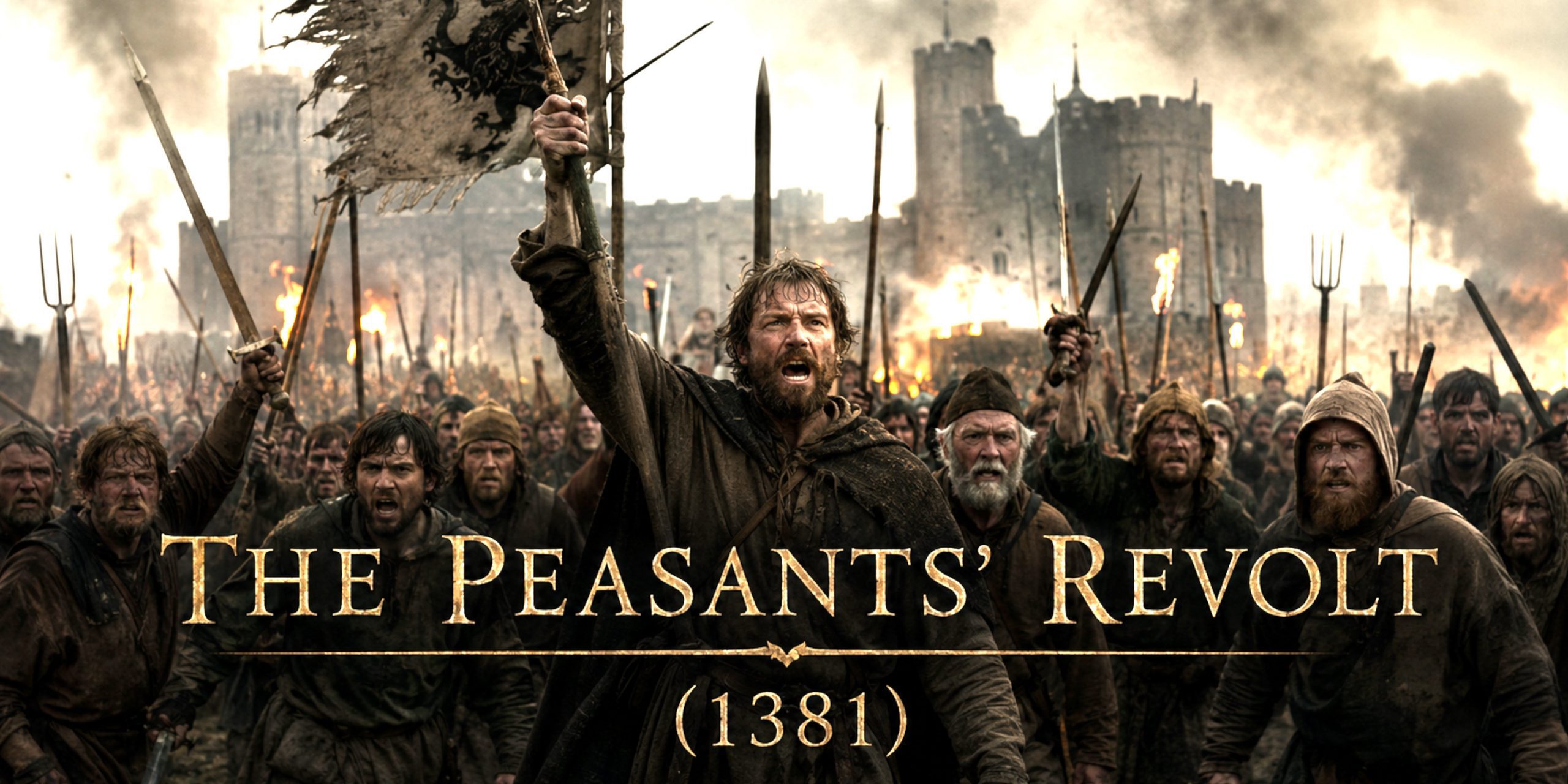
The Peasants’ Revolt of 1381 was the largest popular uprising in medieval English history. What began as resistance to an unpopular tax rapidly transformed into a nationwide challenge against royal authority, feudal obligations and centuries of entrenched social inequality. Thousands of ordinary men and women marched on London, confronted the young King Richard II and briefly forced England’s ruling elite onto the defensive.
It remains one of the defining moments of the Middle Ages. Although the revolt ultimately failed in military and political terms, many of the grievances it exposed could not simply be ignored. The uprising revealed just how fragile medieval government could become when economic hardship, political incompetence and public anger collided.
As a historian, what continues to fascinate me is not merely the violence. Medieval rebellions were hardly rare. Rather, it is the remarkable confidence of ordinary villagers who believed they could negotiate directly with their king and reshape English society. For a few extraordinary weeks, they almost succeeded.
At a Glance
| Event | Peasants’ Revolt |
|---|---|
| Date | May to June 1381 |
| Location | Southern and Eastern England, especially Kent, Essex and London |
| Monarch | Richard II |
| Rebel Leader | Wat Tyler |
| Religious Figure | John Ball |
| Royal Commander | Richard II and London authorities |
| Outcome | Revolt suppressed, leaders executed, reforms revoked |
What Was the Peasants’ Revolt?
The Peasants’ Revolt was a mass rebellion involving villagers, craftsmen, labourers, merchants and local officials across much of southern England.
Despite its modern name, it was never solely a peasant movement. Many participants came from prosperous farming families, while townspeople and skilled artisans also joined the uprising. Even members of the lesser clergy openly supported it.
The rebels demanded:
- An end to serfdom
- Lower taxation
- Fairer legal treatment
- Freedom to buy and sell labour
- The removal of corrupt royal officials
- Greater local rights
They were not calling for the destruction of the monarchy. Quite the opposite. Many believed Richard II himself had been misled by corrupt advisers and hoped he would rule justly once they were removed. Medieval politics could be wonderfully optimistic when viewed from a village green.
England Before the Revolt
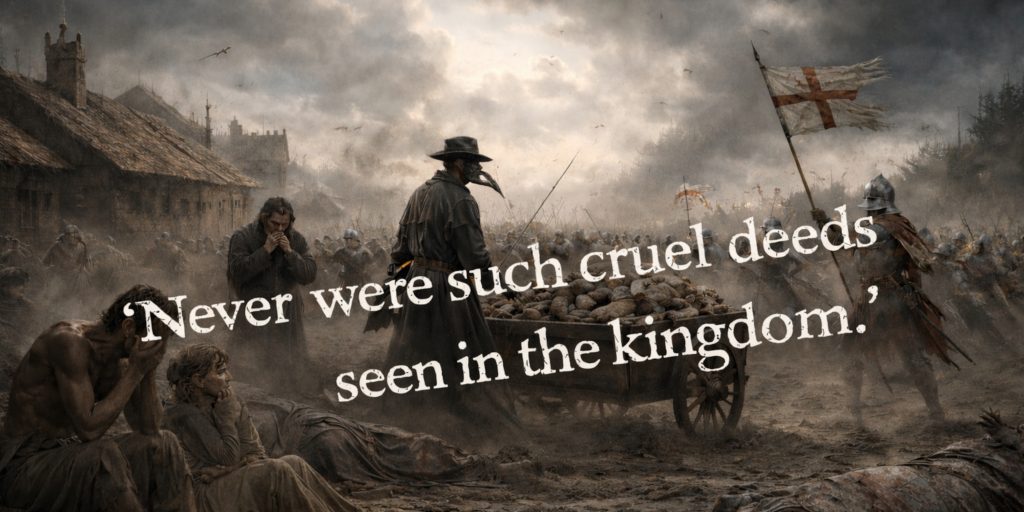
England in the late fourteenth century remained scarred by the Black Death.
The plague of 1348 to 1350 killed perhaps half the population. Labour became scarce and surviving workers found themselves in a stronger bargaining position.
Landowners responded by attempting to freeze wages through legislation such as the Statute of Labourers.
Many villagers believed these restrictions ignored economic reality. If labour was suddenly valuable, why should wages remain artificially low?
The government answered with fines, prosecutions and increasing taxation.
The result was predictable.
The Causes of the Peasants’ Revolt
The Poll Tax
The immediate trigger was the third Poll Tax introduced in 1380.
Unlike taxes based on land or wealth, this levy charged every adult a fixed amount.
Collection was aggressive.
Royal commissioners investigated entire communities, questioned households and pursued suspected tax evasion with considerable enthusiasm and remarkably little diplomacy.
Many villages simply refused to cooperate.
The Hundred Years’ War
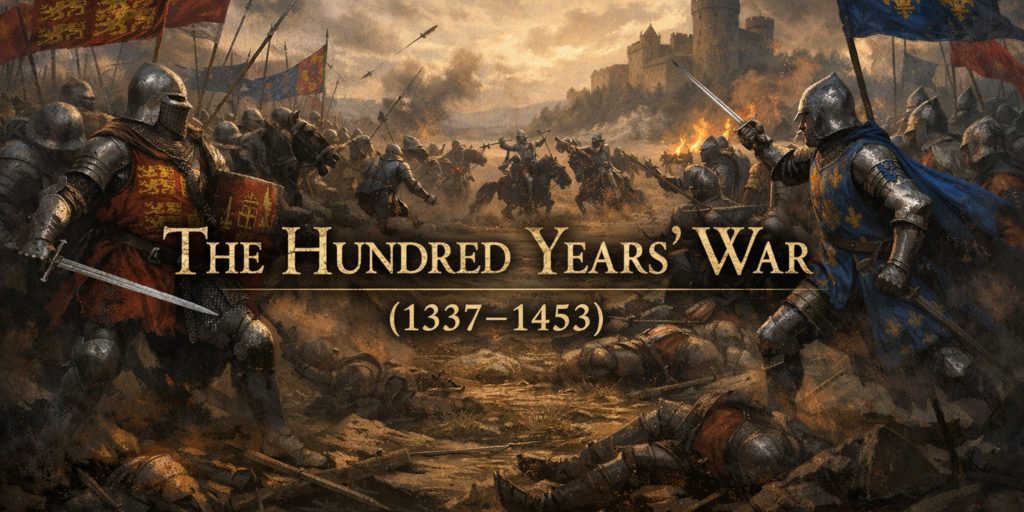
England’s war against France demanded enormous financial resources.
Military campaigns became increasingly expensive while victories grew less frequent.
Ordinary taxpayers questioned why they should fund distant wars while struggling to survive themselves.
Feudal Restrictions
Although labour shortages had shifted economic power, many villagers remained legally tied to their lords.
Serfdom restricted movement, inheritance and employment.
The rebels increasingly viewed these obligations as outdated.
Corruption
Local officials often abused their authority.
Tax collectors, sheriffs and legal administrators became symbols of injustice.
Many were specifically targeted during the revolt.
John Ball and Revolutionary Ideas
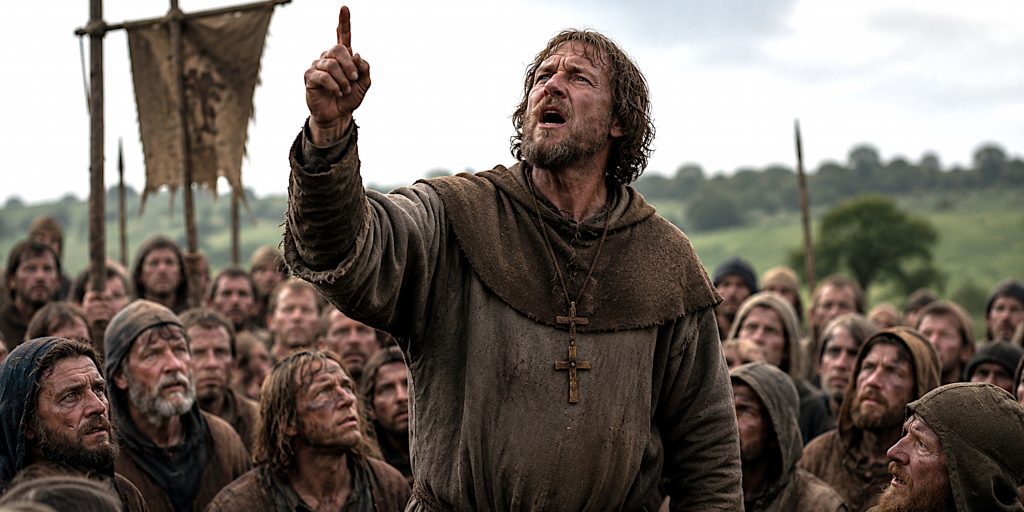
The radical priest John Ball became the movement’s most famous preacher.
He had long criticised social inequality and challenged the legitimacy of hereditary privilege.
His best known question echoed across England:
“When Adam delved and Eve span, who was then the gentleman?”
It remains one of medieval Europe’s most famous political slogans.
Ball argued that all people were created equal before God.
Such ideas sounded dangerously revolutionary to England’s ruling elite.
Wat Tyler
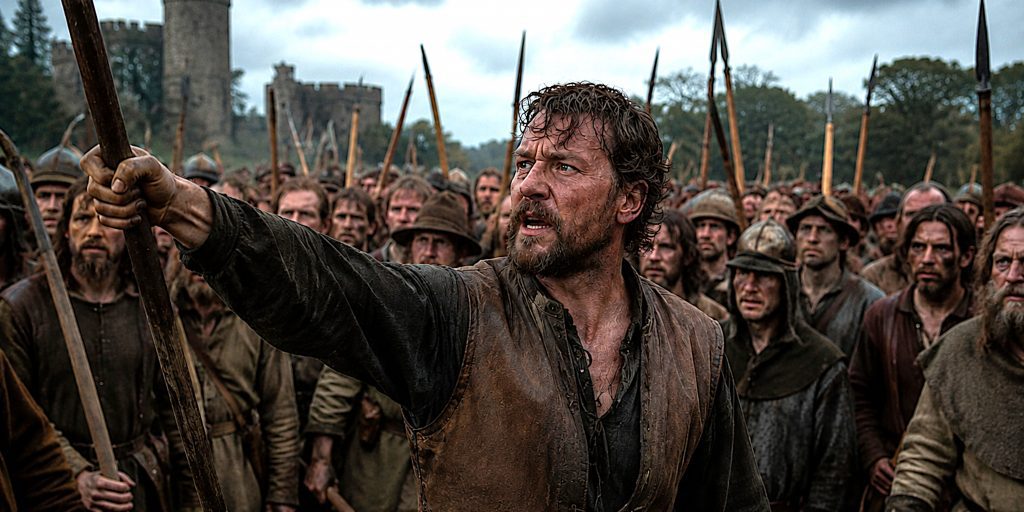
Wat Tyler remains an enigmatic figure.
Little is known about his early life.
He emerged as the principal military leader during the uprising, organising thousands of followers with surprising discipline.
Contemporary writers often portrayed him as dangerous or violent, although most were writing from the perspective of horrified royal officials.
His leadership demonstrated tactical ability, confidence and political awareness.
Timeline of the Peasants’ Revolt
| Date | Event |
| Late May 1381 | Resistance begins in Essex |
| Early June | Revolt spreads across Kent |
| 10 June | Canterbury occupied |
| 12 June | Rebels march on London |
| 13 June | London gates opened to rebels |
| 14 June | Richard II meets rebels at Mile End |
| 14 June | Savoy Palace destroyed |
| 15 June | Wat Tyler killed at Smithfield |
| Following weeks | Royal forces suppress remaining resistance |
The March on London
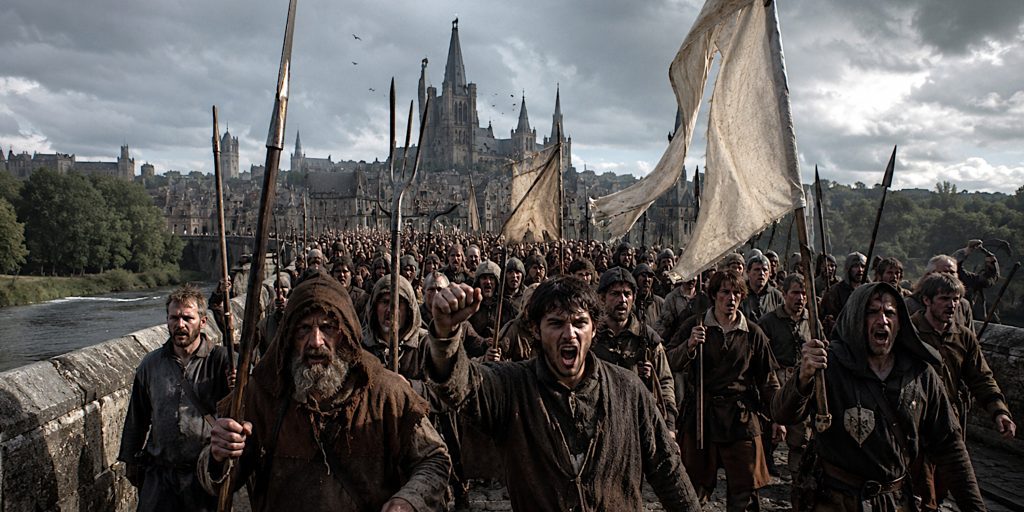
The rebels entered London with surprising ease.
Many citizens sympathised with their grievances and opened the city gates.
The Savoy Palace, owned by John of Gaunt, became the revolt’s most famous target.
Rather than looting its treasures, many rebels deliberately destroyed them.
This was symbolic.
Luxury represented oppression.
Gold was thrown into the Thames rather than stolen.
That decision has puzzled economists ever since.
Several senior royal officials were captured and executed, including the Archbishop of Canterbury, Simon Sudbury.
The Meeting at Mile End
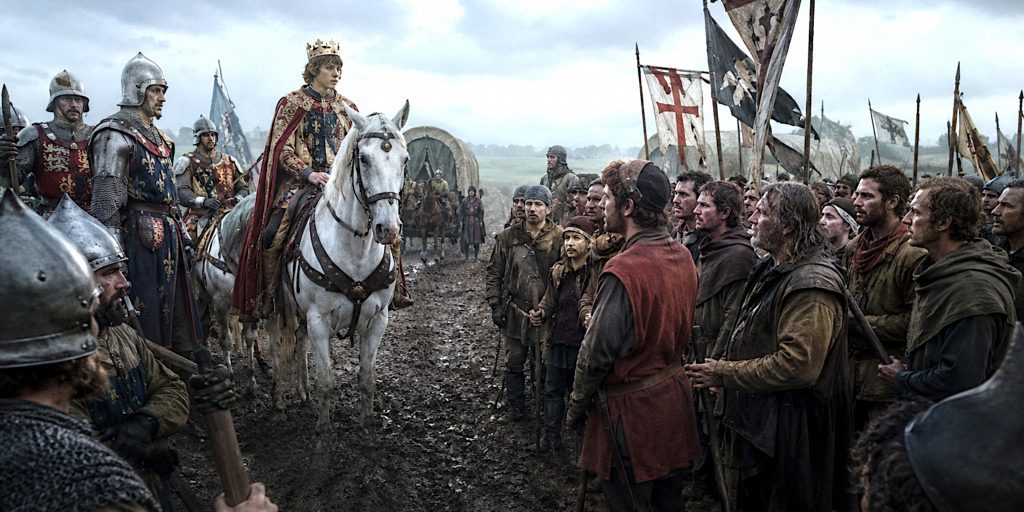
Richard II, only fourteen years old, agreed to meet the rebels.
He promised:
- Freedom from serfdom
- Fair rents
- Pardons
- Greater liberties
Many believed victory had been achieved.
Unfortunately, events moved rather faster than the royal administration.
The Death of Wat Tyler
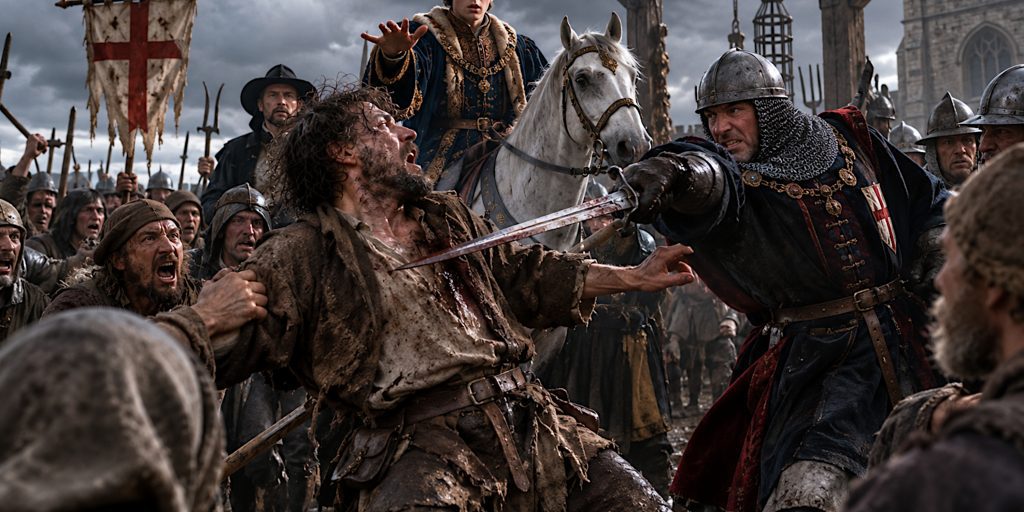
On 15 June 1381, Tyler met Richard II at Smithfield.
Accounts differ dramatically.
Some chroniclers claimed Tyler behaved aggressively.
Others suggest negotiations were progressing until violence unexpectedly erupted.
William Walworth, Lord Mayor of London, struck Tyler with his sword.
Royal retainers finished the attack.
Tyler died shortly afterwards.
Richard II rode towards the confused rebels and declared:
“I am your captain. Follow me.”
Remarkably, many obeyed.
Without Tyler’s leadership, the rebellion quickly fragmented.
Military Forces
Royal Government
| Component | Details |
| Commander | Richard II |
| Senior Officials | William Walworth, royal household knights |
| Strength | Several thousand available across England |
| Composition | Knights, men at arms, city militia, household troops |
Rebel Forces
| Component | Details |
| Leader | Wat Tyler |
| Religious Leader | John Ball |
| Estimated Strength | Up to 60,000 participants across England |
| Composition | Farmers, labourers, craftsmen, archers, townspeople, clergy |
Arms and Weapons
Neither side fielded professional armies throughout the revolt.
Most rebels carried whatever weapons they already owned.
Rebel Weapons
- Longbows
- Bills
- Spears
- Axes
- Agricultural flails
- Clubs
- Falchions
- Bollock daggers
- Hunting knives
Royal Forces
- Knightly swords
- Arming swords
- Longswords
- Lances
- Maces
- Poleaxes
- Longbows
- Crossbows
Professional soldiers wore mail with increasing use of plate armour.
Most rebels possessed padded gambesons or simple protective clothing, although wealthier participants occasionally owned mail shirts.
Contemporary Quotes
The chronicler Thomas Walsingham condemned the rebels, writing:
“They wished to destroy all the nobles.”
Jean Froissart recorded:
“They were all of one accord.”
John Ball famously declared:
“When Adam delved and Eve span, who was then the gentleman?”
Richard II later proclaimed:
“Villeins ye are, and villeins ye shall remain.”
Whether these words were spoken exactly as recorded remains uncertain, but they capture contemporary attitudes with remarkable clarity.
Why the Revolt Failed
Several factors contributed to the collapse.
- Loss of central leadership after Tyler’s death
- Rebel forces lacked permanent organisation
- Royal promises divided participants
- Local uprisings became isolated
- Noble armies gradually restored order
The Crown systematically hunted remaining leaders.
John Ball was captured and executed.
Hundreds of rebels faced punishment.
The Aftermath
Richard II revoked almost every concession granted during the negotiations.
Serfdom technically remained.
Yet the social landscape had already changed.
Landlords increasingly abandoned traditional labour services in favour of paid employment.
Within a century, classical English serfdom had largely disappeared.
Ironically, the rebels failed politically but succeeded in revealing that medieval society was already changing.
Long Term Legacy
The Peasants’ Revolt shaped English history in several important ways.
Political Impact
- Demonstrated limits of royal taxation
- Increased caution over future poll taxes
- Strengthened awareness of popular protest
Social Impact
- Accelerated decline of serfdom
- Encouraged wage labour
- Changed relationships between landlords and tenants
Historical Legacy
Modern historians increasingly view the revolt as an early expression of political consciousness rather than a simple riot.
Its participants articulated coherent demands concerning justice, taxation and personal liberty.
Those ideas continued to resonate long after the executions had ended.
Archaeology and Historic Sites
Several locations associated with the revolt remain accessible today.
Smithfield, London
The site where Wat Tyler was killed remains identifiable within modern London.
Mile End
Location of Richard II’s negotiations with the rebels.
Canterbury
The city played an important role during the Kentish uprising.
The Tower of London
Many of the revolt’s most dramatic events unfolded around the Tower, including the execution of Archbishop Simon Sudbury.
Archaeological evidence comes largely from urban excavations in London, where material from the late fourteenth century illustrates the city’s streets, buildings and daily life during the revolt.
Although few artefacts can be directly connected to individual rebels, excavations provide valuable context for understanding the world they inhabited.
Why Historians Still Debate the Revolt
One enduring question concerns the rebels’ true ambitions.
Were they seeking reform or revolution?
The answer probably lies somewhere between the two.
Many demanded equality before the law while continuing to support the monarchy.
Others expressed far more radical ideas.
The movement was never entirely unified.
Like most large protests throughout history, people marched together while imagining rather different destinations.
Frequently Asked Questions
When was the Peasants’ Revolt?
The main uprising occurred during May and June 1381.
Who led the Peasants’ Revolt?
Wat Tyler served as the principal leader, while John Ball became its best known religious spokesman.
Why did the revolt happen?
The revolt resulted from heavy taxation, resentment of feudal obligations, economic pressures after the Black Death and widespread anger at corrupt officials.
Was the revolt successful?
Militarily and politically, no. Most immediate reforms were cancelled. Socially, however, it exposed profound weaknesses in the feudal system and accelerated long term change.
Why was Wat Tyler killed?
He died during negotiations with Richard II at Smithfield after a confrontation with London’s mayor, William Walworth. Exactly what happened remains disputed.
Takeaway
The Peasants’ Revolt of 1381 stands among the most remarkable episodes in English medieval history. For a brief moment, villagers, craftsmen and labourers forced the government of England to negotiate from a position of weakness. Their movement collapsed through division, violence and determined royal retaliation, yet its significance reaches far beyond those dramatic days in June.
The revolt exposed the cracks within feudal England. Labour had become valuable, expectations had changed and ordinary people increasingly questioned inherited privilege. Those ideas proved far more resilient than Wat Tyler himself.
History often remembers kings and conquerors. Occasionally, however, it is worth pausing to remember the thousands who marched behind homemade banners, armed with little more than farming tools, stubborn determination and the extraordinary belief that England could become fairer than the one they had inherited.