Fantasy is full of legendary swords that glow, burst into flames, or happily announce their magical abilities every few pages. Ragnarök takes a different approach. It rarely needs to explain itself. The sword simply exists with an unsettling sense of age and menace, as though it has witnessed the rise and fall of countless kingdoms and found them all equally disappointing.
Appearing throughout Mark Lawrence’s acclaimed The Broken Empire trilogy, Ragnarök is far more than another enchanted blade. It reflects the brutal, cynical world around it and perfectly complements one of fantasy’s most morally complex protagonists, Jorg Ancrath.
Unlike many famous fantasy weapons that become symbols of hope, Ragnarök represents power stripped of illusion. It is ancient, mysterious, and quietly terrifying.
What Is Ragnarök?
Ragnarök is the legendary sword wielded by Jorg Ancrath in The Broken Empire trilogy, consisting of:
- Prince of Thorns
- King of Thorns
- Emperor of Thorns
The weapon carries immense historical weight within the setting. Its very name immediately evokes destruction and endings, borrowing from Norse mythology where Ragnarök marks the final battle that brings about the death of gods and the rebirth of the world.
That inspiration is fitting. The sword feels like something left behind after civilisation collapsed, which, in many ways, matches the world of The Broken Empire itself.
Rather than dazzling readers with spectacular magical effects, Ragnarök earns its reputation through atmosphere. Every appearance reminds you that this is no ordinary piece of steel.
A Sword Born from a Fallen World
One of the most fascinating aspects of The Broken Empire is that it quietly blends medieval fantasy with the distant remains of our own civilisation.
Ruined technology, forgotten science, and fragmented history all linger beneath castles and kingdoms. Ragnarök fits naturally into this strange landscape.
Its true origins remain deliberately mysterious. Lawrence avoids lengthy explanations, allowing readers to speculate about whether the blade is connected to ancient technologies, forgotten magic, or relics from humanity’s previous age.
That ambiguity makes the weapon considerably more memorable.
Sometimes the unknown is far more interesting than a detailed instruction manual.
Ragnarök’s Appearance
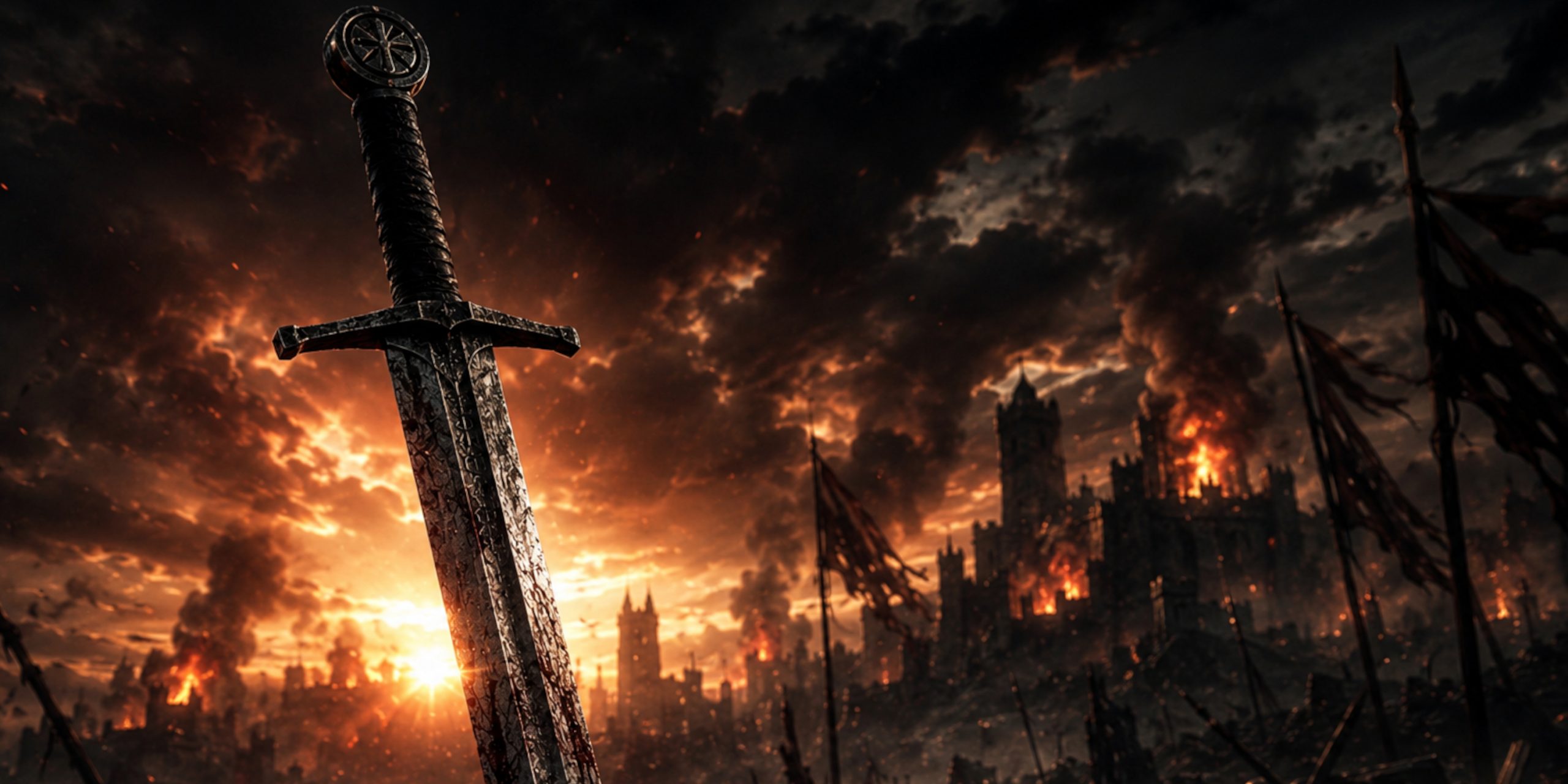
Lawrence never overwhelms readers with lengthy physical descriptions, yet enough details emerge to build a vivid picture.
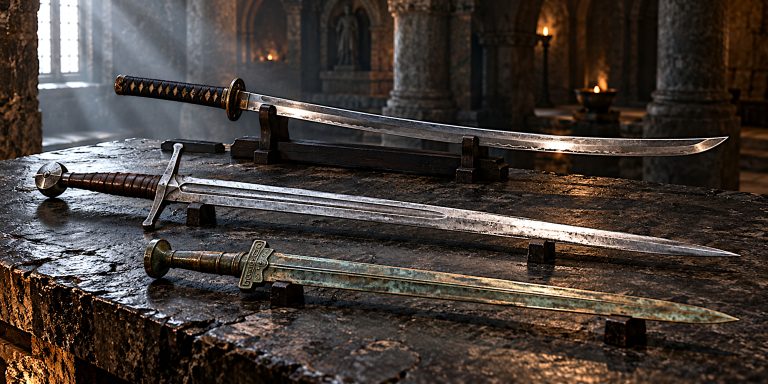
Ragnarök is generally imagined as:
| Feature | Description |
|---|---|
| Blade | Long, dark steel with an ancient appearance |
| Edge | Exceptionally sharp and durable |
| Style | Functional rather than decorative |
| Presence | Heavy with history and menace |
| Condition | Remarkably well preserved despite its age |
Unlike fantasy swords covered in jewels and glowing runes, Ragnarök feels practical.
It looks like a weapon designed to survive centuries of warfare rather than impress visitors in a royal throne room.
Powers and Abilities
Part of Ragnarök’s appeal comes from how restrained its abilities appear.
Rather than functioning like a magical superweapon, its power lies in subtlety and myth.
Its notable qualities include:
- Incredible durability
- Exceptional cutting ability
- Ancient craftsmanship beyond ordinary smithing
- Psychological impact on those who recognise it
- Deep symbolic importance throughout the story
Readers often debate whether the sword possesses supernatural qualities or whether much of its reputation stems from history and legend.
That uncertainty is entirely intentional.
Why Ragnarök Fits Jorg So Well
Jorg Ancrath is not the typical fantasy hero.
He is intelligent, ruthless, ambitious, occasionally horrifying, and strangely charismatic despite making enough questionable decisions to keep an entire group of therapists employed for decades.
Ragnarök reflects those same contradictions.
Neither hero nor villain defines the sword. Like Jorg himself, it exists beyond simple labels.
The blade becomes an extension of his determination, carrying him through battles where survival often depends as much on willpower as skill.
It never overshadows its wielder.
Instead, it amplifies who he already is.
Symbolism Behind the Sword
The name Ragnarök immediately carries powerful associations.
In Norse mythology, Ragnarök represents:
- The fall of old powers
- The collapse of civilisation
- Chaos preceding renewal
- Cycles of destruction and rebirth
These themes run throughout The Broken Empire.
Empires crumble.
Kings fall.
Old certainties disappear.
The sword becomes a physical reminder that nothing lasts forever, no matter how powerful it once seemed.
That symbolic role arguably matters more than any magical property.
Combat Style
Ragnarök suits direct, aggressive combat.
It is not presented as an elegant duelling weapon designed for tournaments or displays of refined swordsmanship.
Instead, it thrives amid brutal, desperate fighting.
The sword complements Jorg’s willingness to exploit every weakness and seize every opportunity, no matter how ruthless the method.
Efficiency consistently outweighs honour.
That feels entirely appropriate within Lawrence’s unforgiving world.
How Ragnarök Compares to Other Fantasy Swords
| Sword | Series | Primary Strength |
|---|---|---|
| Ragnarök | The Broken Empire | Ancient symbolism and mystery |
| Stormbringer | Elric | Soul consuming power |
| Andúril | The Lord of the Rings | Kingship and hope |
| Nightblood | Warbreaker | Sentient magical destruction |
| Frostmourne | Warcraft | Corruption and domination |
Many fantasy swords become famous because of spectacular magical abilities.
Ragnarök earns its place through atmosphere.
It feels dangerous before it even leaves its scabbard.
Themes That Ragnarök Represents
The sword reinforces several recurring themes throughout the trilogy.
These include:
- The burden of history
- Violence as a tool of power
- The collapse of civilisation
- Legacy and memory
- The cost of ambition
- Survival over idealism
Few fantasy weapons integrate so naturally into both character development and world-building.
Why Readers Still Remember Ragnarök
Many fantasy weapons fade into the background after the final page.
Ragnarök tends to linger.
Partly because Lawrence refuses to over explain it.
Partly because the sword feels genuinely ancient.
Mostly because every appearance reinforces the unsettling tone that defines The Broken Empire.
It is not simply a powerful weapon.
It is another reminder that this world has already experienced its golden age, and everyone left behind is picking through the ruins.
Legacy
Ragnarök has become one of modern fantasy’s more distinctive legendary swords despite lacking the widespread recognition of weapons like Excalibur or Andúril.
Readers who enjoy subtle world-building often point to the sword as an example of restrained storytelling. Lawrence trusts the audience to fill in the gaps, allowing mystery to become one of the blade’s greatest strengths.
That approach gives Ragnarök a timeless quality. It feels less like a magical item created for a fantasy novel and more like an archaeological discovery whose full history has been lost.
In a genre crowded with enchanted weapons competing to be louder, brighter, and more destructive, Ragnarök quietly proves that sometimes the most memorable sword is the one that refuses to explain itself.