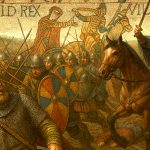
The Battle of Cuarte, fought in October 1094 near Valencia, was one of the defining victories of Rodrigo Díaz de Vivar, better known as El Cid Campeador. It came at a dangerous moment. El Cid had only recently taken Valencia after a long siege, and the arrival of a major Almoravid relief army threatened to erase his achievement almost immediately.
What followed was not a vast clash of endless armies as later legends sometimes suggest. It was a sharp, aggressive and highly calculated medieval engagement. El Cid faced a larger force, used intelligence and timing brilliantly, and turned a desperate defensive situation into one of the most famous victories of his career.
As with much of El Cid’s life, separating history from heroic storytelling requires patience. Medieval chroniclers loved a dramatic flourish. If they had access to modern cinema, the slow-motion horse charge would probably have been unbearable.
Background: Valencia and the Almoravid Threat
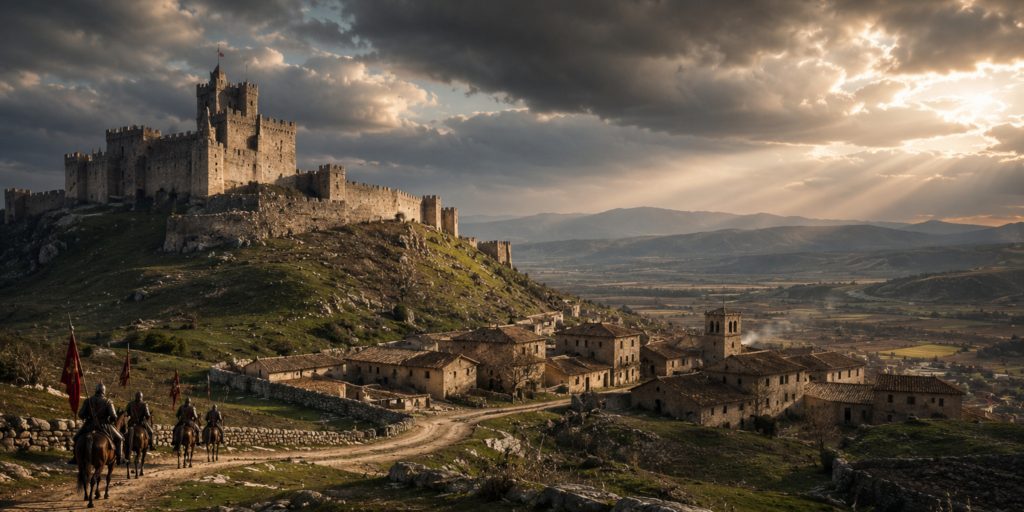
By 1094, Iberia was a fractured landscape of competing powers.
Christian kingdoms such as Castile, León and Aragón expanded southwards while Muslim taifa kingdoms struggled with internal rivalries. The arrival of the Almoravids, a powerful Berber dynasty from North Africa, transformed the balance of power.
El Cid had operated for years as a warlord, commander and political survivor. He served Christian and Muslim rulers at different points, reflecting the complicated realities of medieval Iberia rather than a simple religious divide.
His capture of Valencia in June 1094 created an independent lordship under his control. For the Almoravids, this was unacceptable. Valencia was too valuable economically and strategically to leave in his hands.
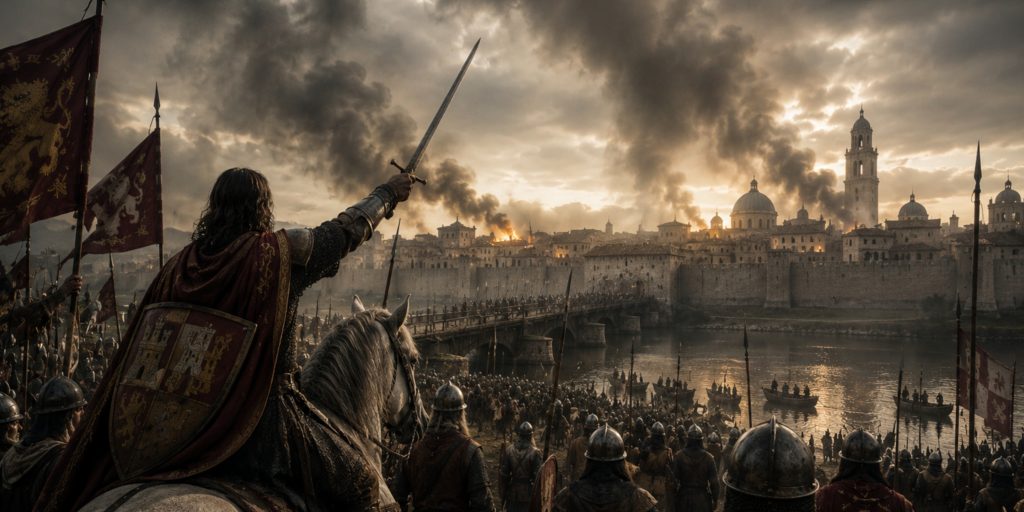
Forces at the Battle of Cuarte
Exact numbers remain debated. Medieval sources often inflated army sizes to make victories appear more miraculous. Modern historians generally favour smaller estimates.
| Army | Commander | Estimated Strength | Composition |
|---|---|---|---|
| Valencian forces of El Cid | Rodrigo Díaz de Vivar | Around 4,000 to 7,000 | Heavy cavalry, infantry, local troops, crossbowmen |
| Almoravid army | Muhammad ibn Tāshufīn (commander under Yusuf ibn Tashfin) | Possibly 10,000 to 15,000 | Berber cavalry, infantry, Andalusi troops |
Some medieval sources claim far larger Almoravid numbers, but these are usually treated cautiously.
Leaders and Command Structure
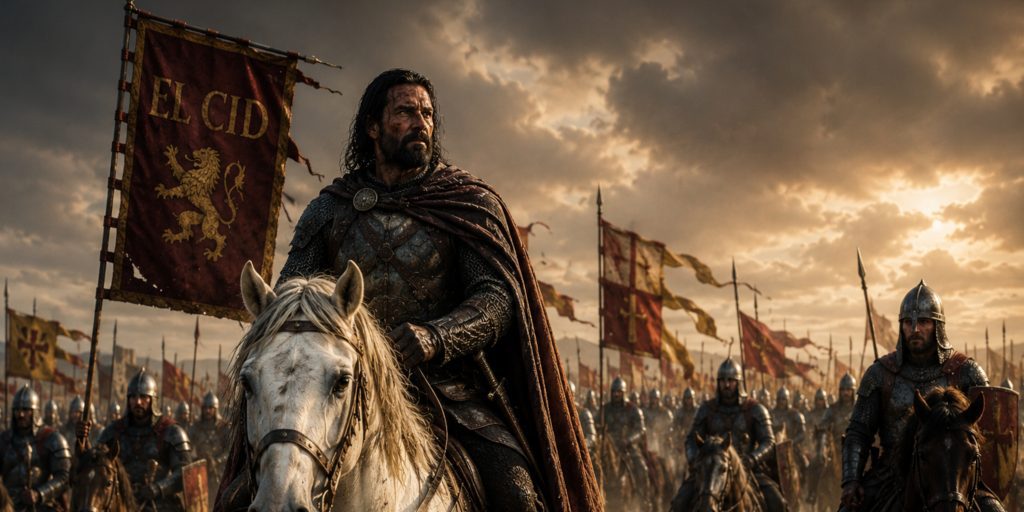
El Cid (Rodrigo Díaz de Vivar)
Role: Lord of Valencia
Born: c. 1043
Military style: Mobile warfare, cavalry tactics, psychological warfare
Strengths:
- Skilled use of reconnaissance
- Experience fighting both Christian and Muslim armies
- Strong cavalry command
- Ability to exploit enemy hesitation
- Flexible battlefield tactics
El Cid’s reputation was built less on overwhelming numbers and more on judgement. He repeatedly survived situations where a less adaptable commander would probably have ended up as a cautionary footnote.
Muhammad ibn Tāshufīn
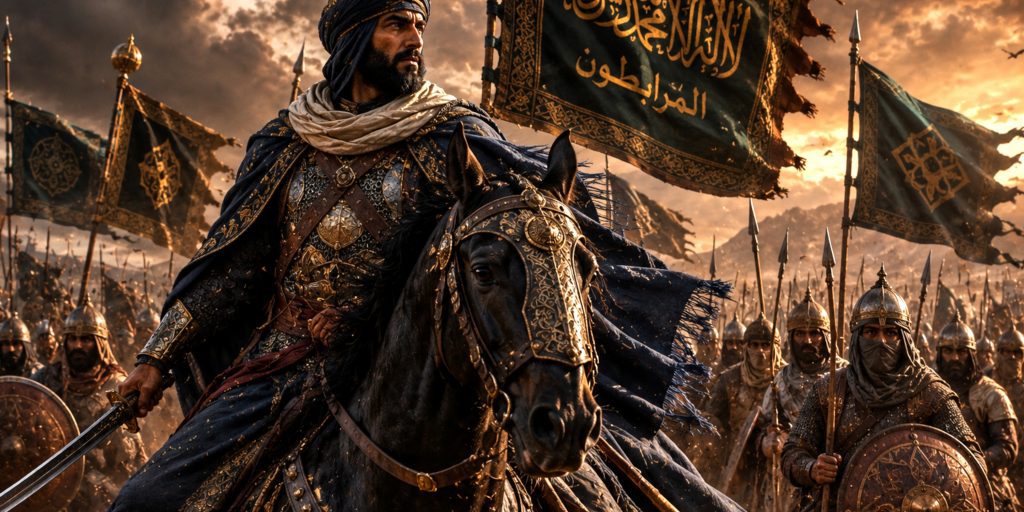
Role: Almoravid commander
Background: Relative of Almoravid ruler Yusuf ibn Tashfin
Strengths:
- Access to disciplined North African forces
- Strong cavalry traditions
- Large manpower reserves
- Experienced commanders
The Almoravids were not the disorganised enemy sometimes portrayed in later Christian legends. They had already defeated major Christian armies, most notably at Sagrajas in 1086.
Arms and Armour at Cuarte
The battle represented a meeting of different military traditions. Iberian warfare in the late 11th century blended European, Andalusi and North African influences.
El Cid’s Army
| Equipment | Details |
|---|---|
| Swords | Arming swords, early medieval knightly swords, Hispano-Christian blades |
| Famous associated swords | Tizona and Colada, although their historical links are debated |
| Spears and lances | Primary weapons of mounted knights |
| Shields | Kite shields and round shields |
| Armour | Mail hauberks, helmets, padded garments |
| Missile weapons | Bows and early crossbows |
Sword Types Used
Likely swords included:
- Oakeshott Type X swords
- Broad blades
- Wide fuller
- Designed mainly for cutting
- Common among 11th-century knights
- Early Type XI variants
- Longer blades
- Better reach from horseback
- More associated with the transition towards later medieval cavalry warfare
- Andalusi swords
- Influenced by Islamic metalworking traditions
- Often highly decorated among elite warriors
- Effective cutting weapons
The legendary swords of El Cid deserve caution. Later tradition transformed weapons into symbols of honour and identity. The real Rodrigo Díaz certainly owned elite weapons, but the stories attached to them developed over centuries.
Almoravid Arms and Armour
| Equipment | Details |
|---|---|
| Swords | Straight swords and curved North African influenced blades |
| Spears | Widely used by cavalry and infantry |
| Javelins | Favoured by mobile troops |
| Shields | Leather shields, including North African styles |
| Armour | Mail shirts, helmets, quilted protection |
| Bows | Important for harassment tactics |
The Almoravids specialised in mobility. Their cavalry was dangerous, fast and experienced in fighting across different environments.
Battle Timeline
June 1094: El Cid Captures Valencia
After a lengthy siege, Valencia surrendered. El Cid became ruler of one of the richest cities on the Mediterranean coast of Iberia.
Late Summer 1094: Almoravid Army Advances
The Almoravids assembled a force to retake Valencia. Their goal was simple: remove El Cid before he could strengthen his position.
October 1094: Siege Begins
The Almoravid army surrounded Valencia.
They expected El Cid to remain trapped behind the walls.
He did not.
El Cid’s Counterattack
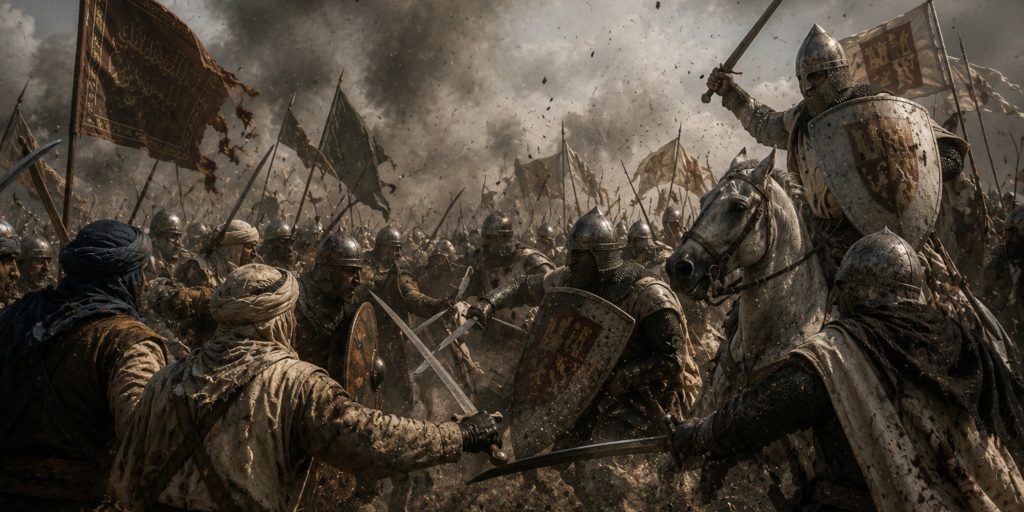
El Cid launched a surprise attack outside the city.
Accounts suggest he divided his forces:
- One group attacked directly
- Another moved against the Almoravid camp
- Confusion spread through the besieging army
This type of battlefield deception suited El Cid perfectly. He understood that breaking an enemy’s confidence could be as important as destroying their soldiers.
Almoravid Retreat
The Almoravid army collapsed and withdrew.
The victory secured Valencia and proved El Cid could defeat one of the most powerful military forces in the western Mediterranean.
Military Analysis: Why El Cid Won
Superior Intelligence
El Cid appears to have understood the enemy position and weaknesses before committing his forces.
Aggressive Timing
Rather than waiting behind Valencia’s walls, he chose the moment of attack.
This was risky. A failed sortie could have cost him the city.
Psychological Pressure
The attack on the Almoravid camp created confusion.
Medieval armies depended heavily on cohesion. Once panic started, even large forces could unravel quickly.
Veteran Troops
Many of El Cid’s soldiers were experienced professionals rather than temporary levies.
Archaeology and Physical Evidence
Direct archaeological evidence specifically tied to the Battle of Cuarte remains limited. The battlefield has been affected by centuries of urban growth around modern Valencia.
However, archaeology from 11th-century Valencia helps reconstruct the world of the battle.
Important discoveries include:
- Islamic defensive structures from medieval Valencia
- Ceramics showing trade connections across the Mediterranean
- Military objects from the period
- Fortification remains linked to taifa and Almoravid-era occupation
Places connected with El Cid’s era include:
Valencia Archaeological Centre (L’Almoina)
Contains remains from Roman, Visigothic and Islamic Valencia.
Valencia Cathedral Area
Built after the Christian conquest on the site associated with the city’s former mosque.
Museo de Burgos
Contains material linked to medieval Castile and the world in which Rodrigo Díaz lived.
Contemporary Sources and Quotes
The Battle of Cuarte is known through medieval Christian and Muslim sources, though all must be read carefully.
The Historia Roderici, a Latin biography of El Cid written not long after his lifetime, presents him as a skilled and courageous commander:
“He always defeated his enemies and was never overcome by them.”
The Poema de mio Cid, written later, transformed Rodrigo into a literary hero:
“What a good servant, if only he had a good lord.”
The poem is not a battlefield report, but it reveals how quickly El Cid became a figure of legend.
Muslim sources offer a valuable counterbalance, sometimes presenting him as a dangerous and ruthless warlord rather than a romantic hero.
The truth is probably somewhere between. Rodrigo Díaz was neither a perfect knight nor simply a mercenary. He was a product of a violent frontier world where survival required intelligence, ambition and occasionally a flexible approach to loyalty.
Outcome and Consequences
The victory at Cuarte:
- Preserved El Cid’s rule over Valencia
- Damaged Almoravid prestige
- Strengthened Christian confidence after earlier defeats
- Established El Cid’s reputation as one of Iberia’s greatest commanders
Valencia remained under his control until his death in 1099.
His widow, Jimena Díaz, continued defending the city but eventually abandoned it in 1102 when holding it became impossible.
Legacy of the Battle of Cuarte
Cuarte stands as one of the finest examples of medieval battlefield leadership in Iberia.
It was not the largest battle of the Reconquista period, nor the bloodiest. Its importance came from the circumstances: an isolated commander, a newly conquered city and an enemy expected to overwhelm him.
El Cid’s victory demonstrated that tactics, timing and morale could overcome numerical disadvantage.
The later legends gave Rodrigo Díaz a shining sword, a flawless reputation and almost superhuman qualities. The real commander is arguably more interesting: a clever, ambitious and sometimes ruthless frontier warrior who understood war better than most of his rivals.
For a historian, that version feels far more human. And frankly, winning a battle without needing centuries of exaggeration afterwards is usually a sign you were fairly good at your job.