Most legendary weapons in fantasy have a dramatic backstory. Umbra takes things a bit further by basically deciding that owning a sword should come with an existential crisis.
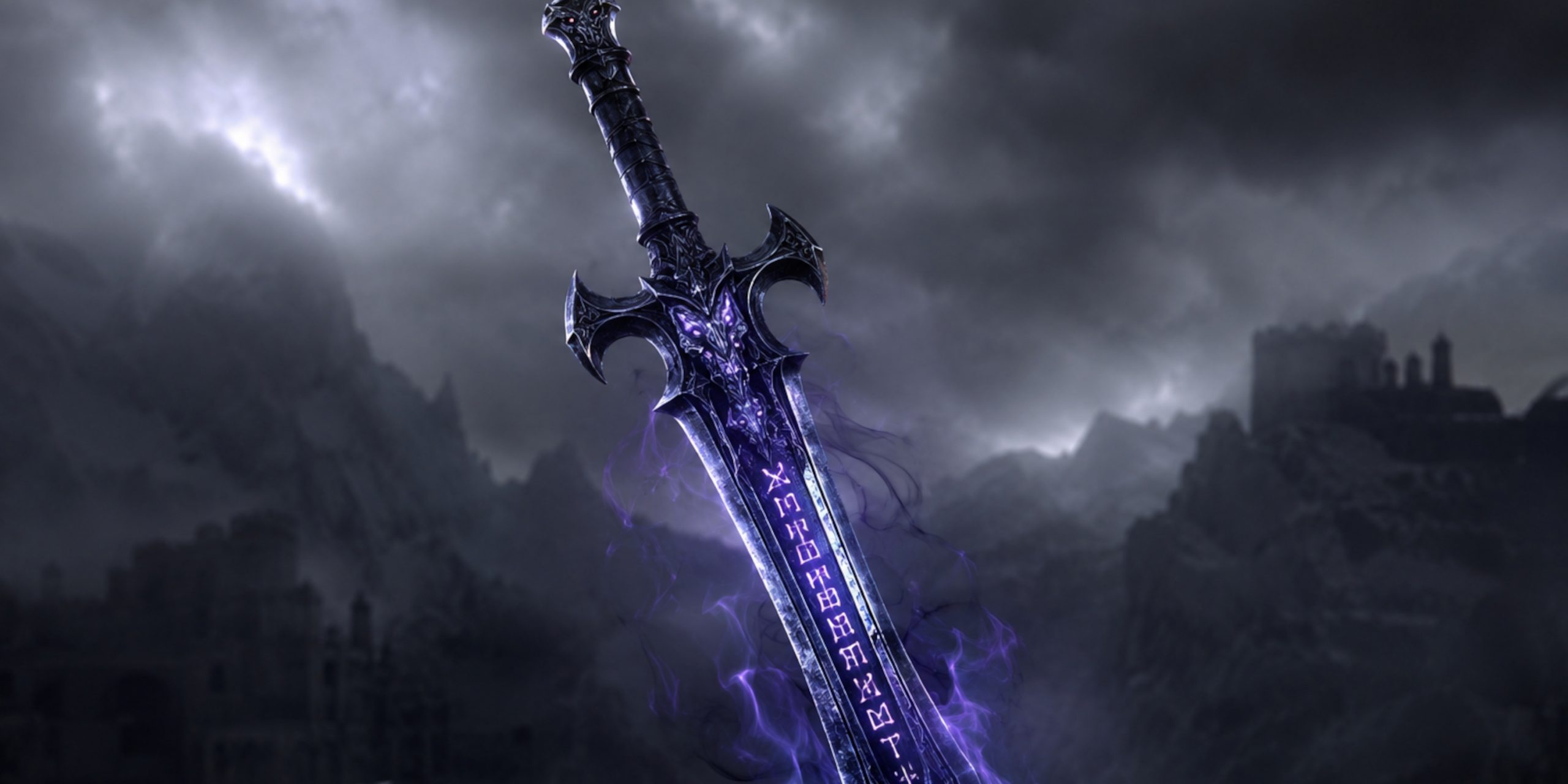
Across The Elder Scrolls series, Umbra is one of the most memorable weapons ever created. It is not simply a powerful blade with impressive stats. It is a sentient artefact linked to the Daedric Prince Clavicus Vile, carrying a hunger for souls and a nasty habit of dominating whoever dares to wield it.
Part weapon, part curse and part character, Umbra represents one of the darker ideas in Elder Scrolls lore: what happens when an object of power wants something from you?
Origins Of Umbra
Umbra’s creation is tied to Clavicus Vile, the Daedric Prince associated with bargains, wishes and deals that usually come with extremely inconvenient small print.
The sword was forged using a fragment of Vile’s own power, but that fragment eventually developed its own identity. This consciousness became Umbra, a force that wanted independence from its creator.
Unlike many enchanted weapons, Umbra does not simply obey its owner. It influences them, gradually consuming their identity until the wielder and sword become almost inseparable.
The name “Umbra” often refers to both the sword and the person carrying it, suggesting the weapon does not just change hands. It replaces people.
A normal cursed sword ruins your day. Umbra looks at your entire personality and starts redecorating.
Umbra Across The Elder Scrolls Games
The Elder Scrolls III: Morrowind
Umbra appears in Morrowind as both a weapon and a warrior.
The current wielder is an Orc who has been consumed by the blade’s influence. He has become known only as Umbra, abandoning his former identity.
Found in the mountains near Suran, he seeks an honourable death in battle. The sword has granted him incredible strength, but it has also left him trapped in endless conflict.
The player can defeat him and claim the blade, gaining one of the strongest weapons available in the game.
Key features:
| Attribute | Details |
|---|---|
| Weapon type | Two-handed longsword |
| Main ability | Soul Trap enchantment |
| Reputation | Among the strongest swords in Morrowind |
| Theme | Power gained at the cost of identity |
The Elder Scrolls IV: Oblivion
Umbra returns in Oblivion with an even stronger connection to Clavicus Vile.
The wielder this time is a woman named Lenwin, who has also taken the name Umbra after falling under the sword’s influence. She hides in Vindasel, unable to escape what the weapon has made her become.
Players encounter Umbra during Clavicus Vile’s Daedric quest, where they must decide whether to return the sword or keep it.
The choice is interesting because Umbra is genuinely powerful. Giving it away feels responsible. Keeping it feels extremely Elder Scrolls.
The game knows exactly how tempting it is.
Umbra’s Design And Abilities
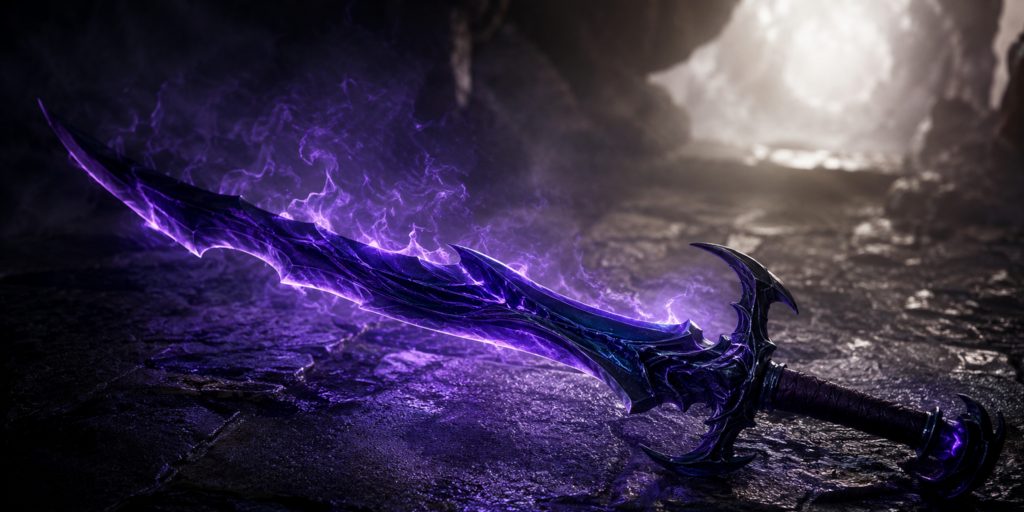
Umbra’s appearance changes between games, but certain traits remain consistent:
| Feature | Description |
| Blade style | Large, intimidating sword |
| Origin | Daedric magic |
| Primary power | Capturing souls |
| Associated Prince | Clavicus Vile |
| Main danger | Corrupting the wielder |
The Soul Trap enchantment perfectly fits its story. The sword literally consumes souls in combat while slowly consuming the person holding it.
Subtle? Absolutely not.
Effective? Definitely.
Why Umbra Is So Powerful
Umbra stands apart because its strength is not only mechanical. Plenty of weapons in The Elder Scrolls can deal huge damage, but few feel as dangerous.
The sword offers:
- Exceptional combat performance
- Powerful enchantments
- A connection to Daedric mythology
- A unique identity beyond being equipment
- A moral question every time it appears
Umbra represents temptation. It asks the player a simple question: if something clearly should not be used, but it is incredibly useful, are you still going to swing it?
The answer from most players is usually “yes, immediately.”
Umbra And Clavicus Vile
The relationship between Umbra and Clavicus Vile is unusual because the sword is not just another Daedric artefact sitting in a collection.
Umbra became a problem for its creator.
The blade wanted freedom, creating conflict between Vile and the fragment of power he had placed inside it. This makes Umbra feel less like a magical item and more like a rebellious piece of a god.
In a world filled with ancient relics, that is still impressively dramatic.
Umbra In The Elder Scrolls Novels
Umbra’s story expands beyond the games in the novels The Infernal City and Lord of Souls.
The books explore the sword’s sentience and the consequences of its separation from Clavicus Vile. They show Umbra as a dangerous force capable of far more than improving someone’s damage numbers.
The novels reinforce the idea that Umbra was never really a weapon people owned.
Umbra owned them.
Comparison With Other Elder Scrolls Weapons
| Weapon | Origin | Main Power | Difference |
| Umbra | Clavicus Vile | Soul capture and corruption | Sentient and independent |
| Ebony Blade | Mephala | Gains power through betrayal | Feeds on personal choices |
| Dawnbreaker | Meridia | Destroys undead | More heroic purpose |
| Mehrunes’ Razor | Mehrunes Dagon | Instant killing potential | Symbol of destruction |
| Goldbrand | Boethiah | Fire damage | More traditional enchanted blade |
Umbra is not necessarily the strongest weapon in every game, but from a lore perspective it is among the most frightening.
Legacy Of Umbra
Umbra has remained popular because it captures what The Elder Scrolls does best. It mixes adventure, mystery and a slightly uncomfortable feeling that picking up ancient magical objects from caves might not be a great life decision.
The sword has everything a legendary weapon needs:
- A mysterious origin
- A memorable appearance
- Powerful abilities
- A tragic history
- A personality of its own
Many fantasy swords are remembered because of who carried them. Umbra is remembered because it slowly erased the people who did.
That makes it one of the most fascinating and unsettling weapons in all of Tamriel.