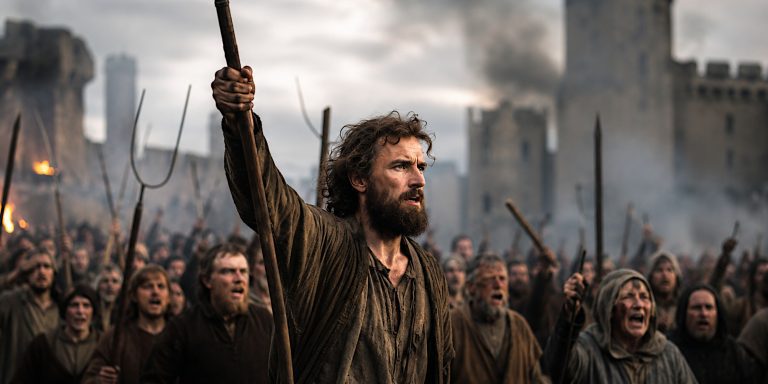
The Welsh spearmen and Archers of the 13th and 14th centuries occupied a fascinating place in medieval warfare. They were rarely the most heavily armoured soldiers on the battlefield, and they were not interested in fighting like the mail-covered knights of France or England. Their strengths came from speed, knowledge of difficult terrain, aggression and a style of warfare that could make even professional armies deeply uncomfortable.
The image of the Welsh warrior as simply a longbowman is far too narrow. Wales produced skilled archers, but also fierce spearmen who fought in mountain passes, forests, raids and major battles across Britain and Europe. Their methods influenced English warfare during the later Middle Ages, particularly after Edward I’s conquest of Wales.
There is something wonderfully stubborn about Welsh military tradition in this period. While wealthy nobles across Europe were spending fortunes trying to become walking iron statues, many Welsh fighters were proving that a sharp spear, a good position and knowing exactly where the nearest bog was could ruin anyone’s day.
Historical Background: Wales In The 13th And 14th Centuries
The 13th century was dominated by the struggle between native Welsh rulers and the expanding power of the English crown.
The armies of princes such as Llywelyn ap Iorwerth and Llywelyn ap Gruffudd relied heavily on local fighting traditions. Wales lacked the resources to field large numbers of heavily equipped knights, so its armies developed around mobility.
Welsh forces commonly included:
- Spearmen for close combat
- Archers using powerful bows
- Light infantry suited to rough terrain
- Raiders capable of moving quickly through hostile territory
The conquest campaigns of Edward I between 1277 and 1283 eventually brought independent Welsh rule to an end, but Welsh soldiers did not disappear. Instead, they became an important part of English armies.
During the 14th century, Welsh archers and infantry fought in:
- The Scottish Wars of Independence
- English campaigns in France
- The early phases of the Hundred Years’ War
Their battlefield reputation moved from local resistance fighters to valued professional troops.
Welsh Spearmen: Fighting Style And Battlefield Role
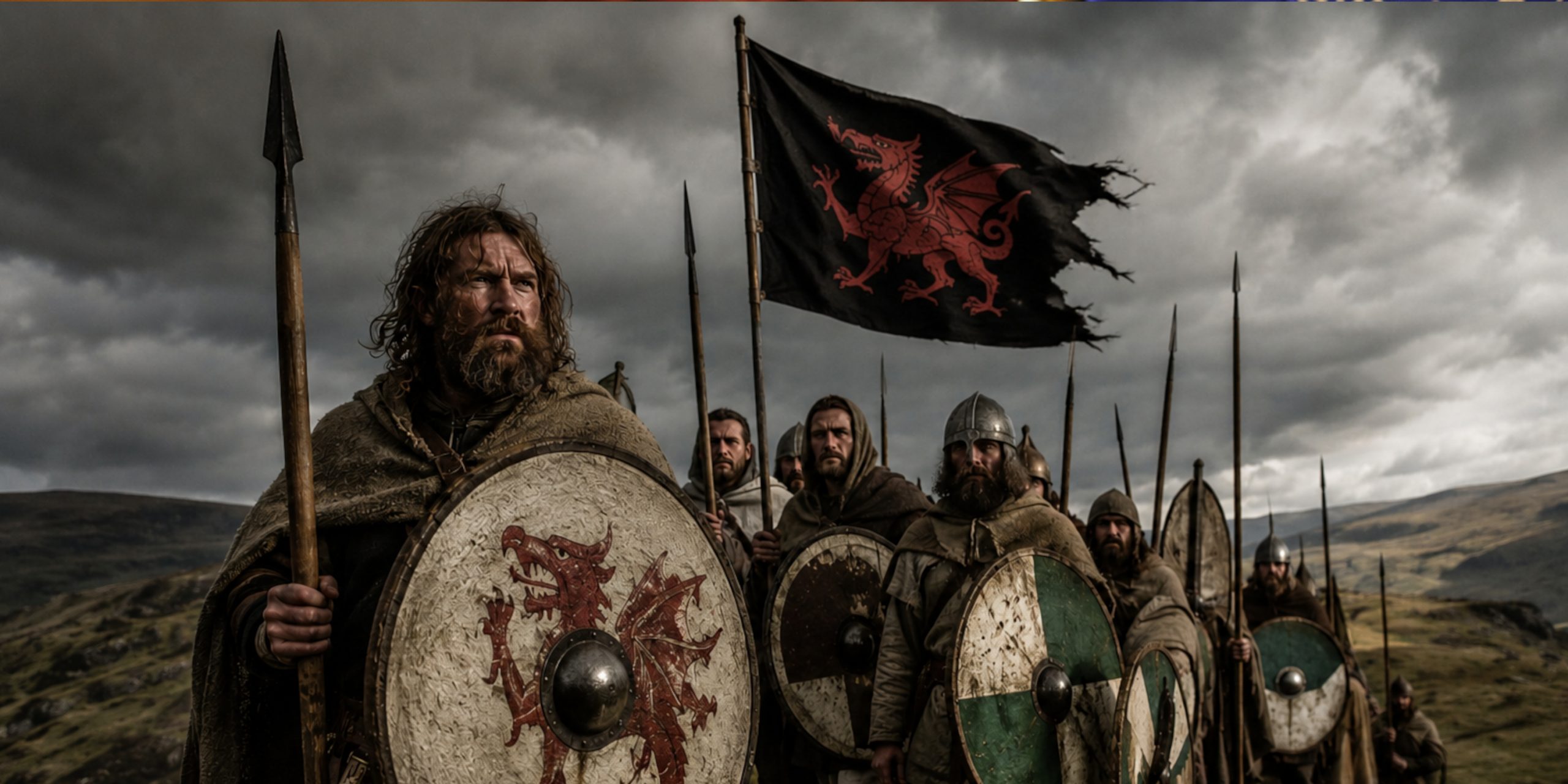
Welsh spearmen formed the backbone of many native armies.
They were not usually designed to stand in dense formations like later Swiss pikemen. Their warfare was more flexible, favouring ambushes, rapid attacks and exploiting terrain.
Main Roles
| Role | Purpose |
|---|---|
| Ambush warfare | Attacking enemies in forests, valleys and mountain routes |
| Defensive fighting | Holding difficult ground against cavalry |
| Raiding | Fast attacks against settlements, supply lines and camps |
| Supporting archers | Protecting missile troops from enemy advances |
Against heavily armoured opponents, Welsh infantry often avoided direct open-field confrontations where cavalry had the advantage. A knight was terrifying on good ground, less impressive when his horse was struggling through a Welsh hillside in miserable weather.
Welsh Archers And The Rise Of The Longbow
The Welsh association with the longbow became famous during this period.
The longbow was not invented in Wales, but Welsh archers played a significant role in its military development. English commanders recognised the effectiveness of Welsh bowmen and increasingly recruited them.
Welsh bows were typically:
- Made from woods such as elm or yew when available
- Tall, powerful self bows
- Capable of firing heavy arrows
- Effective against lightly armoured troops and horses
A famous account from Gerald of Wales in the late 12th century described Welsh arrows penetrating armour and even striking through an oak door during fighting near Abergavenny. Medieval writers loved dramatic examples, so some caution is needed, but the reputation of Welsh archery was clearly established.
By the 14th century, the longbow had become one of England’s most feared weapons.
Welsh archers contributed to English victories including:
Arms And Armour Of Welsh Spearmen And Archers
Welsh soldiers varied greatly in equipment. Wealthier warriors could possess high-quality armour, while poorer fighters carried practical weapons suited to harsh conditions.
Spears And Polearms
The spear was the defining weapon of Welsh infantry.
Common types included:
Welsh Spear
A simple but highly effective weapon.
Typical features:
- Ash wooden shaft
- Iron spearhead
- Around 1.8 to 2.5 metres in length
- Useful for thrusting and throwing depending on design
The spear remained popular because it was cheap, reliable and deadly. Medieval warfare had many glamorous weapons, but the humble spear did most of the hard work.
Glaives And Long-Handled Blades
Some Welsh fighters used polearms with cutting blades.
Features:
- Long wooden haft
- Single-edged blade
- Effective against infantry
- Could threaten horses and lightly protected opponents
Welsh Swords And Sidearms
Swords were less common among ordinary Welsh infantry because they were expensive, but they were used by nobles, professional soldiers and wealthier warriors.
Specific sword types included:
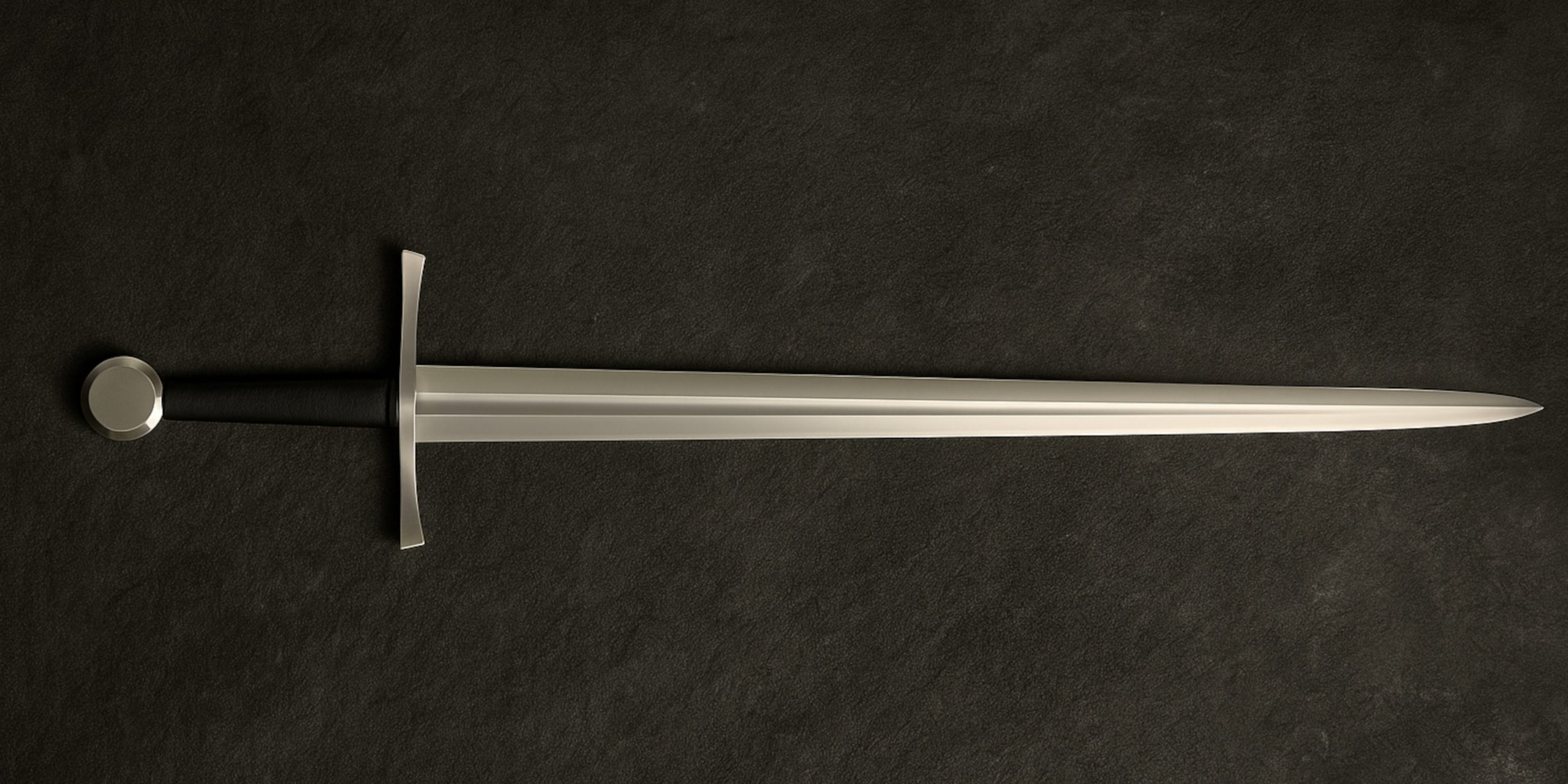
Arming Sword
The classic knightly sword of the 13th and 14th centuries.
Features:
- Straight double-edged blade
- Single-handed grip
- Cruciform guard
- Designed for cutting and thrusting
Welsh nobles and men serving in professional armies could carry these alongside shields.
Type XII And Type XIV Medieval Swords
Using the Oakeshott classification, examples from this period commonly included:
Type XII Sword
- Popular during the 13th century
- Broad cutting blade
- Fuller running along much of the blade
- Effective against mail-armoured opponents
Type XIV Sword
- Common from the late 13th into 14th century
- Shorter, wider blade
- Stronger point for thrusting
- Better suited to changing armour technology
Falchion
The falchion was a single-edged sword with strong cutting power.
Features:
- Broad chopping blade
- One-handed use
- Useful against lightly armoured opponents
It was a practical weapon rather than the fantasy cleaver often shown in modern games.
Long Knife And Dagger
Many Welsh soldiers carried blades such as:
- Utility knives
- Fighting knives
- Ballock daggers (increasingly common during the 14th century)
These were essential tools as well as weapons.
Armour And Protection
Welsh warriors generally wore lighter protection than wealthy English or French troops.
Common equipment included:
Padded Armour (Gambeson)
The most accessible defence.
Benefits:
- Affordable
- Absorbed blows
- Provided some protection against cuts
Mail Armour
Used by wealthier fighters.
Included:
- Mail shirts
- Mail coifs
- Reinforced protection beneath helmets
Helmets
Common types:
Kettle Hat
- Wide brim
- Excellent visibility
- Popular among infantry
Skull Cap And Iron Helm
Simpler helmets were widely used by foot soldiers.
Shields
Earlier Welsh warriors frequently used shields, although their importance reduced as two-handed weapons and archery roles developed.
Welsh Warriors In English Service
After the conquest of Wales, English kings increasingly recruited Welsh troops.
Edward I valued them during campaigns in Scotland. Their mobility complemented heavier English forces.
At Falkirk in 1298, archers played a crucial role in defeating Scottish formations. The combination of missile troops and cavalry demonstrated a tactical shift that would influence later battles.
By the Hundred Years’ War, Welsh soldiers were part of English expeditionary armies fighting in France. Their contribution became linked with the rise of English longbow tactics.
Archaeology And Surviving Evidence
Archaeology gives a more realistic picture of Welsh warfare than romantic legends.
Important evidence comes from:
Welsh Castles And Battle Sites
Excavations around castles built and contested during the Edwardian conquest provide evidence of military life.
Examples include:
- Castell y Bere
- Dolforwyn Castle
- Criccieth Castle
- Harlech Castle
Finds include:
- Arrowheads
- Spearheads
- Knife blades
- Armour fragments
- Military fittings
Longbow Evidence
Complete medieval bows rarely survive because wood decays, but finds from later periods help historians understand construction methods.
The famous Tudor bows recovered from the Mary Rose show the later development of the military longbow tradition that grew from earlier medieval practices.
Archaeological arrowheads from medieval Wales and England show a range of designs:
- Broadheads for hunting and unarmoured targets
- Narrow bodkin-style heads associated with armour penetration
Contemporary Accounts And Quotes
Medieval writers provide valuable descriptions, although they often mixed observation with exaggeration.
Gerald of Wales wrote about the power of Welsh archery:
“The arrows penetrated an oak door… almost as if they had been shot through butter.”
His accounts helped establish the reputation of Welsh bowmen.
The Lanercost Chronicle, describing warfare in Britain, frequently presented Welsh troops as fast-moving and dangerous opponents, particularly in difficult terrain.
Edward I’s recruitment of Welsh soldiers after conquest also reveals a practical truth. Medieval kings did not hire troops because they admired them culturally. They hired them because they worked.
Strengths And Weaknesses
Strengths
- Excellent mobility
- Skilled in rough terrain
- Strong missile capability
- Effective raiding tactics
- Adaptable soldiers
Weaknesses
- Limited heavy armour
- Vulnerable on open ground against cavalry
- Less effective in prolonged formation combat
- Dependent on terrain advantages
Legacy Of Welsh Spearmen And Archers
The Welsh warriors of the 13th and 14th centuries represent a major transition in medieval warfare.
They came from a military culture where survival mattered more than ceremony. Their methods challenged the dominance of elite cavalry and helped shape the infantry-focused warfare of the later Middle Ages.
The spearman holding a mountain path and the archer releasing arrows into an advancing army may not have looked as impressive as a knight in polished armour, but history has a habit of remembering the people who changed battles rather than those who simply looked expensive.
Welsh soldiers proved that discipline, terrain and the right weapon could compete with wealth and status. It was a lesson medieval Europe would learn repeatedly.