The Warriors Who Fought Ireland’s Wars From the Shadows
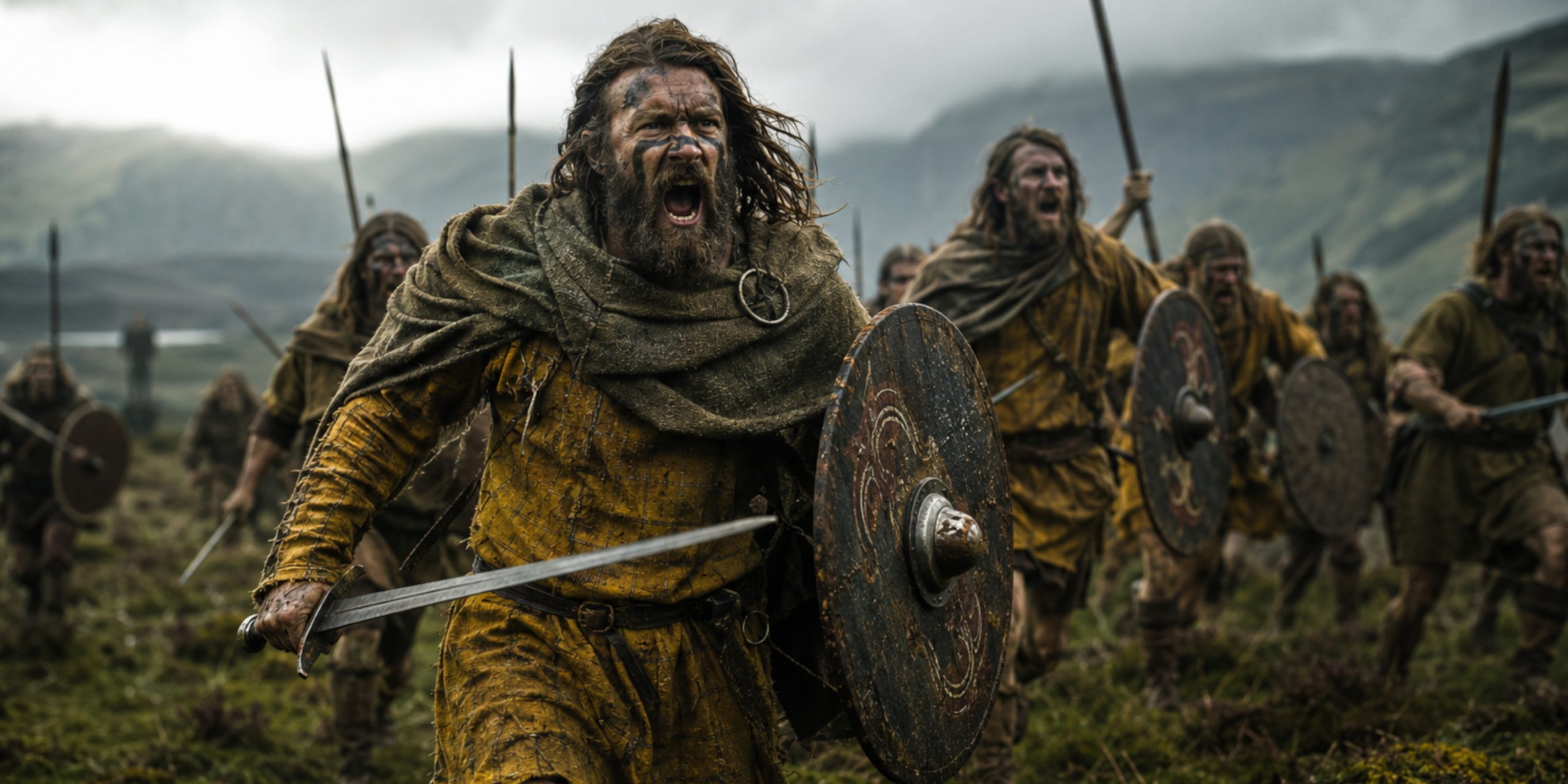
The Irish Kern was one of the most recognisable soldiers of medieval Gaelic warfare. Lightly armed, quick-moving and perfectly adapted to Ireland’s difficult landscape, Kerns fought across centuries of clan warfare, Anglo-Irish conflicts and Tudor campaigns.
To an armoured knight used to open battlefields and organised formations, a Kern could look dangerously under-equipped. No shining plate armour. No towering warhorse. No expensive tournament weaponry. Then the fighting started, and many outsiders quickly discovered that chasing a Kern through Irish woodland, bogs and hills was a spectacularly bad life choice.
Between the 13th and 16th centuries, these warriors served as scouts, raiders, skirmishers and battlefield troops. They lacked the prestige of the heavier Gallóglaigh mercenaries, but they formed the backbone of many Gaelic armies.
Who Were the Irish Kerns?
The word Kern comes from the Irish ceithern, meaning a band of fighting men. In medieval sources, the term generally referred to lightly equipped Gaelic infantry.
Unlike professional Gallóglaigh warriors, who were heavily armed soldiers of Norse-Gaelic origin, Kerns were usually local fighters raised by Irish lords.
They were commonly used for:
- Ambush warfare
- Scouting enemy movements
- Cattle raids
- Harassing supply lines
- Screening larger armies
- Supporting heavier infantry
Their strength came from speed and knowledge of terrain. Ireland’s forests, rivers and boglands rewarded mobility far more than the slow advance of heavily armoured troops.
Historical Background: Ireland Between Two Worlds
From the 13th century onwards, Ireland was a contested military landscape.
After the Anglo-Norman invasion of the late 12th century, Gaelic Irish kingdoms, Norman settlers and later English Tudor forces competed for power.
Kerns fought in:
- Gaelic clan conflicts
- Wars against Anglo-Norman lords
- The Bruce invasion of Ireland (1315 to 1318)
- The Fitzgerald rebellions
- The Nine Years’ War (1594 to 1603)
By the late medieval period, Irish warfare had developed a distinctive style. Instead of copying continental European armies built around cavalry charges and dense infantry formations, Gaelic forces relied heavily on speed, raids and local advantage.
A Kern was not designed to hold a battlefield like a Swiss pikeman. He was designed to make sure the enemy never comfortably reached one.
Appearance and Clothing
Contemporary descriptions often focused on the unusual appearance of Irish soldiers.
Kerns were commonly associated with:
- Léine: A long linen tunic, often dyed saffron yellow
- Brat: A woollen cloak used for warmth and protection
- Bare legs or simple footwear
- Long hairstyles described by outsiders as distinctive or wild
English writers frequently criticised their clothing, partly because it represented a separate Gaelic identity that Tudor authorities wanted to suppress.
The famous 16th-century images by artist Lucas de Heere show Irish soldiers wearing flowing garments while carrying weapons, giving us one of the strongest visual references for late medieval Kerns.
Arms and Armour of Irish Kerns
Irish Kerns valued weapons that suited fast movement. Carrying too much equipment defeated the entire purpose of their style of fighting.
Swords Used by Irish Kerns
Although spears and missiles were more common, swords were important personal weapons.
Irish Ring-Pommel Sword
One of the most distinctive medieval Irish swords.
Features:
- Circular open-ring pommel
- Straight double-edged blade
- One-handed design
- Used from roughly the 13th to 16th centuries
The ring-pommel sword became strongly associated with Gaelic warriors and appears in surviving examples and artistic sources.
Medieval Arming Sword
Many Kerns also used European-style swords obtained through trade, inheritance or capture.
Typical features:
- Double-edged blade
- Cruciform guard
- Designed for cutting and thrusting
- Effective against lightly armoured opponents
Baselard and Short Swords
Some Irish fighters carried shorter blades influenced by wider European styles.
Advantages:
- Easier to carry during raids
- Practical in close combat
- Less expensive than elite swords
For a Kern moving quickly across rough ground, a reliable sidearm mattered more than an impressive display weapon.
Spears, Javelins and Missile Weapons
The most iconic Kern weapons were throwing weapons.
Common arms included:
Javelins (Darts)
Known in Irish contexts as throwing spears or darts, these were among their favourite weapons.
They allowed Kerns to:
- Attack from distance
- Disrupt formations
- Withdraw before retaliation
English accounts repeatedly mention Irish troops throwing darts before closing or retreating.
Spears
Longer fighting spears were also used for close combat. They were cheap, effective and suited warriors who could not afford expensive equipment.
Bows
Irish archery existed, although it never reached the same cultural importance as the English longbow tradition.
Armour and Protection
Most Kerns wore little or no metal armour.
Possible protection included:
- Thick clothing
- Padded garments
- Leather protection
- Occasional helmets or captured armour
This was not because Irish warriors misunderstood armour. Armour was expensive, and heavy equipment reduced their greatest advantage, movement.
Their heavier counterparts, the Gallóglaigh, wore mail and helmets. The Kern’s defence was often simply not being where the enemy expected him to be.
Battlefield Tactics
Kerns specialised in irregular warfare.
Their typical approach involved:
- Approaching quickly through difficult terrain
- Launching missiles at the enemy
- Avoiding prolonged combat against heavier forces
- Drawing opponents into disadvantageous positions
They excelled at what modern observers would recognise as guerrilla-style warfare.
Against cavalry and heavily equipped soldiers, this could be extremely frustrating. A knight could spend a fortune on armour, weapons and horses only to discover his opponent had disappeared into a bog with his cattle.
Famous Battles and Campaigns Involving Kerns
Battle of Dysert O’Dea (1318)
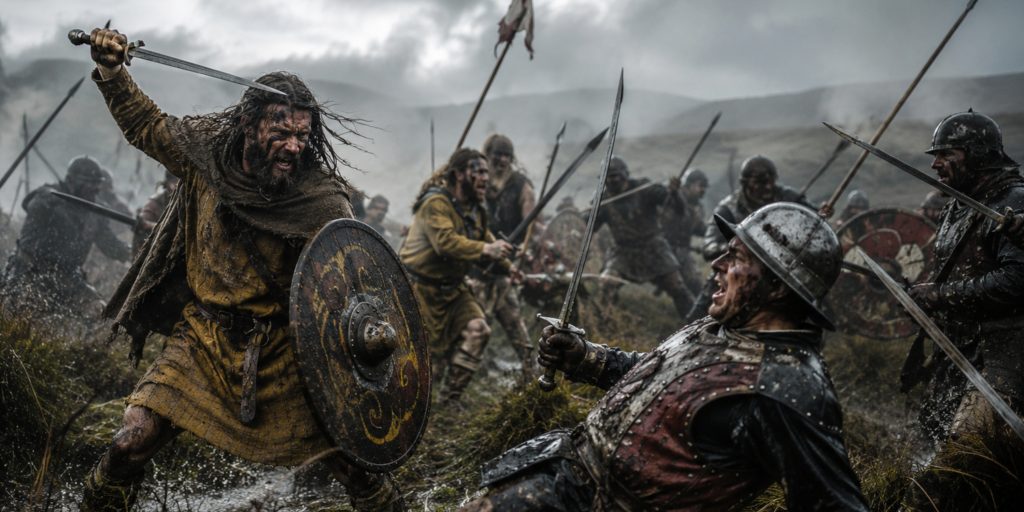
Irish forces under Conor O’Brien defeated Anglo-Norman forces led by Richard de Clare.
Kerns played an important role in the type of mobile warfare that allowed Gaelic armies to challenge better-equipped opponents.
Bruce Campaign in Ireland (1315 to 1318)
During Edward Bruce’s attempt to become King of Ireland, Gaelic troops including Kerns fought alongside and against Scottish forces.
Tudor Conquest of Ireland
During the 16th century, Kerns became a constant problem for English commanders.
They participated in conflicts including:
- Desmond Rebellions
- Nine Years’ War
- Regional Gaelic resistance campaigns
However, the increasing use of firearms, larger professional armies and changing military organisation eventually reduced their battlefield role.
Archaeology and Surviving Evidence
The study of Irish Kerns relies on a mixture of archaeology, manuscripts, artwork and surviving weapons.
Important evidence includes:
Surviving Irish Swords
Examples of medieval Irish swords, especially ring-pommel designs, survive in museum collections.
They reveal:
- Skilled metalworking traditions
- Connections with wider European sword styles
- Distinctive Gaelic preferences
The Galloglass and Kern Tomb Effigies
Late medieval Irish grave monuments provide valuable images of Gaelic warriors.
They often show:
- Helmets
- Swords
- Mail armour
- Axes
- Clothing styles
Although many represent wealthier warriors, they provide clues about military culture.
Battlefield Archaeology
Irish medieval battlefields are difficult to study because lighter equipment leaves fewer traces than heavily armoured warfare.
Finds include:
- Sword fragments
- Spearheads
- Arrowheads
- Defensive structures
- Fortifications linked to Gaelic lordships
The archaeology tells a familiar story. The Kern travelled light in life and left archaeologists with the same problem centuries later.
Contemporary Accounts and Quotes
Many descriptions of Kerns come from English observers, who were often hostile but fascinated.
The Tudor writer Edmund Spenser described Irish soldiers and their traditional clothing in A View of the Present State of Ireland, criticising the mantle worn by Gaelic fighters:
“It is a fit house for an outlaw, a meet bed for a rebel.”
The comment was meant as criticism, but it accidentally highlighted one of the Kern’s greatest strengths. Their equipment was practical.
Gerald of Wales, writing earlier about Irish warfare, noted their reliance on lighter arms compared with continental soldiers:
“They use but little armour.”
English commanders regularly complained about the difficulty of fighting Irish troops who avoided conventional battles.
Decline of the Irish Kern
By the late 16th and early 17th centuries, warfare was changing.
The Kern declined because of:
- Wider adoption of firearms
- Expansion of professional armies
- English military reforms in Ireland
- Decline of independent Gaelic lordships
After the Nine Years’ War and the Flight of the Earls in 1607, the society that produced traditional Kern warriors was transformed.
The fighting style survived in memory, but the medieval Kern disappeared.
Legacy of the Irish Kern
The Irish Kern represents a different idea of the medieval warrior.
They were not the heavily armoured knights celebrated in medieval romance. They were practical fighters shaped by their environment. Their weapons, clothing and tactics reflected Ireland’s political landscape and geography.
They frustrated larger armies, survived centuries of conflict and became one of the most recognisable soldiers of Gaelic Ireland.
History tends to remember the warriors with the biggest armour and grandest weapons. The Kern is a useful reminder that sometimes the most dangerous opponent is the one travelling light enough to choose when the fight happens.