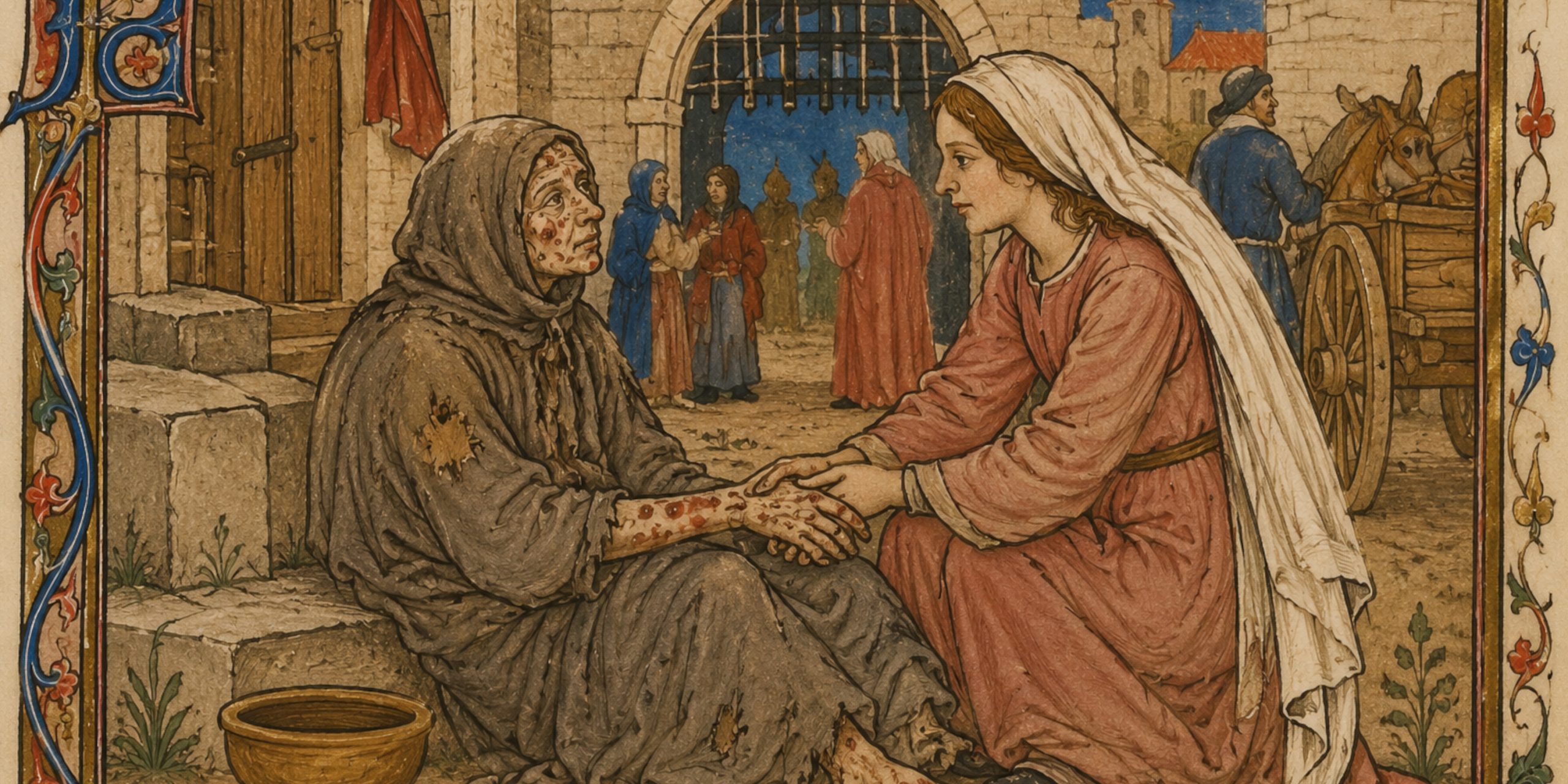
Few diseases carried the same weight in the medieval imagination as leprosy. It frightened kings, priests, peasants and physicians alike. Not simply because of its physical effects, but because medieval people believed it revealed something deeper about the soul, morality and divine judgement. That sounds terribly unfair, and frankly it was. Medieval society could be compassionate in one breath and brutally suspicious in the next.
Leprosy, known today as Hansen’s disease, became wrapped in layers of theology, fear and myth during the Middle Ages. To modern eyes, some reactions seem absurdly theatrical. Ceremonial funerals for the living. Bells attached to clothing. Public declarations of impurity. Yet the reality was far more complicated than the popular image of a lonely outcast rattling a warning clapper in the fog.
Many people with leprosy lived within communities. Some married, traded, worshipped and maintained social ties. Others entered specialised hospitals that offered shelter and care. Medieval responses ranged from cruelty to charity, often at exactly the same time. Human beings have always excelled at contradiction.
What Was Leprosy?
Leprosy is a chronic infectious disease caused by Mycobacterium leprae. It primarily affects the skin, nerves and extremities. Contrary to medieval belief, it is not highly contagious. In fact, prolonged close contact is usually required for transmission.
The medieval understanding of the disease was wildly inconsistent. Physicians borrowed ideas from ancient Greek and Roman medicine, especially Galen and Hippocrates. Some believed leprosy came from corrupted bodily humours. Others blamed heredity, poor diet, sexual activity, bad air or divine punishment.
By the High Middle Ages, the term “leprosy” covered a huge range of skin conditions. Medieval diagnosis was often unreliable. Psoriasis, eczema, lupus and fungal infections could all be labelled as leprosy. A medieval doctor examining a rash had about as much certainty as a man inspecting soup in candlelight.
The Fear Surrounding Leprosy
Leprosy occupied a strange symbolic place in Christian Europe. Biblical references strongly shaped attitudes toward sufferers. Stories from Leviticus described ritual impurity, while Christ’s healing of lepers became one of the most powerful examples of mercy and redemption.
This produced two competing reactions:
- Fear of contamination and sin
- Compassion toward the afflicted
Both existed side by side.
Leprosy became associated with moral decay, particularly pride, lust and greed. Some sermons described it as an outward sign of inward corruption. Yet caring for lepers was also viewed as a holy act capable of earning spiritual reward.
The contradiction created an uneasy atmosphere. Medieval Christians might recoil from a leper in the street while donating generously to a leper hospital the next morning. Human psychology has not evolved quite as much as we flatter ourselves into believing.
Diagnosis and Public Rituals
In some regions, suspected sufferers underwent formal examinations by clergy and physicians. These could be surprisingly elaborate affairs.
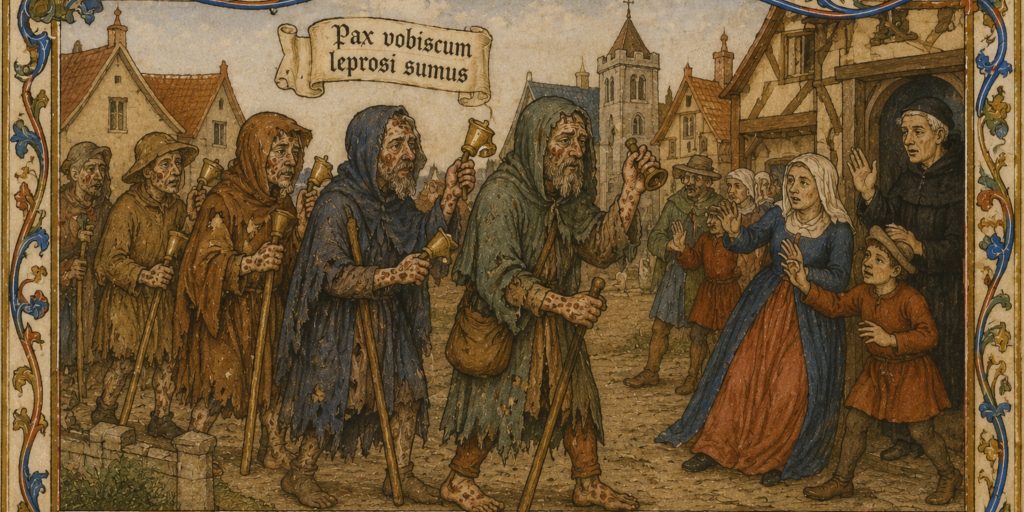
A person diagnosed with leprosy might experience rituals resembling a funeral. In parts of France and England, the afflicted individual could be symbolically declared “dead” to society. Priests sometimes sprinkled earth over them while reciting burial prayers.
Certain restrictions could follow:
- Wearing distinctive clothing
- Carrying a bell or clapper
- Avoiding marketplaces or churches
- Living outside town walls
- Restrictions on marriage or inheritance
It is important not to exaggerate how universal these practices were. Medieval Europe was not a single legal system. Enforcement varied enormously between kingdoms, towns and centuries.
Many communities ignored strict exclusion rules entirely.
Daily Life with Leprosy
For those genuinely suffering from advanced leprosy, daily life could be physically punishing.
Symptoms included:
- Skin lesions
- Loss of sensation
- Damage to fingers and toes
- Facial disfigurement
- Blindness in severe cases
- Chronic infections
One of the cruellest aspects of the disease was nerve damage. Patients often injured themselves without realising it. Burns, cuts and fractures accumulated over time. Medieval medicine had almost no effective treatment for this.
Yet people adapted remarkably well.
Archaeological evidence shows some sufferers survived for decades with extensive disability. That only happened because family members or communities cared for them. Medieval society was harsher than ours in many ways, but not uniformly heartless.
Many lepers continued to work when physically able:
- Farming
- Craftwork
- Begging under licensed protection
- Religious service
- Trade
Some even retained positions of status.
Leper Hospitals and Communities
One of the most misunderstood parts of medieval leprosy is the role of leper hospitals, often called lazar houses.
These institutions emerged across Europe from roughly the 11th century onward. England alone may have had over 300 at the height of their popularity.
Despite the name, they were not hospitals in the modern sense. They functioned more like religious communities mixed with almshouses.
Life inside varied enormously depending on wealth and management. Some were impoverished and overcrowded. Others were surprisingly comfortable.
Residents might receive:
- Food and clothing
- Religious services
- Basic medical care
- Gardens and farmland
- Private living quarters
- Legal protection
Many lazar houses sat beside roads leading into towns. This placement allowed residents to beg from travellers while remaining technically outside urban centres.
There is something deeply medieval about solving social anxiety through architecture.
Women and Leprosy
Women with leprosy faced particular vulnerabilities.
Physical disfigurement could affect marriage prospects and inheritance rights. Some women were abandoned by husbands or families. Others entered religious communities where they could receive care and protection.
Yet there are records of women maintaining authority and property despite diagnosis. Noblewomen occasionally continued to manage estates while afflicted.
Female religious orders also played a major role in caring for sufferers. Medieval nuns often provided nursing services that were far more compassionate than later stereotypes suggest.
Frankly, if medieval Europe functioned at all, it owed an enormous debt to overworked religious women quietly holding everything together.
Famous People Believed to Have Had Leprosy
King Baldwin IV of Jerusalem
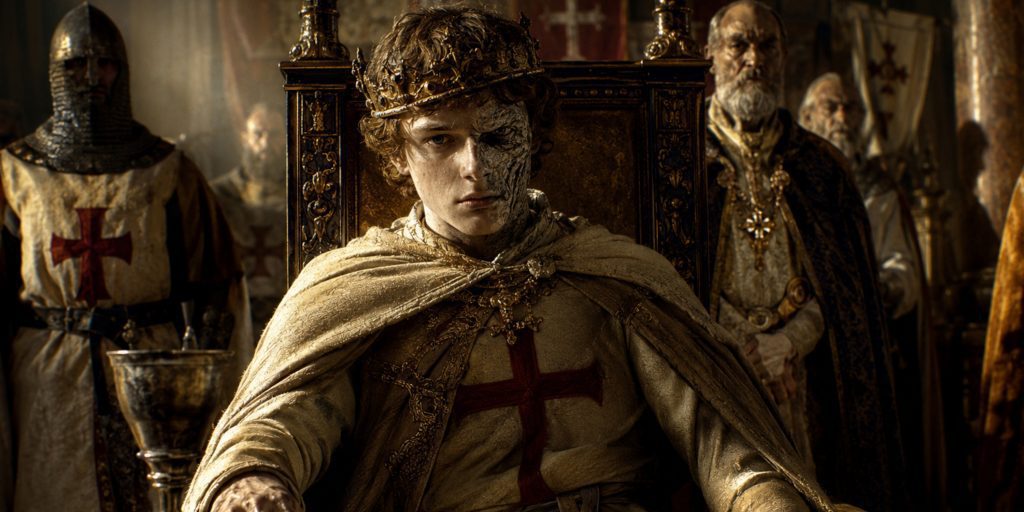
The most famous medieval leper was undoubtedly Baldwin IV of Jerusalem.
Diagnosed as a child in the 12th century, Baldwin developed progressive symptoms but still ruled the Kingdom of Jerusalem during one of its most dangerous periods.
Contemporary chronicler William of Tyre first noticed something unusual when Baldwin could not feel pain in his arm during childhood games. That loss of sensation was a classic symptom.
Despite worsening illness, Baldwin:
- Led military campaigns
- Rode on horseback
- Directed strategy against Saladin
- Maintained royal authority amid political chaos
By adulthood he was severely disabled and often unable to walk or use his hands properly. Yet he remained intellectually active and politically formidable.
His life is genuinely astonishing. Medieval politics was difficult enough without trying to command armies while your body steadily betrayed you.
Robert the Bruce

Robert the Bruce was long rumoured to have suffered from leprosy, though modern historians largely reject the diagnosis.
The story emerged partly because of later English propaganda and descriptions of illness near the end of his life. Recent analysis suggests other conditions are more likely.
Still, the persistence of the rumour shows how closely medieval societies associated visible illness with political reputation.
Emperor Constantine IX Monomachos
Constantine IX Monomachos may have suffered from a skin disease identified by some chroniclers as leprosy, though evidence remains uncertain.
Byzantine writers often used disease symbolically in political criticism, making retrospective diagnosis extremely difficult.
Medieval chroniclers were many things. Objective medical professionals were not among them.
Religion and Spiritual Meaning
Religion shaped nearly every aspect of leprosy in medieval Europe.
Lepers occupied a paradoxical spiritual role. They could be viewed as sinners suffering divine punishment, yet also as people specially connected to Christ through suffering.
Some saints deliberately embraced contact with lepers as an act of humility.
Notable examples include:
- Francis of Assisi
- Louis IX of France
Saint Francis famously described overcoming his revulsion toward lepers as a turning point in his spiritual life.
This religious framework occasionally improved treatment. Providing charity to lepers could enhance a ruler’s reputation for piety and compassion.
Of course, this did not always translate into kindness at street level. Medieval morality often looked far better in illuminated manuscripts than in crowded marketplaces.
Medieval Treatments and Medicine
There was no cure for leprosy in the medieval world.
Treatments varied from sensible hygiene advice to outright nonsense.
Common remedies included:
- Herbal salves
- Bloodletting
- Dietary restrictions
- Mineral baths
- Prayer and pilgrimage
- Ointments containing mercury or sulphur
Some physicians recommended bizarre mixtures involving animal blood or exotic ingredients. Medieval medicine occasionally reads like a wager between bored monks.
Still, not all approaches were foolish. Isolation from secondary infection, improved diet and stable shelter probably helped some patients survive longer.
Archaeology and Modern Discoveries
Modern archaeology has transformed understanding of medieval leprosy.
Excavations of leper cemeteries and hospitals in England, Denmark and elsewhere have revealed:
- Evidence of long-term care
- Survival despite severe disability
- Distinct burial practices
- Better nutrition than expected in some communities
At sites such as St Mary Magdalen in Winchester, skeletons show advanced leprosy combined with signs that sufferers were cared for over many years.
DNA analysis has also identified medieval strains of Mycobacterium leprae. Surprisingly, the disease appears genetically stable across centuries.
The bacteria changed very little. Human fear did most of the dramatic work.
Why Leprosy Declined in Europe
By the late medieval period, leprosy declined sharply across much of Europe.
Historians still debate why.
Possible reasons include:
- Improved immunity
- Competition from tuberculosis
- Changes in living conditions
- Better diagnosis separating other diseases
- Shifts in population patterns
By the 16th century, many leper hospitals had closed or been repurposed.
Ironically, just as true leprosy became rarer, European societies entered new periods of panic surrounding plague, witchcraft and heresy. Humanity rarely leaves its fear shelf empty for long.