Few medieval chroniclers have shaped modern understanding of the Crusades more than William of Tyre. Without him, the Kingdom of Jerusalem would feel far more distant, half-lost behind legends, propaganda, and the sort of heroic nonsense that medieval rulers loved commissioning when things were going badly.
William was not merely a monk copying dusty texts by candlelight. He was a statesman, diplomat, archbishop, royal tutor, and one of the sharpest observers of the Latin East. He knew kings personally, attended political councils, negotiated with emperors, and watched the Crusader States slide from confidence into deep anxiety.
Most importantly, he wrote it all down.
His great work, usually known as the Historia rerum in partibus transmarinis gestarum or History of Deeds Done Beyond the Sea, remains one of the essential sources for the Crusades. It is detailed, intelligent, occasionally biased, and often unexpectedly human. William admired courage but had little patience for stupidity, which makes him feel surprisingly modern at times.
Who Was William of Tyre?
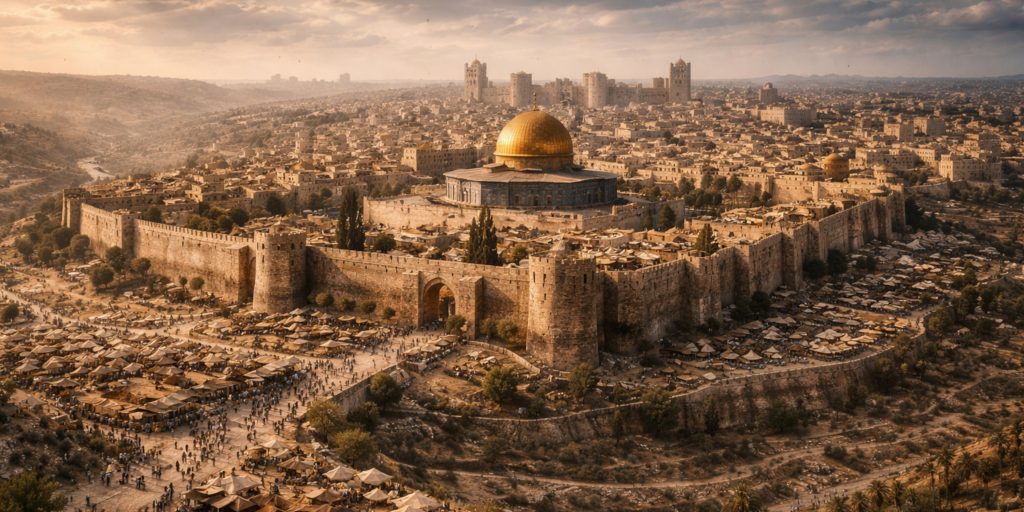
William was born around 1130 in the Kingdom of Jerusalem, probably in the city itself. That alone made him unusual. Many leading figures in the Crusader States were recent arrivals from Europe, but William belonged to the first generation truly born in Outremer.
He grew up in a world where French, Latin, Greek, Arabic, and Armenian cultures collided daily. Markets in Jerusalem could contain pilgrims from England, Syrian Christians, Italian merchants, and Turkish envoys all within shouting distance of each other. Medieval diplomacy often resembled an exhausted argument conducted in six languages over watered wine.
William received an exceptional education. Around the 1140s he travelled to Europe and studied in Paris, Bologna, and probably Orléans. He learned theology, law, rhetoric, and classical literature. By the standards of the age, he was extraordinarily well educated, closer to a university intellectual than a frontier churchman.
When he returned to Jerusalem, he quickly entered royal service.
William and the Kings of Jerusalem
William became closely tied to the royal court of Amalric I of Jerusalem. The king recognised his intelligence and administrative skill, appointing him to important diplomatic and ecclesiastical positions.
At one stage, William was sent to Constantinople to negotiate with the Byzantine Empire, a task requiring tact, patience, and a tolerance for imperial ceremony that probably tested every nerve in his body.
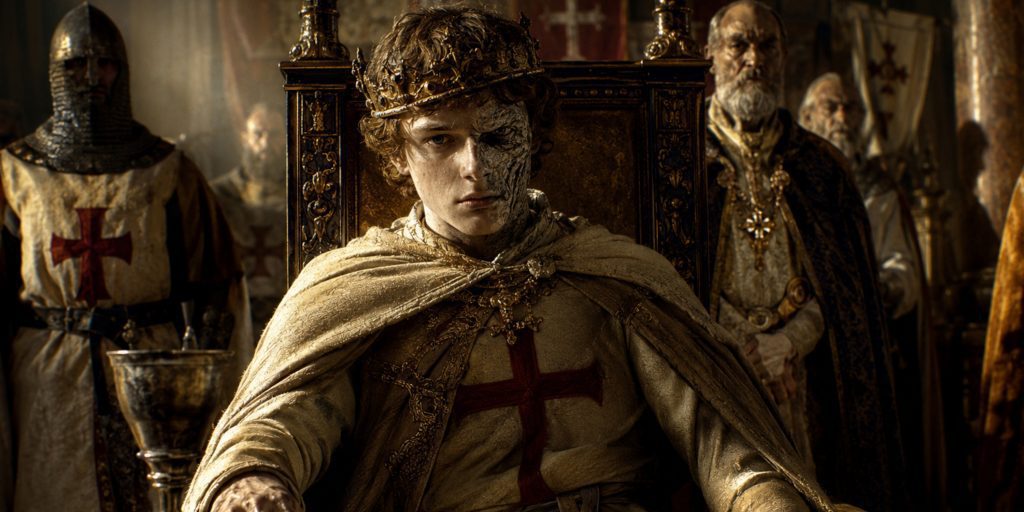
Later, William became tutor to the young Baldwin IV of Jerusalem.
This placed him near the centre of one of the most tragic stories in Crusader history.
William famously described discovering the prince’s illness while observing the boys at play. Baldwin showed no reaction when pinched or injured, revealing the early symptoms of leprosy.
William wrote:
“He endured the pinches of his companions with excessive patience.”
It is one of the most haunting lines in medieval history. Quiet, restrained, and devastating.
Unlike many chroniclers, William rarely overdramatized events. He understood that simple details often carried greater weight than theatrical speeches.
Archbishop of Tyre
In 1175, William became Archbishop of Tyre, one of the most prestigious church positions in the Latin East.
Tyre itself was one of the wealthiest and most important cities in the Crusader States. It functioned as a major port, commercial hub, and defensive stronghold. Whoever controlled Tyre controlled an artery of trade and communication.
William’s role was not purely religious. Medieval bishops were political operators as much as spiritual leaders. He dealt with diplomacy, royal succession disputes, alliances, and the endless rivalries between noble factions.
The Kingdom of Jerusalem by this point was under growing pressure from the rising power of Saladin. William understood the danger clearly, perhaps more clearly than many of the nobles around him.
He watched factional politics weaken the kingdom at exactly the wrong moment.
Historians often read frustration between the lines of his writing. One gets the impression that William occasionally wanted to lock several crusader barons in separate towers until they learned basic common sense.
The Great Chronicle
William’s masterpiece remains his history of the Crusades and the Latin East.
Formally titled the Historia rerum in partibus transmarinis gestarum, it covered events from the rise of Islam through the First Crusade and into William’s own lifetime.
Unlike earlier crusading chronicles, William had access to royal archives, eyewitnesses, diplomatic records, and personal experience. In many cases, he personally knew the people he described.
His writing style was sophisticated by medieval standards. He borrowed heavily from Roman historians such as Livy and Tacitus, trying to create not merely a religious narrative but a serious political history.
That ambition mattered.
William did not present the Crusades as a simple tale of holy warriors defeating evil enemies. He recognised complexity, political failures, corruption, greed, and poor leadership within the Crusader States themselves.
He could also admire opponents.
Of Saladin, he wrote:
“A man of vigorous mind, valiant in war, and generous beyond measure.”
That was not the sort of description many medieval propagandists would have tolerated comfortably.
William’s View of the Crusader States
William loved the Kingdom of Jerusalem, but he was not blind to its flaws.
His history reveals a state increasingly divided by internal rivalries. Noble factions competed for influence while external threats intensified. The military orders argued with the crown, local barons feuded constantly, and succession crises weakened royal authority.
In some passages, William sounds less like a triumphalist crusader and more like a worried civil servant watching the roof catch fire while everyone debates who owns the bucket.
He particularly disliked reckless figures whose personal ambition endangered the kingdom. His criticisms of certain nobles are subtle but unmistakable.
Modern historians value this enormously because it gives his work texture and credibility. William was biased, certainly, but he was not blindly partisan.
Contemporary Quotes About William
Several later writers recognised William’s remarkable intellect and literary ability.
The chronicler Jacques de Vitry praised the learning of earlier historians from the Latin East, with William standing foremost among them.
William himself wrote with memorable clarity. Some of his observations remain striking centuries later.
On the fragility of fortune:
“Nothing in human affairs is stable.”
On political ambition and instability:
“Envy is the mother of hatred.”
On the dangers facing Jerusalem:
“The realm was weakened by internal dissensions.”
These lines carry a sober realism rarely associated with popular images of the Crusades.
William and Saladin’s Age
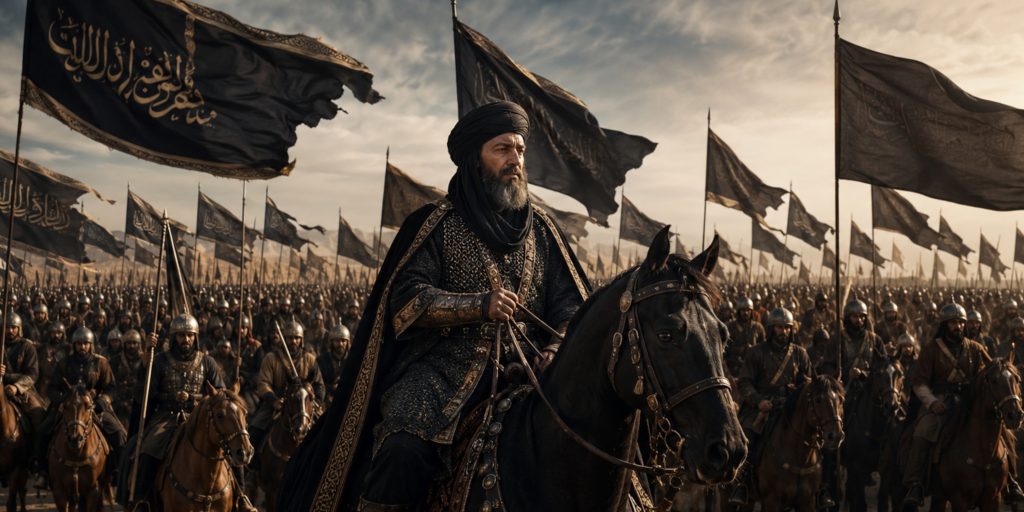
William lived during the transformation of the Near East under Saladin’s leadership.
He witnessed the gradual consolidation of Muslim power under the Ayyubids and recognised that the Crusader States faced an opponent far more capable than many previous rivals.
Importantly, William died before the catastrophic Battle of Hattin in 1187 and the fall of Jerusalem later that year. Had he lived to record those events, his account would likely have been one of the greatest historical narratives of the Middle Ages.
Instead, his chronicle ends just before disaster overtook the kingdom he had spent his life serving.
There is something painfully fitting about that.
Was William of Tyre Reliable?
By medieval standards, William was remarkably reliable.
He checked sources, compared accounts, and attempted chronological accuracy. He cared deeply about evidence and frequently acknowledged uncertainty when details were unclear.
That said, he remained a product of his age.
He had political loyalties, personal rivalries, and strong opinions. His hostility toward certain court factions occasionally colours his narrative. He also viewed events through the perspective of a Latin Christian churchman.
Still, compared with many medieval chroniclers, William stands out as measured, analytical, and intellectually serious.
Modern historians continue to rely heavily upon him.
Without William, understanding the internal politics of the Kingdom of Jerusalem would be vastly harder. Entire personalities, disputes, and diplomatic manoeuvres would vanish into silence.
Legacy of William of Tyre
Historia rerum in partibus transmarinis gestarum became one of the foundational texts for later medieval histories of the Crusades.
It was translated into Old French and circulated widely across Europe. Later chroniclers borrowed heavily from it, sometimes without much embarrassment. Medieval writers could be wonderfully casual about intellectual property when convenient.
Today, William remains indispensable to scholars studying the Crusader States.
He matters not simply because he recorded events, but because he understood the tragedy unfolding around him. His writing captures a kingdom at its cultural height and political breaking point.
He saw brilliance, courage, vanity, greed, devotion, and looming catastrophe all tangled together inside the fragile world of crusader Jerusalem.
That is precisely why his work still feels alive.
The Seven Swords Takeaway
William of Tyre was more than a chronicler of the Crusades. He was one of the medieval world’s finest historians.
Educated, politically connected, intellectually curious, and unusually perceptive, he left behind a portrait of the Crusader States unmatched in depth and humanity.
His Jerusalem was not a mythic realm of flawless knights and holy certainty. It was a complicated frontier kingdom filled with ambition, fear, cultural exchange, and political miscalculation.
In other words, it was a very human place.
And William understood humans rather well.