The best samurai films can make a duel feel unbearably tense before anyone draws a sword. A glance, a shifting foot, someone being suspiciously polite: suddenly, a courtyard becomes the most stressful place imaginable.
But swordplay is only part of the appeal. These films ask uncomfortable questions about loyalty, class, violence and who benefits when everyone keeps talking about honour. Some celebrate courage. Others examine the institutions demanding it, usually with considerably less enthusiasm.
Seven Samurai takes the top spot here for its combination of character, action and emotional weight. Harakiri comes closest to displacing it, while Yojimbo is my strongest recommendation for newcomers.
This ranking weighs filmmaking, performances, thematic depth, action and lasting influence. It is an editorial judgement, rather than a league table assembled from review scores. Individual films are ranked separately, and the selection includes a few closely related swordplay films whose protagonists sit outside the samurai class.
The Best Samurai Films at a Glance
| Rank | Film | Director | Best for |
|---|---|---|---|
| 1 | Seven Samurai (1954) | Akira Kurosawa | The complete samurai epic |
| 2 | Harakiri (1962) | Masaki Kobayashi | Moral tension and devastating drama |
| 3 | Ran (1985) | Akira Kurosawa | Warfare, tragedy and visual scale |
| 4 | Yojimbo (1961) | Akira Kurosawa | Dark humour and a brilliant leading performance |
| 5 | Throne of Blood (1957) | Akira Kurosawa | Atmosphere and supernatural dread |
| 6 | 13 Assassins (2010) | Takashi Miike | Sustained, brutal action |
| 7 | The Twilight Samurai (2002) | Yoji Yamada | Family life and intimate storytelling |
| 8 | Samurai Rebellion (1967) | Masaki Kobayashi | Defiance against abusive authority |
| 9 | The Hidden Fortress (1958) | Akira Kurosawa | Adventure and comic friction |
| 10 | The Sword of Doom (1966) | Kihachi Okamoto | A disturbing study of violence |
| 11 | Zatoichi (2003) | Takeshi Kitano | Playful, unconventional swordplay |
| 12 | Rurouni Kenshin (2012) | Keishi Otomo | Fast, stylised modern action |
The countdown below keeps major endings unspoiled.
12. Rurouni Kenshin (2012)
Director: Keishi Otomo
Best for: Viewers approaching samurai cinema through anime, manga or action games.
A former assassin tries to build a peaceful life while carrying the skills, and consequences, of his violent past.
What earns Rurouni Kenshin a place here is its physical energy. The fights move through rooms, streets and changing levels rather than settling into a repetitive exchange of blows. Kenshin’s speed also creates an interesting problem: how do you make an exceptionally capable swordsman vulnerable? The film’s answer lies partly in his refusal to kill.
The heightened performances and melodrama will not work for everyone. It also belongs to a different register from the restrained dramas higher up this list. Still, its commitment to movement and readable action makes it a lively gateway into Japanese sword cinema.
Why it ranks here: Excellent action, though its dramatic complexity is less consistent than that of the films above it.
11. Zatoichi (2003)
Director: Takeshi Kitano
Best for: Anyone who likes their swordplay mixed with odd humour and formal surprises.
Kitano’s interpretation of the blind swordsman moves between sudden violence, comedy and musical playfulness. Zatoichi is not a samurai by social status, but his adventures belong firmly within the wider tradition of Japanese swordplay cinema. Kitano takes on a character long associated with Shintaro Katsu’s earlier films.
The appeal is partly rhythmic. A confrontation can end almost before you have processed its beginning, while apparently incidental sounds and movements become part of the film’s design.
Its digital blood effects can look conspicuous, and the tonal shifts may frustrate viewers expecting a straightforward revenge story. I rather like its willingness to be strange. A genre containing this many solemn men deserves the occasional disruption.
Why it ranks here: Inventive and entertaining, though less emotionally substantial than the strongest entries.
10. The Sword of Doom (1966)
Director: Kihachi Okamoto
Best for: Viewers interested in a protagonist whose swordsmanship offers no moral reassurance.
Ryunosuke, played by Tatsuya Nakadai, is a gifted swordsman whose behaviour makes that gift increasingly horrifying. The film follows violence without granting its central figure an easy path towards redemption.
What unsettles me most is the gap between technical control and emotional emptiness. We are accustomed to films presenting mastery as evidence of discipline or wisdom. Here, being exceptionally good with a sword tells us very little about whether someone should be trusted with one.
The narrative can feel fragmented, and its abrupt ending will leave some viewers dissatisfied. Those weaknesses matter, even if the final stretch has a feverish force that is difficult to shake.
Why it ranks here: A remarkable portrait of destructive skill, held back by an unresolved narrative.
9. The Hidden Fortress (1958)
Director: Akira Kurosawa
Best for: Adventure, unlikely alliances and a less forbidding introduction to classic Japanese cinema.
A general and a princess attempt to cross dangerous territory with two peasants whose enthusiasm for money exceeds their enthusiasm for almost everything else.
The mixture of suspense and petty squabbling gives The Hidden Fortress its distinctive charm. Its characters do not all experience the adventure with equal dignity, which makes the journey more entertaining.
The film’s influence on Star Wars is well documented, particularly its use of low-status characters as an entry point into a larger conflict. But it deserves attention as a film in its own right, rather than merely as something George Lucas watched.
Why it ranks here: Superb adventure filmmaking, although its emotional reach is narrower than Kurosawa’s greatest tragedies.
8. Samurai Rebellion (1967)
Director: Masaki Kobayashi
Best for: A carefully built drama about the moment obedience becomes intolerable.
Toshiro Mifune plays a man whose household is subjected to the demands of an authoritarian lord. As those demands become increasingly invasive, family loyalty collides with the obligation to obey.
Kobayashi gives domestic decisions the weight other directors reserve for military campaigns. Who can marry, who must leave and whose feelings count become questions of power.
Mifune’s restraint is crucial. The performance allows frustration to accumulate, so that resistance feels earned rather than announced for dramatic convenience.
Its deliberate pace asks for patience. Give it that patience and the eventual violence carries an emotional charge that more frantic films struggle to achieve.
Why it ranks here: One of the genre’s strongest examinations of authority entering the home.
7. The Twilight Samurai (2002)
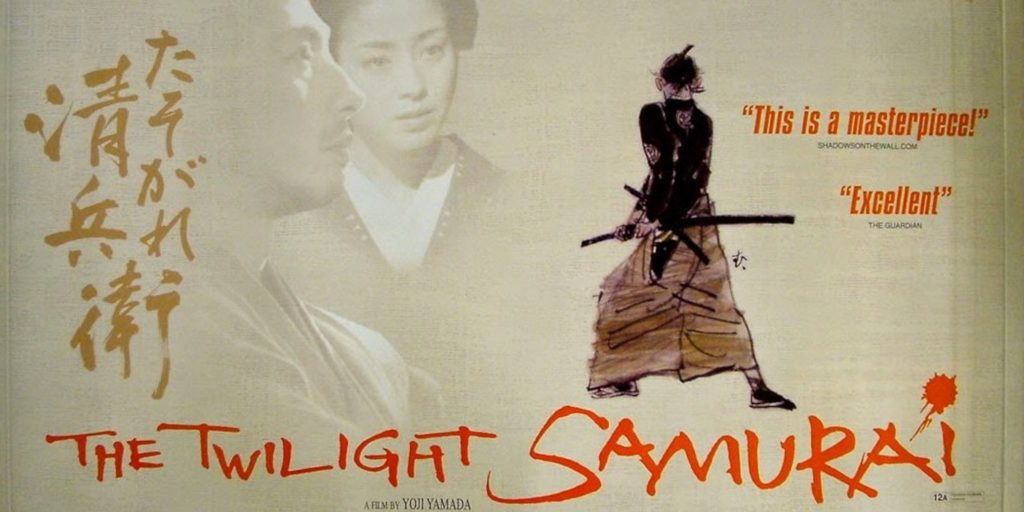
Director: Yoji Yamada
Best for: Viewers who want to understand the person carrying the sword.
Seibei, played by Hiroyuki Sanada, is a low-ranking samurai with family responsibilities and limited money. His daily life gives the film its centre of gravity.
I find its attention to ordinary pressures particularly persuasive. Caring for relatives and keeping a household functioning do not become less demanding because someone owns a sword. Seibei’s obligations make his vulnerability tangible.
The action is sparse, which may disappoint viewers looking for a succession of duels. That scarcity is also why the confrontations matter: violence interrupts a life we have been allowed to understand.
The film received an Academy Award nomination for best foreign-language film.
Why it ranks here: An unusually humane samurai drama, with a central performance that rewards close attention.
6. 13 Assassins (2010)

Director: Takashi Miike
Best for: A large-scale confrontation built around preparation, terrain and escalating desperation.
Miike’s remake of Eiichi Kudo’s 1963 film follows a group assembled to kill a cruel lord before his power increases further.
The early sections establish why the mission matters. The later action then converts planning into a prolonged struggle where advantages gradually disappear.
What makes the fighting compelling is its changing shape. Traps, confined spaces and exhaustion give the battle a progression beyond simply adding more opponents. By the end, the characters’ physical deterioration becomes part of the drama.
The villain is less psychologically interesting than the antagonists in several films above it, and some assassins receive limited development. Nevertheless, the action earns its scale.
Why it ranks here: Among the strongest modern samurai action films, though its characterisation is uneven.
5. Throne of Blood (1957)
Director: Akira Kurosawa
Best for: Anyone who prefers dread to heroic reassurance.
Kurosawa relocates Macbeth to a Japanese warrior setting, drawing on Noh theatre to shape the performances and atmosphere.
The result feels enclosed even when its characters ride through open country. Fog obscures routes, rooms become oppressive, and ambition gradually narrows the possibilities available to Washizu, played by Mifune.
The supernatural elements are especially effective because they do not make the human choices less troubling. A prophecy offers temptation; people still decide what to do with it.
Its stylised acting may require adjustment if you expect naturalistic dialogue. Once its rhythm settles, however, the stillness becomes extraordinarily tense.
Why it ranks here: Few films make political ambition feel so physically poisonous.
4. Yojimbo (1961)
Director: Akira Kurosawa
Best for: A first encounter with classic samurai cinema.
A wandering ronin enters a town controlled by rival criminal factions and begins exploiting their hostility.
Mifune’s performance is the great attraction. His character watches, calculates and occasionally seems offended by how easy everyone is making this. Small physical gestures communicate personality without demanding a speech about his troubled past.
The humour is wonderfully sour. Greed and vanity keep creating opportunities for manipulation, but Kurosawa never lets the joke remove the danger.
Its comparatively compact running time and darkly comic tone make it an accessible introduction to the director’s work. BFI
Why it ranks here: A superb balance of performance, suspense and comic timing.
3. Ran (1985)
Director: Akira Kurosawa
Best for: Tragedy on the scale of armies and burning castles.
An ageing warlord’s attempt to divide power among his sons unleashes the consequences of both family conflict and his own violent history.
Drawing on King Lear, Ran turns succession into catastrophe. Its battles are visually magnificent, but their beauty makes the destruction more disturbing rather than more heroic. The Criterion Collection
The distance of some compositions is essential. Individuals become small within landscapes and military formations, while decisions made in private destroy lives far beyond the family making them.
It is emotionally colder than Seven Samurai, and that distance can make its characters harder to approach. Yet the severity belongs to the film’s vision.
Why it ranks here: An extraordinary war tragedy whose visual control never softens its cruelty.
2. Harakiri (1962)
Director: Masaki Kobayashi
Best for: Viewers who want the genre’s assumptions examined under pressure.
A ronin arrives at a clan residence requesting permission to commit ritual suicide. The conversation that follows gradually exposes what the household’s commitment to honour actually involves.
Tatsuya Nakadai gives a performance of immense control. Each pause seems to alter the balance of the encounter.
Harakiri makes architecture, ceremony and official language feel threatening. Its central question concerns what happens when protecting an institution’s reputation becomes more important than recognising suffering. Criterion describes the film as an attack on a corrupt, hypocritical system. The Criterion Collection
The deliberate pace and distressing violence are substantial demands. They are also integral to its force.
Why it ranks here: The sharpest moral challenge in this ranking, and a credible alternative for first place.
1. Seven Samurai (1954)
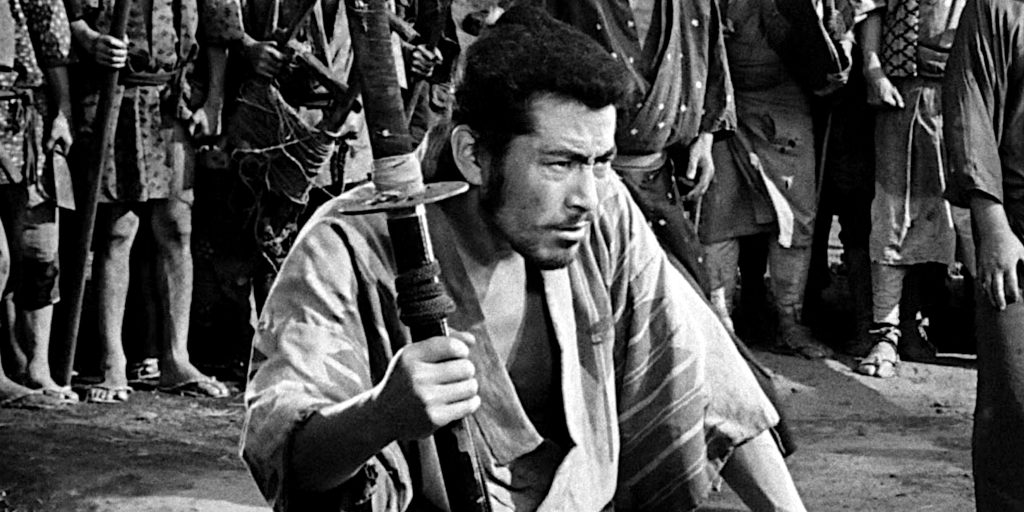
Director: Akira Kurosawa
Best for: The fullest expression of what samurai cinema can achieve.
Farmers recruit seven masterless samurai to defend their village against bandits. That premise supports an unusually rich film about cooperation between people who need one another but do not entirely trust one another. Criterion Channel
The time spent recruiting, preparing and arguing is fundamental. We learn enough about the defenders and villagers for the action to carry personal consequences.
Kurosawa also makes the village understandable as a physical place. When the fighting begins, movement through it has meaning. The rain and mud give the climactic action weight, friction and exhaustion.
For me, its greatest achievement is the way triumph remains complicated. Courage matters, yet it cannot erase class divisions or make sacrifice fair.
The length is a commitment. The characters justify it.
Why it ranks first: No other film here combines ensemble storytelling, tactical clarity, humour and grief quite so completely.
Which Samurai Film Should You Watch First?
Start with Yojimbo if you want something immediately engaging. Its humour, strong central performance and relatively straightforward premise make it an excellent introduction.
Choose 13 Assassins for modern action, The Twilight Samurai for intimate drama or Harakiri for a demanding moral confrontation.
Watch Seven Samurai when you can give it an unhurried evening. Its quieter scenes are part of the experience, rather than obstacles between the battles.
For broader context, the BFI’s guide to samurai cinema offers a useful introduction beyond the most familiar titles.
Are Samurai Films Historically Accurate?
Historical accuracy varies, and convincing filmmaking should not be confused with documentary evidence.
It helps to ask three separate questions: does the film create a plausible setting, does it represent the social relationships of its period convincingly, and does its action look persuasive? A film can succeed at one while taking considerable liberties with another.
Sword choreography is designed for the camera and the story. Speed, distance and the number of opponents may be exaggerated even when costumes and locations look carefully researched.
Some of the most thoughtful films here question the behaviour expected of warriors. That can make them valuable historical conversation starters, but individual scenes still need checking against evidence.
Other Samurai Films Worth Exploring
Several strong contenders fall outside this top twelve:
- Sanjuro (1962): A natural next choice after Yojimbo, with more comic friction around its experienced protagonist.
- Kagemusha (1980): Essential companion viewing for anyone drawn to the scale and political concerns of Ran.
- The Tale of Zatoichi (1962): The place to begin exploring Shintaro Katsu’s interpretation of the blind swordsman.
- The Hidden Blade (2004): A worthwhile continuation for viewers who appreciate Yamada’s attention to ordinary lives.
- Lone Wolf and Cub: Sword of Vengeance (1972): A starting point for a much more stylised and violent branch of sword cinema.
Kurosawa understandably occupies much of this ranking, but stopping with him would leave a substantial part of the genre unexplored. Kobayashi, Yamada and Okamoto offer very different ideas about what a swordsman’s story should reveal.