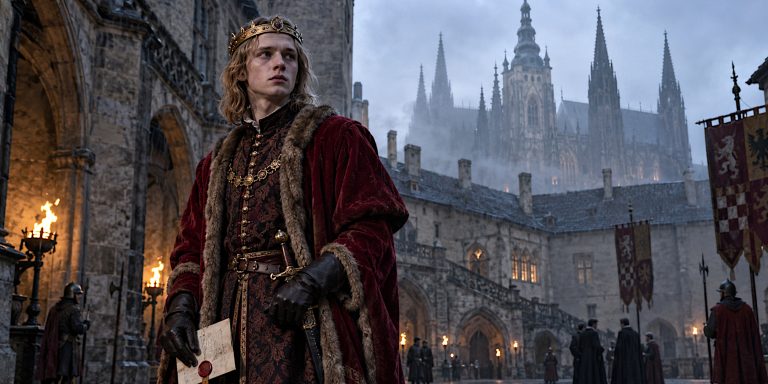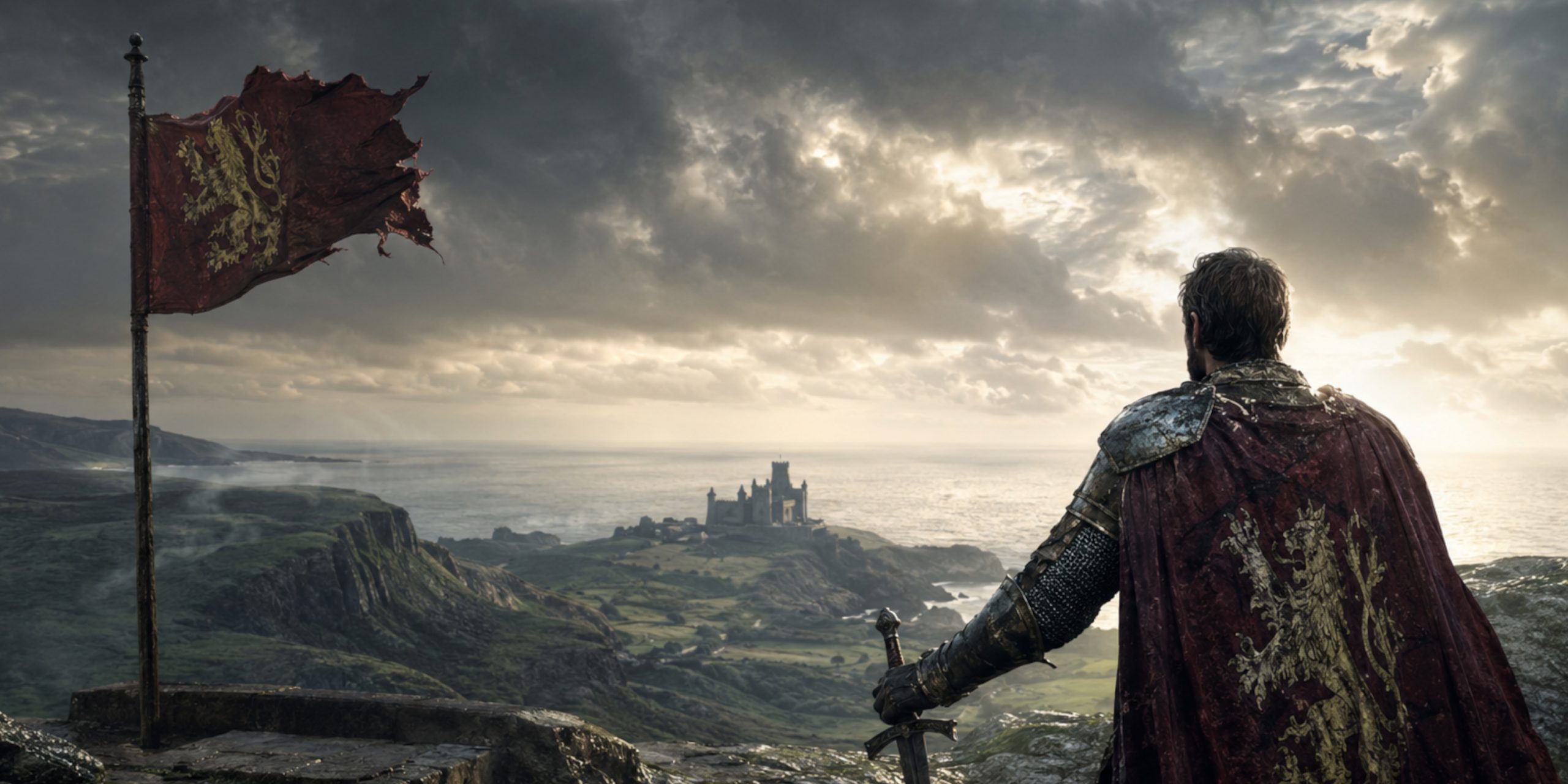
The world of the Pendragon Cycle feels familiar at first glance. Arthurian legends, misty hills, kings and prophecies. Then you start paying attention and realise it is less about shining knights and more about fractured power, tribal loyalties, and a Britain that is barely holding together.
This is not a tidy kingdom waiting for Arthur to arrive. It is a patchwork of competing rulers, old Celtic traditions, Roman leftovers, and Saxon pressure creeping in from the edges.
So if you have ever found yourself wondering who actually holds power in this world, or why everything feels like it could collapse at any moment, this guide should help.
The High Kingship of Britain
At the top, at least in theory, sits the idea of a High King.
This is less a stable throne and more a political ambition. The High King is supposed to unite Britain, command loyalty, and push back external threats. In reality, it is a fragile title that depends entirely on personal strength, alliances, and timing.
Arthur’s eventual rise matters because he does what most before him fail to do. He makes that title feel real. Before him, it is contested, ignored, or openly challenged by regional rulers who see no reason to bow to anyone.
The High Kingship is the prize everyone circles, even if they pretend otherwise.
The Kingdom of Dyfed
Dyfed is one of the more stable and grounded kingdoms in the series, often tied to Taliesin and his lineage.
This region reflects the lingering strength of Romano-British culture. You get a sense of order here, or at least an attempt at it. There is structure, faith, and a connection to older traditions that feel slightly more intact than elsewhere.
Dyfed often acts as a kind of anchor. Not always the most powerful, but one of the more coherent political spaces in a very messy landscape.
The Kingdom of Gwynedd
Gwynedd leans harder into its Celtic identity.
It feels older, more rooted in myth and tradition, and a bit less interested in adapting to the changing world. That makes it both culturally rich and politically stubborn.
Leaders here tend to value heritage and lineage. That is admirable until it gets in the way of practical decisions, which it often does.
Gwynedd stands as a reminder that Britain is not moving forward as one. Some regions are looking ahead, others are clinging tightly to what they were.
The Kingdom of Powys
Powys sits somewhere between ambition and vulnerability.
It has strength, resources, and strategic importance, but it is also exposed. Both politically and geographically, it feels like a place that is constantly being tested.
Rulers here tend to be pragmatic. They have to be. Survival depends on reading shifting alliances and knowing when to fight and when to bend.
Powys is rarely the centre of the story, but it is always part of the balance. Ignore it and things tend to unravel.
The Atrebates and Southern Tribes
Not all power is neatly organised into kingdoms.
The Atrebates and other southern tribes represent a looser form of authority. Tribal loyalty matters more than borders, and leadership is often personal rather than institutional.
These groups can be unpredictable. They might align with a king one moment and oppose him the next. Their strength lies in flexibility, but that also makes them difficult to trust.
They highlight a key truth about this world. Control is never absolute. It is negotiated, constantly.
The Irish Influence
Ireland is never far from the story, even when it is off the page.
Irish kingdoms bring both cultural exchange and conflict. Raids, alliances, and shifting loyalties across the sea add another layer of instability to Britain’s already complicated political map.
Characters tied to Ireland often carry a different perspective. Less concerned with the idea of a unified Britain, more focused on opportunity and advantage.
It is a reminder that Britain’s struggles are not happening in isolation.
The Saxon Threat
Then there are the Saxons.
Not a single unified force at this stage, but a growing presence that feels inevitable. They arrive in waves, settle, push boundaries, and slowly reshape the land.
Different Saxon groups operate independently, but the effect is cumulative. Pressure builds over time.
What makes them so effective is not just military strength, but persistence. They do not need one decisive victory. They just need to keep coming.
For the British kingdoms, this creates a constant background tension. Internal rivalries suddenly look a bit short sighted when there is a larger threat waiting just beyond the horizon.
The Role of Avalon
Avalon is less a kingdom and more a spiritual centre, often tied to Merlin and the deeper mythic elements of the story.
It operates on a different level to the political world. Influence here is subtle but powerful. Guidance, prophecy, and knowledge shape events in ways that kings often fail to see.
Avalon represents continuity. While kingdoms rise and fall, its presence suggests something older and more enduring beneath the chaos.
Arthur’s Unification
When King Arthur begins to bring these factions together, it feels less like destiny and more like a miracle of timing, charisma, and sheer effort.
He is not stepping into a ready made kingdom. He is stitching together something that has never quite existed.
Every alliance is fragile. Every victory needs reinforcing. The idea of unity is constantly under threat from pride, history, and simple human stubbornness.
That is what makes his success, however temporary, feel earned.
Why This World Feels So Unstable
What stands out most is how little is settled.
Borders shift. Loyalties change. Leaders rise and fall quickly. Even the idea of Britain as a single entity feels like a work in progress.
This instability is not a flaw in the storytelling. It is the point. The Pendragon Cycle leans into a version of Arthurian legend that feels grounded in the messiness of early medieval Britain.
You are not watching a golden age. You are watching the struggle to create one.
Seven Swords Takeaway
If you came in expecting a neat map with clear lines and obvious rulers, this world might feel chaotic at first.
Give it a bit of time and that chaos starts to make sense. Each kingdom, tribe, and faction is reacting to the same pressure in different ways. Some adapt, some resist, some simply survive.
And somewhere in the middle of all that, Arthur tries to build something lasting.
It is ambitious, slightly reckless, and honestly a bit unlikely.
Which is exactly why it works.