A Dynasty Born from Chaos
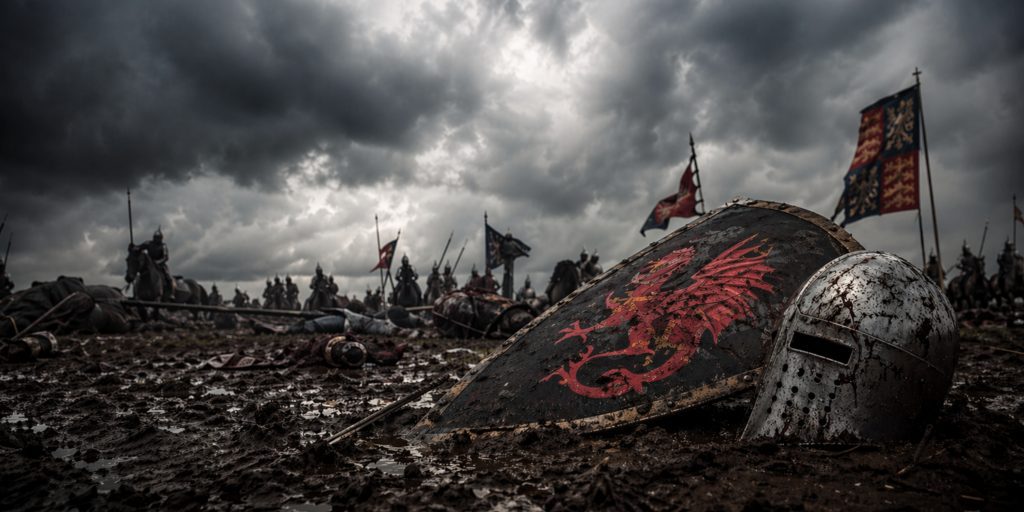
The Tudor story begins, as so many English dynasties do, with blood in the mud and a crown taken by force. The decisive moment came at the Battle of Bosworth Field, where Richard III fell and Henry VII emerged victorious.
Henry’s claim to the throne was, to be polite, creative. His lineage traced through a legitimised but once-illegitimate Beaufort line. Not the sort of thing one would usually build a monarchy upon. Yet England in 1485 was tired. The Wars of the Roses had drained the nobility and fractured loyalty. Henry offered something rare, stability.
His marriage to Elizabeth of York was a political masterstroke. It symbolically united the rival houses of Lancaster and York, giving birth to the Tudor rose and, more importantly, a fragile peace.
There is something almost pragmatic about Henry VII. He ruled cautiously, counted his coins obsessively, and avoided unnecessary wars. Not glamorous, but after decades of civil conflict, dull competence was exactly what England needed.
Consolidation and Control Under Henry VII
Henry VII governed with a firm grip, though rarely an obvious one. He rebuilt royal finances, strengthened the authority of the crown, and kept the nobility under careful watch.
His use of bonds and recognisances, financial penalties designed to ensure loyalty, was effective if not entirely popular. One imagines many a noble smiling politely at court while quietly resenting the bill waiting for them at home.
Foreign policy was cautious and strategic. Marriage alliances with Spain and Scotland helped stabilise England’s position without costly campaigns. Henry understood that survival, not glory, was the priority.
By the time of his death in 1509, he left a solvent crown and a secure succession. It was a strong foundation, though perhaps too reliant on the personality of the man who built it.
Henry VIII and the Dangerous Allure of Power
If Henry VII was careful, his son Henry VIII was anything but.
Young, charismatic, and determined to leave his mark, Henry VIII transformed the monarchy into something louder and far more unpredictable. His reign is often reduced to his six marriages, though that does rather miss the scale of his political and religious upheaval.
The most significant shift came with the break from Rome. Frustrated by the refusal of the Pope to annul his marriage to Catherine of Aragon, Henry initiated the English Reformation. The Church of England was born, with the king at its head.
This was not just a theological adjustment. It reshaped land ownership, dissolved monasteries, and redirected immense wealth to the crown. It also created deep religious divisions that would haunt England for generations.
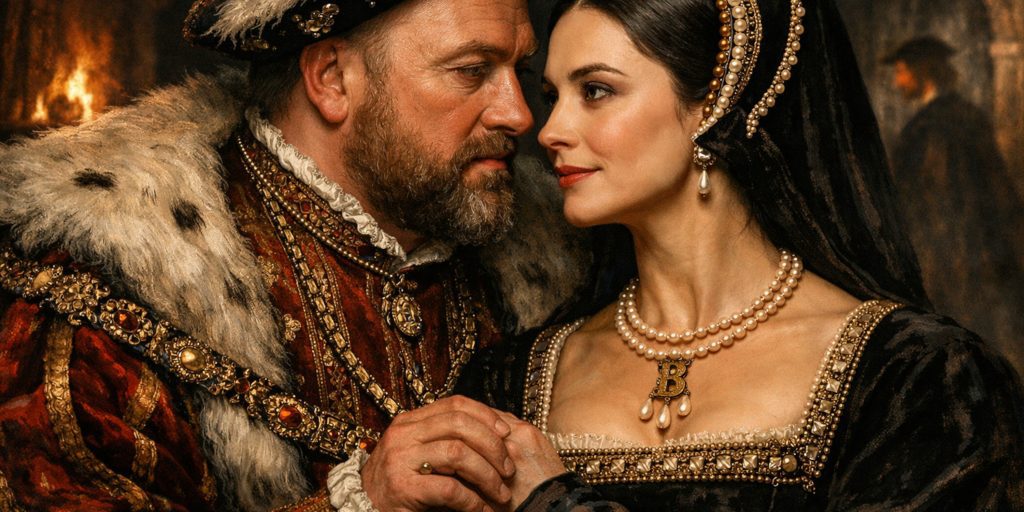
Henry’s court was brilliant and dangerous. Figures like Thomas Cromwell rose and fell with alarming speed. Even queens were not safe. Anne Boleyn’s execution in 1536 remains one of the most chilling reminders of how absolute power can become deeply personal.
There is a temptation to see Henry as larger than life. He was, certainly. Yet his reign left England richer in the short term, and far more unstable in the long run.
Edward VI and the Fragility of Reform
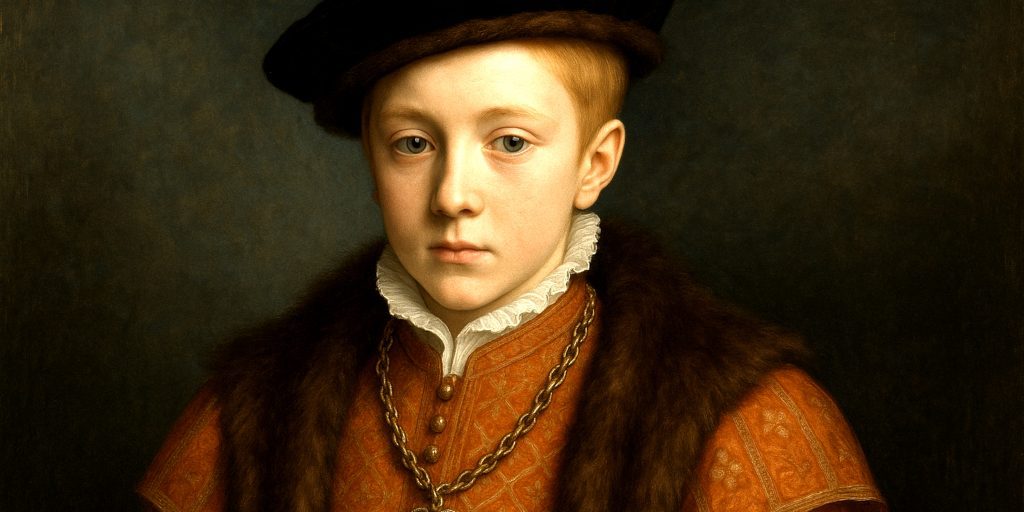
Edward VI inherited the throne as a child in 1547. Real power rested with regents, first the Duke of Somerset, then the Duke of Northumberland.
Under Edward, Protestant reforms accelerated. The Church of England moved further from its Catholic roots, adopting more radical doctrines and practices.
Yet this was a fragile transformation. It depended heavily on those governing in the king’s name, and on a monarch who would not live long enough to secure it.
Edward’s early death in 1553 created a succession crisis that exposed just how unstable the Tudor settlement still was.
Mary I and the Struggle for Faith
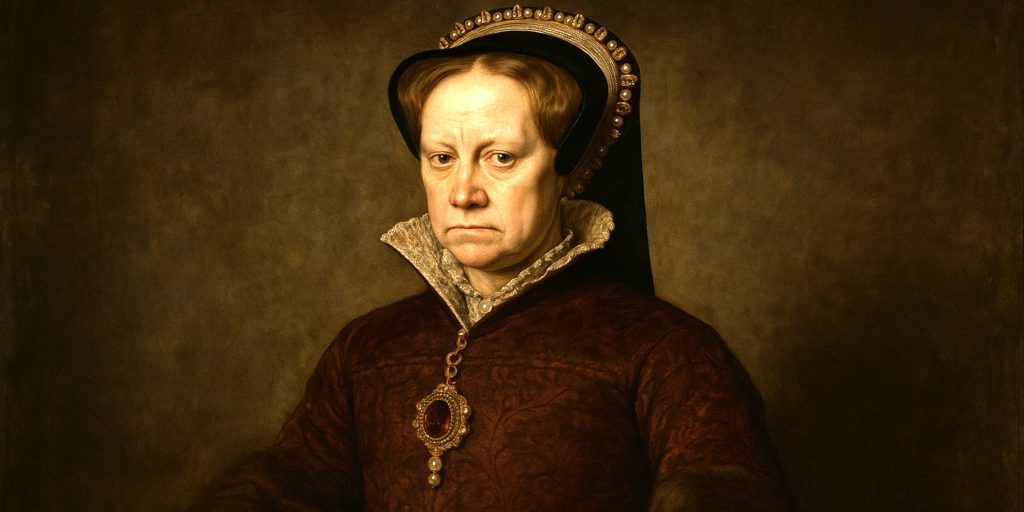
Mary I, daughter of Catherine of Aragon, sought to restore Catholicism to England.
Her reign was marked by determination and, at times, severity. The Marian persecutions led to the execution of hundreds of Protestants, earning her the enduring nickname “Bloody Mary”. It is a label that feels both accurate and slightly reductive, though history is rarely kind to those who lose the long game.
Mary’s marriage to Philip II of Spain was deeply unpopular. It raised fears of foreign influence and did little to stabilise her rule.
Despite her efforts, her religious settlement did not endure. When she died in 1558, England once again stood at a crossroads.
Elizabeth I and the Tudor High Point
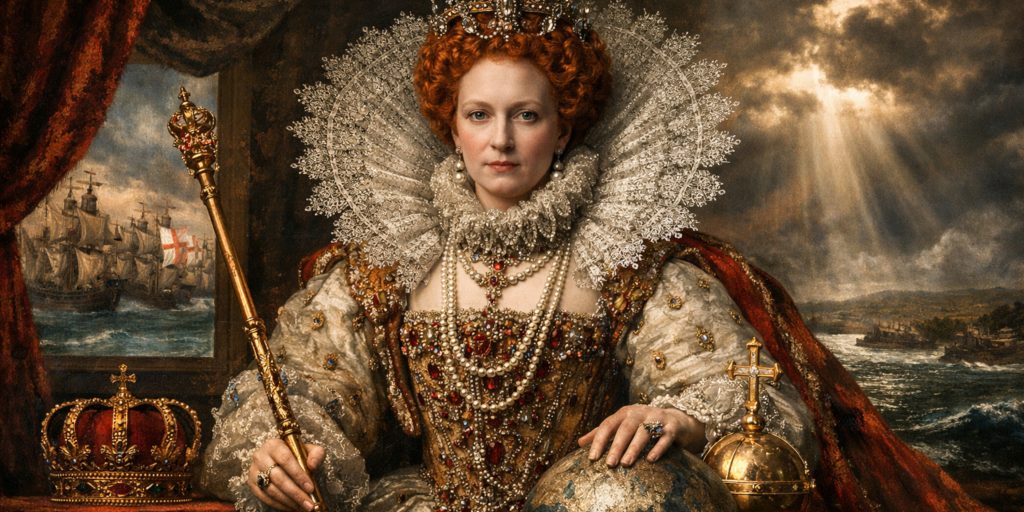
Elizabeth I is often seen as the culmination of the Tudor dynasty. Whether by design or instinct, she achieved a balance her predecessors struggled to maintain.
Her religious settlement restored Protestantism, though in a more moderate form. It was, if nothing else, practical. England needed stability more than purity.
Her reign saw cultural flourishing, exploration, and the defeat of the Spanish Armada. Figures like William Shakespeare thrived in this environment, contributing to what is often called the Elizabethan Golden Age.
Elizabeth herself was a formidable political operator. She navigated court factions, foreign threats, and the persistent question of her own marriage with remarkable skill. Or perhaps stubbornness. One suspects both.
Yet there was a lingering problem. She never married, never produced an heir, and quietly allowed the question of succession to hover unresolved.
The End of the Tudor Line
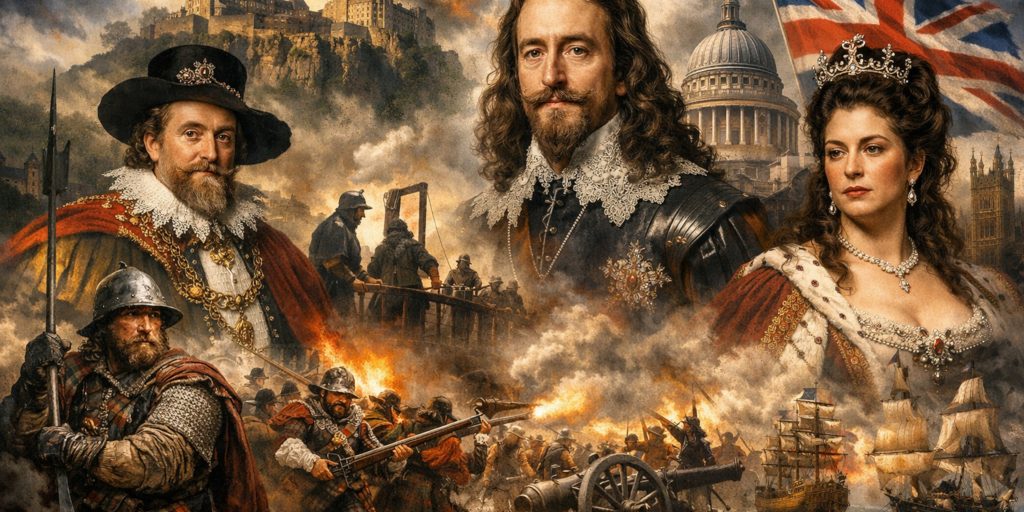
When Elizabeth died in 1603, the Tudor dynasty ended not with a dramatic collapse, but with a quiet transition.
The crown passed to James VI and I, uniting the English and Scottish crowns under the Stuart line. It was a peaceful succession, which feels almost out of character for a dynasty born in battle.
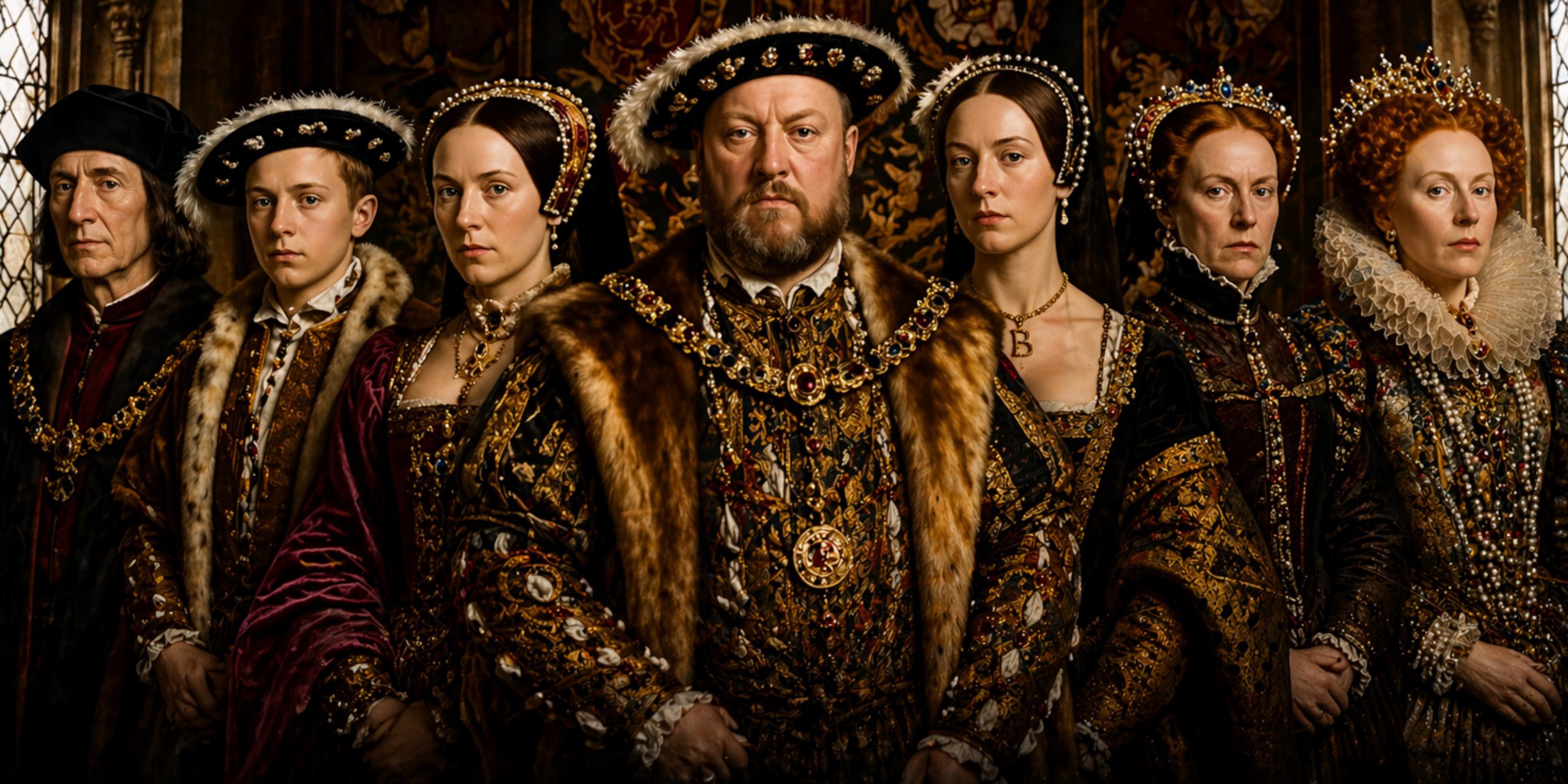
The Tudors left behind a transformed England. Stronger central authority, a redefined church, and a more prominent role on the European stage. They also left unresolved tensions, particularly religious ones, that would erupt in the following century.
Legacy and Reflection
The Tudor dynasty is often remembered for its personalities. Henry VIII’s appetites, Elizabeth’s poise, Mary’s severity. Yet beneath these figures lies a deeper story of transition.
England moved from medieval instability to early modern statehood during this period. Governance became more centralised, the monarchy more assertive, and national identity more defined.
It is tempting to admire the Tudors for their achievements. It is equally fair to note the cost. Executions, religious persecution, and political manipulation were not unfortunate side effects. They were part of the machinery of power.
From a historian’s perspective, the Tudors are fascinating precisely because they resist simple judgement. They were neither wholly admirable nor entirely monstrous. They were, like most rulers, shaped by their time and quite willing to shape it in return.
And perhaps that is the real lesson. Dynasties rise on ambition and circumstance, but they fall, eventually, to the same quiet inevitability that claims us all. The Tudors simply did it with better portraits and far more drama.