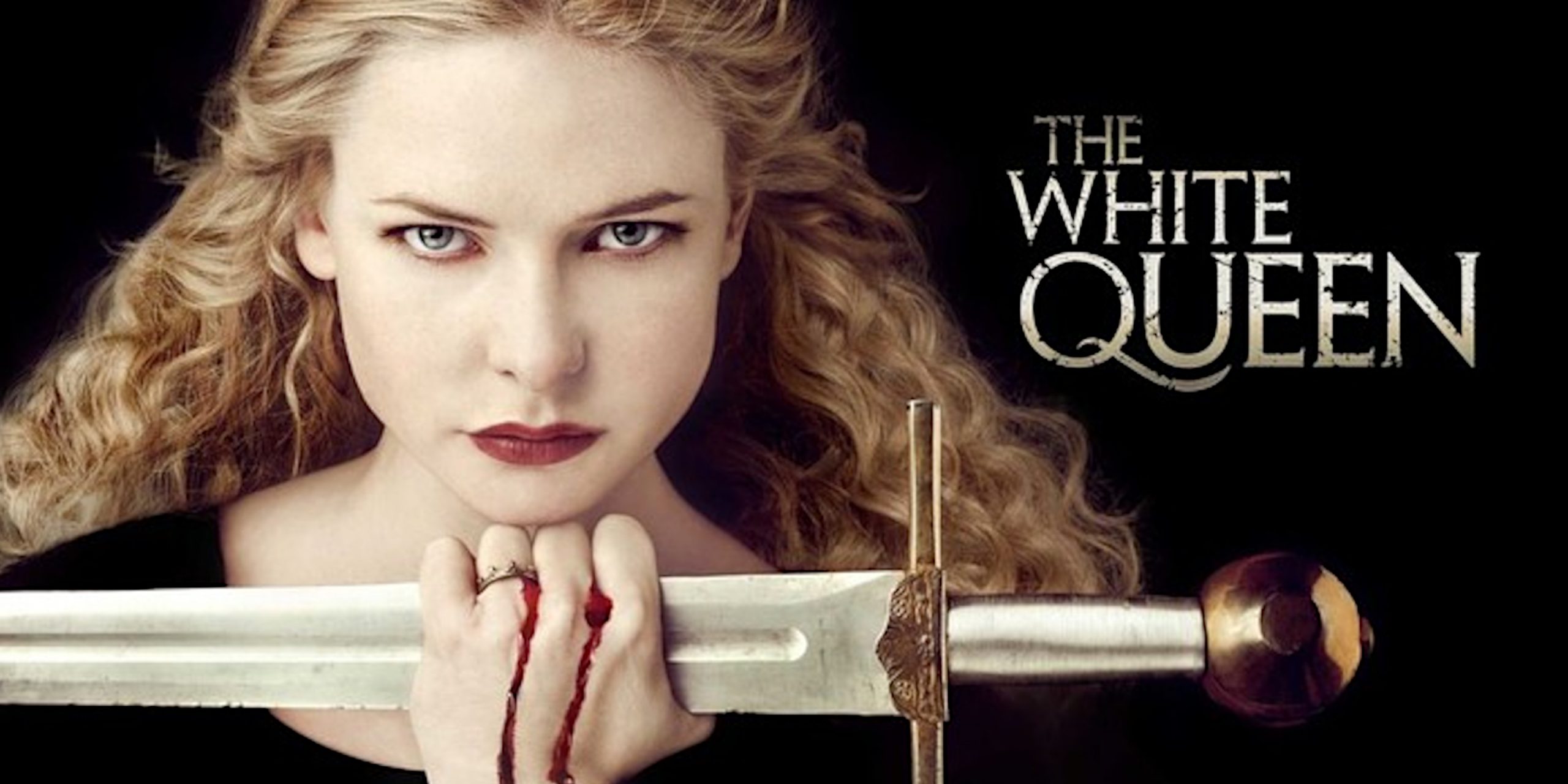
If you watched The White Queen and immediately thought, “Wait, who is related to who, why is everyone called Elizabeth, and why does this family tree look like someone dropped spaghetti on a map of England?”, you are very much not alone.
The White Queen, The White Princess and The Spanish Princess are basically one long Tudor prequel trilogy. Together, they follow the end of the Wars of the Roses, the rise of the Tudors, and the beginning of the dynasty that eventually gives us Henry VIII, Anne Boleyn, six wives, several beheadings and enough family drama to make modern reality TV look weirdly calm.
The three series were released years apart and have different casts, but they fit together surprisingly neatly. Once you know who survives, who marries who and who spends several episodes glaring across a candlelit room, the whole thing starts to make sense.
Which Series Comes First?
The watch order is thankfully much simpler than the family tree.
- The White Queen
- The White Princess
- The Spanish Princess
Each series picks up where the previous one leaves off.
- The White Queen covers the Wars of the Roses and the reign of Edward IV.
- The White Princess follows Elizabeth of York and Henry VII after the war ends.
- The Spanish Princess moves to the next generation and centres on Catherine of Aragon and the future Henry VIII.
Think of it like three seasons of one giant story, except everyone keeps changing actors and acquiring more elaborate hats.
The White Queen: Where Everything Begins
The White Queen is set during the Wars of the Roses, the brutal civil war between the House of York and the House of Lancaster.
At the centre of the story is Elizabeth Woodville, known as the “White Queen”. She secretly marries King Edward IV after meeting him in the woods in what may be one of the most suspiciously attractive first meetings in television history.
Their marriage changes everything. Elizabeth becomes queen, but her position is constantly threatened by rivals, betrayals and the endlessly ambitious Earl of Warwick, better known as Warwick the Kingmaker.
The series also follows two other major women:
- Margaret Beaufort, mother of Henry Tudor
- Anne Neville, daughter of Warwick and future queen
By the end of The White Queen, Edward IV is dead, Richard III has taken the throne, and Henry Tudor defeats Richard at Bosworth. Henry then marries Elizabeth of York, the daughter of Elizabeth Woodville.
That marriage is the bridge to the next series.
How The White Princess Connects to The White Queen
The White Princess begins almost immediately after the end of The White Queen.
The central character is Elizabeth of York, who was a child and teenager in the earlier series. She is now played by a different actor and is married to Henry VII.
This marriage is incredibly important because it finally unites the rival York and Lancaster families. Henry is a Lancastrian claimant. Elizabeth is the eldest daughter of Edward IV and Elizabeth Woodville, making her the strongest Yorkist symbol in England.
In other words, their marriage is not exactly a love story at first. It is more of a political hostage situation with nice costumes.
The White Princess explores:
- Elizabeth of York adjusting to life as queen
- Henry VII trying not to lose the throne every other Tuesday
- Elizabeth Woodville still causing trouble in the background
- Margaret Beaufort becoming even more intense than she was in The White Queen, which is honestly impressive
One of the biggest recurring themes is that nobody fully trusts anyone. The Wars of the Roses may technically be over, but every noble family still looks one bad dinner party away from starting another rebellion.
The Characters Who Appear in Both Series
Several characters continue from The White Queen into The White Princess, although they are played by new actors.
Elizabeth of York
In The White Queen, Elizabeth of York is one of Edward IV and Elizabeth Woodville’s children.
In The White Princess, she becomes the main character. Her marriage to Henry VII creates the Tudor dynasty.
Elizabeth Woodville
The White Queen focuses heavily on Elizabeth Woodville as queen.
In The White Princess, she appears as the widowed former queen and mother of Elizabeth of York. She still has influence, still has enemies and still has a talent for making every room feel awkward.
Margaret Beaufort
Margaret Beaufort appears in both series and might quietly be the real villain, depending on your point of view.
She is the mother of Henry VII and spends both shows relentlessly pushing her son toward power. By The White Princess, she has become one of the most powerful women in England.
How The Spanish Princess Connects to The White Princess
The Spanish Princess takes place after The White Princess and follows the next generation.
Its main character is Catherine of Aragon, the Spanish princess who arrives in England to marry Prince Arthur, the eldest son of Henry VII and Elizabeth of York.
That means the central royal couple from The White Princess are now the parents in The Spanish Princess.
This is where the timeline becomes especially important:
- Elizabeth of York and Henry VII have several children
- Their eldest son is Arthur
- Their second son is Henry, the future Henry VIII
- Catherine first marries Arthur
- Arthur dies
- Catherine later marries Henry
Yes, that Henry. The one with the wives.
So while The White Queen is about the end of the Plantagenets, and The White Princess is about the rise of the Tudors, The Spanish Princess is really the beginning of the Tudor story most people already know.
By the end of The Spanish Princess, the stage is set for The Tudors, Wolf Hall and approximately every historical drama where someone in a velvet doublet makes a terrible decision.
The Full Family Connection
To make things a little easier, here is the simplified line of succession:
- Elizabeth Woodville marries Edward IV
- Their daughter is Elizabeth of York
- Elizabeth of York marries Henry VII
- Their son is Henry VIII
- Henry VIII marries Catherine of Aragon
So the lead characters of each series are directly connected:
- Elizabeth Woodville is the main figure in The White Queen
- Her daughter Elizabeth of York leads The White Princess
- Her daughter-in-law Catherine of Aragon leads The Spanish Princess
It is essentially one family saga across three generations.
Which Series Is the Best?
This partly depends on what you enjoy.
The White Queen
The White Queen is the most dramatic and arguably the strongest. It has battles, betrayals, political chaos and enough surprise reversals to make it feel like medieval Game of Thrones, except everyone involved was real and somehow even pettier.
It also has the clearest sense of momentum because the Wars of the Roses are genuinely fascinating. One minute Edward IV is king, the next minute he is not, then he is again. England in the fifteenth century had all the political stability of a shopping trolley with one broken wheel.
The White Princess
The White Princess is quieter and more character-driven. It focuses more on marriage, paranoia and the awkward process of turning bitter enemies into one royal family.
If you enjoy slow-burning tension and political manoeuvring, this is probably the best of the three.
The Spanish Princess
The Spanish Princess is the most glamorous and the most divisive. Catherine of Aragon gets far more attention than she usually does in Tudor dramas, which is genuinely refreshing.
It also leans a little more heavily into romance and spectacle. Some viewers love that. Others spend half the series shouting “that is not historically accurate” at the television while still watching every episode.
Are the Series Historically Accurate?
All three shows are based on novels by Philippa Gregory, so they mix real history with a fair amount of invention.
The major events are mostly accurate:
- Edward IV marries Elizabeth Woodville
- Richard III becomes king
- Henry VII marries Elizabeth of York
- Catherine of Aragon marries Arthur, then Henry VIII
However, the shows often dramatise private conversations, relationships and motives.
The White Queen in particular enjoys suggesting that everyone may secretly be plotting, poisoning or casting curses. Historically, there is very little evidence for most of that. It does, however, make for excellent television.
The White Princess and The Spanish Princess also take liberties, especially with timelines and personalities. Margaret Beaufort, for example, becomes increasingly terrifying with every series. The real Margaret was certainly formidable, but the shows sometimes portray her like she personally invented stress.
Should You Watch Them in Order?
Absolutely.
You can technically start with The White Princess or The Spanish Princess, but you will miss a huge amount of context. Watching them in order makes the character relationships much more satisfying because you see the children from one series grow up and become the adults in the next.
There is something oddly satisfying about realising that the frightened little girl in The White Queen becomes the queen trying to hold the country together in The White Princess.
Then, before you know it, her son is Henry VIII and England is somehow about to get even messier.
Takeaway
The White Queen, The White Princess and The Spanish Princess are less like separate shows and more like one sprawling historical saga split into three parts.
The White Queen gives you the war.
The White Princess gives you the uneasy peace.
The Spanish Princess gives you the beginning of the Tudor age everyone remembers.
Watch them in order and suddenly the whole thing clicks. You stop wondering who everybody is, and start appreciating just how absurdly dramatic English royal history really was. Frankly, if somebody pitched this as fiction, you would probably tell them to make it slightly less ridiculous.