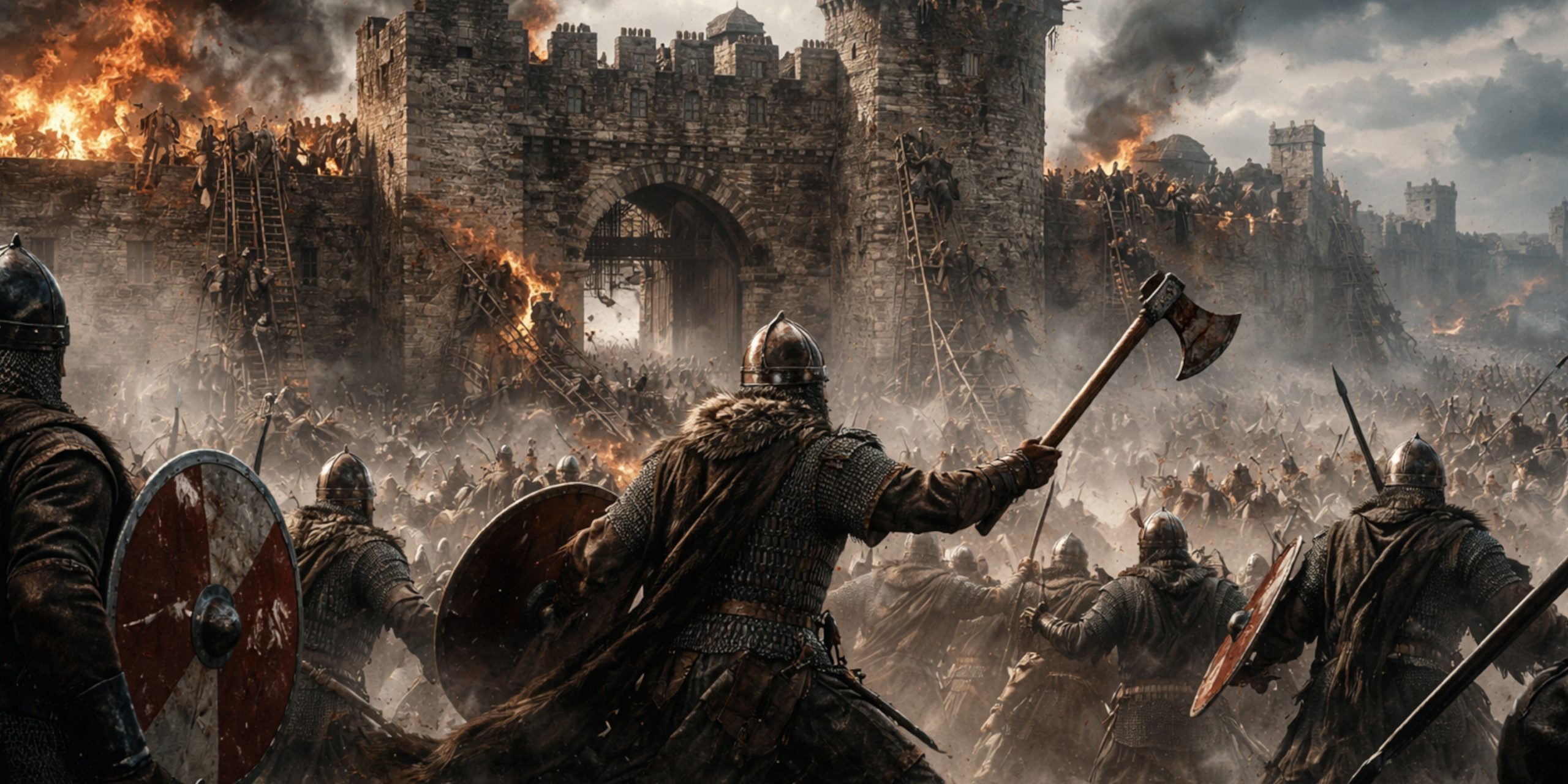
When the Great Heathen Army descended upon York in late 866, Northumbria was already doing a perfectly adequate job of destroying itself.
The kingdom was split between rival claimants, the nobility were quarrelling, and the city itself, one of the richest and most important in Anglo-Saxon England, was dangerously exposed. Into this confusion came a large Scandinavian force led by some of the most formidable Viking commanders of the age.
Within months York had fallen. By the spring of 867 the Northumbrians attempted to retake it, only to be crushed outside the city’s Roman walls. Their kings died in the fighting, Northumbria collapsed as an independent power, and York became the centre of Viking rule in northern England.
The siege and capture of York was not like other raids. It marked the beginning of a new political order. From this point onward, the Vikings were no longer just raiders appearing on the horizon like an unpleasant surprise. They had become conquerors.
Background: A Kingdom in Chaos
By 866 Northumbria was divided between two rival kings, Ælla and Osberht. Osberht had previously ruled much of the kingdom but had been driven out. Ælla, whether usurper or legitimate ruler depending on which chronicler one reads, controlled York.
Neither man trusted the other, which would have been inconvenient enough without a Viking army arriving at precisely the wrong moment.
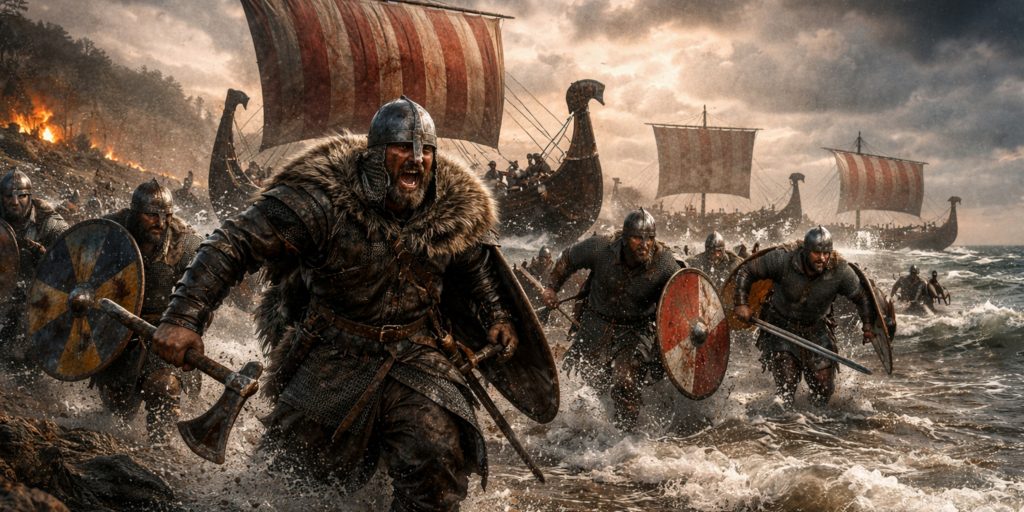
The Great Heathen Army had landed in East Anglia in 865. Unlike earlier Viking bands, this was not a small force seeking plunder before sailing home. It was larger, better organised and clearly intended to conquer territory.
After wintering in East Anglia and securing horses, the army marched north into Northumbria in late 866. York, then known as Eoforwic, was the obvious target. It was wealthy, heavily populated, and strategically important. Whoever held York controlled the road network and much of the north.
The city was also protected by the surviving Roman walls. Unfortunately for the Northumbrians, walls are only useful if one has enough united defenders behind them.
Why York Mattered
York was the greatest city in northern England.
It had been the Roman fortress of Eboracum and remained one of the few truly urban centres in Anglo-Saxon Britain. It contained:
- Strong Roman defences
- Important religious institutions
- A thriving market and mint
- Control over roads linking Northumbria, Mercia and the east coast
- Access to the River Ouse and wider trade networks
To the Vikings, York offered more than loot. It offered a capital.
Foces
Viking Great Heathen Army
| Element | Details |
|---|---|
| Estimated strength | Perhaps 5,000 to 10,000 men |
| Main commanders | Ivar the Boneless, Halfdan Ragnarsson, possibly Ubba |
| Troop types | Viking infantry, experienced raiders, some mounted troops using captured horses |
| Strengths | Aggressive assault tactics, experienced warriors, unified leadership |
Northumbrian Forces
| Element | Details |
| Estimated strength | Perhaps 3,000 to 6,000 men |
| Main commanders | King Ælla and King Osberht |
| Troop types | Anglo-Saxon fyrd, noble retainers, household warriors |
| Strengths | Defensive position, Roman walls, knowledge of local terrain |
Precise numbers are impossible to establish. Medieval chroniclers were fond of writing figures that appear to have been selected by rolling dice across a monastery floor. The Viking army was almost certainly larger and, more importantly, far better organised.
Leaders and Troop Composition
Viking Commanders
| Leader | Role | Notes |
| Ivar the Boneless | Principal commander | Traditionally associated with the capture of York and famed for his cunning and ruthlessness |
| Halfdan Ragnarsson | Viking war leader | Later king in Northumbria, probably one of the main commanders during the siege |
| Ubba | Possible commander | Mentioned in later traditions, though his role at York is less certain |
Northumbrian Leaders
| Leader | Role | Notes |
| Ælla | King of Northumbria | Ruled York at the time of the Viking attack |
| Osberht | Rival king of Northumbria | Reconciled with Ælla to fight the Vikings |
Troop Composition
Viking Army
- Veteran Scandinavian warriors
- Danish and possibly Norwegian contingents
- Professional raiders with experience from Francia and the British Isles
- Shield wall infantry armed with axes, spears and swords
- Some mounted troops used for mobility rather than cavalry combat
Northumbrian Army
- Fyrd levies called from across Northumbria
- Noble retainers and household troops
- Local garrison inside York
- Warriors fighting in traditional Anglo-Saxon shield wall formations
The Capture of York, November 866
The Vikings entered York in November 866, probably exploiting the division within Northumbria and perhaps taking advantage of weak or undermanned defences.
Some historians believe the city was taken with little resistance. Others suggest there may have been a brief assault or internal betrayal. Either way, the Vikings secured York quickly and settled in for the winter.
Once inside the city, they repaired and strengthened the Roman walls and prepared for the inevitable counterattack.
York now had a new set of tenants. They were louder, considerably more violent, and had little interest in paying local taxes.
The Northumbrian Counterattack, March 867
The shock of losing York finally forced Ælla and Osberht to reconcile. For a brief moment, Northumbria achieved precisely the unity it had needed months earlier.
The two kings gathered an army and marched on York in March 867.
The Anglo-Saxons managed to break into the city, perhaps through a breach in the walls or an open gate. At first, they may even have driven the Vikings back. Yet once inside the confined streets and narrow spaces of York, the battle turned against them.
The Vikings counterattacked fiercely. Fighting within a city favoured smaller, disciplined groups of experienced warriors rather than a large levy struggling to maintain formation.
Both Ælla and Osberht were killed.
According to later tradition, Ælla suffered the notorious “blood eagle” execution at the hands of Ivar, supposedly in revenge for the death of Ragnar Lodbrok. The story is dramatic, memorable and exactly the sort of thing medieval writers adored. Whether it actually happened remains doubtful.
The more reliable sources simply state that both kings died in the fighting.
Arms and Armour
Viking Arms and Armour
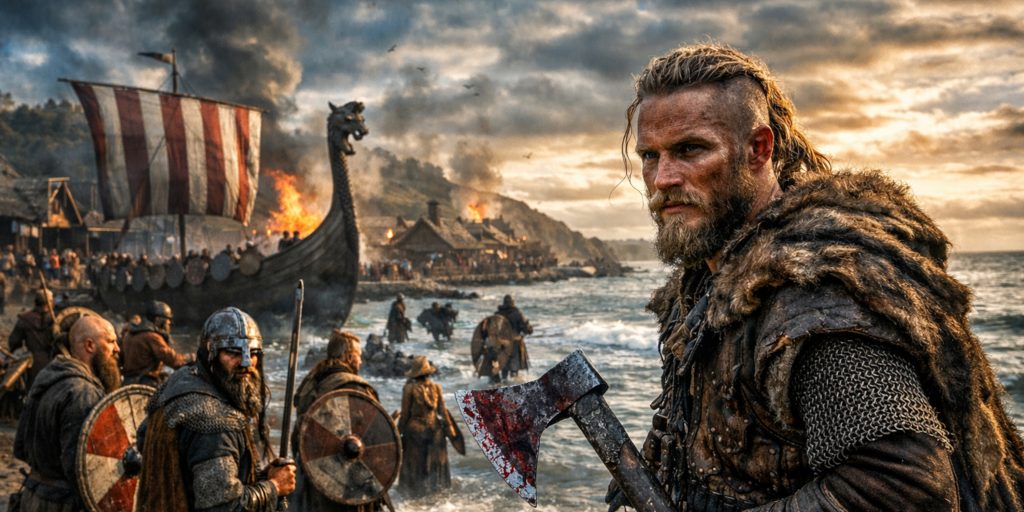
| Weapon or Equipment | Details |
| Sword | Pattern-welded Viking swords, often Petersen Type H or Type K styles |
| Axe | Bearded axes and heavier Danish axes |
| Spear | The most common Viking weapon, used for thrusting and throwing |
| Shield | Round wooden shield with iron boss |
| Helmet | Conical iron helmets, though many warriors fought bareheaded |
| Armour | Mail shirts worn by wealthier warriors |
The finest Viking swords at York would have been expensive, prestigious weapons. A well-made blade could be passed down through generations. These were not the sort of thing one casually misplaced behind the mead bench.
Anglo-Saxon Arms and Armour
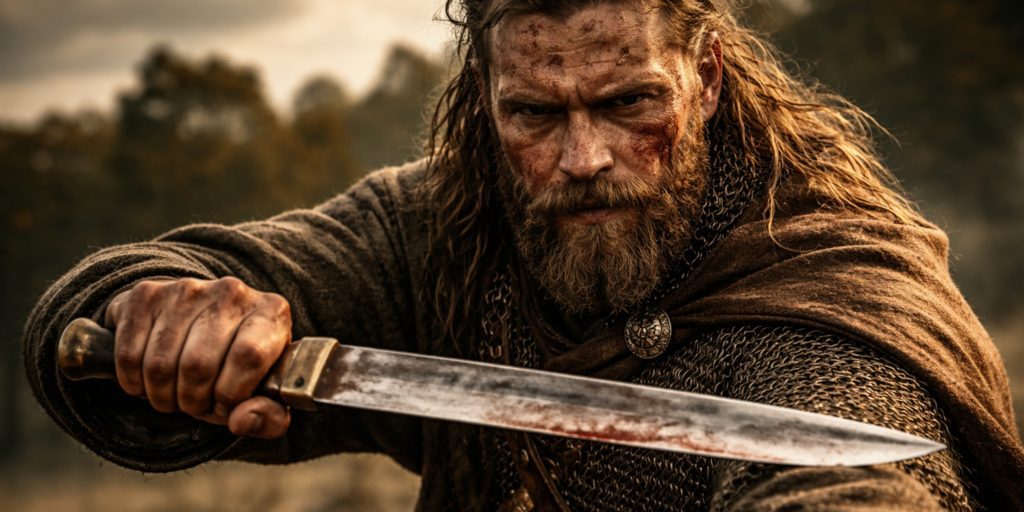
| Weapon or Equipment | Details |
| Sword | Anglo-Saxon swords, often descended from earlier Migration Period styles |
| Seax | Long knife or short sword carried as a secondary weapon |
| Spear | Main weapon of the fyrd and noble retainers |
| Shield | Round wooden shield, often painted and reinforced |
| Helmet | Iron helmets worn by noble warriors |
| Armour | Mail shirts for wealthier troops, padded clothing for most levies |
Specific Sword Types Used
- Pattern-welded Viking sword
- Petersen Type H sword
- Petersen Type K sword
- Anglo-Saxon broad sword
- Long seax
The sword remained a status weapon rather than the standard arm of the ordinary warrior. Most men fought with spears. A spear was cheaper, easier to use, and less likely to disappear after an enthusiastic evening in the alehouse.
Battle Timeline
| Date | Event |
| 865 | Great Heathen Army lands in East Anglia |
| Late 866 | Viking army marches north into Northumbria |
| November 866 | York captured by the Vikings |
| Winter 866-867 | Vikings fortify and hold the city |
| March 867 | Ælla and Osberht unite and attack York |
| 21 March 867 | Northumbrian assault fails, both kings killed |
| After March 867 | Vikings install a client ruler and secure Northumbria |
Archaeology
Archaeological discoveries in York have revealed just how important the city became under Viking rule.
Excavations at Coppergate uncovered extensive evidence of Scandinavian settlement dating from the late ninth century onward. Although most of these finds belong to the later Viking city of Jórvík rather than the initial capture, they show how completely York was transformed.
Finds include:
- Viking houses and workshops
- Weapons, including spearheads and sword fragments
- Scandinavian jewellery and combs
- Coins minted under Viking rulers
- Evidence of trade stretching from Ireland to the Islamic world
Fragments of the Roman and later medieval walls still survive around York today. These walls, although altered over centuries, give a sense of the formidable defences that shaped the battle.
Archaeologists have also discovered weapon damage and signs of hurried repairs to parts of the defences. While it is difficult to tie these directly to the fighting of 866-867, they are entirely consistent with a city that had experienced siege and violent assault.
Contemporary Quotes
The Anglo-Saxon Chronicle offered a stark summary of the disaster:
“They stormed the fortress, and there was an excessive slaughter made of the Northumbrians.”
The chronicler Symeon of Durham wrote:
“The kings were both slain, and the rest who escaped made peace with the Danes.”
Asser, writing later about the Viking invasions, described the Great Heathen Army as:
“A great pagan army from the north.”
None of these writers had much fondness for the Vikings, which is perhaps understandable. Viking armies had an unfortunate habit of appearing without invitation and then staying for several generations.
Aftermath
The defeat at York destroyed Northumbrian independence.
After the battle, the Vikings installed Ecgberht as a puppet ruler. Real power remained with the Great Heathen Army.
Northumbria never fully recovered. The kingdom fragmented, and Viking influence dominated the region for decades. York became Jórvík, one of the most important Viking cities in Europe.
The capture of York also set a pattern repeated elsewhere in England:
- Viking armies seized major towns
- Local rulers were killed or replaced
- Scandinavian settlers followed the armies
- Temporary raids became permanent conquest
Within a generation, much of northern and eastern England lay within the Danelaw.
Why the Siege of York Matters so much to the story of the Vikings
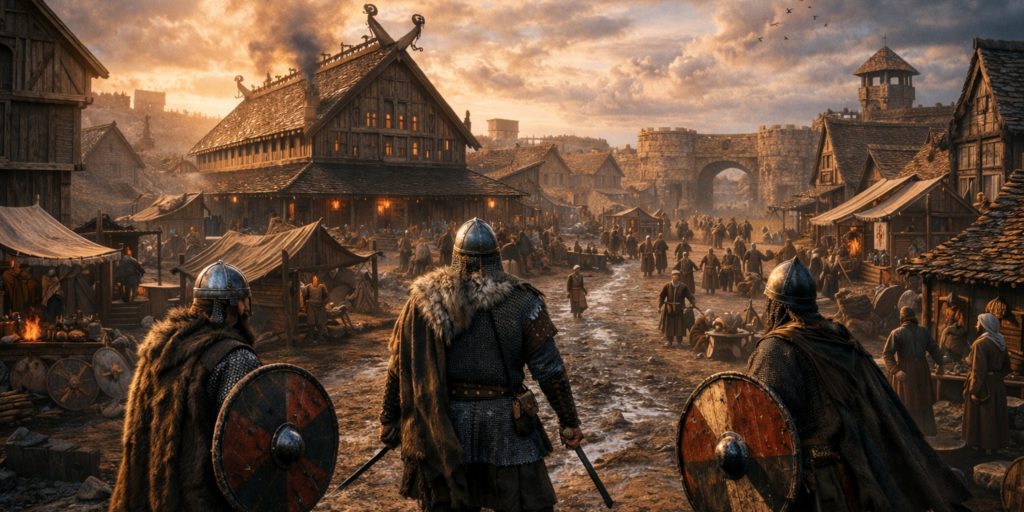
The siege and capture of York was one of the decisive moments in early English history.
It marked the collapse of one of the great Anglo-Saxon kingdoms and the beginning of Viking England in the north. York ceased to be merely a regional city and became the Viking capital of Jórvík, a place where Scandinavian, Anglo-Saxon and wider European cultures collided.
There is also something painfully familiar about the story. A divided kingdom faces a serious external threat, spends too long quarrelling amongst itself, finally unites when it is already too late, and then suffers a catastrophe.
Historians encounter this pattern with depressing regularity. Medieval rulers, one suspects, rarely read the previous chapter.