There is something oddly hypnotic about how Spartacus handles violence. It is theatrical, exaggerated, sometimes ridiculous, yet grounded just enough in history to make you lean forward and think, “wait… did they actually use that?”
Short answer, often yes. Longer answer, not always like that.
What makes the show stand out is not just the blood, it is the variety of weapons. Every fighter feels distinct because what they carry changes how they fight, how they move, and usually how they die.
Let’s get into the weapons that actually shaped the chaos.
Gladius
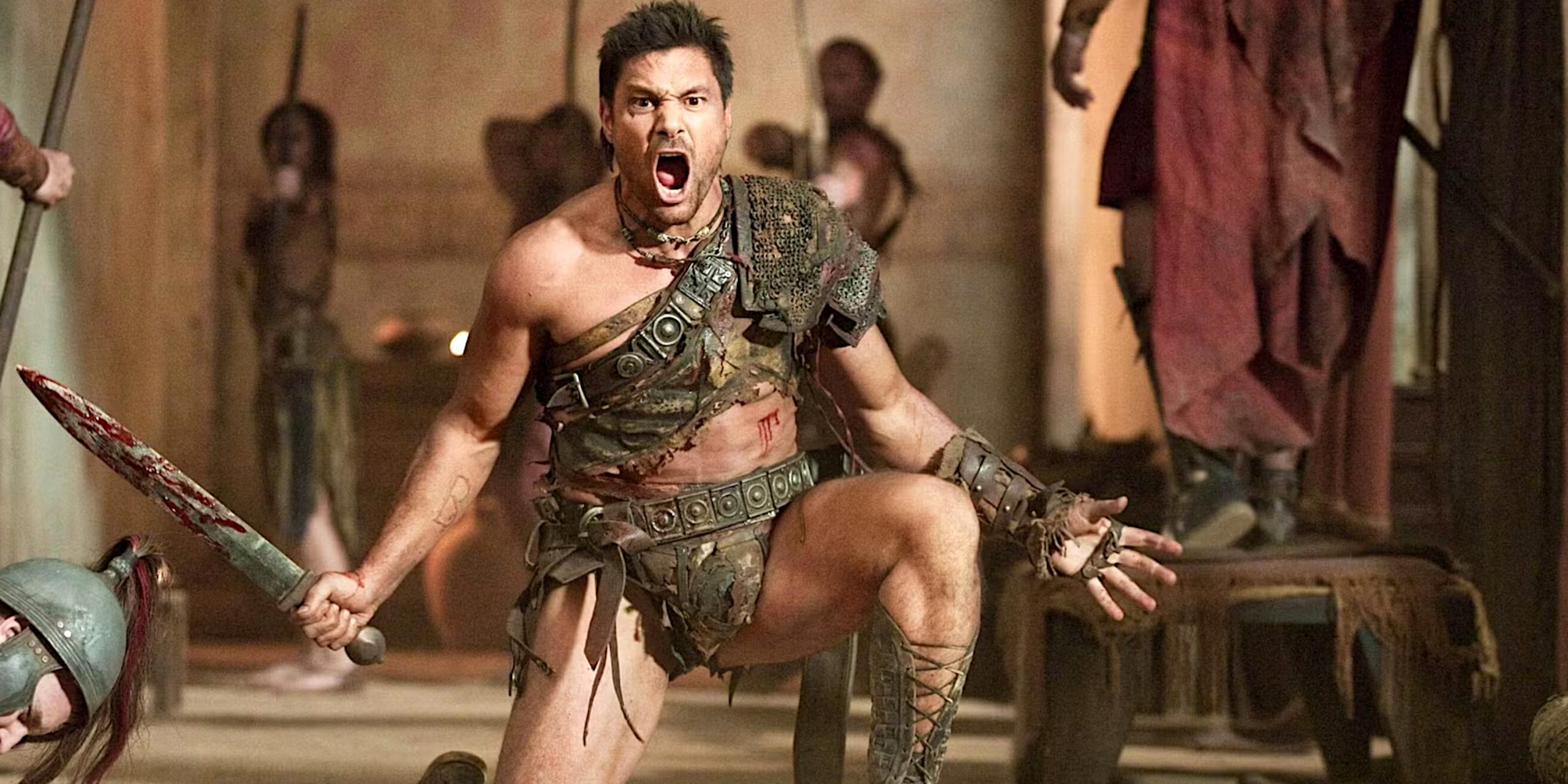
The gladius is everywhere in Spartacus, and for good reason. This is the Roman killing tool.
Short, brutal, and designed for stabbing rather than dramatic swings, it fits the show’s close-quarters fights perfectly. When a Roman soldier steps forward with a gladius, you know it is about to get uncomfortable for someone.
Historically, the gladius was terrifying because it forced combat into tight formations. In the show, it becomes more personal. You see every thrust land, every inch of blade matter.
There is nothing flashy about it. That is exactly why it works.
Trident and Net
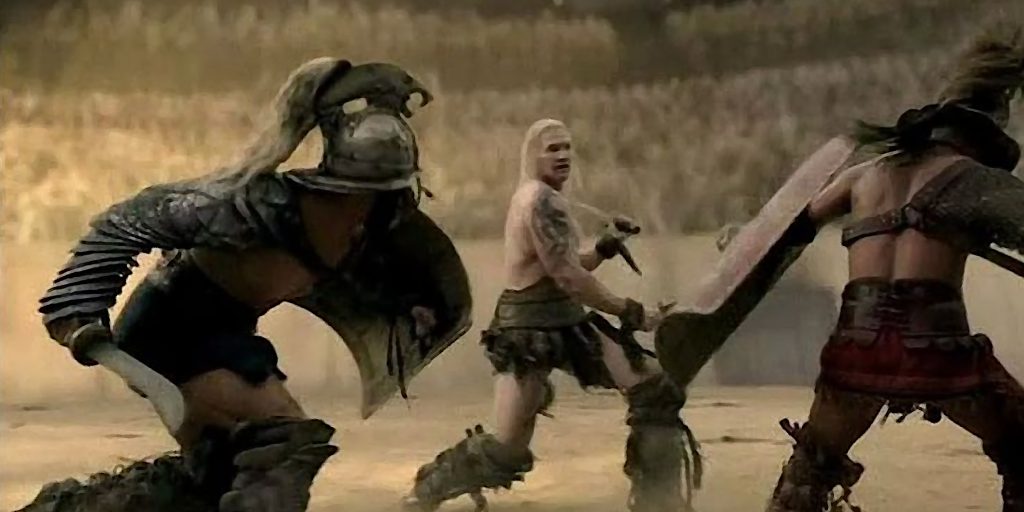
This is where the show leans into spectacle, and honestly, it earns it.
The trident paired with a weighted net turns a fight into a hunt. Fighters like this do not rush. They stalk. They trap. Then they finish things at a distance that feels unfair.
The net is the real weapon here. Once someone is tangled, the fight is effectively over, and the trident becomes a tool for precision rather than brute force.
Historically accurate? Yes, though probably less dramatic. In Spartacus, it becomes a kind of psychological warfare. Watching someone realise they cannot move is half the brutality.
Sica
The sica feels like it was made for betrayal.
A curved blade designed to slip around shields, it is subtle compared to the gladius, but no less dangerous. If anything, it feels more intimate. Less battlefield, more assassination.
In the show, it often ends up in the hands of fighters who rely on speed and positioning. It rewards precision, not strength.
There is something quietly unsettling about it. You do not always see it coming.
Dual Swords
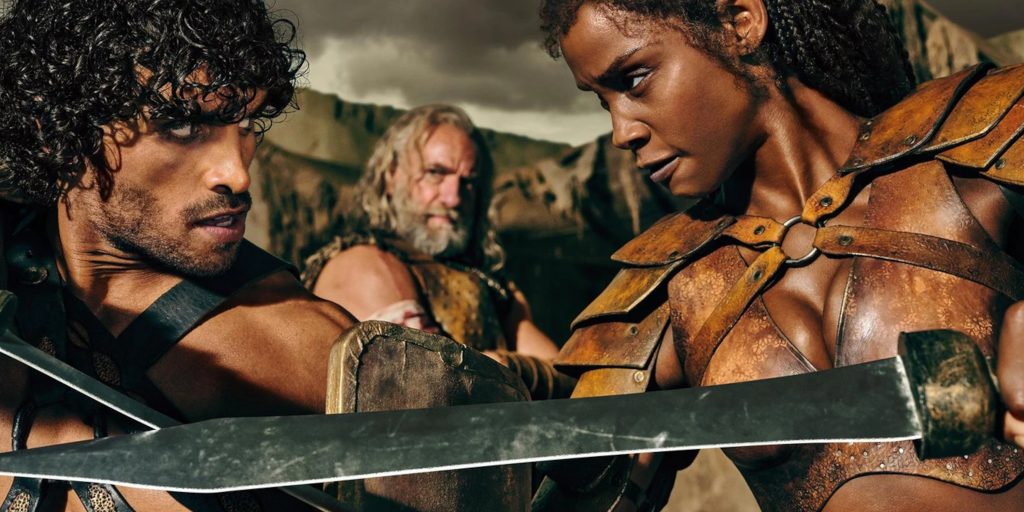
Now we move slightly away from strict history and into pure television energy.
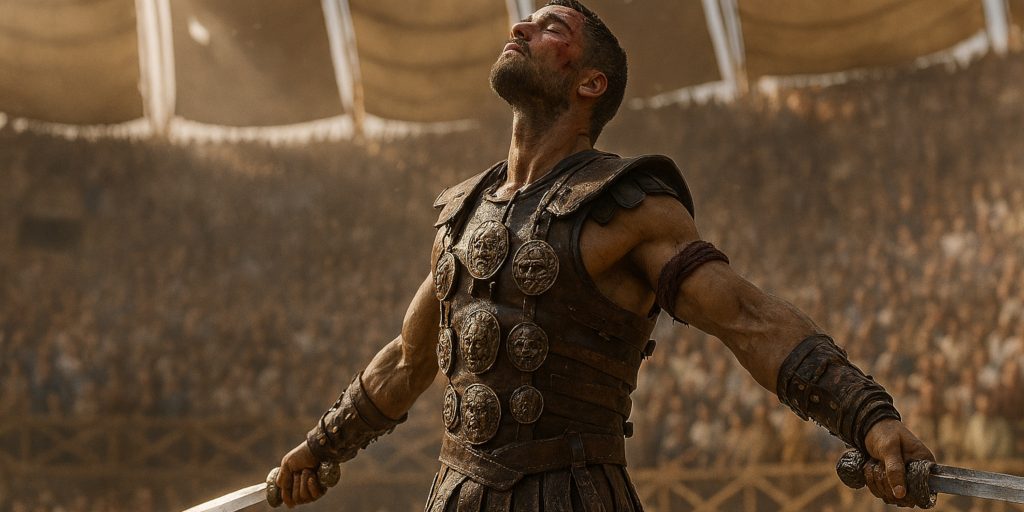
Dual wielding looks incredible. It also demands a lot from the fighter. Coordination, aggression, and a willingness to stay constantly on the offensive.
In Spartacus, this style belongs to characters who fight like they have something to prove. It is fast, relentless, and often ends with someone overwhelmed before they can even react.
Historically rare, but as a visual language, it tells you everything you need to know about a character in seconds.
Spear
The spear does not get enough credit.
It is simple, efficient, and deadly at a distance that most fighters are not prepared for. In the show, it often creates a shift in pacing. Suddenly the fight is not chaotic. It is controlled.
A good spear user dictates space. They decide when the fight happens.
Historically, it was one of the most common weapons in the ancient world. In Spartacus, it serves as a reminder that sometimes the most basic tools are the most effective.
War Hammer
This is where subtlety leaves the room.
The war hammer is not elegant. It is not precise. It is about impact, pure and simple. Armour, bone, it does not matter much.
In Spartacus, when a hammer appears, the tone shifts. Fights become shorter, heavier, more decisive. There is no dancing around this weapon.
Historically, blunt weapons were valued for exactly this reason. They ignore defences. They end arguments quickly.
Whip
The whip sits in an unusual space between weapon and tool of control.
It is not always lethal on its own, but in the right hands, it disrupts, disarms, and humiliates. In Spartacus, it is often used to assert dominance as much as to inflict damage.
There is a theatrical quality to it. Every crack carries intent.
It reminds you that not every fight is about killing. Sometimes it is about breaking someone first.
Shield and Blade Combinations
Technically not a single weapon, but ignoring it would be a mistake.
The combination of shield and blade defines Roman combat. The shield is not just defensive. It is used to strike, shove, pin, and control space.
In the show, some of the most effective fighters use this pairing to dominate opponents who rely purely on offence.
It is not glamorous, but it is brutally efficient.
Takeaway
What Spartacus gets right is not perfect historical accuracy, but the feeling of danger tied to each weapon.
Every blade, every tool, carries a personality. You can often tell how a fight will unfold just by what someone is holding.
If you strip away the slow motion and the fountains of blood, there is still a core truth underneath. These weapons were designed for one thing, and they were very good at it.
Some just happened to look better on camera while doing it.