Trần Hưng Đạo is one of those rare medieval figures whose reputation does not shrink under scrutiny. The more you read, the more formidable he seems. He was not simply a prince with a famous name or a commander lucky enough to win one celebrated battle. He was the leading military mind of Đại Việt during the Mongol invasions, and the man most closely associated with preserving the kingdom’s independence in the thirteenth century.
That alone would secure him a place in history. What makes him especially compelling is the quality of his leadership. He understood terrain, timing, morale, supply, political unity and the brutal art of choosing when not to fight. Too many accounts of medieval warfare get distracted by banners and heroic poses. Trần Hưng Đạo deserves attention for something rarer, actual strategic intelligence.
Who Was Trần Hưng Đạo?
Trần Hưng Đạo, also known as Trần Quốc Tuấn, was a prince of the Trần dynasty and the most celebrated military commander in medieval Vietnamese history. He lived in the thirteenth century, when Đại Việt faced repeated invasions from the Mongol Empire and the Yuan dynasty.
He is best remembered as the architect of Vietnamese resistance during the invasions of 1285 and 1287 to 1288, especially the campaign that ended in the famous victory at Bạch Đằng. In Vietnamese historical memory, he became far more than a royal commander. He became a national hero, a symbol of resistance, and later an almost sacred figure of loyalty and martial wisdom.
That sort of legacy is not handed out for turning up in decent armour and looking determined.
Historical Background
The Trần dynasty ruled Đại Việt during one of the most dangerous periods in its medieval history. Mongol power expanded across Eurasia in the thirteenth century, and Southeast Asia did not escape that pressure.
Đại Việt faced three major Mongol or Yuan invasions:
- 1258
- 1285
- 1287 to 1288
The later invasions are the ones most closely associated with Trần Hưng Đạo’s military leadership. These campaigns tested the kingdom’s political unity, military organisation and sheer nerve. Đại Việt could not rely on scale alone. It had to survive by being sharper, faster, harder to trap and much better at making invasion expensive.
That is one of the enduring themes of his career. He understood that survival was not passive. It was an active military achievement.
Trần Hưng Đạo’s Military Acumen
Trần Hưng Đạo’s reputation rests on more than one famous victory. He stands out because he appears to have understood war at every level, from battlefield tactics to long campaign planning.
Strategic Patience
One of his greatest strengths was restraint. He did not rush into battle simply because an enemy army had arrived and looked menacing. He understood that a stronger invader could be weakened by distance, climate, supply problems and constant pressure before a decisive engagement was attempted.
That takes confidence. It also takes a willingness to be misunderstood in the short term, which is rarely a popular career choice.
Use of Terrain
He was exceptionally skilled at exploiting rivers, estuaries and difficult ground. In the wars against the Yuan, terrain was not a backdrop. It was part of the battle plan. Trần Hưng Đạo recognised that local geography could neutralise the enemy’s advantages and create the conditions for destruction.
Coordination and Morale
He also seems to have been highly effective at maintaining cohesion. A kingdom under invasion does not survive on clever tactics alone. It needs commanders who can preserve trust, manage retreat without panic, and keep the court and military aligned behind a common goal.
Adaptability
He was not locked into one form of warfare. His campaigns suggest a flexible approach that mixed field resistance, withdrawal, attritional warfare, disruption of supply, ambush and planned counterattack. That flexibility was vital against an enemy as experienced as the Mongols.
The Great Campaigns of Trần Hưng Đạo
The 1285 Invasion
The Yuan invasion of 1285 was one of the great crises of the Trần dynasty. Enemy forces advanced deeply into Đại Việt, and the Vietnamese court was forced into retreat. On the surface, this might look like collapse. In reality, it formed part of a wider defensive method.
Rather than offering the invaders a simple, decisive battle under favourable conditions, Đại Việt preserved its forces and waited for the moment to strike back. Overextension, supply strain and sustained resistance gradually weakened the invading army. The Vietnamese counteroffensive then reversed the campaign.
This is one of the clearest signs of Trần Hưng Đạo’s quality. He understood that retreat could be a weapon when used with discipline.
The Bạch Đằng Victory, 1288
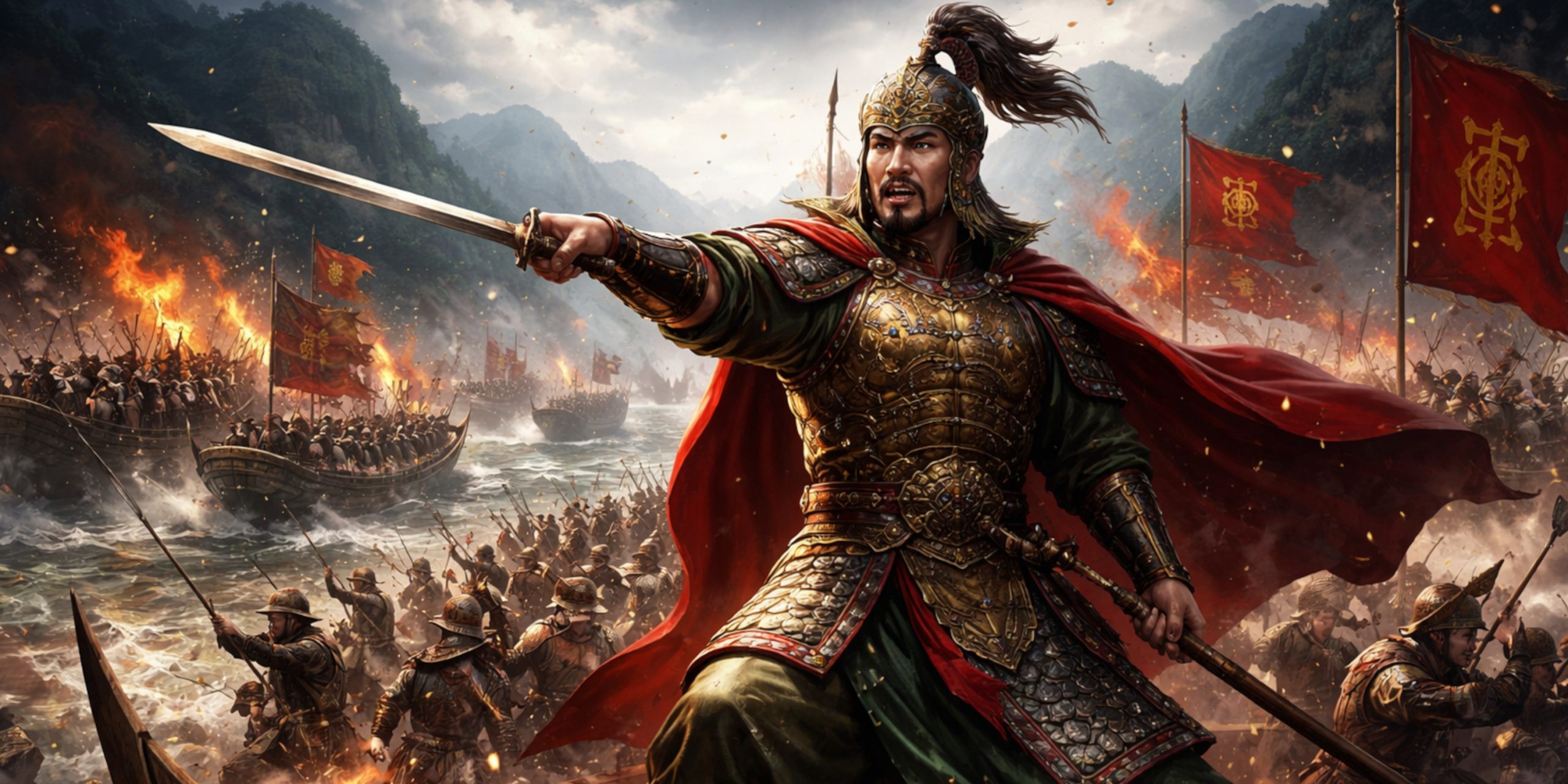
The battle of Bạch Đằng in 1288 is the great set-piece triumph of Trần Hưng Đạo’s career and one of the most famous victories in Vietnamese history.
Here, the river became a trap. Wooden stakes were planted in the riverbed, positioned to exploit tidal conditions. Enemy vessels were lured into the area at the wrong moment. As the water shifted, mobility disappeared and the trap closed. Vietnamese forces then attacked with devastating effect.
It is a beautiful piece of military thinking, if one is allowed to admire a battlefield for being both clever and ruinous. The plan relied on preparation, deception, environmental knowledge and timing. It was not brute force. It was intelligence sharpened into a killing instrument.
Bạch Đằng did more than win a battle. It broke the invasion and secured Trần Hưng Đạo’s place among the great commanders of the medieval world.
Arms and Armour in the Age of Trần Hưng Đạo
No precise surviving equipment list tells us exactly what Trần Hưng Đạo wore or carried in the field, which is maddening but not unusual for the medieval world. Still, the military culture of the Trần period allows a sensible reconstruction of the arms and armour associated with elite commanders in Đại Việt.
Weapons
Likely weapons of the period included:
- Spears and polearms for formation fighting
- Swords as sidearms and symbols of rank
- Bows and crossbows for ranged warfare
- Naval and boarding weapons suited to river combat
For a commander of Trần Hưng Đạo’s status, the sword was probably as much an emblem of authority as a practical battlefield weapon. Spears and missile weapons, however, would have remained central to the wider conduct of war.
Armour
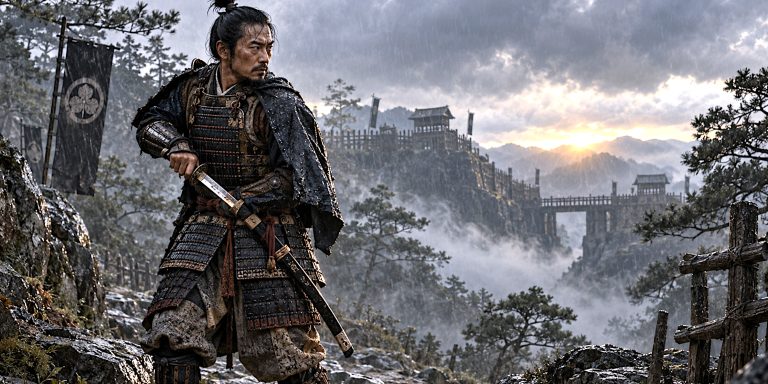
Armour in thirteenth-century Đại Việt likely balanced protection and mobility. Lamellar or scale-style armour is often associated with the wider military culture of East and Southeast Asia in this period, and elite warriors would have used helmets and defensive gear suited to command in mobile campaigns.
This matters because the environment mattered. Heavy, cumbersome protection may sound impressive in fantasy art, but campaigning through river plains, humid terrain and fast-moving engagements tends to punish theatrical nonsense quite quickly.
Command Display
As a prince and supreme commander, Trần Hưng Đạo would also have projected authority through appearance. Richer materials, more elaborate equipment and visible markers of rank were part of the language of command. In medieval warfare, looking like the centre of power was not vanity. It was practical.
Leadership and Character
Trần Hưng Đạo’s long-term fame rests not only on victories, but on character. He is remembered as a man of loyalty, discipline and clear political judgement. He served the Trần dynasty at a moment when internal division could have been fatal, yet later tradition praises him as a defender of the realm rather than a rival to it.
That distinction matters. Medieval courts were not exactly famous for calm cooperation and emotional maturity. A powerful prince with military prestige could be dangerous to the state he claimed to protect. Trần Hưng Đạo’s memory is unusually strong because he is associated with the opposite, strength used in service of survival.
He also seems to have understood morale. Resistance is not built from speeches alone. It requires credibility. People have to believe that endurance is possible. Commanders who provide that belief are rare, and usually remembered.
Artefacts and Relic Sites Connected to His Era
Anyone interested in Trần Hưng Đạo should think in terms of a historical landscape rather than one single display case. His legacy survives through museums, relic sites and battle zones linked to the Trần dynasty and the Mongol wars.
Vietnam National Museum of History, Hanoi
This is one of the best places to explore material culture from medieval Vietnam, including objects and interpretation relevant to the Trần dynasty. It provides wider context for the political and military world in which Trần Hưng Đạo lived.
Vietnam History Museum, Ho Chi Minh City
This museum includes displays relating to Vietnamese dynastic history and military heritage, with material useful for understanding the Trần period and its national significance.
Bạch Đằng Giang Relic Site
This is perhaps the most important historical landscape associated with Trần Hưng Đạo’s greatest victory. It preserves the memory of the 1288 campaign and connects public commemoration with the physical geography of the battle.
Regional Museums in Northern Vietnam
Museums and local heritage sites in the broader Bạch Đằng region, especially around Hải Phòng and Quảng Ninh, are also relevant for artefacts and interpretation tied to the campaign against the Yuan.
Latest Archaeology and Recent Findings
The most important archaeological discoveries linked to Trần Hưng Đạo’s military legacy are the wooden stake fields associated with the Bạch Đằng battlefield zone.
These finds matter enormously. For centuries, the battle was remembered through chronicles, memory and reverence. The discovery of stake remains in the wider Bạch Đằng area gives physical support to the traditional account of how the river trap worked. It confirms that this famous victory was not merely embellished legend. It was grounded in a very real and carefully prepared battlefield system.
Recent heritage interpretation has also continued to emphasise the wider Bạch Đằng landscape as an archaeological and historical zone, not just a single battlefield point. That helps place the victory within a broader military environment of tidal water, prepared obstacles and coordinated attack.
There is, however, one sensible caution. English-language reporting on the latest archaeology can be patchy, and heritage websites often present the clearest public summaries. The evidence is important, but the online trail can be less tidy than one might like. Medieval history rarely arrives gift-wrapped.
Where to See the Legacy of Trần Hưng Đạo Today
For visitors, researchers and history enthusiasts, the following are the most relevant places to begin:
- The Vietnam National Museum of History in Hanoi
- The Vietnam History Museum in Ho Chi Minh City
- The Bạch Đằng Giang Relic Site
- Regional museums and heritage sites in northern Vietnam linked to the Bạch Đằng campaign
- Temples and commemorative spaces dedicated to Trần Hưng Đạo across Vietnam
His legacy is not confined to scholarship. It remains visibly alive in public memory, sacred sites and national commemoration.
Takeaway
Trần Hưng Đạo deserves his place among the great commanders of the medieval world. He faced one of history’s most formidable empires and helped preserve the independence of Đại Việt through patience, tactical imagination and ruthless strategic sense.
For me, that is the heart of his appeal. He was not merely brave, and bravery on its own is common enough in historical writing. He was effective. He understood war as a system, not a spectacle. That is rarer, and far more interesting.
If medieval history has a habit of turning some figures into legends, Trần Hưng Đạo is a case where the reality seems to have done most of the work.
Watch the documentary:
FAQ
Was Trần Hưng Đạo a real historical figure?
Yes. Trần Hưng Đạo, also known as Trần Quốc Tuấn, was a real prince and military commander of the Trần dynasty in thirteenth-century Đại Việt.
What is Trần Hưng Đạo most famous for?
He is most famous for leading Đại Việt’s resistance against the Mongol and Yuan invasions, especially the victory at Bạch Đằng in 1288.
What battle made Trần Hưng Đạo famous?
The battle of Bạch Đằng is the most famous victory associated with him, where river stakes and tidal strategy helped destroy the invading fleet.
Where can you see artefacts from the time of Trần Hưng Đạo?
The best places to start are the Vietnam National Museum of History in Hanoi, the Vietnam History Museum in Ho Chi Minh City, and the Bạch Đằng Giang Relic Site.
What archaeology is linked to Trần Hưng Đạo?
The most significant discoveries are the wooden stake fields found in the Bạch Đằng battlefield zone, which support the historical tradition surrounding the 1288 victory.