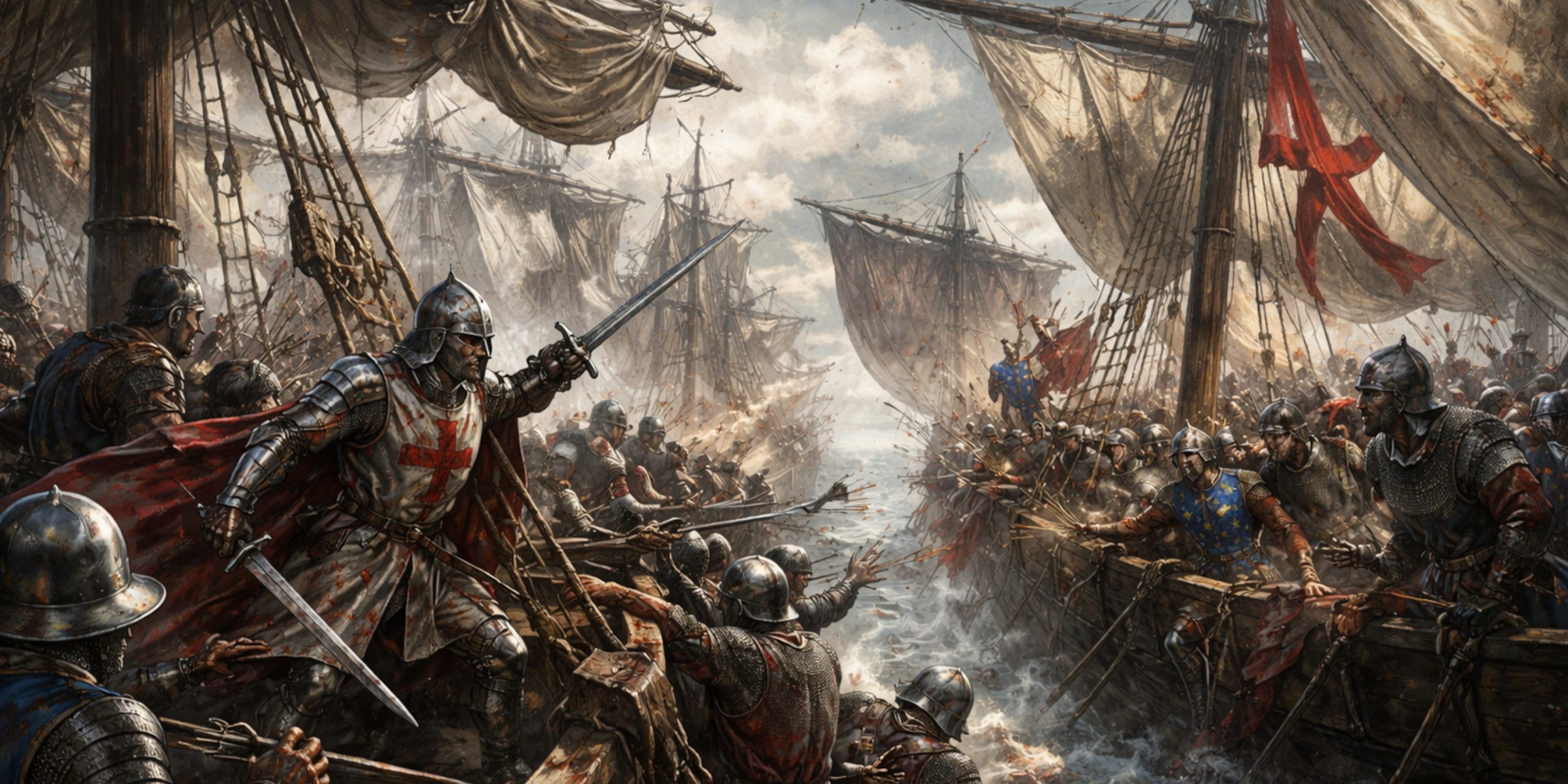
The Battle of Sluys, fought on 24 June 1340 off the Flemish coast, was one of the defining naval clashes of the Middle Ages. It marked the first great English victory of the Hundred Years’ War and secured command of the Channel for a generation.
When I first studied Sluys, I was struck by how brutal and strangely intimate medieval naval warfare could be. This was not an elegant exchange of broadsides. It was a floating siege, a chain of ships lashed together, turning the sea itself into a battlefield of splintered decks and boarding axes.
At Sluys, King Edward III of England did more than win a fight. He shattered French plans for invasion and laid the foundations for English campaigns in France.
Background to the Battle
In 1340, the Hundred Years’ War was still in its early phase. The French crown, under Philip VI of France, had assembled a large fleet at the port of Sluys. Their aim was simple and alarming: dominate the Channel, disrupt English trade, and potentially invade.
Edward III could not allow that. He gathered a fleet of cogs and smaller vessels, largely converted merchant ships, and sailed to confront the French fleet anchored in a defensive formation.
The date was symbolic. 24 June was the Feast of St John the Baptist. Medieval chroniclers would later note the piety of the English king, though I suspect cold strategy mattered rather more than saints.
Foces
The fleets were immense by medieval standards.
Estimated Strength
| Side | Ships | Estimated Men |
|---|---|---|
| England | 120–150 | 10,000–15,000 |
| France | 180–200 | 15,000–20,000 |
The French ships were chained together in three lines across the harbour entrance. This created a formidable barrier but limited manoeuvrability. The English fleet retained flexibility, attacking in waves.
Leaders
English Command
- Edward III of England
- Sir Robert Morley, Admiral of the Northern Fleet
- Sir Hugh Hastings
Edward personally directed operations, a rare and risky act for a monarch. Medieval kings had a habit of getting very close to the danger.
French Command
- Hugues Quiéret
- Nicolas Béhuchet
French command was divided between a naval officer and a royal administrator. This was not ideal. Béhuchet was reportedly hanged from a yardarm after capture. A pointed lesson in accountability.
Arms and Armour
Naval combat in 1340 was effectively infantry warfare on wooden platforms.
English Troop Composition
- Longbowmen
- Men at arms
- Sailors equipped for boarding
French Troop Composition
- Genoese crossbowmen
- Men at arms
- Sailors and marines
Weapons Used
Ranged Weapons
- English longbow
- Genoese crossbow
- Javelins and thrown stones
Polearms and Close Combat
- Spears
- Bills and poleaxes
- Boarding axes
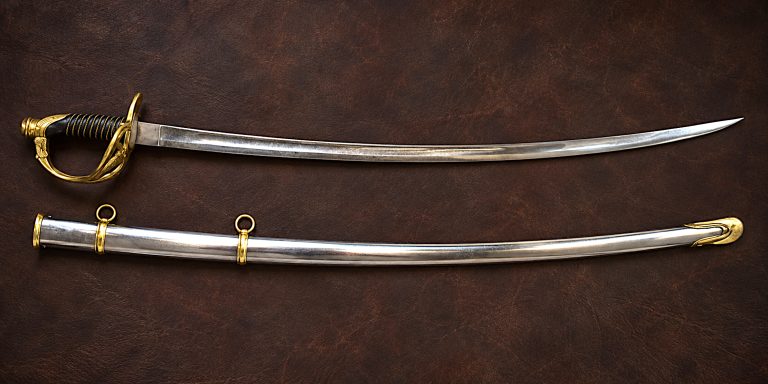
Swords
- Oakeshott Type XIII arming swords
- Oakeshott Type XIV arming swords
- Falchions for close deck fighting
The longbow proved decisive. English archers, firing from elevated forecastles, poured arrows into the packed French decks. Crossbowmen struggled to reload amid the chaos.
In armour, both sides wore mail with emerging plate elements. Helmets included bascinets with visors and kettle hats. The sea was not kind to heavy equipment. Falling overboard in full harness was effectively a death sentence.
The Battle Timeline
Morning, 24 June 1340
English fleet approaches Sluys. Edward orders attack despite strong French position.
Late Morning
Initial boarding actions begin. English archers soften targets before grappling and assault.
Midday
Fierce hand to hand fighting across chained French vessels. The battle becomes a continuous melee.
Afternoon
French resistance collapses as ships are captured one by one. Many French sailors drown attempting escape.
Evening
English victory secured. Massive French losses reported.
Contemporary estimates claim up to 15,000 French dead. Medieval chroniclers enjoyed impressive numbers. Even if exaggerated, the slaughter was severe.
Contemporary Accounts
The chronicler Jean Froissart provides one of the best known descriptions. He records that the sea was “covered with the bodies of men and broken ships.”
Another account notes that English archers “shot so strongly and so thick that it seemed snow.” A poetic image, though I suspect the participants found it less picturesque.
English sources celebrated divine favour. French sources lamented treachery and misfortune. History, as usual, sided with the victor.
Archaeology and Material Evidence
Unlike land battles, Sluys has left limited archaeological trace due to tidal shifts and coastal change. However:
- Medieval wrecks in the North Sea show similar cog construction
- Artefacts from 14th century Flemish waters include weapon fragments and rigging elements
- Contemporary harbour excavations at Sluis confirm its scale as a major medieval port
Marine archaeology in the region continues to refine our understanding of cog design and naval logistics. It reminds us that medieval fleets were largely adapted merchant vessels, not purpose built warships in the modern sense.
Consequences and Legacy
The victory at Sluys gave England effective control of the Channel for years. It enabled Edward III to land forces in France and pursue campaigns that culminated at Crécy and Calais.
It also demonstrated the battlefield dominance of the longbow in a naval setting. That lesson would echo throughout the 14th century.
For France, the loss was catastrophic. Naval rebuilding took time, and the threat of English raiding intensified.
Strategically, Sluys was not a mere skirmish. It was the hinge upon which early English successes in the war turned.
Takeaway
Sluys does not receive the same attention as Crécy or Agincourt, perhaps because naval warfare feels less romantic to the popular imagination. Yet it was here that the English secured the freedom to fight on French soil.
As a historian, I find Sluys compelling precisely because it is messy and brutal. Ships chained together, archers firing into packed decks, commanders dying amid ropes and rigging. There is nothing theatrical about it. It is simply war, close enough to touch.
And on that June day in 1340, the sea belonged to England.