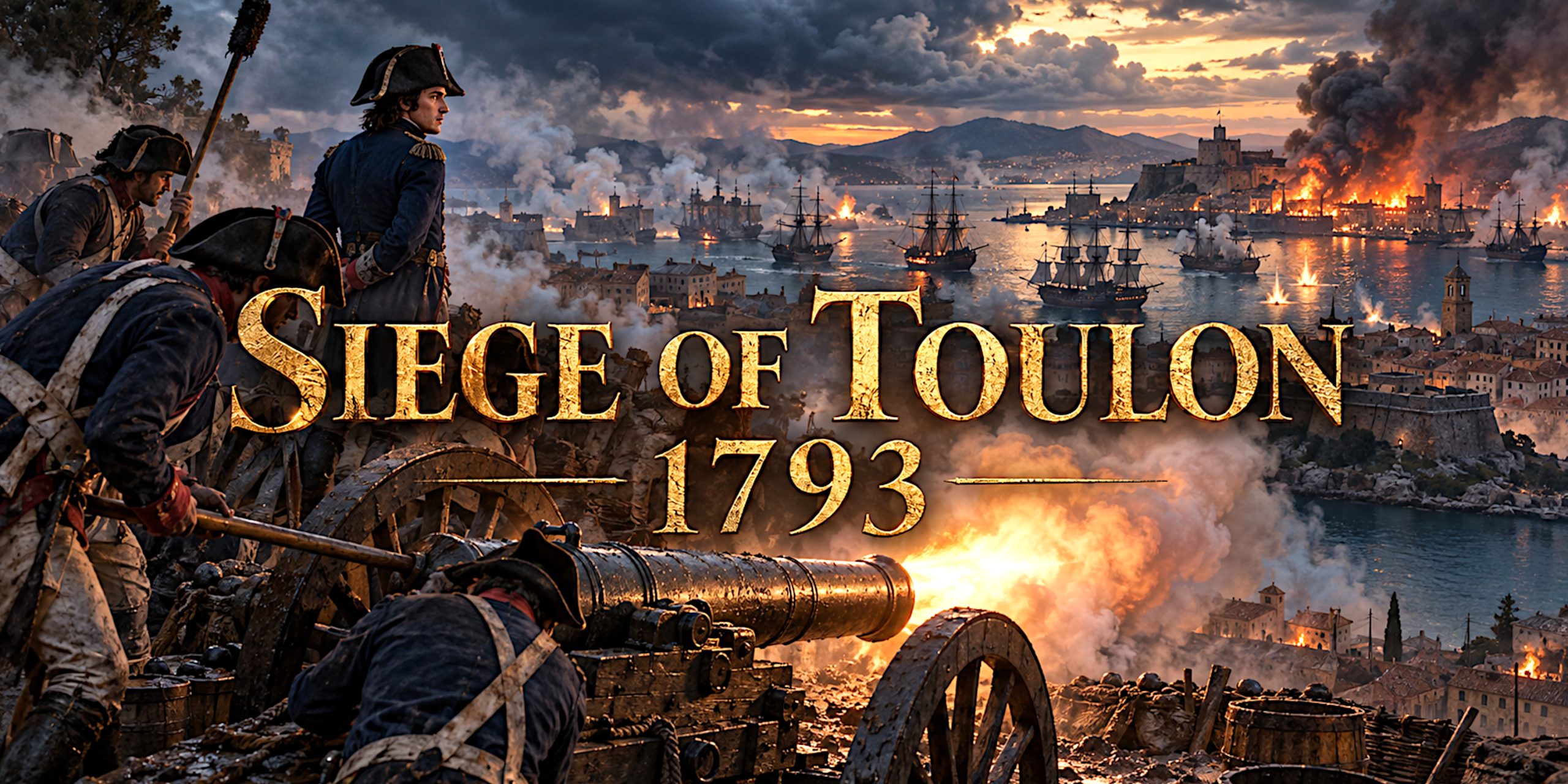
The Siege of Toulon in 1793 gave Napoleon Bonaparte his first major military opportunity. It also exposed the violence of the French Revolution, the difficulties of coalition warfare and a simple geographical truth: a naval base becomes a precarious possession when enemy guns command its anchorage.
Between late August and December, French Republican troops fought to recover Toulon from a coalition supporting the city’s revolt against the Convention. Bonaparte, a 24-year-old artillery officer, helped turn an uncertain siege into a Republican victory. General Jacques François Dugommier supplied the experienced command needed to make the plan work.
I find Toulon most revealing when the future emperor is allowed to remain a young officer. His achievement was substantial enough without making every other participant an extra in his biography.
Siege of Toulon at a Glance
| Detail | Summary |
|---|---|
| Conflict | French Revolutionary Wars, during the War of the First Coalition |
| Dates | Allied occupation began in late August 1793; Republican troops entered Toulon on 19 December |
| Location | Toulon and its surrounding heights, southern France |
| Republican objective | Recover the naval base, arsenal and French warships |
| Defenders | British, Spanish, Neapolitan and Sardinian-Piedmontese forces, with French supporters of the revolt |
| Decisive action | Capture of Fort Mulgrave and the western harbour positions on 17 December |
| Outcome | Republican victory and coalition evacuation |
| Wider significance | Bonaparte’s promotion, damage to the French fleet and violent reprisals against inhabitants |
Why Toulon Rebelled
Toulon’s revolt grew out of the political upheaval of 1793. Opposition to the increasingly dominant Montagnards in Paris did not initially make every dissenter a royalist. The federalist revolts brought together people with different ambitions, including Republicans who opposed the Convention’s leadership.
In Toulon, royalists gained influence and the city’s authorities sought foreign protection. An Anglo-Spanish fleet entered the harbour in late August. The arrangement placed a major French naval base in the hands of powers already at war with France.
For the Convention, this was both a strategic emergency and a political humiliation. Toulon contained an arsenal, dockyards and a substantial part of the Mediterranean fleet. Losing it threatened French naval power and encouraged other opponents of the revolutionary government.
Forces
Strength figures vary because troops arrived throughout the siege, sickness reduced effective numbers and some totals include naval personnel. A fleet’s entire complement should not be treated as an army available to defend the hills.
| Side | Approximate strength | Main components | Operational position |
|---|---|---|---|
| French Republicans | Around 30,000 or more by the final phase; published estimates differ | Regular infantry, volunteer battalions, artillery and engineers | Growing resources, initially uneven command and training |
| Coalition and French defenders | Approximately 12,000–16,000 effective land troops in many accounts; broader totals are higher | British, Spanish, Neapolitan and Piedmontese troops, marines, naval detachments and French royalists | Strong positions and maritime supply, but an extensive defensive perimeter |
| Allied fleets | British and Spanish squadrons | Warships, transports and sailors supporting operations ashore | Essential for supply, evacuation and continued occupation |
The important imbalance was geographical. The defenders had to protect numerous positions around a large harbour. The Republicans could concentrate against a sector whose loss would compromise the entire occupation.
Leaders and Troop Composition
| Leader | Side | Role |
|---|---|---|
| Jacques François Dugommier | Republican | Directed the successful final phase of the siege |
| Napoleon Bonaparte | Republican | Organised artillery, developed batteries and pressed the attack on the western harbour heights |
| Jean François Carteaux | Republican | Commanded during the earlier stages |
| François Amédée Doppet | Republican | Briefly succeeded Carteaux before Dugommier’s arrival |
| Jean François de La Poype | Republican | Conducted operations on the eastern side, including the Faron sector |
| Armand Samuel de Marescot | Republican | Engineer involved in siege operations and securing captured works |
| Vice-Admiral Lord Hood | Coalition | Commanded the British fleet and played a central role in the occupation and evacuation |
| Juan de Lángara | Coalition | Commanded the Spanish fleet |
| Federico Gravina | Coalition | Senior Spanish officer involved in the land defence |
| Charles O’Hara | Coalition | Senior British land commander, captured during the November sortie |
| David Dundas | Coalition | Assumed British land command after O’Hara’s capture |
| Henry Phipps, Lord Mulgrave | Coalition | Associated with the defensive works on the Caire heights |
The armies combined several kinds of troops:
- Republican infantry: experienced soldiers served alongside volunteers with varying levels of training.
- Republican specialists: gunners and engineers made batteries, ammunition supply and earthworks central to the campaign.
- Coalition infantry: contingents from several states defended forts and conducted sorties, with differences in language and command arrangements.
- Marines and sailors: provided manpower, technical knowledge and support for the harbour defences.
- French royalists: contributed local knowledge and armed support, while facing particularly dangerous consequences if the city fell.
Coalition command was a negotiation between national authorities rather than a tidy hierarchy. Unfortunately, Republican cannon did not wait for everyone to agree.
Arms and Armour
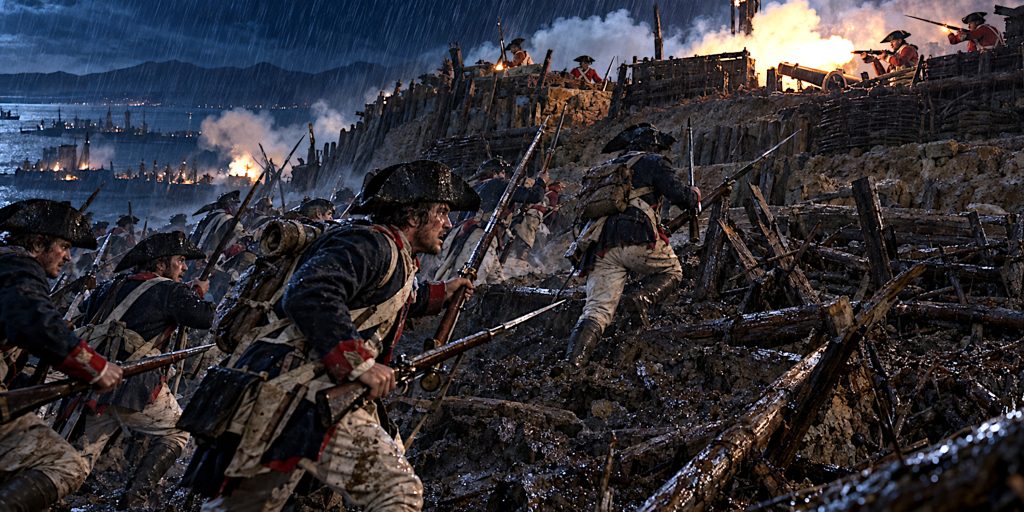
Toulon was dominated by artillery and infantry firearms. Swords mattered in assaults and as officers’ weapons, but the musket, bayonet and gun battery did most of the work.
| Weapon or equipment | Users | Role and qualification |
|---|---|---|
| French Model 1777 flintlock musket and earlier French patterns | Republican infantry and French defenders | Smoothbore infantry weapons; supply was not uniform |
| Brown Bess family of muskets | British infantry and marines | Musket fire and socket-bayonet fighting |
| Flintlock muskets from national arsenals | Spanish, Neapolitan and Piedmontese troops | Infantry firepower, with equipment varying between contingents |
| Field cannon, including Gribeauval-system pieces | Republicans | Supported infantry and engaged defensive positions |
| Heavy cannon, mortars and howitzers | Both sides | Bombardment, attacks on earthworks and threats to shipping |
| Earth parapets, timber obstacles and trenches | Both sides | Protection and control of approaches |
Specific sword types relevant to the armies of 1793 include the following. These are period equipment categories, not a verified inventory of every unit at Toulon.
| Sword type | Likely context | Historical caution |
|---|---|---|
| French Model 1767 infantry sabre and related briquet forms | Selected infantry personnel, including grenadiers | A short, curved sidearm; not the standard weapon of every infantryman |
| French military épée or smallsword | Officers | Designs varied; personal purchase complicates precise identification |
| British 1786-pattern infantry officer’s sword and related spadroons | British officers | Straight cut-and-thrust blades appropriate to the period |
| Naval cutlass | Armed sailors | Several forms existed before later standardised naval patterns |
| Spanish officer’s espada and sabre forms | Spanish officers | Exact patterns require unit-level or individual evidence |
The British 1796-pattern swords and later French An IX and An XI sabres belong to a subsequent period. They should not appear in a 1793 equipment list.
Armour was largely absent from the infantry fighting. Uniform coats, waistcoats, breeches and headgear offered little ballistic protection. Earthworks were considerably more useful than a well-cut coat.
How the Republicans Won
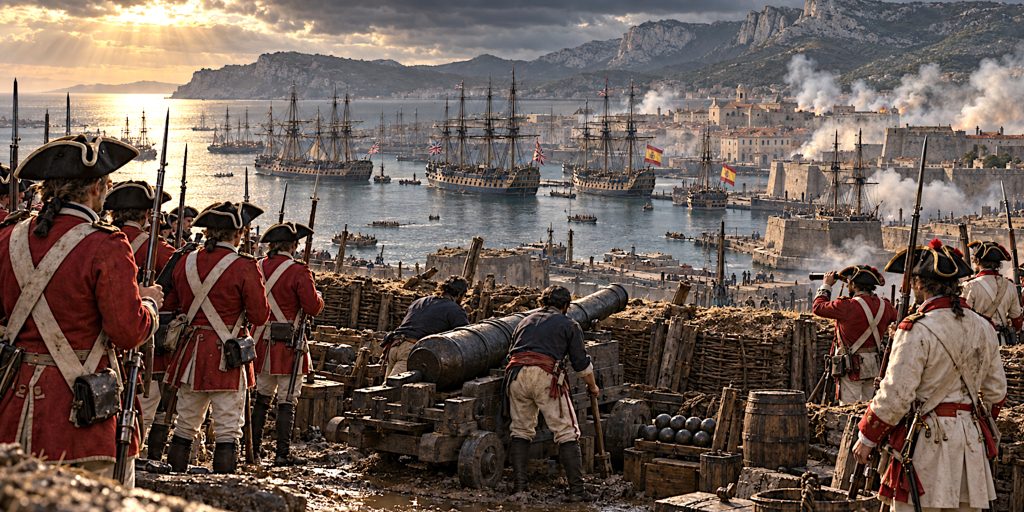
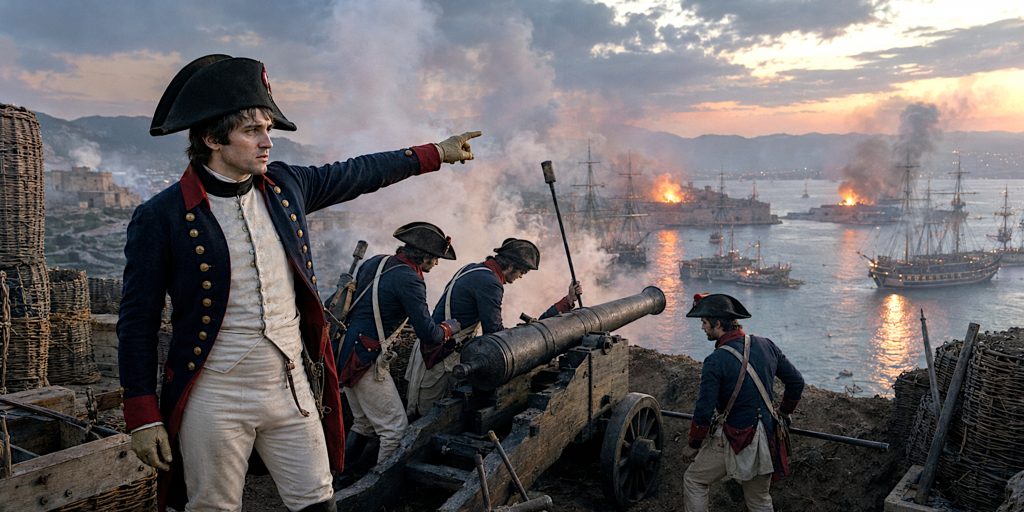
The key lay west of the harbour, around the Caire heights and the positions of Balaguier and l’Aiguillette. Guns established there could threaten the anchorage and undermine the fleet’s ability to sustain the defence.
The coalition understood the danger. Fort Mulgrave, an earthwork on the heights, became the centre of a fortified position nicknamed “Little Gibraltar”. It protected the approaches to the coastal forts below.
Bonaparte’s contribution extended beyond spotting useful ground. He sought guns, ammunition, trained personnel and the means to move equipment into position. Such work rarely attracts the attention given to a cavalry charge, although an artillery plan without powder is mostly a drawing.
Dugommier’s arrival in November brought greater coherence to the Republican effort. The final assault, during the night of 16–17 December, overcame the Mulgrave position after hard fighting. Bonaparte suffered a thigh wound. With the western positions lost and Republican pressure elsewhere continuing, the coalition could no longer hold Toulon without endangering its fleet.
Battle Timeline
| Date | Event | Significance |
|---|---|---|
| Late August 1793 | Anglo-Spanish forces enter Toulon | The revolt acquires foreign military protection |
| Early September | Republican forces establish the siege | The struggle develops around the surrounding forts and heights |
| Mid-September | Bonaparte assumes artillery command after Dommartin is wounded | Artillery organisation becomes a major element of the Republican effort |
| 22 September | Republican attack towards the western harbour positions fails | The defenders strengthen the threatened sector |
| October–November | Batteries and siege resources expand | Republican firepower increases |
| Mid-November | Dugommier takes command | The final campaign gains experienced direction |
| 30 November | Coalition sortie from Malbousquet ends in retreat; O’Hara is captured | The defenders lose a senior commander |
| Mid-December | Bombardment prepares the decisive attack | Pressure concentrates on the western works |
| Night of 16–17 December | Republicans storm Fort Mulgrave | The principal obstacle on the Caire heights falls |
| 17–18 December | Western harbour positions are secured and the coalition prepares to leave | Continued occupation becomes untenable |
| Night of 18–19 December | Evacuation and destruction in the dockyards | Troops and civilians depart amid fires and confusion |
| 19 December | Republican troops enter Toulon | The siege ends and repression follows |
| 22 December | Bonaparte is promoted to brigadier-general | His success receives formal recognition |
Contemporary Quotes
In his letter of 19 December 1793, Dugommier announced:
“Toulon is restored to the Republic and the success of our arms is complete.”
Translation from the French. The letter was read to the Convention on 25 December and preserved in the Archives parlementaires.
The same report identified the l’Aiguillette promontory as the decisive objective. It is valuable evidence that the harbour strategy was understood at the time, rather than invented retrospectively to decorate Napoleon’s reputation.
A much darker voice appears in a dispatch of the representatives on mission, dated 20 December and reproduced in the documentary discussion accompanying Barras’s memoirs:
“National vengeance is being unleashed. We are shooting in great numbers.”
Translation from the French. This was official language celebrating repression. It tells us about the victors’ intentions, though it cannot by itself establish the number of victims.
Read together, these reports make uncomfortable companions: military success in one, political killing in the other.
Archaeology and Surviving Evidence
Toulon’s surviving landscape helps explain the siege, but it needs careful reading. Later rebuilding has altered the defences, and a cannonball without a secure archaeological context cannot confidently be assigned to December 1793.
| Site or evidence | What it contributes | Limitation |
|---|---|---|
| Fort Balaguier | Shows the relationship between coastal batteries and the harbour entrance | The fort underwent later alterations, notably in the nineteenth century |
| Fort de l’Aiguillette | Helps explain why control of the western shore mattered | Its surviving fabric reflects several phases of military development |
| Caire heights and Fort Napoléon | Preserve the setting of the decisive struggle | The masonry fort was built from 1811, not during the siege |
| Military plans and engineering records | Locate works and document changes to the defences | Proposed construction must be distinguished from completed work |
| Harbour and dockyard remains | Potential evidence for destruction and naval activity | Attribution to 1793 requires a published investigation and secure dating |
The heritage inventories document the temporary British redoubt on the Caire heights and its replacement by a permanent fort. Fort Napoléon is therefore a later structure on the historic position, not an intact Fort Mulgrave.
Claims about excavated uniform fragments, musket parts or identified burnt warships should be supported by named excavation reports. The surviving forts, plans and engineering records already provide substantial evidence without adding finds whose provenance cannot be checked.
Outcome and Legacy
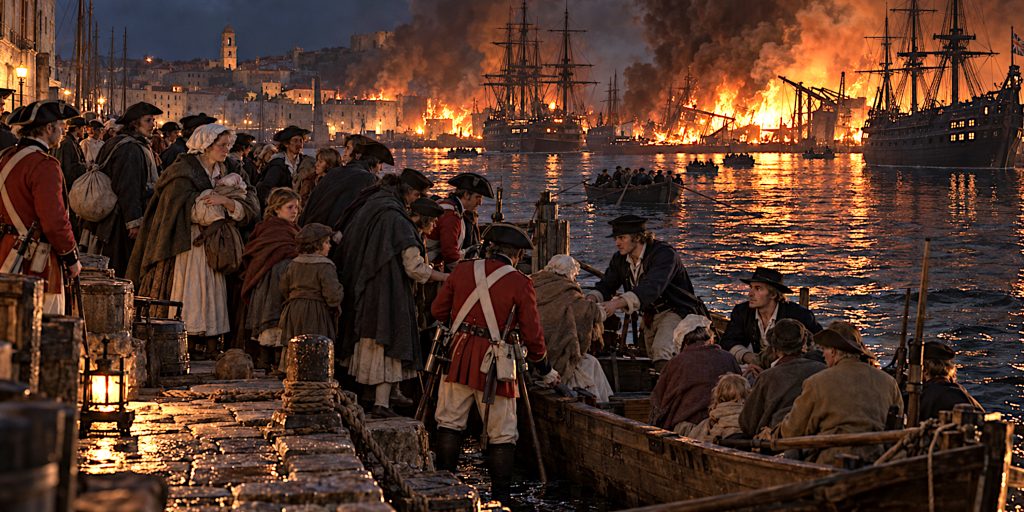
The coalition evacuation saved troops and carried away thousands of civilians who feared Republican reprisals. Retreating forces also burnt or removed French warships and damaged naval infrastructure. Recovering the city did not immediately restore the fleet to its former strength.
For those left behind, victory brought repression. Hundreds were killed in the reprisals associated with the representatives on mission, particularly Barras and Fréron. Precise totals remain disputed. Toulon was also renamed Port-la-Montagne, an administrative punishment with the modest ambition of rewriting the city’s identity.
Bonaparte emerged as a brigadier-general. Toulon demonstrated his ability to connect terrain, artillery and an opponent’s strategic vulnerability. It also showed his energy in assembling the resources needed to exploit that vulnerability.
His achievement deserves recognition alongside Dugommier’s leadership, Marescot’s engineering and the soldiers who took the works. I would resist the temptation to make Toulon an inevitable first chapter in an emperor’s life. In December 1793, it was an uncertain siege won through preparation and violent fighting, followed by consequences that no account of military brilliance should tidy away.
Sources and Further Reading
- Dugommier’s victory letter, preserved in the Archives parlementaires.
- Documentary discussion of Bonaparte at Toulon accompanying Barras’s memoirs.
- Arthur Chuquet, Dugommier, chapter on Toulon.
- World History Encyclopedia: Siege of Toulon.
- French regional heritage inventory: Fort Napoléon.
- French regional heritage inventory: Fort Balaguier.
- French regional heritage inventory: Fort de l’Aiguillette.
- Musée de l’Armée: Model 1767 grenadier sabre.
- Royal Museums Greenwich: the spadroon tradition.