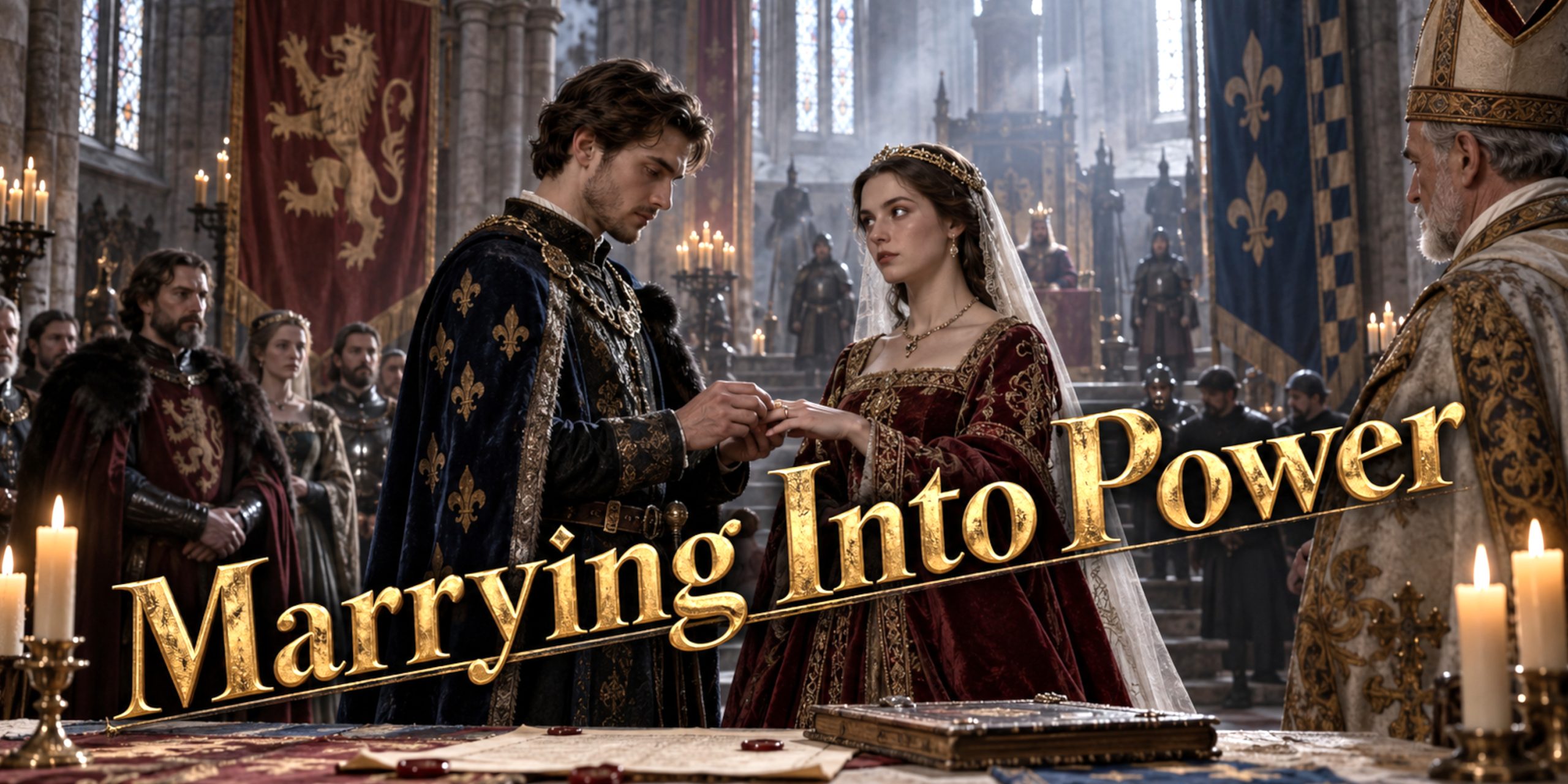
Marriage in Crusader Kings 3 is diplomacy, military planning and selective breeding conducted beneath a thin layer of courtly romance. The ceremony might feature flowers and flattering speeches, but you are probably thinking about claims, alliances and whether the children will inherit the Genius trait.
A strong marriage can rescue a vulnerable ruler, introduce valuable claims into your dynasty or place your descendants in line for a foreign throne. A careless one can hand land to another house, produce the wrong dynasty of heirs or attach you to an ally who treats every minor border dispute as an international emergency.
The best match depends on what your ruler needs now and what you want the dynasty to control two generations later.
Marriage Strategy at a Glance
| Objective | Look for | Main risk |
|---|---|---|
| Immediate protection | A close relative of a powerful ruler | Being dragged into repeated wars |
| Better heirs | Strong congenital traits | Weak political value |
| New claims | Children or siblings of title holders | Claims may take generations to become useful |
| Prestige | A spouse from a famous or highly ranked dynasty | The candidate may refuse |
| Council support | High Stewardship, Diplomacy, Intrigue, Martial or Learning | Passing over a stronger political match |
| Dynasty preservation | Correct marriage type for your succession | Children belonging to another house |
| Foreign expansion | Vulnerable heirs and favourable succession | Unexpected births changing the inheritance order |
| Internal stability | Powerful vassal families | Strengthening a future faction leader |
My first rule is simple: decide what the marriage is meant to achieve before opening the candidate list. Otherwise, the search becomes a medieval dating app in which everyone is judged by troop numbers and genetic potential. Which, to be fair, is exactly what it is.
Why Marriage Is So Powerful in CK3
A marriage can influence several systems at once:
- Alliances and military strength
- Inheritance and succession
- Claims on foreign titles
- Prestige and legitimacy
- Fertility and the production of heirs
- Congenital traits
- Relations between rulers
- Council performance
- Dynasty growth and Renown
These benefits operate across different timescales. An alliance may become available immediately, while a claim might not reach your dynasty until the next generation. Genetic planning can take even longer.
That distinction matters. There is little point arranging a brilliant marriage for the year 1120 if your neighbour intends to remove you from the map in 1105.
Choose Your Objective Before Choosing a Spouse
Before arranging a marriage, ask three questions:
- What is the greatest threat to my ruler?
- What does my realm currently lack?
- Where should my dynasty be in twenty or fifty years?
An exposed count surrounded by stronger neighbours usually needs an alliance. A secure king with several healthy children can afford to pursue claims or congenital traits. A ruler without a viable heir should prioritise fertility, age and dynasty continuity before dreaming about foreign crowns.
CK3 rewards ambition, but it punishes ambition that ignores the immediate situation with almost comic efficiency.
Using Marriage to Secure Powerful Alliances
A marriage or betrothal between close relatives of two rulers can create the basis for an alliance. Once established, that ally may be called into wars, although willingness to participate can depend on circumstances, opinion and available resources.
When comparing potential allies, do not look only at the displayed troop total.
Consider:
- How far away the ally is
- Whether their forces can reach you quickly
- Whether they are already fighting wars
- Their realm’s internal stability
- The age and health of the relatives connecting the alliance
- Whether succession could dissolve the relationship
- The political cost of their likely calls to war
A nearby duke with 3,000 available soldiers may be more useful than a distant king with 9,000 troops who must march across half of Europe while being attacked by three cousins.
Powerful allies also work as deterrents. The AI considers the wider military strength available to a ruler, so an alliance can discourage an attack before any troops are raised. For a vulnerable child ruler or newly independent count, that protection can be worth more than a speculative claim.
When an alliance is worth the trouble
An alliance is particularly valuable when:
- You expect an imminent defensive war
- A faction is close to issuing demands
- You plan to conquer a stronger neighbour
- Your ruler has recently inherited an unstable realm
- Your levies have not recovered from an earlier conflict
Do remember that allies have their own wars. Your impressive new father-in-law may summon you to fight over a county you cannot locate without zooming out twice.
Marriage, Claims and Inheritance
Claims are where marriage becomes properly dangerous.
Marrying a character with claims can allow those claims to pass to your children, depending on the type of claim, the claimant’s sex, the relevant faith doctrines and the title’s succession rules. Those descendants can then press their rights through war or eventually inherit the title.
A productive claim strategy usually follows this pattern:
- Identify a title you want.
- Study its ruler, heirs and succession law.
- Find a claimant or potential claimant connected to that title.
- Arrange a marriage that keeps the resulting children in your dynasty.
- Wait for the claim to pass or become enforceable.
- Press the claim when the political situation is favourable.
The fifth step can take years. CK3 is very good at making you feel clever and then asking whether you still remember the plan three rulers later.
Pressed and unpressed claims
A pressed claim is generally more reliable because it can be inherited by the claimant’s children. An unpressed claim is more fragile and may disappear if it is not converted into a pressed claim or used successfully.
Always inspect the claim itself rather than assuming every claimant offers the same opportunity.
Watch the line of succession
A candidate does not need to be the current heir to become useful. Deaths, disinheritance, title loss and changes in succession can move a previously unimportant character much closer to the throne.
Useful targets can include:
- Younger sons with inheritable claims
- Daughters whose brothers have no children
- Dispossessed members of conquered dynasties
- Claimants living as guests in foreign courts
- Widowed nobles with titles or valuable children
- Relatives of rulers facing unstable successions
Never assume the succession will remain unchanged. New children have an irritating habit of appearing shortly after you complete the perfect arrangement.
Patrilineal and Matrilineal Marriage
The marriage type determines which dynasty the children normally join.
| Marriage type | Children usually join | Common strategic use |
|---|---|---|
| Patrilineal | The father’s dynasty | Standard marriage for male dynastic heirs |
| Matrilineal | The mother’s dynasty | Preserving a female ruler’s house or recruiting men into it |
For a female ruler or important female heir, a matrilineal marriage is often essential. A prestigious husband is little consolation if every child belongs to his dynasty and your game ends when she dies.
The same principle can be used offensively. Arrange matrilineal marriages between women of your house and unlanded men who possess claims. Their children will belong to your dynasty and may inherit those claims.
AI rulers are less likely to accept an unconventional marriage when the candidate is important to their succession. You may need to target younger sons, landless claimants or characters whose lieges underestimate their future value.
Check the dynasty shield shown for prospective children before confirming any important union. It takes seconds and can prevent several decades of inventive swearing.
Betrothal or Immediate Marriage?
Betrothals allow children to be promised before they are old enough to marry. This can secure a valuable candidate early and establish future diplomatic links.
They also involve risk.
A childhood betrothal may become less attractive because:
- One candidate develops poor traits
- A better alliance becomes available
- Succession changes remove the expected claim
- One family loses its titles
- The political relationship deteriorates
- A child dies before reaching adulthood
- The other ruler breaks the arrangement
Use early betrothals when the target is unusually valuable or when you urgently need to reserve an alliance. Otherwise, waiting until the candidates are closer to adulthood gives you more information.
There is a temptation to betroth every child immediately. Resist it. Unmarried relatives are diplomatic resources, and keeping one available can save a reign when the political weather turns unpleasant.
Breeding Congenital Traits
Congenital traits can be inherited and strengthened across generations. The most valuable trait groups improve qualities such as intelligence, physical health, beauty or fertility.
Commonly prized traits include:
- Genius, Intelligent and Quick
- Herculean or Amazonian, Robust and Hale
- Beautiful, Handsome, Pretty, Comely or related equivalents
- Fecund
- Pure-blooded
- Giant, depending on your aims and tolerance for complications
Negative congenital traits should be treated carefully, particularly when they could combine with close-relative marriages.
Building a trait programme
A practical breeding strategy involves:
- Marrying dynasty members to characters with desirable traits
- Pairing characters who share the same positive trait
- Keeping successful genetic lines within the wider dynasty
- Using relevant Dynasty Legacies to improve inheritance chances
- Avoiding repeated close-kin marriages unless the risk is justified
- Maintaining several branches so one unfortunate succession does not ruin the project
Trait breeding is powerful, but political marriages should not be abandoned completely. A Genius spouse does not provide much comfort when an invading emperor is dismantling your capital.
The strongest campaigns usually alternate priorities. One generation secures the realm through alliances, while the next pursues traits or claims from a position of safety.
Fertility, Age and the Need for Heirs
If the marriage must produce children, check the candidates’ ages, health and fertility modifiers.
Relevant factors include:
- Age
- Health traits
- Congenital fertility traits
- Lifestyle perks
- Existing children
- Celibacy
- Disease
- Sexual orientation
- Faith doctrines concerning marriage and concubinage
- Whether the spouses will reside at the same court
A ruler who urgently needs an heir should normally marry a healthy candidate with a realistic reproductive window. Prestige and claims mean very little if the marriage cannot continue the dynasty.
Older characters remain useful for marriages intended to secure alliances, skills or claims without producing additional children. They can also help manage succession when you already have enough heirs and would prefer not to partition the realm into decorative fragments.
Marrying for Skills and Council Performance
A spouse is also an active member of your court. Their attributes can support the ruler through the spouse council tasks, either providing broad assistance or concentrating on a particular skill.
This makes high-stat candidates especially valuable for:
- Increasing Domain Limit through Stewardship support
- Improving diplomacy and opinion
- Strengthening hostile and personal schemes
- Supporting military command
- Accelerating cultural or religious development
A gifted spouse can be worth more than a modest alliance, particularly for a small ruler trying to stabilise finances or hold an oversized domain.
Look beyond the total attribute score. A spouse with exceptional Stewardship may solve a specific problem better than a more rounded candidate. Marriage is one of the cleanest ways to repair a ruler’s weakest area without changing lifestyle.
Prestige and Marriage Acceptance
Characters and their lieges evaluate proposed marriages according to political and personal factors. Acceptance may be affected by:
- Relative rank
- Prestige and dynasty reputation
- Existing opinion
- Religious differences
- Cultural acceptance
- The candidate’s place in the succession
- Alliance value
- Age and fertility
- Traits
- Marriage type
- Existing hooks
- Whether either party is a ruler or heir
Improving relations, gaining Prestige or acquiring a hook can make a rejected proposal possible. So can waiting until the target’s circumstances change.
Marriage acceptance is not a judgement of character. It is a calculation. The game is perfectly willing to tell your charming, brilliant heir that they are beneath a duke’s least remarkable nephew.
Faith, Culture and Marriage Rules
Marriage options are shaped by the doctrines of each faith and, in some cases, cultural traditions.
These rules can determine:
- Whether rulers practise monogamy, polygamy or concubinage
- Which relatives may marry
- Whether adultery is criminal or merely shunned
- Whether divorce is permitted
- Which sex may hold titles
- How easily claims can be pressed
- Whether marriages across faiths are accepted
- How same-sex relationships are treated
This creates substantial differences between campaigns. A strategy designed for a Catholic ruler in France may not transfer neatly to a Norse, Muslim, Hindu or reformed pagan realm.
Check the faith interface before building a plan around marriage or inheritance. CK3’s religious systems are quite happy to invalidate a scheme on a technicality that was visible all along.
Grand Weddings and Political Theatre
Players with the relevant expansion content can arrange a Grand Wedding rather than an ordinary ceremony. These activities can generate Prestige, improve relationships and create opportunities for diplomacy, romance and intrigue.
A Grand Wedding is most useful when:
- The marriage involves major dynasties
- You need Prestige or stronger relations
- Important political guests can attend
- The ceremony supports a larger diplomatic plan
- You can afford the cost without weakening the realm
Grand Weddings are not automatically the best choice. Spending heavily on pageantry while your army is underfunded has a certain historical authenticity, but that does not make it sensible.
How to Marry Courtiers and Recruit Talent
Marriage can be used to bring skilled characters into your court.
If a courtier belongs to you, arranging their marriage may cause the new spouse to join your court, depending on the marriage type and the status of both characters. This is an excellent way to recruit:
- Knights with high Prowess
- Physicians
- Council candidates
- Tutors
- Commanders
- Characters with useful claims
- People carrying valuable congenital traits
For male courtiers, a matrilineal marriage may bring the husband into the woman’s court. For female courtiers, a standard patrilineal marriage may bring the wife to the husband’s court. Always inspect where the couple will reside before confirming.
This system turns unmarried courtiers into recruitment tools. Apparently medieval LinkedIn required vows before onboarding.
Managing Spare Children and Dynasty Members
Not every child should marry for the same reason.
A useful division might be:
- Primary heir: traits, skills and succession security
- Second child: powerful defensive alliance
- Third child: foreign claim
- Daughters and younger sons: court recruitment or secondary alliances
- Distant relatives: dynasty expansion and Renown
- Unlanded claimants: marriages designed to bring titles into the house
Landing relatives can help your dynasty accumulate Renown, but it also gives them military power, independent ambitions and an alarming interest in your throne.
Spread the dynasty widely enough to grow, but keep the most dangerous claims under observation.
Common Marriage Mistakes
Chasing the largest army
Military strength can collapse through war, rebellion or succession. Evaluate the realm behind the number.
Forgetting the dynasty of future children
This is particularly dangerous with female rulers and heirs. One incorrect marriage type can end the campaign.
Pressing a claim for the wrong person
Winning a claimant’s war does not always add the territory to your realm. The result depends on title rank, vassalage and the claimant’s relationship to you.
Producing too many heirs
More children provide diplomatic options, but partition succession can split the realm. Fertility is helpful until the family tree begins resembling a land redistribution programme.
Ignoring age and health
A magnificent claimant who cannot produce children may not serve a dynastic plan.
Using every relative at once
Keep at least one eligible close relative available when possible. Emergency alliances are much easier to arrange when you still have someone left to marry.
Assuming a betrothal guarantees the outcome
Political circumstances can change before the wedding. Review valuable betrothals as both candidates approach adulthood.
Overcommitting to genetics
Congenital traits are excellent, but survival comes first. The most beautiful and intelligent dynasty in Europe can still be conquered.
A Practical Marriage Checklist
Before accepting a marriage, check:
- Which dynasty will the children belong to?
- Does the marriage create an alliance?
- Is that ally nearby and politically stable?
- Does either candidate have useful claims?
- Can those claims be inherited?
- Where will the couple live?
- Are both candidates likely to produce children?
- Are there positive or negative congenital traits?
- What skills will the spouse contribute?
- Does the match affect Prestige?
- Could the marriage strengthen a dangerous rival?
- What happens if the current heir dies?
If the proposal still looks good after all of that, it probably is. Probably. This remains Crusader Kings.
Best Marriage Strategy by Campaign Stage
| Campaign stage | Main priorities |
|---|---|
| Vulnerable count | Immediate alliances, fertility and survival |
| Expanding duke | Military support, skilled spouses and local claims |
| Established king | Kingdom claims, dynasty expansion and strong traits |
| Emperor | Strategic claimants, vassal management and succession control |
| Late dynastic campaign | Renown, multiple crowns and advanced congenital traits |
Early rulers usually benefit from practical matches. Once the realm is secure, marriage can become more ambitious and experimental.
A count marries because the duke next door looks threatening. An emperor marries because someone’s great-grandmother once had a plausible argument concerning Sicily. Both are reasonable within their own strange little worlds.
Takeaway
The best marriages in Crusader Kings 3 solve an immediate problem while creating a future opportunity. They protect vulnerable rulers, improve heirs and open routes to territory that would otherwise require years of conquest.
Treat each eligible relative as a strategic resource. Study claims, succession and dynasty membership before committing them. Keep spare marriage options for emergencies, and remember that the strongest-looking alliance is not always the most reliable.
Most importantly, think in generations. A marriage that appears modest today may place your grandchild on a throne. A prestigious mistake may do the same for somebody else’s dynasty.
In CK3, love may be optional. Reading the succession screen is not.