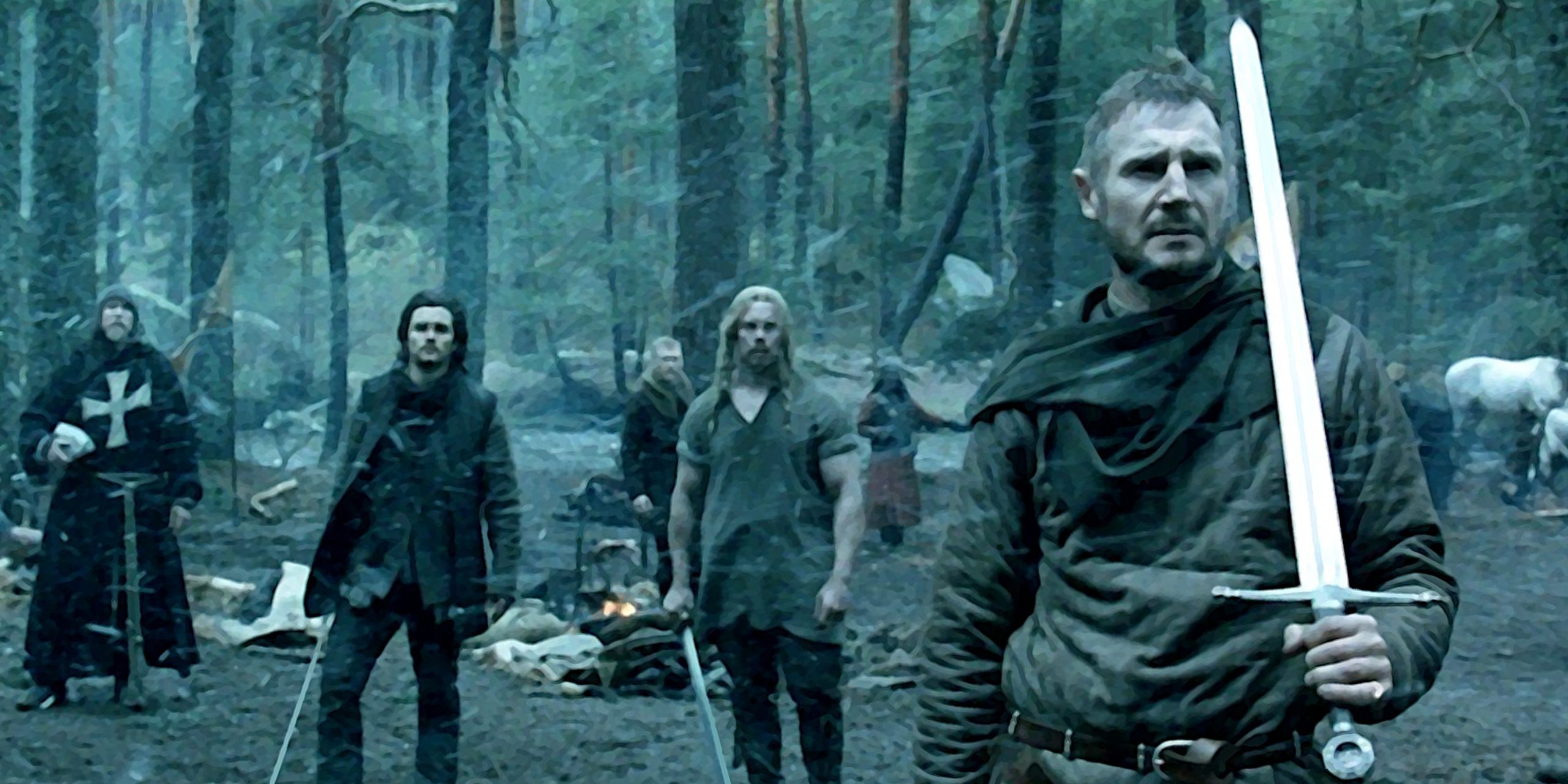
If there is one thing that has kept Ridley Scott’s Kingdom of Heaven alive long after its cinema release, it is the fact that the film never quite tells you everything. The director’s cut, thankfully, fills in huge gaps and turns the story into something far richer, but even then there are scenes, characters and little moments that seem to hint at something more.
This is not a film that throws mystery boxes at the audience every five minutes. Nobody is secretly a dragon, nobody time travels, and thankfully nobody turns out to have been dead all along. Instead, Kingdom of Heaven leaves just enough room for people to argue over what characters really mean, what certain scenes are trying to say, and whether some parts of the story are far more symbolic than they first appear.
As someone who has spent far too long rewatching this film and pausing every few minutes like an overenthusiastic medieval detective, here are the most interesting fan theories and interpretations surrounding Kingdom of Heaven.
Is Baldwin IV More Than Just a Character?
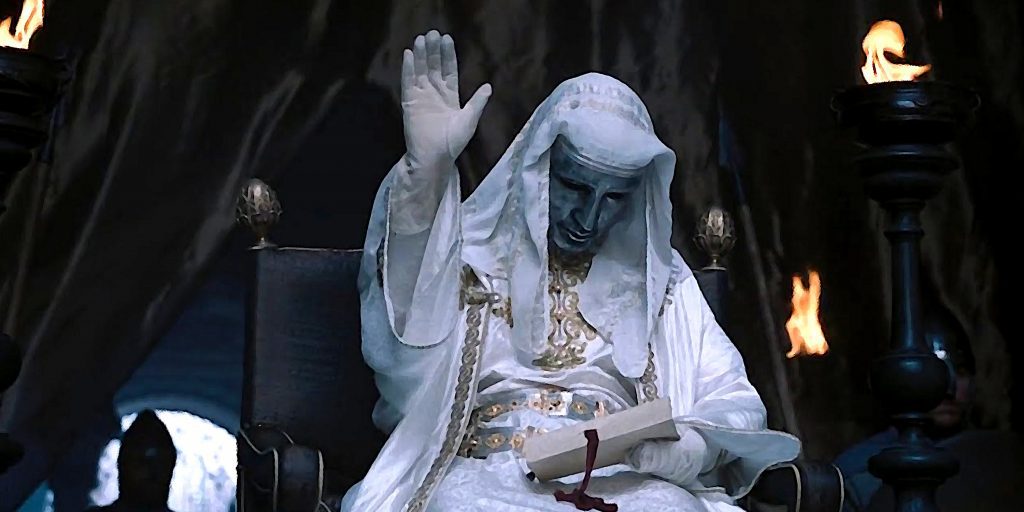
One of the most popular interpretations of the film is that Baldwin IV is not simply the King of Jerusalem. He represents the idea of civilisation itself.
Baldwin is physically frail, hidden beneath a silver mask and slowly dying, yet he is the only person capable of keeping peace between Christians and Muslims. While stronger men around him are desperate for war, pride and personal glory, Baldwin spends nearly every scene trying to hold everything together.
There is something oddly tragic about that. The one man with the clearest understanding of what is at stake is also the one man who cannot survive.
Many fans see Baldwin as the last barrier between order and chaos. Once he dies, the kingdom immediately begins to collapse. Guy becomes king, Reynald acts like he has just discovered the concept of consequences and decided he does not care, and the fragile balance vanishes almost overnight.
The silver mask itself has also sparked endless interpretation. Some viewers think it symbolises the distance between Baldwin and the world around him. Others see it as a literal mask of kingship. Beneath it he is a dying young man, but while wearing it he becomes the living symbol of Jerusalem.
Frankly, it is one of the coolest visual choices in the film. If someone turned up to a medieval council meeting wearing that mask in real life, everyone would probably just assume he was important and let him speak.
The Kingdom of Heaven Is Not Actually Jerusalem
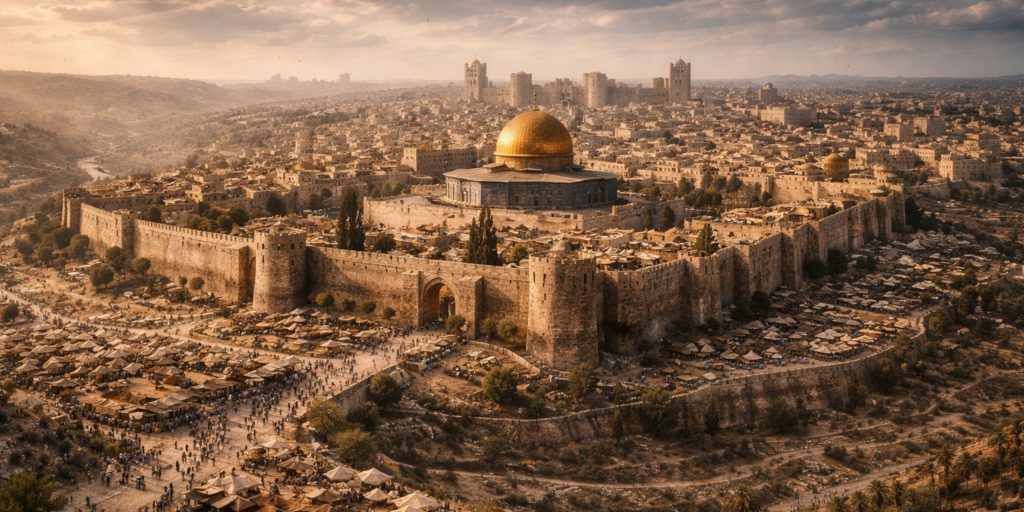
The title itself has led to one of the film’s biggest interpretations.
On the surface, the Kingdom of Heaven is Jerusalem. Every character is fighting over it, defending it or dreaming of ruling it. Yet by the end of the film, it becomes pretty clear that the actual “kingdom of heaven” has very little to do with the city.
Balian repeatedly says that what matters is people, not stones. When Jerusalem is about to fall, he chooses to surrender the city in order to save its inhabitants. For him, the kingdom is not a place. It is an idea.
The film keeps returning to that theme. Baldwin says that Jerusalem should be a kingdom of conscience. Saladin, despite being the supposed enemy, treats the city with far more humanity than many of the Christians. Even Sibylla eventually abandons the crown because she sees what power has done to everyone around her.
A lot of fans interpret the title as referring to the moral choices people make, rather than to any physical kingdom. The real kingdom of heaven exists when people choose mercy over violence, compassion over ego, and reason over fanaticism.
Which is admittedly a lovely idea. It is also the exact opposite of how most people in this film behave.
Was Balian Ever Really Meant to Belong in Jerusalem?

Balian spends most of the film caught between worlds. He is French, but never fully part of the nobility. He becomes a lord in Jerusalem, yet always feels like an outsider. Even his relationship with Sibylla seems strangely temporary, as though both of them know it cannot last.
Some fans believe the film deliberately frames Balian as someone who can never truly belong in Jerusalem because he is there to witness its fall, not to save it.
He arrives in the Holy Land full of guilt and grief. At first he wants redemption, then purpose, then perhaps love. Yet by the end he leaves with none of those things fully intact.
Instead, he returns home.
There is a reading of the film where Balian’s journey is not about becoming a great knight or ruler. It is about learning that chasing grand ideals and distant kingdoms can distract you from what actually matters.
His final return to France is often interpreted as him finally accepting that peace cannot be found through titles, castles or holy wars. It can only be found in ordinary life.
The blacksmith who left home searching for meaning ends up finding it in the place he started. There is something oddly fitting about that, even if it makes his entire trip feel like the most expensive gap year in medieval history.
Is Sibylla the Film’s Most Tragic Character?

Baldwin often gets the most sympathy, but there is a strong case that Sibylla is actually the most tragic figure in the film.
At first she seems clever, calm and politically aware. Unlike Guy, she understands how dangerous the kingdom has become. She also sees Balian as a possible alternative, perhaps because he represents a different kind of man.
Then everything goes wrong.
Her son becomes king. She discovers he has inherited Baldwin’s illness. Then she makes the devastating choice to end his life herself.
Many viewers interpret Sibylla’s story as the emotional heart of the film. She is caught between love, duty, power and survival, and every choice she makes costs her something.
There is also a theory that Sibylla never truly believes in the kingdom the way Baldwin does. She wants escape long before she finally leaves Jerusalem with Balian. The crown feels less like a prize and more like a trap.
By the end, Sibylla has lost her brother, her son, her position and her home. She walks away from everything. In a film filled with crusaders, kings and armies, her quiet decision to leave may be the most powerful moment of all.
The Director’s Cut Changes Everything
There is a reason so many fans insist that the director’s cut is the only version worth watching.
The theatrical version turns Kingdom of Heaven into a fairly straightforward historical epic. The director’s cut transforms it into something far more complicated.
The extra scenes with Baldwin, Sibylla and the politics of Jerusalem make the story feel less like a battle between good and evil and more like a slow collapse caused by pride, fear and bad decisions.
A lot of fan theories only really work because of the director’s cut. Sibylla’s character suddenly has depth. Baldwin becomes even more symbolic. Guy seems less like a cartoon villain and more like a dangerous man who mistakes cruelty for strength.
Even Balian feels different. In the shorter version he can come across as oddly passive. In the director’s cut he is still idealistic, but there is a sense that he is constantly being pulled apart by forces larger than himself.
It is one of the few films where the longer version genuinely changes the meaning of the story. Watching the theatrical cut after the director’s cut feels a bit like reading the last page of a novel and deciding that is probably enough.
Is Guy of Lusignan Supposed to Represent Blind Fanaticism?
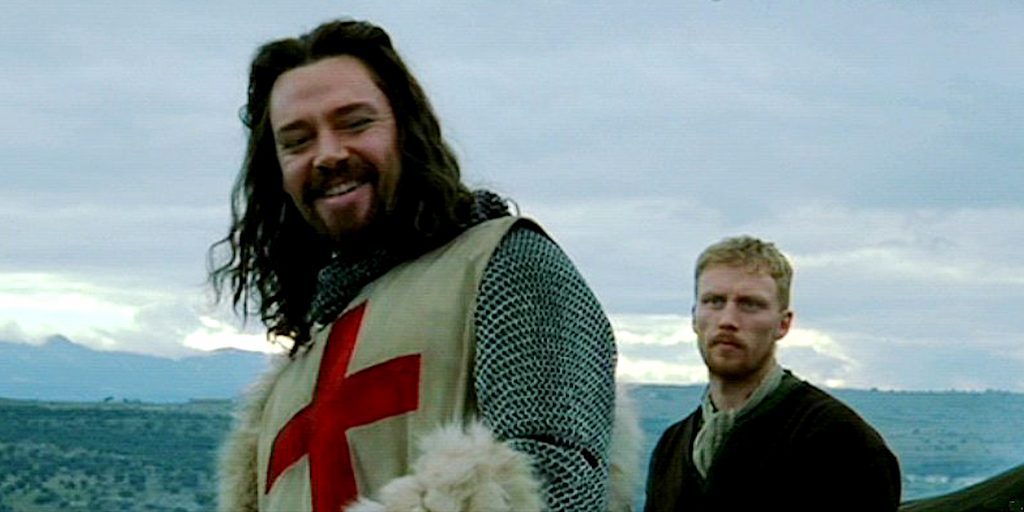
Guy is often viewed as the film’s main villain, but there is more going on with him than simple cruelty.
Many interpretations see Guy as the embodiment of blind certainty. He never questions himself, never reflects and never listens. He is convinced that violence will solve every problem because violence makes him feel powerful.
That certainty is exactly what makes him dangerous.
In contrast, Baldwin doubts, Balian hesitates and Saladin thinks carefully before acting. Guy does none of those things. He marches directly toward disaster with the confidence of someone who has never once had to consider whether he might be wrong.
There is a slightly uncomfortable modern relevance to that. The film suggests that the people most certain they are right are often the people most likely to destroy everything around them.
Guy is not terrifying because he is clever. He is terrifying because he is convinced.
Why Saladin Is So Important to the Film

One of the most interesting aspects of Kingdom of Heaven is that Saladin is not treated as a typical villain.
Instead, he becomes a mirror to Baldwin and Balian.
Like Baldwin, Saladin values peace when possible. Like Balian, he understands that cities and kingdoms are less important than human lives. When he finally takes Jerusalem, he behaves with far more restraint than the crusaders who once captured it.
Some fans argue that Saladin represents what Jerusalem could have been if its leaders had acted with wisdom rather than ego.
His final line has become one of the most discussed moments in the film.
When asked what Jerusalem is worth, he replies, “Nothing.” Then after a pause, “Everything.”
That line feels like the entire film condensed into a few seconds. Jerusalem is only stone and dust, yet it means everything because of what people believe it represents.
It is frustrating, beautiful and slightly maddening, which is probably why people are still talking about it years later.
Why People Still Debate Kingdom of Heaven
Kingdom of Heaven has lasted because it refuses to give easy answers. It is not interested in simple heroes and villains. Nearly every character is trapped between good intentions, terrible choices and the impossible pressure of history.
That ambiguity gives the film room to breathe. Fans can argue about Baldwin’s symbolism, whether Balian truly changed, or what the kingdom of heaven really means.
Personally, I think that is why the film works so well. It trusts the audience. It leaves space for interpretation instead of spelling everything out.
Also, let us be honest, any film featuring a masked king, a doomed city, Ridley Scott in full dramatic mode and Orlando Bloom trying very hard to look exhausted in every scene was always going to inspire a few theories.
The best fan theories are not necessarily the ones that “solve” the film. They are the ones that make you want to watch it again, notice something new and start the whole argument over from the beginning.