Francis Spriggs sits in that crowded corner of pirate history reserved for men who were dangerous, capable, and just unlucky enough not to become legends. He was no Blackbeard, and no one named a theme park ride after him. Yet for a few short years in the early eighteenth century, Spriggs commanded ships, terrorised trade, and made the Caribbean an even less relaxing place to be.
Writing from York, where the River Ouse has seen many things but thankfully not pirates, I find Spriggs interesting precisely because he feels human. Ambitious, quick to quarrel, and prone to poor career decisions, he is a reminder that piracy was not all bravado and buried gold.
History and Early Life
Very little is known about Spriggs before he turned pirate, which in itself tells a story. He likely came from modest stock and worked at sea in some capacity. His first clear appearance in the records comes in 1723 when he was serving aboard the pirate vessel of Edward Low.
Low was infamous for cruelty, which makes Spriggs’ later behaviour rather less surprising. According to several accounts, Spriggs was initially forced into piracy, though he adapted to it with alarming speed. Within months, he had seized command of his own ship, which suggests both competence and a willingness to stab the right people at the right moment.
Ships and the Bounty
Spriggs’ best known command was a brigantine often referred to as the Delight. Like many pirate vessels, it was fast rather than imposing, designed to chase down merchantmen that had no interest in a fair fight.
His ships typically carried:
- Light cannon, enough to frighten but not slow pursuit
- A large crew by merchant standards, which discouraged resistance
- Plenty of sail, because escape mattered more than dignity
As for bounty, Spriggs was successful but not spectacular. His prizes included cargoes of sugar, rum, textiles, and occasional coin. No evidence suggests vast hoards of treasure, which is historically accurate but deeply disappointing.
Piracy paid well when it worked. It also encouraged spending habits that ensured it rarely worked for long.
Weapons and Fighting Style
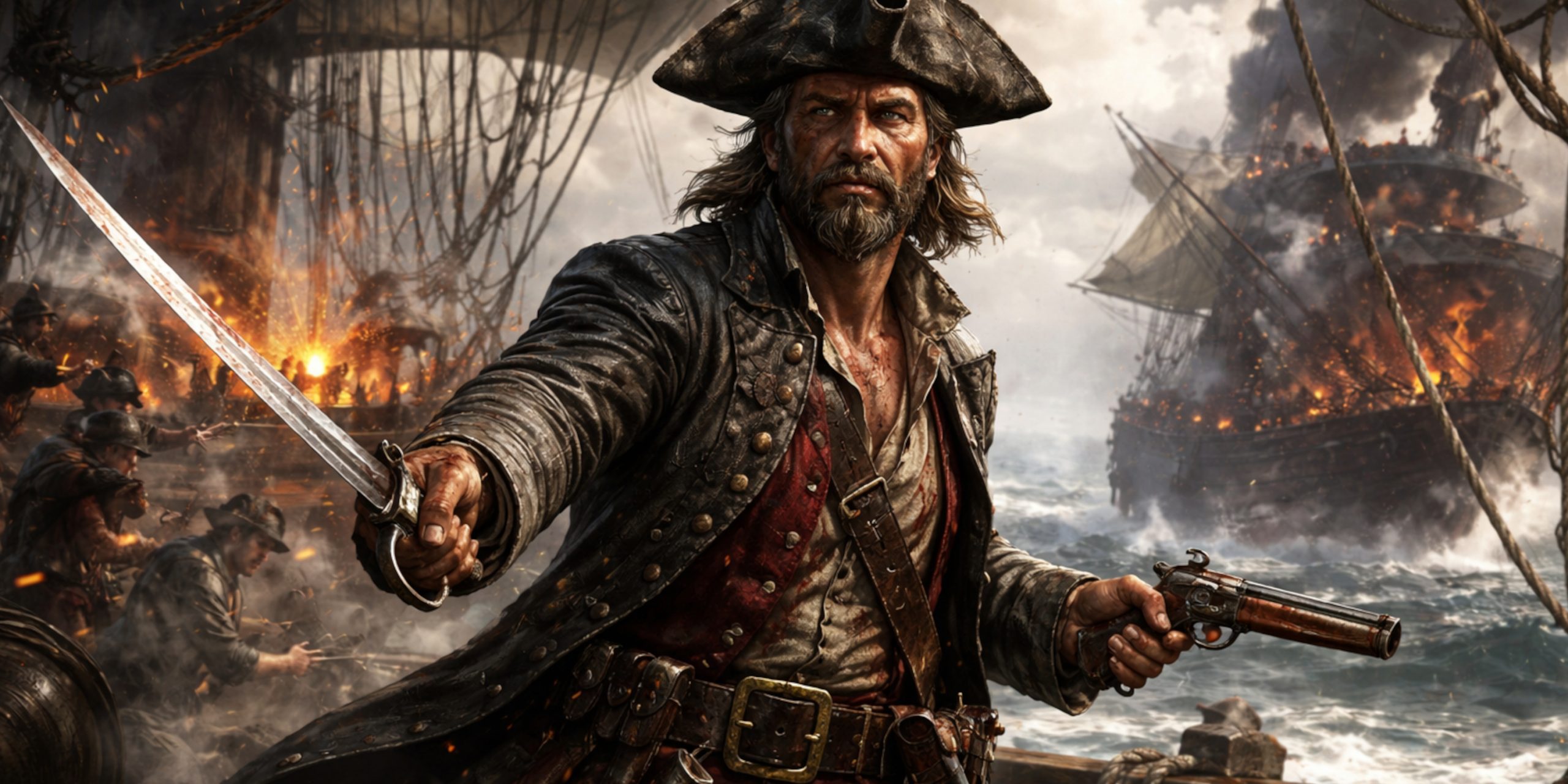
Spriggs armed his men in the usual fashion of the period. Nothing exotic, just efficient tools for close violence.
Common weapons aboard his ships included:
- Cutlasses, brutal and practical in confined spaces
- Flintlock pistols, more intimidating than accurate
- Muskets for boarding actions and deck control
- Boarding axes, which solved problems that conversation could not
Spriggs appears to have favoured aggression over restraint. This made him feared, though not always loved. Pirate crews elected their captains, and Spriggs’ later troubles suggest that popularity was not his strongest suit.
Battles and Notable Actions
Spriggs operated mainly in the Caribbean and along the American seaboard. He attacked merchant vessels flying British, French, and Dutch colours, showing no particular patriotism once profit was involved.
One notable engagement occurred when Spriggs captured a well armed merchant ship after a short but sharp fight. Contemporary accounts suggest his crew overwhelmed the defenders with speed rather than firepower.
However, his career was marked by internal conflict as much as external battle. Disputes with his crew became increasingly frequent, a poor sign in a profession where mutiny was a recognised management tool.
Contemporary Quotes
Spriggs appears in several contemporary accounts, though often unflatteringly.
Captain Charles Johnson, writing in A General History of the Pyrates, noted that Spriggs was
“a Man of no small Courage, though his Temper was ill suited to Command.”
Another sailor captured by Spriggs reportedly described him as
“hasty in anger, and quicker still with the lash.”
Not exactly a glowing reference, though one suspects few pirates enjoyed positive performance reviews.
Fate and Disappearance
Spriggs’ end is uncertain, which is pirate history’s way of saying it probably was not pleasant. The most widely accepted account suggests that his crew mutinied and marooned him on an island, possibly somewhere off the coast of South America.
If true, this would be an irony so sharp it deserves respect. A man who lived by collective consent undone by it.
No confirmed record of his death exists. He simply vanishes from the sources, leaving historians to shrug and readers to imagine the worst.
Legacy
Francis Spriggs left no buried treasure, no iconic flag, and no dramatic execution scene. What he left instead is a clear example of how piracy actually worked.
It rewarded boldness, punished poor leadership, and had a habit of ending careers abruptly. Spriggs rose fast, burned bridges faster, and disappeared entirely.
As a historian, I find that oddly satisfying. History is full of men who thought they were indispensable. It usually disagreed.
Takeaway
Spriggs was not a legend. He was a working pirate, sharp edged and short lived. That makes him valuable. He shows us piracy without the romance, where ambition outpaces judgement and the sea keeps its own counsel.
From the safety of Yorkshire, I will say this. If you must gamble your life on a career, choose one where your colleagues cannot legally vote to abandon you on a beach.
Watch the documentary: