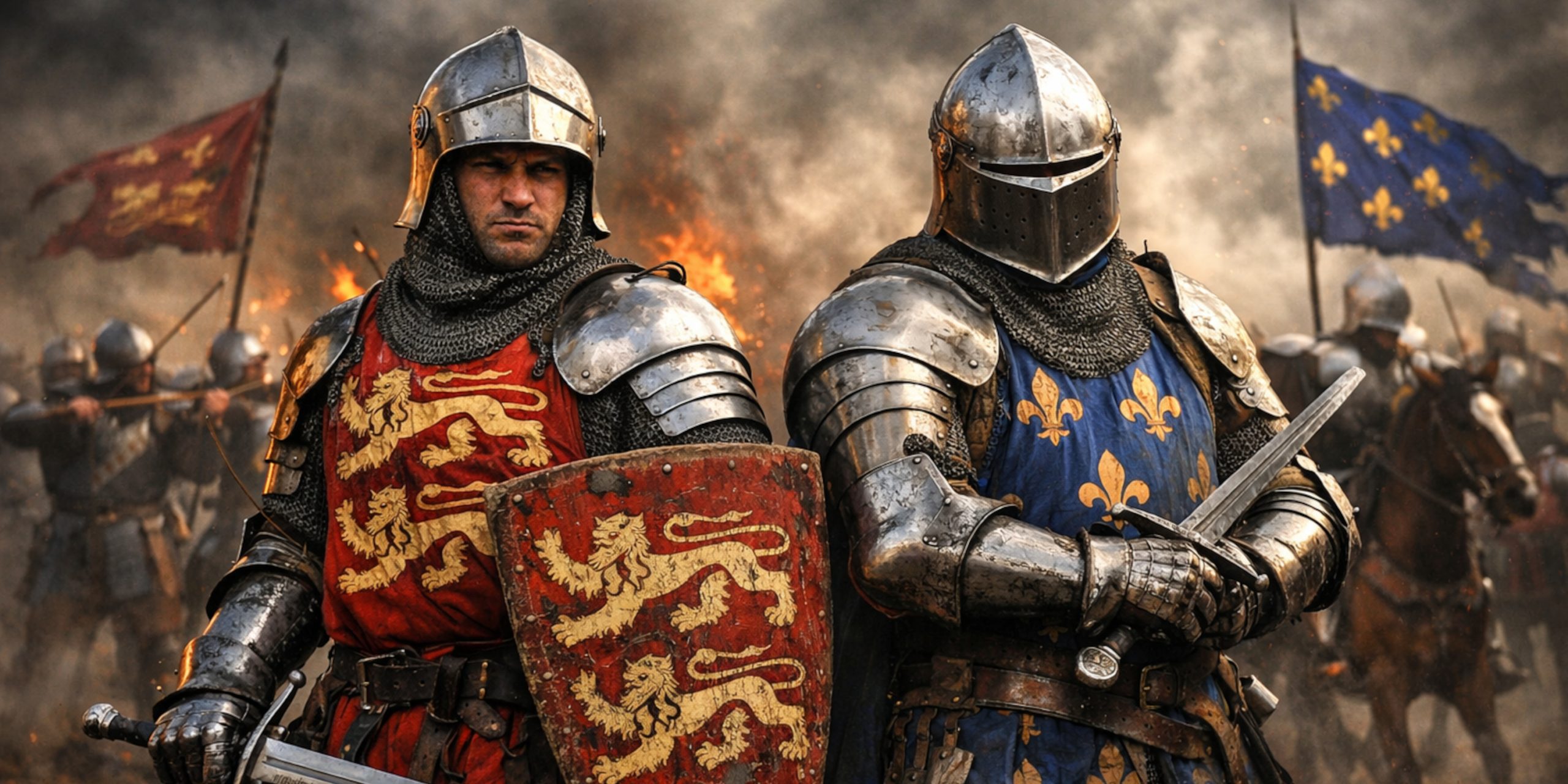
Set an English knight and a French knight side by side in the fourteenth or fifteenth century and most modern viewers would struggle to tell them apart. This is not ignorance, it is accuracy. These men fought in the same wars, wore armour made by the same workshops, prayed in the same churches, and often spoke the same language at court. Yet beneath the shared steel sat two distinct military cultures, shaped by geography, politics, and a long and frequently bad tempered rivalry.
As a historian, I find this comparison useful because it strips away national myth and forces us to look at what knights actually did, carried, and believed. Also, it provides a welcome corrective to films where everyone politely sticks to their own “national” equipment racks.
Origins and Social Role
The English Knight
The English knight emerged from Norman traditions after 1066 and developed within a relatively compact kingdom. English kings relied heavily on contractual service rather than feudal obligation alone. By the thirteenth century, many knights were professional soldiers first and landholders second.
Service abroad was common. Campaigning in France, Scotland, and Wales hardened English knights into a pragmatic fighting class. They were expected to fight mounted, dismount when required, and cooperate with infantry and archers. This flexibility became a quiet English strength, though it rarely features on patriotic tapestries.
The French Knight
The French knight stood at the centre of Europe’s largest and wealthiest feudal society. Nobility was more layered, titles more elaborate, and expectations more theatrical. Chivalric ideals flourished here, not because the French fought differently, but because they wrote about it more enthusiastically.
French knights often saw themselves as the natural leaders of Christendom’s wars. This self image produced superb cavalry, immense confidence, and on occasion a stubborn refusal to adapt. Courage was not lacking. Adaptability sometimes was.
Training and Martial Culture
Shared Foundations
Both English and French knights trained from childhood as pages and squires. Horsemanship, swordplay, lance work, hunting, and wrestling formed the core curriculum. Manuals circulated across borders. A French treatise on swordplay could easily be read in England and vice versa.
Tournaments played a central role. Despite later romantic gloss, these were brutal affairs that rewarded strength, endurance, and teamwork. They were also excellent preparation for war, whatever later moralists claimed.
Cultural Differences
English knights tended to view warfare as a profession with a pay structure. Ransoms, contracts, and logistics mattered. French knights often framed war as a proving ground for honour. This difference shows up repeatedly in chronicles, particularly when battles went badly.
An English chronicler might complain about poor supply. A French one might lament wounded pride. Both, of course, blamed the other side.
Arms and Armour
Armour
By the fourteenth century, armour across England and France was broadly identical.
Common elements included:
- Mail hauberk or shirt beneath plate
- Plate breastplate and backplate
- Arm harness with couters and vambraces
- Leg harness with cuisses and greaves
- Visored bascinet or later close helmet
Italian and German armourers supplied both kingdoms. Milanese plate turned up in London and Paris alike. The idea of uniquely “English” or “French” armour is mostly a modern invention.
Swords
Here we can be more specific, though overlap remains extensive.
English knights commonly used:
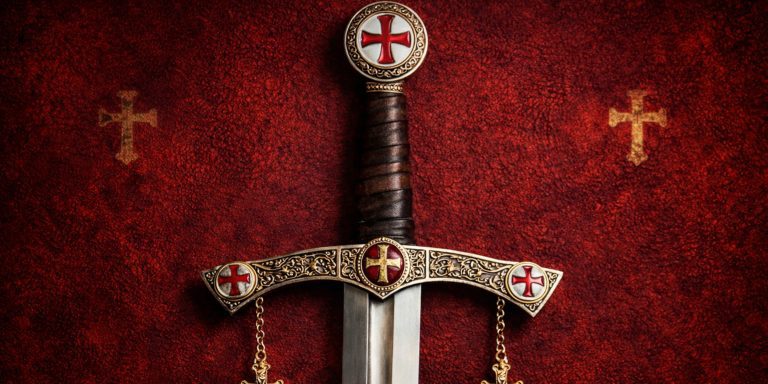
- Arming swords, especially Oakeshott Types XII and XIV
- Hand and a half swords, Types XV and XVI, increasingly popular from the late fourteenth century
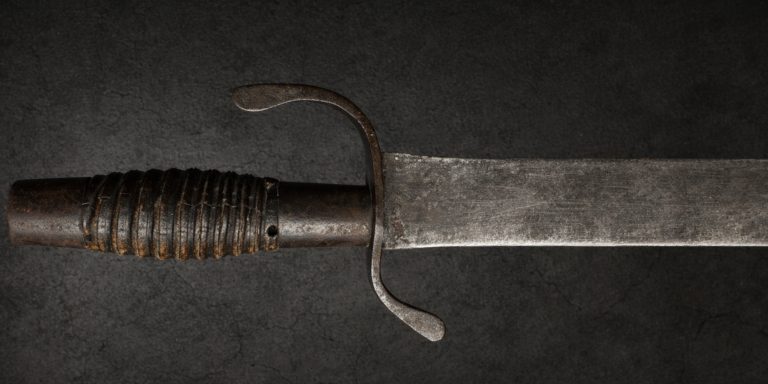
- Falchions, particularly among wealthier retainers rather than the knightly elite
French knights favoured:
- Arming swords of similar types, with a slight preference for broader cutting blades
- Longswords with pronounced taper for armoured combat
- Estocs, thrust centric swords designed specifically to exploit gaps in plate armour
In practice, a knight would use whatever quality blade he could obtain. A good sword crossed borders faster than any army.
Other Weapons
Both English and French knights carried:
- Lances for mounted combat
- Daggers such as rondels for close fighting
- Maces and war hammers for dealing with armour
If anything, English knights appear slightly more willing to dismount and fight with polearms when required. French knights generally preferred to solve problems at a gallop.
Battlefield Doctrine
English Practice
English knights became adept at fighting dismounted alongside infantry. This was not ideological, it was practical. Archers needed protection, and muddy fields have a habit of ruining cavalry plans.
At battles like Crécy and Agincourt, English knights fought on foot behind stakes and among archers. It was not glamorous, but it worked. Medieval warfare rarely rewards aesthetic purity.
French Practice
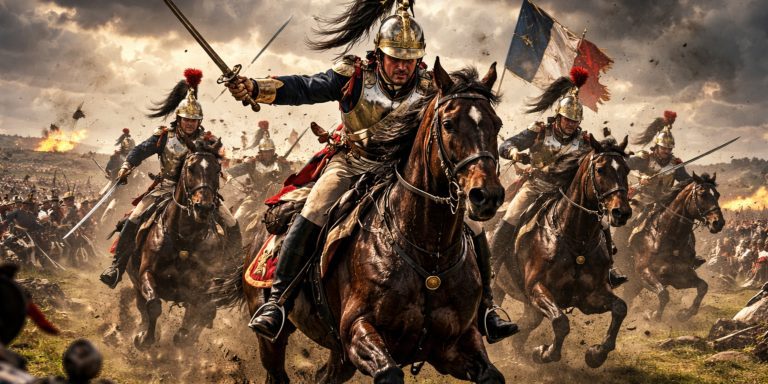
French doctrine placed greater emphasis on shock cavalry. Mounted charges remained the ideal solution long after circumstances suggested caution.
This was not stupidity. French knights achieved spectacular successes when conditions suited them. The problem came when confidence outweighed reconnaissance. Heavy cavalry does not negotiate churned ground politely.
Chivalry and Reputation
French knights dominated the literature of chivalry. Romances, chansons, and courtly biographies painted an image of noble warriors driven by honour and faith. English knights participated in this culture, but were less inclined to write poems about themselves afterwards.
A contemporary French chronicler observed:
“The flower of France rode forth as if to a tournament, trusting in valour alone.”
An English observer, writing of the same engagement, dryly noted:
“They advanced with great courage and very little sense of the ground.”
One suspects both were correct.
Archaeology and Material Evidence
Archaeology confirms how closely aligned English and French knightly equipment truly was.
Key findings include:
- Armour fragments from battlefield sites in northern France that match English royal inventories
- Sword finds from river deposits in England that mirror continental blade styles
- Mass graves from battles like Towton and Agincourt showing trauma consistent with polearms, daggers, and blunt force weapons rather than heroic single combat
Isotopic analysis of skeletons from French battlefields has also revealed combatants raised in England and vice versa. Knights, it turns out, were less loyal to borders than to paymasters.
Contemporary Voices
Jean Froissart, chronicling the Anglo French wars, famously wrote:
“Knights were courteous and cruel in equal measure, and war was their inheritance.”
An English chronicler, less lyrical but no less honest, remarked:
“Many sought honour, but all sought profit, and neither side pretended otherwise for long.”
These voices remind us that medieval knights were not symbols. They were men with ambitions, fears, and an impressive tolerance for discomfort.
Seven Swords Takeaway
English and French knights were far more alike than different. They wore the same armour, wielded the same swords, and shared a martial culture that spanned borders and generations. The differences lay less in equipment and more in attitude, particularly in how each kingdom adapted to changing forms of warfare.
If there is a lesson here, it is that tradition can inspire excellence, but only adaptation keeps you alive. The English learned this early. The French learned it eventually. The armourers, sensibly, sold to both.