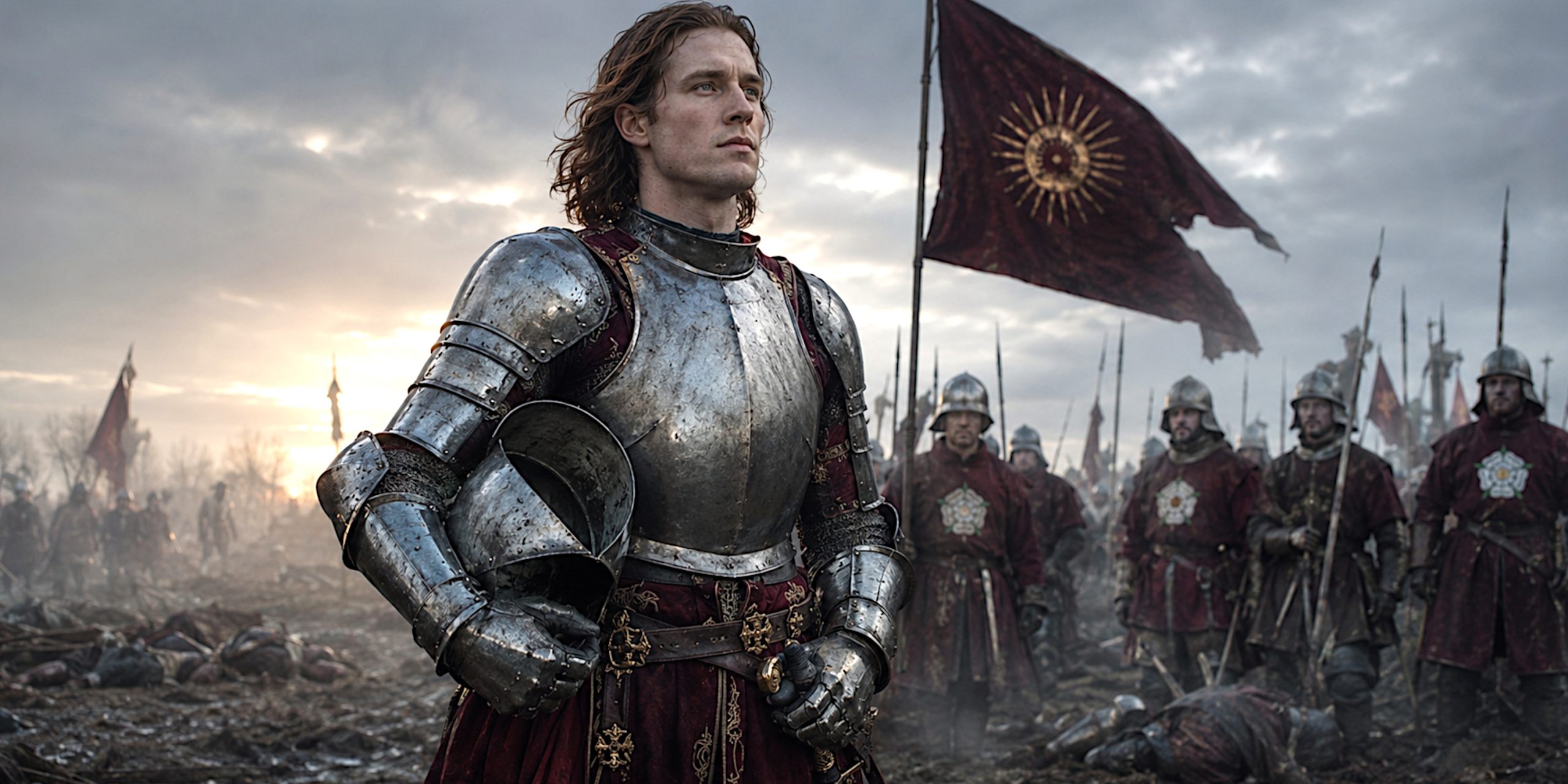
Edward IV was the first Yorkist king of England and one of the most formidable battlefield commanders produced by the Wars of the Roses. Tall, handsome and physically imposing, he possessed the sort of royal presence that medieval chroniclers noticed immediately. He could charm allies, inspire soldiers and act with astonishing speed when threatened.
He was also politically complacent, financially calculating and capable of considerable ruthlessness. Edward won the throne in 1461, lost it in 1470 and recovered it the following year through two decisive victories. No English king since William the Conqueror had secured his crown through such sustained personal success in battle.
Yet Edward’s achievement proved painfully fragile. When he died unexpectedly in 1483, the political order he had built began collapsing almost at once. His young sons disappeared, his brother Richard took the throne, and the Yorkist dynasty was destroyed within two years.
Edward was brilliant at winning power. His failure was to leave behind a system capable of surviving without him.
Edward IV at a Glance
| Detail | Information |
|---|---|
| Full name | Edward Plantagenet |
| Born | 28 April 1442 |
| Birthplace | Rouen, Normandy |
| Parents | Richard, Duke of York, and Cecily Neville |
| Dynasty | House of York |
| First reign | 4 March 1461 to 3 October 1470 |
| Second reign | 11 April 1471 to 9 April 1483 |
| Coronation | 28 June 1461 |
| Queen | Elizabeth Woodville |
| Children | Ten legitimate children who survived infancy, alongside acknowledged illegitimate children |
| Predecessor | Henry VI |
| Successor | Edward V |
| Died | 9 April 1483 |
| Age at death | 40 |
| Burial place | St George’s Chapel, Windsor Castle |
| Best-known victories | Mortimer’s Cross, Towton, Barnet and Tewkesbury |
| Principal badges | The Sun in Splendour and the White Rose of York |
Birth and Yorkist Inheritance
Edward was born at Rouen while his father, Richard, Duke of York, was serving English interests in France. Through both parents he descended from Edward III, although his claim to the throne was particularly important through his paternal grandmother, Anne Mortimer.
The Mortimer line descended from Lionel of Antwerp, Edward III’s second surviving son. The Lancastrian kings descended through John of Gaunt, the third surviving son. This gave the Yorkists a compelling hereditary argument, but medieval succession was never a tidy exercise in drawing family trees. Possession, parliamentary recognition, military support and political necessity mattered just as much.
Edward spent much of his childhood within the extensive Yorkist affinity centred on Ludlow and the Welsh Marches. He grew up in a household shaped by aristocratic government, military service and the escalating conflict surrounding Henry VI.
His father initially sought reform and influence rather than the throne. Years of political exclusion, military confrontation and personal rivalry gradually made compromise impossible. By 1460, Richard of York had openly presented his claim to the crown.
Parliament responded with the Act of Accord. Henry VI would remain king for life, but York and his descendants would inherit ahead of Henry’s son, Edward of Westminster. Queen Margaret of Anjou was unlikely to accept the disinheritance of her only child with serene good grace. She did not.
The Death of Richard of York
On 30 December 1460, Richard of York was defeated and killed at the Battle of Wakefield. Edward’s younger brother Edmund, Earl of Rutland, was also killed, while their uncle Richard Neville, Earl of Salisbury, was captured and executed.
At eighteen, Edward inherited his father’s titles, lands and claim to the throne. He also inherited a civil war that appeared to be going badly.
His response revealed the qualities that would define his military career. Edward did not retreat into caution. He gathered the Yorkist forces available in the Welsh Marches and moved against a Lancastrian army led by Jasper Tudor and James Butler, Earl of Wiltshire.
The new Duke of York had barely reached adulthood, yet he was already expected to rescue a cause built by older and more experienced men. Rather inconveniently for his enemies, he proved exceptionally good at it.
Mortimer’s Cross and the Three Suns
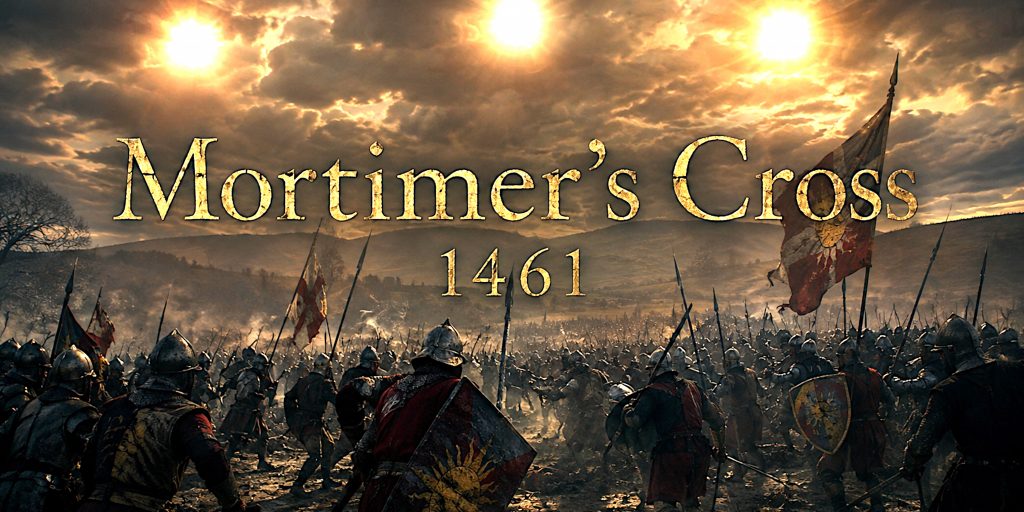
Edward defeated the Lancastrians at Mortimer’s Cross in Herefordshire on 2 February 1461. Before the battle, his soldiers reportedly saw a parhelion, an atmospheric phenomenon in which three apparent suns appear in the sky.
Edward interpreted the sight as a favourable sign, possibly representing the Holy Trinity. He later adopted the Sun in Splendour as one of his most recognisable badges.
The symbolism was clever. Medieval rulers understood that military success required a convincing story as well as a convincing army. Edward presented himself as a providential figure whose victory had been anticipated in the heavens. One suspects the Lancastrians interpreted the weather differently.
Mortimer’s Cross secured Edward’s position in the west, but the wider Yorkist cause remained endangered. Warwick was defeated at the Second Battle of St Albans later that month, allowing the Lancastrians to recover Henry VI.
Edward joined Warwick and advanced towards London. The capital admitted the Yorkists, while Margaret of Anjou’s army withdrew northwards. On 4 March 1461, Edward was proclaimed king.
He still had to make that proclamation mean something.
Towton and the Seizure of the Crown
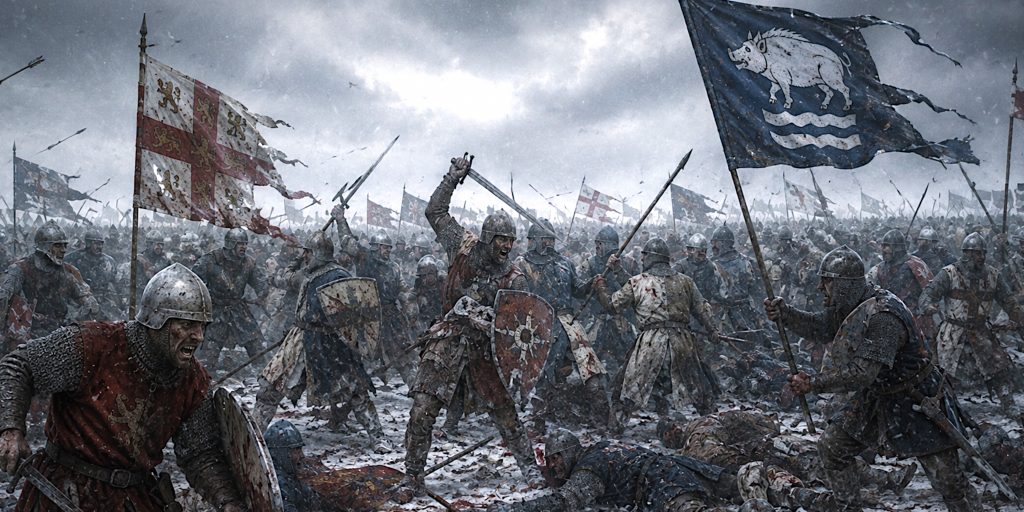
The decisive confrontation came at Towton on 29 March 1461. Fought in bitter weather on Palm Sunday, it became the largest and probably the bloodiest battle of the Wars of the Roses.
Edward led the Yorkist army personally. Snow and wind initially favoured the Yorkist archers, who could shoot farther than their Lancastrian opponents. After prolonged missile exchanges, the armies met in savage close combat.
The struggle lasted for hours. Yorkist reinforcements under the Duke of Norfolk eventually threatened the Lancastrian flank, contributing to the collapse of Henry VI’s army. Many fleeing soldiers were killed while attempting to cross watercourses south of the battlefield.
Contemporary estimates of the dead are extremely high and cannot be accepted literally. Archaeological work, mass-grave evidence and documentary accounts nevertheless confirm exceptional violence.
Towton transformed Edward from a proclaimed claimant into the effective king of England. Henry VI, Margaret of Anjou and their son fled to Scotland. Edward returned south and was crowned at Westminster Abbey on 28 June.
He was nineteen years old.
What Did Edward IV Look Like?
Edward was unusually tall for the fifteenth century. Examination of his skeleton in the eighteenth century suggested a height of around 6 feet 4 inches, although historical measurements and later reporting leave some room for caution.
Contemporaries consistently described him as handsome and physically impressive. The Burgundian chronicler Philippe de Commines remembered him as an exceptionally attractive prince and a courageous ruler.
His appearance was politically useful. Medieval kingship was performed in public, and Edward looked convincing in armour, ceremonial clothing and court dress. He contrasted sharply with Henry VI, whose periods of mental illness and distaste for warfare weakened his authority in an age that expected kings to command.
Later accounts also describe Edward becoming heavier as he aged. Dominic Mancini portrayed him as increasingly indulgent in food, drink and sexual relationships. Mancini wrote after Edward’s death and with access to hostile opinions, so his description should be read critically. Even so, the transformation from athletic warrior to comfortable monarch appears credible.
Marriage to Elizabeth Woodville
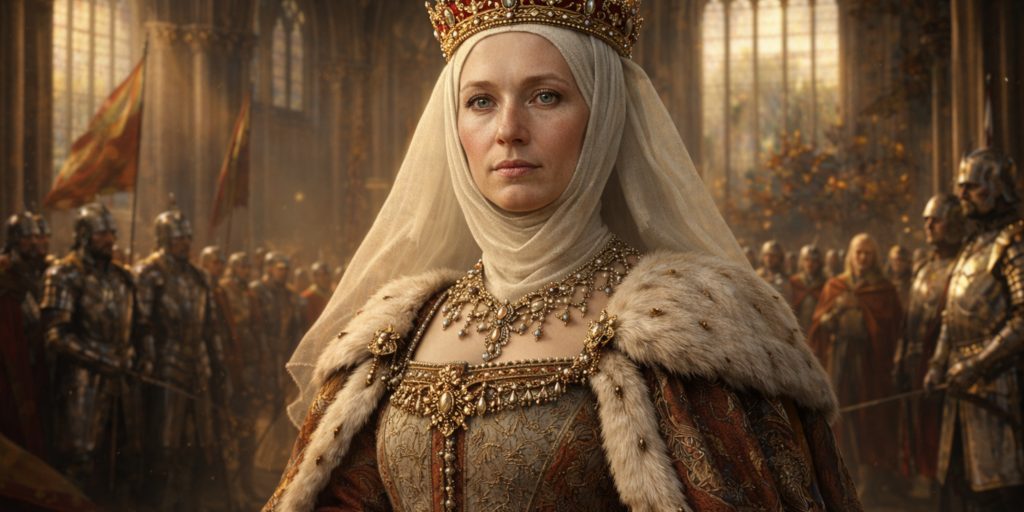
Edward secretly married Elizabeth Woodville, probably on 1 May 1464. She was the widow of Sir John Grey of Groby, a Lancastrian knight killed at the Second Battle of St Albans.
The marriage was extraordinary for several reasons:
- Elizabeth was an English subject rather than a foreign princess.
- She was a widow with two sons.
- Her family had Lancastrian connections.
- The marriage was made without the prior knowledge of Edward’s leading councillors.
- Warwick was pursuing diplomatic negotiations for a foreign royal marriage.
The traditional image of Edward being overwhelmed by Elizabeth’s beauty may contain some truth, but the marriage also had political possibilities. It allowed him to reconcile part of the Lancastrian gentry and build a new network of dependants personally loyal to the Crown.
The difficulty was scale. Elizabeth had numerous siblings, and the king arranged advantageous marriages and appointments for several members of the Woodville family. Established nobles regarded their rapid advancement with suspicion and resentment.
Warwick found the marriage particularly damaging. He had helped create Edward’s kingship and expected to shape its foreign policy. Discovering that the king had privately married while he negotiated elsewhere was not merely embarrassing. It demonstrated that Edward intended to rule independently.
Edward IV and the Earl of Warwick
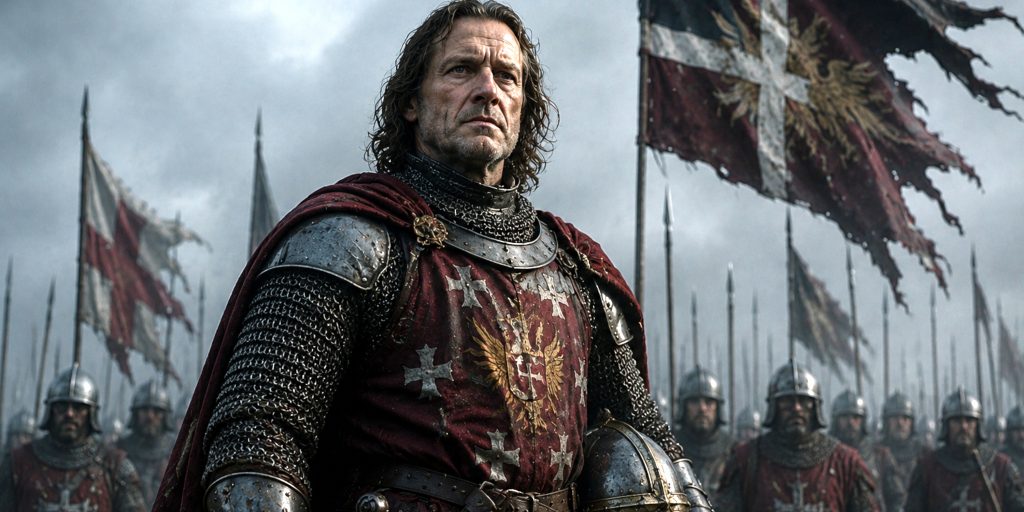
Richard Neville, Earl of Warwick, later became known as the Kingmaker. The nickname is convenient, although it can make him sound rather more efficient than events eventually proved.
Warwick’s military, financial and political support had been essential during Edward’s rise. Their relationship deteriorated over royal patronage, foreign policy and the growing influence of the Woodvilles.
Warwick favoured closer relations with France. Edward increasingly preferred an alliance with Burgundy, strengthened in 1468 when his sister Margaret married Charles the Bold.
The conflict became open rebellion in 1469. Warwick allied himself with Edward’s disaffected brother George, Duke of Clarence. Their supporters defeated a royal army at Edgecote Moor, after which Edward was briefly held under Warwick’s control.
Edward had not personally commanded the defeated army at Edgecote, so describing the battle simply as one of his battlefield defeats is misleading. His real failure was political. He had allowed resentment to grow until powerful subjects believed they could govern through him.
Warwick could capture the king but could not rule effectively without royal authority. Edward regained his freedom, temporarily reconciled with his opponents and waited for a chance to reassert control.
Deposition and Exile
A renewed rebellion in 1470 exposed Warwick and Clarence’s involvement. They fled to France, where Louis XI engineered an unlikely alliance between Warwick and Margaret of Anjou.
Warwick had spent years fighting the Lancastrians and was implicated in the deaths of several of Margaret’s supporters. Their reconciliation was less a meeting of minds than an emergency arrangement between people who had exhausted the alternatives.
Warwick invaded England in September 1470. Support for Edward collapsed with alarming speed, particularly after Warwick’s brother John Neville, Marquess of Montagu, turned against him.
Unable to assemble a reliable army, Edward fled to the Burgundian Netherlands. Henry VI was restored in what became known as the Readeption.
Edward had lost the kingdom largely through political miscalculation. His second rise would demonstrate that losing a kingdom and accepting the loss were quite different matters.
The Return of 1471
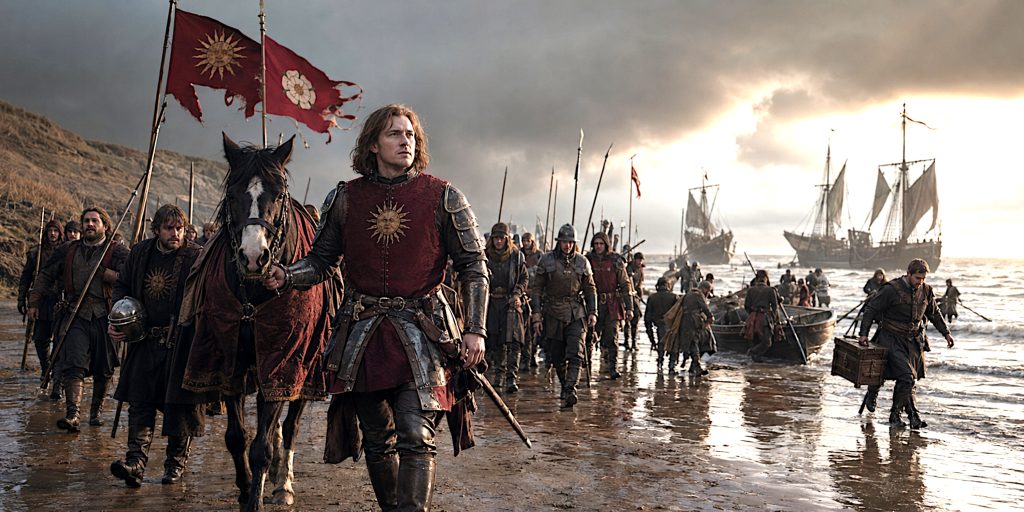
Edward returned to England in March 1471 with a relatively small force. He landed at Ravenspurn in Yorkshire and initially claimed that he sought only the restoration of his duchy. This was transparently convenient, but it allowed uncertain supporters to delay choosing sides.
As Edward moved south, his army grew. Clarence abandoned Warwick and reconciled with his brother. London opened its gates, giving Edward control of the capital and possession of Henry VI.
Edward then marched against Warwick.
His restoration campaign was a remarkable exercise in speed, nerve and political improvisation. He began with limited resources, faced a restored government and succeeded in dividing his enemies before they could concentrate against him.
The Battle of Barnet
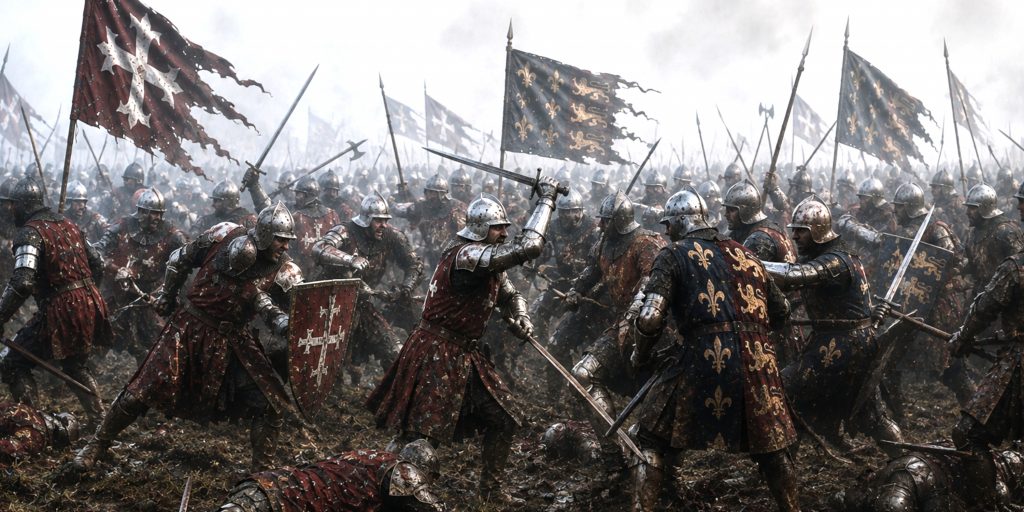
Edward confronted Warwick near Barnet on 14 April 1471. The battle was fought in thick mist, which distorted the positions of both armies.
The opposing lines were misaligned. Parts of each army overlapped the enemy’s flank, producing confusion as men attacked at angles rather than across a neat front. Warwick’s forces eventually began fighting among themselves after mistaking returning allies for Edward’s troops.
Edward fought in the centre and appears to have led aggressively. Warwick was killed during the collapse of his army.
Barnet removed Edward’s most dangerous political opponent, but the Lancastrian threat had not ended. Margaret of Anjou and Prince Edward had landed in England on the same day.
The Battle of Tewkesbury
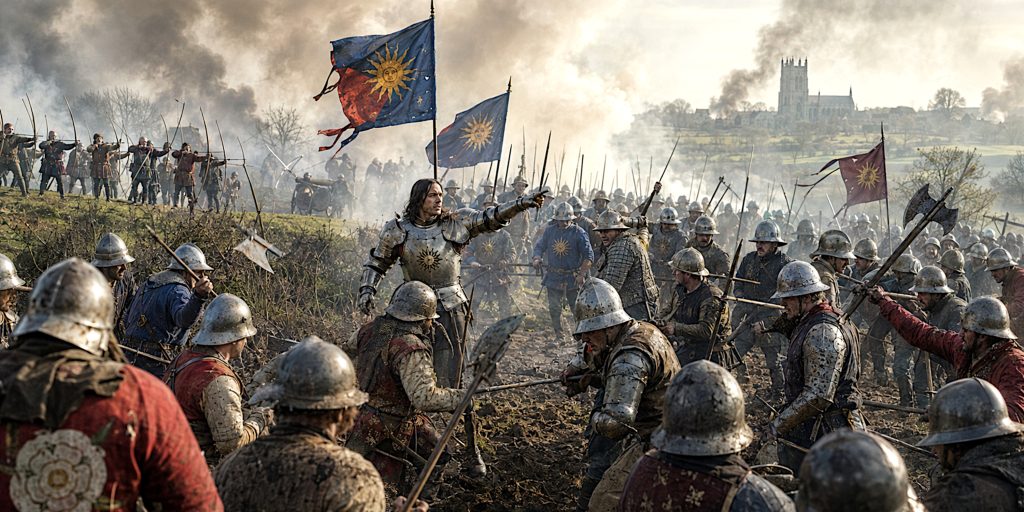
Edward pursued the Lancastrian army westwards and intercepted it at Tewkesbury on 4 May 1471.
The Lancastrians occupied a difficult defensive position broken by hedges, banks and uneven ground. Edward used artillery and archery to pressure their lines. Edmund Beaufort, Duke of Somerset, launched an attack against the Yorkist left, possibly hoping to exploit concealed routes through the terrain.
The attack failed. Yorkist troops counter-attacked, and the Lancastrian army disintegrated. Prince Edward was killed during or shortly after the fighting. Several senior Lancastrians were executed following the battle, despite having sought sanctuary in Tewkesbury Abbey.
Edward had destroyed the main Lancastrian field army and eliminated Henry VI’s direct heir. Henry himself died in the Tower of London shortly afterwards. The official explanation attributed his death to grief, which has convinced very few historians. Edward’s government almost certainly considered the former king too dangerous to leave alive, although a surviving order signed by Edward has never been found.
Edward IV’s Battles
| Battle or campaign | Date | Edward’s role | Result |
|---|---|---|---|
| Northampton | 1460 | Commanded a Yorkist division | Yorkist victory |
| Mortimer’s Cross | 1461 | Independent commander | Decisive Yorkist victory |
| Towton | 1461 | Commander and claimant to the throne | Decisive Yorkist victory |
| Edgecote Moor | 1469 | Not present as battlefield commander | Royal army defeated |
| Losecoat Field | 1470 | Commanded royal forces | Rebel army defeated |
| Barnet | 1471 | Personal command | Yorkist victory |
| Tewkesbury | 1471 | Personal command | Decisive Yorkist victory |
| French expedition | 1475 | Led invasion force | Settlement at Picquigny |
| Scottish campaign | 1482 | Planned and financed expedition led by Richard of Gloucester | Berwick captured |
Edward’s reputation rests on more than an unbeaten personal battlefield record. He understood movement, morale and timing. His 1471 campaign shows a commander willing to take substantial risks without becoming reckless.
He was less successful at preventing the political crises that made those battles necessary.
Edward IV’s Arms and Armour
No complete suit of armour can be securely identified as Edward’s personal field harness. Any description must therefore rely on surviving equipment, artistic evidence and records from his period.
By the 1460s and 1470s, a wealthy English king could obtain armour from leading European production centres, including Milan and workshops within the Burgundian world.
| Equipment | Likely form |
|---|---|
| Helmet | Sallet with bevor, or an Italian-style armet |
| Body protection | Shaped breastplate and backplate over mail at vulnerable joints |
| Arm protection | Pauldrons, rerebraces, couters and vambraces |
| Leg protection | Cuisses, poleyns, greaves and sabatons |
| Mounted weapon | Lance |
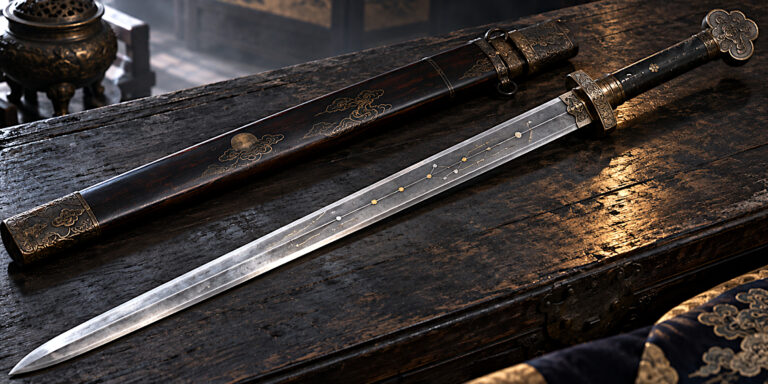
| Sword | Late medieval arming sword or hand-and-a-half sword |
| Dagger | Rondel dagger |
| Foot combat weapon | Pollaxe or another specialised pole weapon |
| Heraldic display | Royal arms, Sun in Splendour and Yorkist badges |
The original article’s reference to a close helm should be treated cautiously. The fully developed close helmet belongs principally to the sixteenth century. A sallet, bevor or armet better fits Edward’s active campaigning years.
The longsword was an important weapon, but a king did not necessarily spend an entire battle exchanging elegant sword strokes. Mounted commanders used lances, while dismounted men-at-arms relied heavily on pollaxes and other weapons capable of attacking armoured opponents. Swords remained essential sidearms and powerful symbols of rank.
Government After 1471
Edward’s second reign was considerably more secure than his first. The leading Lancastrian dynasty had been broken, Warwick was dead and the king had learned the dangers of allowing a subject to accumulate excessive power.
He governed through trusted royal servants, household officers and regional magnates. His brother Richard, Duke of Gloucester, became especially important in northern England.
Edward also used bonds, recognisances and financial obligations to regulate potentially troublesome subjects. These methods could maintain order without permanent military occupation, but they also made royal government feel intrusive and financially predatory.
The king’s rule was not free from unrest. John de Vere, Earl of Oxford, resisted from St Michael’s Mount until 1474. More serious was the deteriorating relationship between Edward and his brother Clarence.
The Execution of George, Duke of Clarence
Clarence had rebelled against Edward, defected to Warwick, returned to Edward’s side and continued behaving as though loyalty were a negotiable arrangement.
Following the death of his wife Isabel Neville, Clarence became involved in disputes over inheritance, household accusations and allegations of treason. Edward eventually brought charges against him in Parliament.
Clarence was executed privately in the Tower of London on 18 February 1478. The famous story that he was drowned in a butt of Malmsey wine appears in later accounts. It may have developed from Clarence’s fondness for the drink, although the precise method of execution remains uncertain.
The episode shows the harder character of Edward’s second reign. He had forgiven Clarence more than once, but forgiveness ended when his brother threatened royal authority yet again.
Executing a royal duke and the king’s own brother was an exceptional act. It removed an immediate problem while leaving Clarence’s children with a grievance and a compromised place within the dynasty.
Money, Trade and Royal Power
Edward took a close interest in commerce. He invested in trading ventures and cultivated good relations with wealthy London merchants.
His government worked to improve royal income from crown lands, customs, feudal rights and commercial activity. The royal household’s finances were examined in the Black Book of the Household, a detailed administrative record produced during his reign.
Edward’s financial reputation needs balance. He reduced dependence on parliamentary taxation during his later years, but he was hardly a model of personal restraint. His court was magnificent and expensive, and surviving evidence indicates substantial debts at his death.
His settlement with France in 1475 was financially valuable. Under the Treaty of Picquigny, Louis XI paid Edward an immediate sum and promised an annual pension. Critics saw this as the abandonment of an English invasion. Edward could reasonably see it as being paid handsomely to avoid a costly and uncertain war.
It was not heroic in the manner of Agincourt. It was, however, practical, profitable and achieved without filling another French field with dead Englishmen.
The French Expedition and Treaty of Picquigny
Edward invaded France in 1475 with a substantial army, hoping to cooperate with Charles the Bold of Burgundy. Charles failed to provide the support Edward expected, while Louis XI preferred negotiation to battle.
The resulting Treaty of Picquigny provided:
- An immediate French payment to Edward
- An annual pension
- A proposed marriage between Edward’s daughter Elizabeth and the French dauphin
- Arrangements intended to improve relations and trade
- English withdrawal from France
Some later writers have treated the treaty as the effective conclusion of the Hundred Years’ War, although the conflict had already ceased to operate as a continuous war after 1453 and English monarchs retained their claim to the French crown.
Edward gained money and security. Louis gained the removal of an invading army. Both kings understood that a profitable peace could be more useful than a glorious battle.
Relations with Scotland
Edward supported Alexander Stewart, Duke of Albany, in a challenge to his brother James III of Scotland. In 1482, an English army led by Richard, Duke of Gloucester, entered Scotland and occupied Edinburgh, although it failed to take Edinburgh Castle.
The political scheme surrounding Albany produced limited results, but the English recovered Berwick-upon-Tweed. Berwick remained under English control thereafter, making the campaign more significant than its inconclusive political outcome might suggest.
The expedition also enhanced Gloucester’s military reputation. Within a year, that reputation would form part of the authority he exercised after Edward’s death.
Court, Books and Architecture
Edward’s court drew heavily upon Burgundian styles of ceremony, clothing, manuscript production and display. His sister Margaret’s position as Duchess of Burgundy strengthened cultural connections across the Channel.
More than forty manuscripts associated with Edward’s collection survive. Many are richly illuminated histories, romances, biblical works and instructional texts. They reveal a king interested in the presentation of monarchy and the moral lessons attached to historical rule.
Edward invested in royal residences, including Eltham Palace. Its Great Hall remains one of the most visible architectural survivals associated with his reign.
In 1475 he ordered the construction of a new St George’s Chapel at Windsor. The chapel became both a centre of royal ceremony and his intended burial place. It was a project in stone, faith and dynastic confidence.
For a dynasty that would be overturned within a decade, the confidence was impressive.
Edward IV and the Church
Edward’s kingship retained the conventional religious character expected of a medieval ruler. He supported religious foundations, observed public ceremonies and presented military victories within a providential framework.
His foundation and rebuilding work at St George’s Chapel reflected his devotion to St George and his association with the Order of the Garter. Windsor provided an appropriate setting for a warrior king who wished to connect his dynasty with chivalric kingship.
Yet political necessity could overcome claims of sanctuary. The executions following Tewkesbury demonstrated that sacred space offered limited protection when the survival of the regime was at stake.
This tension was hardly unique to Edward. Medieval kings could be sincerely religious while acting with considerable brutality. The categories were not mutually exclusive, however uncomfortable that may be to modern readers.
Elizabeth Woodville and Their Children
Edward and Elizabeth had ten children who survived infancy.
| Child | Significance |
|---|---|
| Elizabeth of York | Married Henry VII and became mother of Henry VIII |
| Mary of York | Died unmarried in 1482 |
| Cecily of York | Later married John Welles |
| Edward V | Succeeded his father but was never crowned |
| Margaret of York | Died in infancy |
| Richard, Duke of York | Disappeared with Edward V |
| Anne of York | Married Thomas Howard |
| George, Duke of Bedford | Died young |
| Catherine of York | Married William Courtenay |
| Bridget of York | Became a nun at Dartford Priory |
Edward also had illegitimate children. The best documented include Arthur Plantagenet, later Viscount Lisle, and Elizabeth Plantagenet, who married Thomas Lumley.
The king’s extramarital relationships were widely noted. Mancini claimed that Edward pursued women readily and sometimes recklessly. Some stories were sharpened by political hostility, but Edward’s infidelity is not seriously disputed.
The Question of Edward’s Legitimacy
Claims that Edward was not the biological son of Richard, Duke of York, appeared during his lifetime. Warwick and Clarence reportedly circulated allegations concerning his birth during their rebellion.
The argument drew upon Edward’s birth in Rouen while his father was allegedly elsewhere on campaign. Modern attempts to reconstruct Richard’s movements do not provide conclusive evidence of illegitimacy.
The accusation was politically useful because it undermined Edward’s right to inherit the Yorkist claim. That usefulness should make us particularly cautious.
Edward’s physical differences from his father prove nothing. Several of his siblings were also notably tall and fair. Medieval political propaganda rarely allowed an inconvenient absence of evidence to spoil a promising accusation.
Death of Edward IV
Edward became seriously ill around Easter 1483 and died at Westminster on 9 April. He was only forty.
The cause remains uncertain. Suggestions have included pneumonia, typhoid fever, malaria and complications arising from his increasingly indulgent lifestyle. None can be proved from the surviving evidence.
Edward had enough time to make additions to his will and appears to have intended Richard, Duke of Gloucester, to act as protector for the young Edward V. The precise surviving arrangements are not sufficiently clear to settle every later dispute.
His body was taken to Windsor and buried in St George’s Chapel. The funeral presented him as a successful Christian king, but the transfer of power was already becoming dangerous.
The Princes in the Tower
Edward V was twelve when his father died. Conflict quickly developed between Richard of Gloucester and the Woodville faction surrounding the young king.
Gloucester arrested Anthony Woodville, Earl Rivers, and other members of Edward V’s household. The young king was taken to the Tower of London, then still used as a royal residence as well as a fortress. His younger brother Richard joined him there.
Edward IV’s marriage was subsequently declared invalid on the basis of an alleged pre-contract between Edward and Lady Eleanor Butler. The children of Edward and Elizabeth Woodville were declared illegitimate, and Gloucester became Richard III.
The princes disappeared from public view. Their fate remains one of the most contested questions in English history. Richard III had custody of them and benefited directly from their removal, making him the leading suspect. Other theories exist, but certainty remains beyond the evidence.
The crisis exposed the weakness of Edward’s settlement. He had concentrated authority around his own personality while leaving a minor heir, competing family factions and no political mechanism strong enough to contain them.
Contemporary Descriptions of Edward IV
Philippe de Commines described Edward as exceptionally handsome and courageous. He also suggested that the king had become increasingly devoted to pleasure during his later years.
Dominic Mancini similarly presented Edward as physically impressive but indulgent. He wrote that the king was “of a gentle nature and cheerful aspect”, while also commenting critically upon his appetites.
The Crowland chronicler praised Edward’s military abilities but condemned aspects of his later government, particularly the execution of Clarence and the financial burdens imposed upon subjects.
These accounts should not be treated as neutral character references. Commines wrote from within continental diplomatic politics, Mancini gathered information during the crisis of 1483, and Crowland reflected the anxieties of an educated political observer. Together, however, they produce a recognisable figure: attractive, accessible, courageous, pleasure-loving and dangerous when crossed.
Archaeology and Surviving Evidence
No confirmed personal sword, armour or field equipment belonging to Edward IV survives. His reign is instead represented through battle archaeology, buildings, coins, manuscripts, seals and documentary records.
Towton has produced the most important archaeological evidence associated with his campaigns. Excavated human remains show severe cranial injuries, facial trauma and wounds caused by edged and impact weapons. These findings provide physical evidence for the brutality described in written sources.
The battlefield landscapes at Barnet and Tewkesbury have also been investigated, although modern development, uncertain battle boundaries and the movement of artefacts complicate interpretation.
Material connected with Edward’s reign includes:
- Gold angels, nobles, groats and other royal coinage
- Illuminated manuscripts made for or acquired by the king
- The surviving Great Hall at Eltham Palace
- St George’s Chapel at Windsor
- Royal seals and administrative documents
- Battlefield finds from Wars of the Roses sites
- Late fifteenth-century armour and weapons comparable with those used by his household troops
Archaeology cannot tell us whether Edward ordered the death of Henry VI or explain exactly what happened to his sons. It can, however, strip away the romance of the Wars of the Roses. The injuries at Towton belong to real people killed at close quarters, not decorative figures wandering between heraldic roses.
Where to See Sites and Objects Connected with Edward IV
| Place | What to see |
|---|---|
| St George’s Chapel, Windsor | Edward IV’s burial place and the chapel he founded |
| National Portrait Gallery, London | Later portraits representing the Yorkist king |
| British Library, London | Illuminated manuscripts from Edward’s royal collection |
| British Museum, London | Coins, seals and objects from fifteenth-century England |
| Royal Armouries, Leeds | Armour and weapons illustrating late medieval warfare |
| Eltham Palace, London | The Great Hall associated with Edward’s royal residence |
| Towton, North Yorkshire | Landscape of Edward’s decisive 1461 victory |
| Tewkesbury Abbey | Major surviving site connected with the campaign of 1471 |
| Barnet Museum and battlefield area | Local interpretation of the Battle of Barnet |
| Ludlow Castle | Centre associated with Edward’s youth and the Yorkist affinity |
Visitors should remember that battlefield interpretation changes as new surveys and research refine older conclusions. A plaque beside a road can be useful, but it is not the final word of Clio.
Was Edward IV a Great King?
Edward IV was unquestionably a great military king. He won every major battle in which he personally commanded, recovered a crown after exile and ended the organised Lancastrian challenge.
His record as a political ruler is more complicated.
His principal achievements
- Established the House of York on the throne
- Won decisive victories at Towton, Barnet and Tewkesbury
- Restored royal authority after his return in 1471
- Improved the management of crown income
- Encouraged trade and maintained relations with London merchants
- Recovered Berwick from Scotland
- Developed the royal court and manuscript collection
- Founded the new St George’s Chapel at Windsor
- Presided over relative internal peace during his final twelve years
His principal failures
- Allowed his relationship with Warwick to collapse into rebellion
- Lost the throne in 1470
- Created resentment through Woodville advancement
- Failed to establish a secure regency for his son
- Executed his brother Clarence, deepening dynastic fractures
- Left substantial political dependence upon personal loyalties
- Failed to protect the succession from factional conflict
- Could not prevent the disappearance and probable murder of his sons
My own view is that Edward was the most naturally gifted English warrior-king of the fifteenth century, but not its most careful statesman. His judgement was often excellent in immediate danger and strangely relaxed when danger appeared distant.
On a battlefield, he recognised the decisive moment. In government, he sometimes behaved as though the decisive moment could be dealt with next week.
Edward IV’s Legacy
Edward’s direct male line did not retain the crown. Edward V disappeared, Richard of York shared his fate, and Richard III was killed at Bosworth in 1485.
Yet Edward’s bloodline became central to the Tudor monarchy. His eldest daughter, Elizabeth of York, married Henry VII. Their union joined the surviving claims of York and Lancaster, at least in official presentation, and produced the Tudor royal family.
Edward’s granddaughter and namesake connections spread through European royalty. Through Elizabeth of York, he became an ancestor of every subsequent English and British monarch.
His reign also changed the character of late medieval kingship. Edward combined personal military leadership with increasingly sophisticated household administration, commercial finance, visual propaganda and court ceremony. He looked both backwards to the warrior kings of the Middle Ages and forwards to the more managed monarchy of the Tudors.
The irony is difficult to miss. Edward defeated almost everyone who stood against him, yet his dynasty collapsed because he died before his heir was old enough to defend it.
His life remains one of the clearest examples of how personal monarchy worked. A commanding king could impose order through reputation, loyalty and fear. Remove that king, and the impressive structure might reveal that much of it had been resting on one man.
Frequently Asked Questions
Why did Edward IV have two reigns?
Warwick and Clarence forced him into exile in 1470 and restored Henry VI. Edward returned in 1471, defeated Warwick at Barnet and the Lancastrians at Tewkesbury, then resumed the throne.
Was Edward IV undefeated in battle?
He was not personally defeated in the major battles he commanded. Royal forces lost at Edgecote Moor in 1469, but Edward was not the battlefield commander.
Was Edward IV really 6 feet 4 inches tall?
He appears to have been unusually tall, possibly around 6 feet 4 inches. The precise measurement is not completely secure, but contemporary descriptions agree that he was physically imposing.
Did Edward IV kill Henry VI?
Henry VI died in the Tower shortly after Tewkesbury. Edward’s government almost certainly benefited from his death, but no conclusive documentary evidence identifies the killer or preserves a direct order from Edward.
Why did Edward execute his brother Clarence?
Clarence had repeatedly rebelled, challenged royal authority and become implicated in further accusations of treason. Edward ultimately decided that another reconciliation was too dangerous.
How did Edward IV die?
The cause is unknown. Contemporary and later suggestions include fever, pneumonia, typhoid and illnesses connected with his lifestyle.
Was Edward IV the father of the Princes in the Tower?
Yes. Edward V and Richard, Duke of York, were his sons by Elizabeth Woodville.
Where is Edward IV buried?
He is buried with Elizabeth Woodville in St George’s Chapel at Windsor Castle.
Takeaway
Edward IV was charismatic, intelligent, courageous and exceptionally dangerous in war. He understood spectacle, patronage and the political value of personal accessibility. He could also be secretive, self-indulgent and ruthless.
He deserves neither romantic worship nor casual dismissal. His victories were genuine feats of command, while his later government gave England a period of relative stability after years of civil conflict. At the same time, his handling of family and succession left the Yorkist monarchy dangerously exposed.
Edward won the crown twice and died peacefully in possession of it. For a king of the Wars of the Roses, that was an impressive achievement. What happened immediately afterwards makes the achievement look rather less complete.