Balian of Ibelin was not a conquering hero in the usual crusader mould, nor a saintly idealist. He was a pragmatic noble, shaped by compromise, pressure, and the reality of a collapsing kingdom. When Jerusalem faced its final crisis in 1187, Balian became its last line of defence, not through brilliance on the battlefield, but through judgement, restraint, and negotiation. As a historian, I find him compelling precisely because he does not fit the heroic template cleanly.
Who Was Balian of Ibelin?
Balian of Ibelin was born around 1140 into the Ibelin family, one of the most influential noble houses in the Kingdom of Jerusalem. His father, Barisan of Ibelin, had risen from comparatively modest origins, and the family’s power was built through land, marriage, and political acumen rather than raw military dominance.
Balian held the lordship of Ibelin and later Ramla. He was deeply embedded in the internal politics of the crusader states, often acting as a counterweight to more aggressive factions who favoured constant war with Muslim neighbours. This reputation as a moderating force would later define his role during Jerusalem’s final hours.
Political Context Before 1187
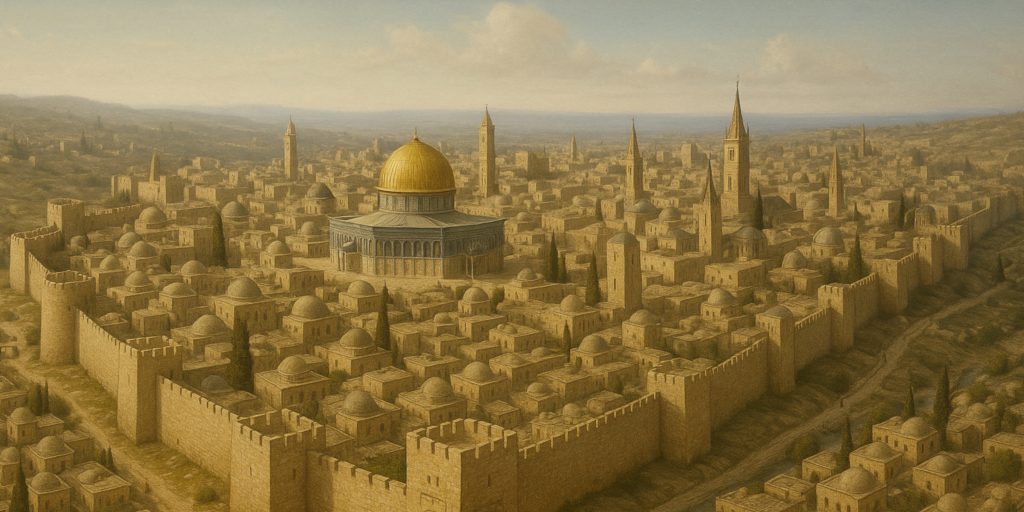
By the 1180s, the Kingdom of Jerusalem was unstable and badly led. The leper king Baldwin IV had died, leaving a succession crisis and a court divided by rival factions. Military leadership was inconsistent, and strategic decisions were often driven by pride rather than necessity.
The catastrophic defeat at Hattin in July 1187 shattered the kingdom’s military core. Most of the experienced knights were killed or captured. Jerusalem, once heavily fortified and well manned, was suddenly exposed.
Balian was not present at Hattin. That absence would prove decisive, because it left one senior noble with both authority and freedom to act when the city faced siege.
The Siege of Jerusalem, 1187

After Hattin, Saladin advanced rapidly through the remnants of the crusader state. When he approached Jerusalem in September 1187, the city was filled with refugees and panic.
Balian initially sought safe conduct from Saladin to escort his family out of Jerusalem. He swore an oath not to take up arms against the sultan. Once inside the city, however, the situation changed. The population begged him to take command. The Patriarch of Jerusalem reportedly absolved him of his oath, arguing that the defence of the city outweighed personal vows.
From a military standpoint, Jerusalem was in dire condition:
- Fewer than twenty knights were available to defend the walls
- Many defenders were untrained townsmen and refugees
- Supplies were limited, especially weapons and armour
- Morale was fragile but not broken
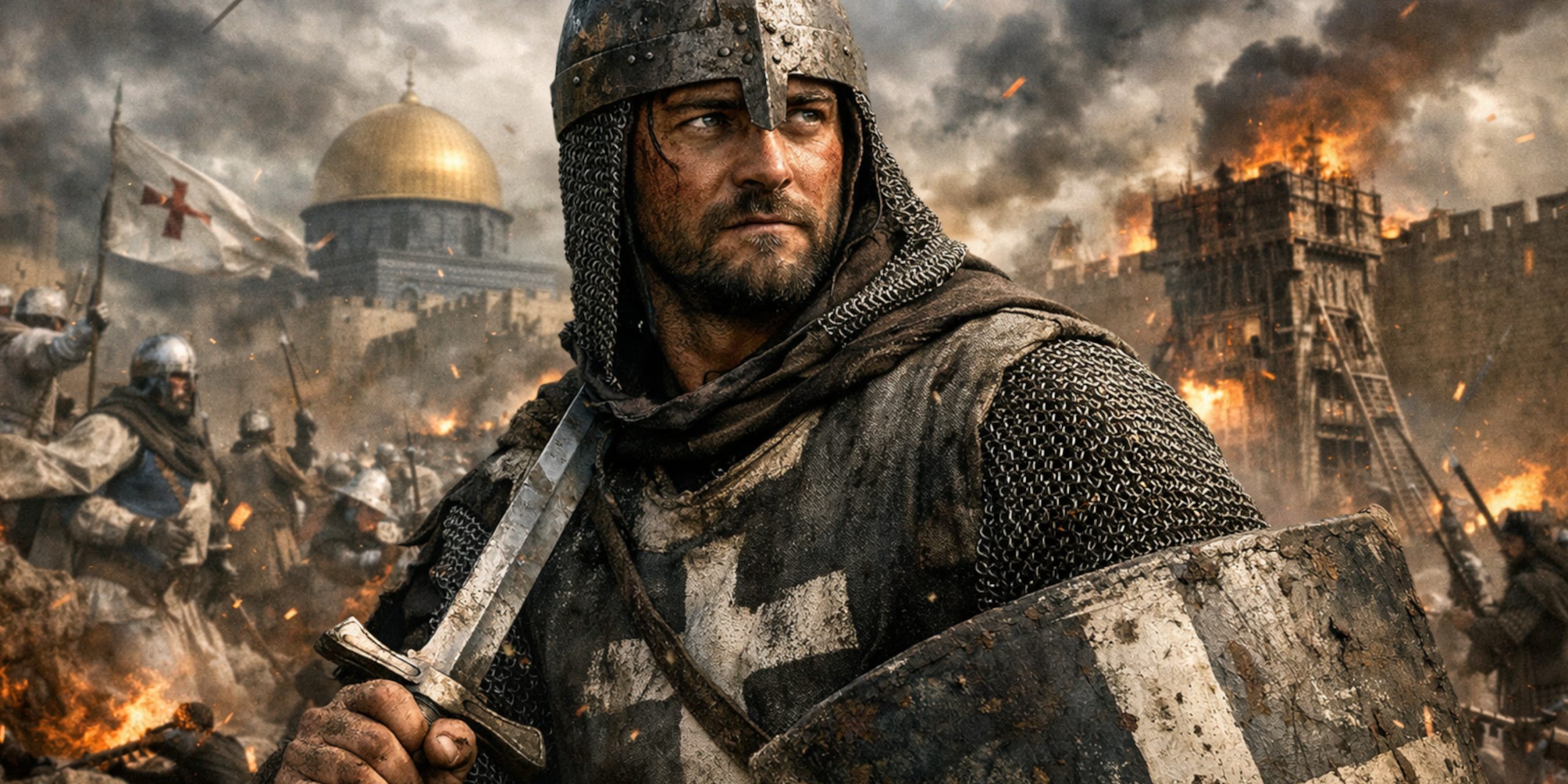
Balian organised a desperate defence, knighting squires and civilians to create a symbolic, if thin, defensive elite. The aim was never outright victory. It was to raise the cost of capture high enough to force negotiation.
Negotiation and Surrender
The siege itself was brief but intense. Siege engines battered the walls, and assaults tested weak points. Balian understood the reality. If Jerusalem fell by storm, massacre was likely, as it had been in 1099.
Balian opened negotiations with Saladin and used a calculated threat. He warned that if the city were taken by force, Christian defenders would destroy holy sites and kill Muslim prisoners. It was not bluster alone. It was a reminder of how ugly the end could be for everyone.
The eventual agreement allowed the population to ransom themselves. Those who could not pay were enslaved, but large scale slaughter was avoided. Compared to earlier crusader atrocities, the fall of Jerusalem in 1187 was restrained.
This outcome was not a military triumph. It was a humanitarian one, achieved under impossible conditions.
Arms, Armour, and the Reality of Defence
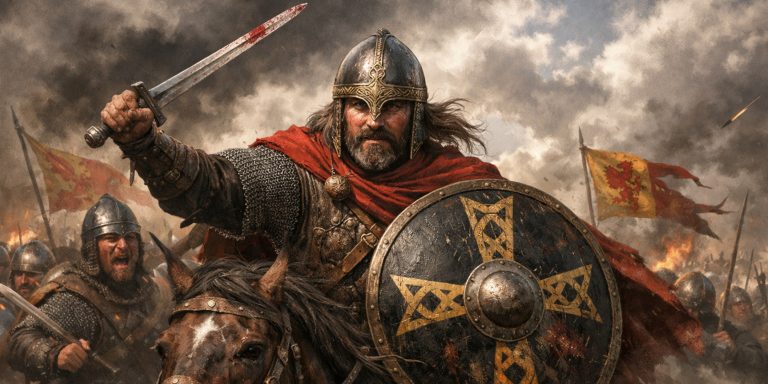
Balian was a knight of the late 12th century, equipped in the standard fashion of the Frankish elite:
- Mail hauberk with coif
- Conical helmet or early great helm
- Kite or early heater shield
- Sword as primary sidearm
- Lance when mounted, though useless during the siege
What mattered more than equipment was organisation. Balian’s real skill lay in managing limited resources and preventing collapse inside the walls. He understood that discipline and morale mattered more than individual heroics.
Contemporary Views and Quotes
Medieval chroniclers were not unanimous in their judgement of Balian, but several themes recur. He is presented as sober, responsible, and reluctant rather than glorious.
Ibn al-Athir noted the negotiations respectfully, portraying Balian as a serious interlocutor rather than a fanatic.
William of Tyre, writing earlier about the Ibelin family, described them as politically astute and deeply involved in the governance of the kingdom, a reputation Balian lived up to.
Later Latin sources emphasised his role in preventing bloodshed. One chronicle remarked that he “saved the people of Jerusalem when no sword could.”
These are not lines that glorify conquest. They praise restraint, which says a great deal about how desperate the situation had become.
Balian in Film vs History
Balian’s modern reputation is shaped heavily by cinema, particularly his portrayal as a blacksmith turned knight in Kingdom of Heaven. The real Balian was a seasoned noble, wealthy, educated, and politically experienced.
Key differences worth noting:
- Historical Balian was middle aged, not a young outsider
- He was deeply enmeshed in aristocratic politics
- His authority came from lineage and land, not sudden elevation
- His actions were cautious and calculated, not impulsive
The film version simplifies his arc to make him relatable. The historical figure is more interesting, if less romantic.
Balian of Ibelin in Kingdom of Heaven (2005)

Kingdom of Heaven did more than any book or documentary to fix Balian of Ibelin in the modern imagination. For better and worse, it reshaped him into a figure designed for a 21st century audience, one defined by individual morality rather than medieval politics.
In the film, Balian is played by Orlando Bloom as a grieving French blacksmith who rises to knighthood through personal virtue. This version strips away almost everything that made the historical Balian powerful. His noble birth, his family network, his political experience, and his status as a landholding lord are all removed. What remains is a solitary moral agent standing against fanaticism on all sides.
This change was deliberate. Director Ridley Scott framed the story as a meditation on tolerance, restraint, and the cost of absolutism. A landed aristocrat negotiating surrender does not fit that narrative cleanly. A reluctant everyman does.
The siege of Jerusalem is where the film comes closest to history. Balian organising civilians, promoting men to knighthood, and prioritising the safety of the population reflects the real events closely in spirit, if not in detail. The film captures the sense of inevitability and exhaustion that defined 1187. Victory is never the goal. Survival is.
Where the portrayal falters is scale and motivation. The real Balian acted as part of a fractured ruling class trying to salvage something from disaster. The film’s Balian stands almost alone, morally superior to both crusaders and Muslims alike. That framing simplifies a far messier reality, where compromise came from necessity rather than enlightenment.
As a historian, I find the film version useful but incomplete. It introduces audiences to a genuinely important figure, but it does so by sanding off the political edges. The real Balian was not an idealist dropped into history. He was a product of it, shaped by land, loyalty, and limits.
If the film asks what a good man should do in a bad situation, the historical record answers a harder question. What does a responsible leader do when there are no good options left.
Legacy and Historical Importance
Balian of Ibelin did not save Jerusalem. That was never possible. What he did was shape how it fell. In crusader history, that matters.
His actions:
- Preserved tens of thousands of lives
- Prevented the destruction of holy sites
- Set a precedent for negotiated surrender
- Exposed the failures of crusader leadership
As a historian, I see Balian as a figure defined by limits. He knew what could not be done and focused on what still could. That kind of realism rarely gets statues, but it leaves a deeper mark.
Where to Learn More and See the Context Today
While no personal artefacts of Balian are securely identified, the physical context of his world remains visible:
- The walls of Jerusalem, much rebuilt, still trace the siege lines
- Crusader castles such as Ibelin and Ramla reveal the architectural mindset of his class
- Contemporary chronicles in Latin and Arabic offer contrasting perspectives
Balian’s story lives less in objects and more in texts, negotiations, and decisions made under pressure.
Takeaway
Balian of Ibelin was not the greatest knight of the crusades. He did not win a famous battle or found a dynasty. What he did was hold together a collapsing city long enough to save its people from annihilation.
That is a quieter form of greatness. It deserves to be taken seriously.
Watch the documentary: