Anne Bonny is one of the most recognisable pirates of the eighteenth century. She is usually shown with red hair, a cutlass and enough pistols to make walking a logistical problem.
The woman found in the surviving records is rather different. We do not know when she was born, what she looked like or what happened to her after her conviction. Her documented pirate career lasted about two months. She never commanded a vessel and may not have used the name Anne Bonny throughout her life.
What the records do establish is still extraordinary. Bonny sailed with an outlawed crew, carried weapons, supplied gunpowder during attacks and was accused of demanding the murder of a captured witness. She was convicted of piracy in Jamaica and sentenced to death, only to disappear from the official record after revealing that she was pregnant.
The difficulty is separating that documented woman from the formidable character created by three centuries of books, illustrations, films and television.
Anne Bonny: What the Records Actually Tell Us
| Detail | What can be supported |
|---|---|
| Name in the records | Ann Bonny, Anne Bonny, Ann Bonn and Ann Fulford |
| Date of birth | Unknown |
| Place of birth | Traditionally Ireland, but not confirmed by the trial record |
| Known activity | August to October 1720 |
| Pirate commander | John Rackham, known as Calico Jack |
| Vessel | The sloop William |
| Area of operation | Bahamas, Cuba and waters around Jamaica |
| Fellow female pirate | Mary Read |
| Capture | Near Negril Point, Jamaica, October 1720 |
| Trial | Spanish Town, Jamaica, 28 November 1720 |
| Sentence | Death by hanging |
| Execution | Postponed after she pleaded pregnancy |
| Final fate | Unknown |
The Four Main Sources for Anne Bonny’s Life
Almost everything written about Bonny ultimately depends on four groups of evidence.
Woodes Rogers’s proclamation
Woodes Rogers, governor of the Bahamas, issued a proclamation in September 1720 calling for the arrest of Rackham and his crew. It named Bonny before the pirates were captured.
This is important because it proves that she was already publicly associated with Rackham’s company. She was not inserted into the story by a later novelist.
Contemporary newspaper reports
News of Rackham’s activities and the search for his crew appeared in colonial and British newspapers. These reports contain inconsistent spellings and occasional confusion, but they show that the two women were noticed while the pursuit was still underway.
The 1721 trial pamphlet
The most important source is The Tryals of Captain John Rackam and Other Pirates, printed in Jamaica by Robert Baldwin in 1721.
It records the charges, witness testimony, verdicts and sentences arising from the prosecution of Rackham’s company. It is not a word-for-word modern court transcript, but it remains the closest surviving account of what was said in court.
A General History of the Pyrates
Published in 1724 under the name Captain Charles Johnson, this book provided the colourful early biographies of Bonny and Mary Read.
It is near-contemporary, but it is not an official record. The author included private conversations, childhood incidents and romantic encounters that cannot be independently verified.
The book is valuable, entertaining and occasionally maddening. Historians cannot safely discard it, but nor should we salute every paragraph and invite it aboard.
Her Birthplace and Childhood Are Not Confirmed
Bonny is usually said to have been born near Cork around 1698 or 1700. The familiar story describes her as the illegitimate daughter of a lawyer and his servant. Her father supposedly dressed her as a boy while pretending that she was a relative entrusted to his care.
When the arrangement was exposed, the family reportedly moved to the Province of Carolina. Bonny’s father prospered there as a merchant or plantation owner.
This entire childhood narrative comes principally from A General History of the Pyrates. The surviving trial record gives no age, birthplace, parentage or physical description for Bonny.
No securely identified Irish baptismal record has settled the matter. A connection with Ireland is possible and remains the traditional interpretation, but it is not proven by contemporary legal evidence.
Bonny may have been Irish. The responsible historical answer is that we cannot yet be certain.
The Name “Anne Bonny” Was Only One Version
The spelling now used for Bonny was not fixed in 1720.
In different contemporary documents she appears as:
- Ann Bonny
- Anne Bonny
- Ann Bonn
- Ann Fulford, alias Bonny
- Anne Fulford, alias Bonny
Woodes Rogers’s proclamation reportedly identified her as “Anne Fulford alias Bonny”. That raises several possibilities. Fulford may have been a birth name, a married name or simply another identity used in the Bahamas.
“Bonny” may have come from a husband called James Bonny, as claimed in A General History. However, the trial proceedings do not explain the relationship.
The inconsistency is not especially unusual. Names were frequently recorded according to how clerks heard them, while sailors and fugitives had obvious reasons to use aliases. Pirates were not renowned for maintaining tidy personal documentation.
She Was Named in a Manhunt Before Her Capture
In August 1720, Rackham and his associates seized the sloop William from Nassau harbour. Its owner is generally identified as John Ham.
Governor Woodes Rogers responded with a proclamation on 5 September. A version subsequently printed in the Boston Gazette described:
“Rackum who ran away with a sloop of six guns”
The notice stated that Rackham had taken twelve men and two women with him. Bonny and Mary Read were identified by name.
This brief notice is one of the strongest pieces of evidence in Bonny’s biography. It establishes that colonial authorities knew women were travelling with Rackham before the crew reached Jamaica.
That creates a problem for the popular story that both women kept their sex secret from everyone aboard. Whatever clothing they wore during action, their identities were apparently known well enough to reach the governor’s office.
Her Entire Confirmed Pirate Career Lasted About Two Months
Rackham’s company took the William in August 1720 and was captured in October. Bonny’s securely documented career as a pirate therefore lasted approximately two months.
During that period, the crew operated around the Bahamas, Cuba and Jamaica. It preyed primarily upon fishing craft, local traders, canoes and lightly defended sailing vessels.
The charges against Bonny and Read concerned attacks on several vessels and their crews. The trial material refers to encounters involving Thomas Spenlow, John Besneck, Joseph Corner and Dorothy Thomas.
These were not glamorous attacks upon Spanish treasure fleets. Rackham’s crew stole provisions, fishing equipment, goods and vessels that could be taken without engaging a major warship.
That does not make the operation harmless. A small armed sloop could terrorise coastal communities, disrupt local trade and leave working sailors without the equipment upon which their livelihood depended.
Bonny became famous, but she was not part of a particularly successful pirate company.
The Trial Record Places Weapons in Her Hands
The most detailed description of Bonny comes from Dorothy Thomas, a Jamaican woman whose canoe was intercepted on the north side of the island.
Thomas told the court that Rackham’s crew took most of the provisions from her canoe. She described Bonny and Read wearing:
“Mens Jackets, and long Trouzers”
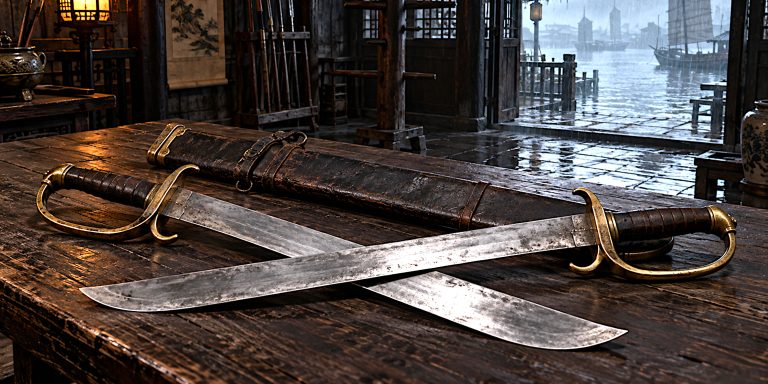
She also recalled handkerchiefs tied around their heads. Each woman carried a machete and a pistol.
This is valuable evidence because it comes from someone who claimed to have encountered the women during an actual act of piracy. It is considerably more useful than the fanciful portraits produced decades or centuries later.
The word “machet” used in the proceedings probably referred to a machete, hanger or heavy cutting weapon suitable for use aboard a small vessel. It should not automatically be imagined as an elegant naval cutlass of the type handed to every screen pirate by a helpful costume department.
Bonny Was Accused of Calling for a Witness to Be Murdered
Dorothy Thomas’s testimony was not limited to clothing.
According to the printed proceedings, Bonny and Read:
“cursed and swore at the Men”
Thomas alleged that the women demanded she be killed so that she could not later testify against them.
This is one of the darkest details in the surviving record. It presents Bonny not as a passive companion but as someone willing to use lethal violence to protect the crew.
Thomas survived because the men apparently did not act upon the demand. Her subsequent appearance in court provided direct evidence of the women’s participation.
As with all criminal testimony, some caution is sensible. Thomas was describing the people who had robbed and threatened her, and the printed pamphlet may compress what was said. Even so, the court accepted her as a credible witness.
The episode is frequently omitted from romantic accounts of Bonny. A rebel heroine is easier to sell when the frightened woman in the canoe is quietly removed from the story.
Witnesses Said She Was “Very Active” During Attacks
Thomas Spenlow testified that Bonny and Read were aboard Rackham’s sloop when his schooner was taken. Other witnesses supported the claim that the women were active participants rather than prisoners or passengers.
The trial account described them as:
“very active on Board, and willing to do any Thing”
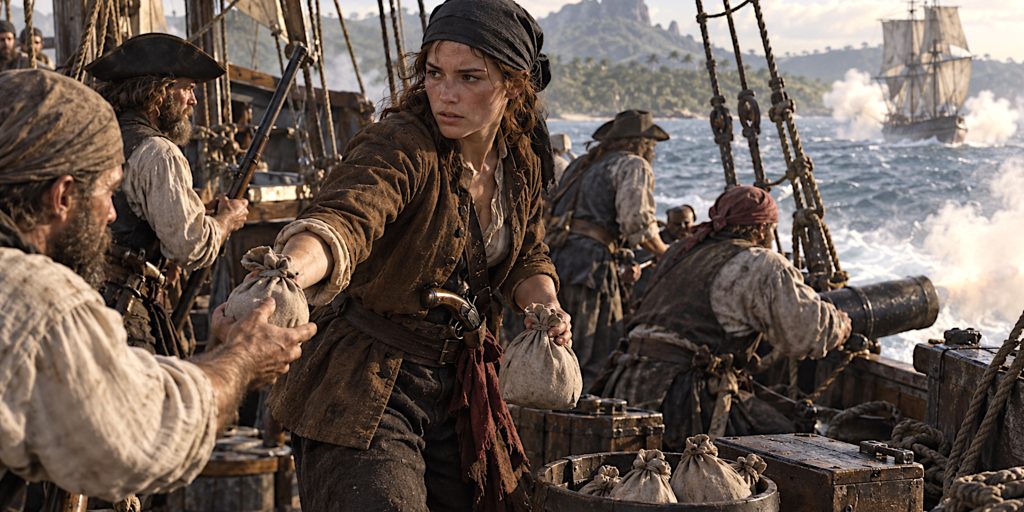
More specifically, Bonny was seen handing gunpowder to the men.
Supplying powder during an engagement was dangerous and essential work. Loose gunpowder had to be moved carefully around sparks, open flame and discharged firearms. On a cramped wooden vessel, a moment of clumsiness could produce a rather final lesson in ammunition handling.
The testimony does not prove that Bonny held a formal rank. It does demonstrate practical participation in the operation of the pirate crew.
She Was Recognised as a Woman Despite Wearing Men’s Clothing
The image of Bonny living permanently in disguise has been exaggerated.
Dorothy Thomas told the court that she believed Bonny and Read were women despite their jackets, trousers and head coverings. The surviving account gives a rather blunt explanation based upon their physical appearance.
The evidence suggests that male clothing may have been worn during attacks or shipboard work. Trousers and jackets allowed freer movement when climbing, handling ropes or fighting on deck. Conventional women’s dress was poorly suited to any of these activities.
Other witnesses appear to have seen the pair in women’s clothing at different times. This has led historians to suggest that they changed dress according to circumstances rather than maintaining a continuous male identity.
Bonny’s clothes were practical, confrontational and useful evidence at her trial. They were not necessarily an elaborate disguise.
She Was a Pirate Crewmember, Not a Captain
Bonny is frequently described online as a pirate captain. The contemporary evidence does not support that rank.
Rackham was identified as commander of the William. The indictments placed Bonny and Read among his company, but neither woman was described as captain, quartermaster or officer.
Bonny may have enjoyed influence aboard the vessel. Her reported relationship with Rackham could have given her a position beyond that of an ordinary recruit. Nothing in the trial record, however, shows that she commanded the ship or directed its broader operations.
This correction does not diminish her importance. An armed woman serving openly in an eighteenth-century pirate crew was remarkable without the addition of an imaginary promotion.
Rackham’s Capture Was Less Cinematic Than the Legend
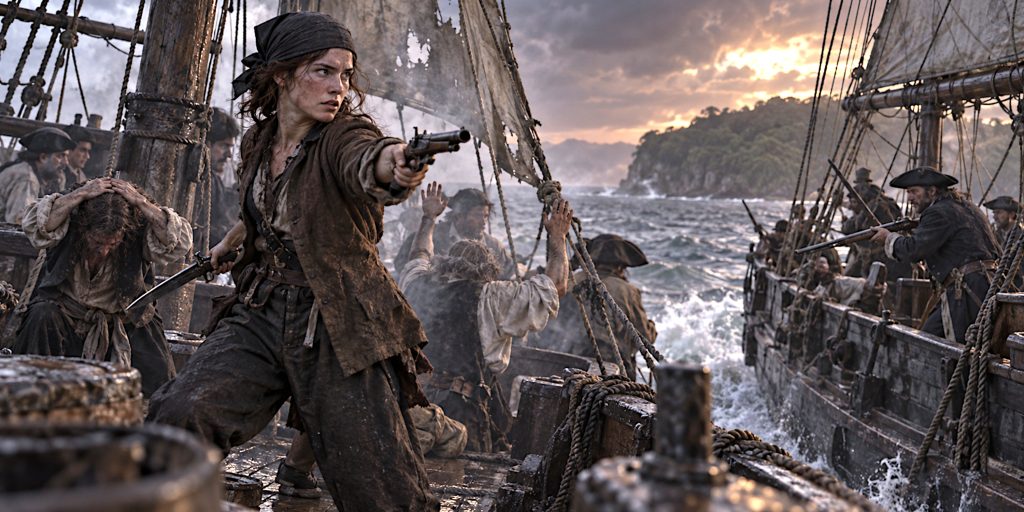
Rackham’s crew was found near Negril Point on the western side of Jamaica in October 1720. The vessel that confronted them was commanded by Jonathan Barnet, operating under authority to pursue pirates.
According to the proceedings, Barnet ordered Rackham to surrender. Rackham’s men replied that they would allow the approaching vessel to come alongside. An exchange of fire followed.
Barnet’s men damaged the pirate sloop’s rigging and boarded. Rackham and his crew then asked for quarter, meaning that they surrendered on the understanding that they would not be killed during the capture.
The official record does not describe Bonny and Read fighting alone while every man hid below deck. Nor does it confirm the popular story that Mary Read fired into the hold and killed one of her own companions for refusing to fight.
Those details appear in later narrative tradition, particularly A General History. They may preserve some memory of the capture, but they are not supported by the surviving trial testimony.
The male pirates may have been drinking before the confrontation, but the familiar image of two women making a heroic last stand against an entire boarding party belongs more securely to legend.
Bonny and Read Faced a Separate Trial
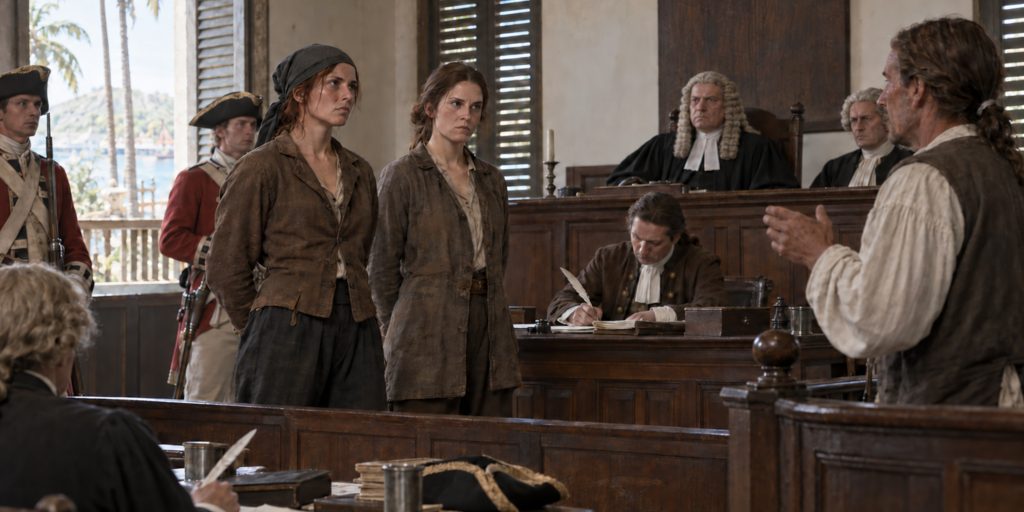
Rackham and the male members of his company were tried at St Jago de la Vega, now Spanish Town, on 16 November 1720.
They were found guilty. Rackham was executed at Port Royal on 18 November, while other condemned pirates were hanged at locations around Jamaica. Displaying their bodies near shipping routes served as a warning to anyone considering a similar career change.
Bonny and Read were tried together on 28 November before a court presided over by Governor Nicholas Lawes.
The indictment accused them of acting:
“piratically and feloniously”
This was not decorative legal language. Piracy was a capital offence, and conviction ordinarily meant death by hanging.
Both women pleaded not guilty. The prosecution then called witnesses who placed them aboard Rackham’s vessel during attacks and described their clothing, weapons and behaviour.
The jury returned guilty verdicts.
The Court Asked Whether They Had Anything to Say
After conviction, the court followed the customary procedure of asking why sentence should not be passed.
Bonny and Read then declared that they were pregnant. The trial pamphlet records that they:
“pleaded their Bellies”
This was a recognised legal plea rather than an appeal to sentiment. Under English law, the execution of a pregnant woman could be postponed until after childbirth.
A pregnancy did not cancel the conviction or remove the death sentence. It delayed the punishment because the law treated the unborn child as innocent.
The court ordered that the women’s claims be examined. The surviving account states that they were found to be “quick with child”, a phrase generally referring to a pregnancy in which foetal movement could be detected.
Their executions were stayed.
Pregnancy Saved Bonny From the Gallows, At Least Temporarily
Bonny’s pregnancy has sometimes been treated as an ingenious trick. That goes beyond what the record establishes.
The court accepted that she was pregnant after an examination. It is possible that uncertainty, error or deception played some part, but there is no firm evidence that Bonny fabricated the claim.
Nor do we know the identity of the father. Rackham is the obvious candidate in popular retellings, yet the surviving court material does not identify him as such.
Mary Read also received a reprieve. She died in prison and was buried in St Catherine Parish on 28 April 1721. The parish register described her simply as “Mary Read, pirate”.
No similarly conclusive entry explains what happened to Bonny.
The Famous “Hanged Like a Dog” Quote Is Not in the Trial Record

Bonny’s best-known remark was supposedly directed at Rackham shortly before his execution.
A General History of the Pyrates reports that she told him:
“if he had fought like a Man, he need not have been hang’d like a Dog”
It is a superbly efficient insult. It also appeared four years after the events and is absent from the trial proceedings.
The author claimed Bonny was permitted to see Rackham in prison before his death. Rather than comforting him, she supposedly condemned his failure to resist Barnet’s attack.
The meeting is plausible, but the exact words cannot be verified. The line should be presented as a quotation attributed to Bonny by the 1724 account, not as a documented courtroom statement.
It has nevertheless become attached to her identity. Rackham’s own words have largely disappeared, while the insult apparently delivered by his lover is still repeated three centuries later. She won that exchange rather comprehensively.
Her Marriage to James Bonny Is Known Mainly From the 1724 Biography
According to A General History, Anne married a poor sailor named James Bonny against her father’s wishes. Her father supposedly disowned her, after which the couple travelled to the Bahamas.
James Bonny allegedly became an informant for Governor Rogers, reporting former pirates who had returned to criminal activity. Anne then became involved with Rackham and abandoned her husband.
This account fits the political atmosphere of Nassau after 1718. Rogers was trying to transform a notorious pirate refuge into a functioning British colony, using pardons, informants and executions where necessary.
However, the surviving trial record does not provide Bonny’s marital history. Even the reference to “Fulford alias Bonny” complicates the familiar story.
James Bonny may have existed and the marriage may have occurred. The precise details remain dependent upon the later narrative.
Her Relationship With Mary Read Remains a Mystery
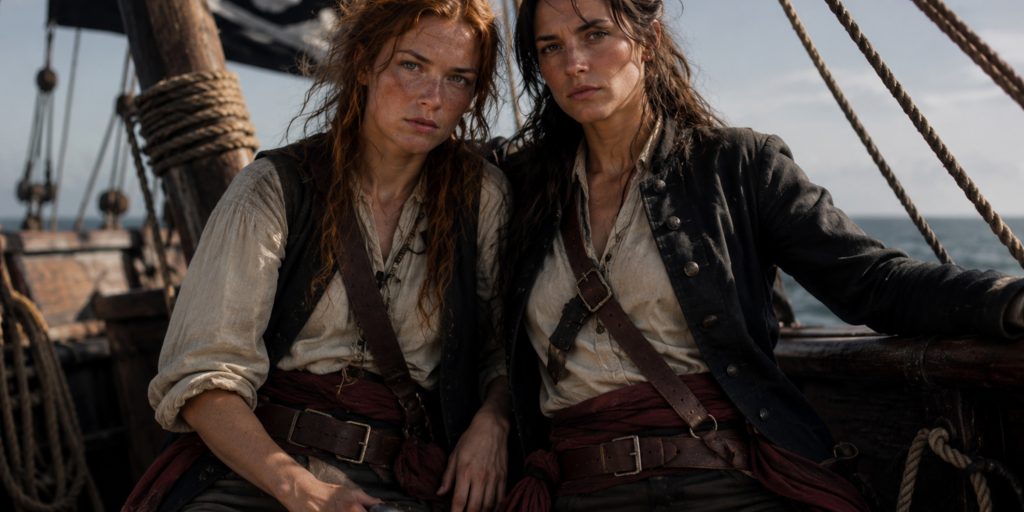
Bonny and Read have been portrayed as friends, rivals, lovers and almost every combination in between.
A General History claims that Bonny became attracted to Read while believing her to be a young man. Read then privately revealed that she was a woman. Rackham supposedly became jealous before being admitted to the secret.
There is no supporting evidence for this conversation. Rogers’s proclamation had already named both women, which suggests that their sex was not an especially well-kept secret.
The trial proves only that Bonny and Read:
- Served aboard the same pirate vessel
- Participated in attacks
- Wore similar clothing during action
- Were captured together
- Stood trial together
- Received stays of execution after pleading pregnancy
They shared an extraordinary and dangerous experience. The emotional or sexual nature of their relationship cannot be recovered from the records.
Modern interpretations are free to explore the possibility, but historical possibility and historical proof are different creatures.
There Is No Evidence That Bonny Had Red Hair
No contemporary source gives a reliable physical description of Bonny’s face, hair colour, height or build.
The familiar red hair appeared in later artistic tradition. By the late nineteenth century she was being represented on illustrated cards and in books as a dramatic red-haired pirate. Twentieth and twenty-first-century popular culture eagerly retained the image.
Red hair suits the legend constructed around Bonny’s temper and supposed Irish ancestry. That is precisely why it should make a historian suspicious.
She may have been red-haired. We simply do not know.
The same caution applies to the widely circulated portraits labelled as Bonny. There is no authenticated portrait made from life. The famous early engravings were imaginative illustrations produced for the 1724 book.
The Familiar Portrait Is Not a True Likeness
The well-known engraving of Bonny shows her holding a firearm and an edged weapon while dressed in a loose jacket and trousers.
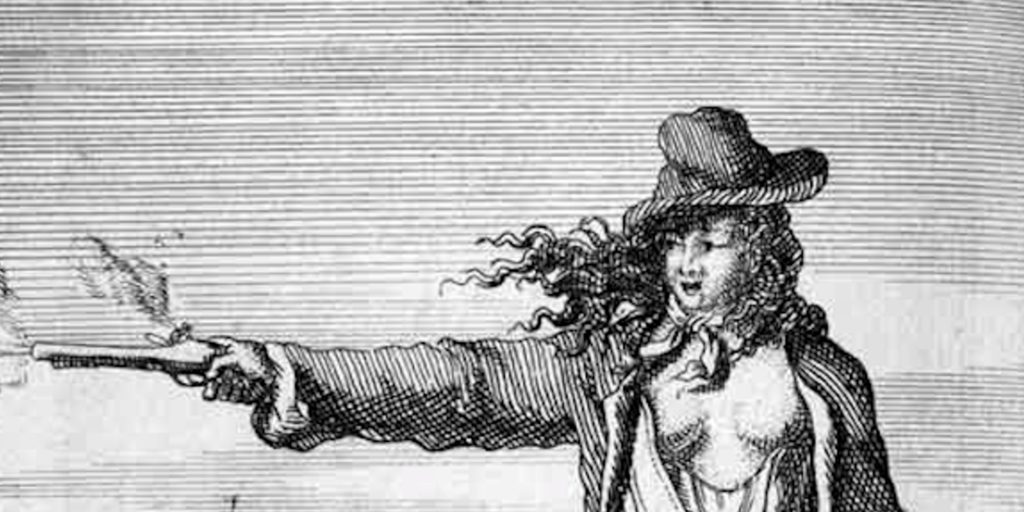
It was published with A General History of the Pyrates. There is no indication that the artist had seen Bonny or worked from a genuine portrait.
The image was designed to communicate a type: the dangerous female pirate who had crossed the boundaries of dress, gender and law. It tells us more about how publishers wished to sell Bonny’s story than about her actual appearance.
Modern recreations often add leather corsets, elaborate hats and immaculate cosmetics. None is supported by the trial testimony. The records describe a jacket, long trousers, a headscarf, a pistol and a heavy cutting weapon.
The historical outfit was practical. The fantasy version looks as though it requires assistance from a wardrobe department.
The Records Do Not Prove She Was an Expert Swordswoman
Bonny is often credited with exceptional skill in sword fighting. The evidence is thinner than the reputation.
Dorothy Thomas placed a machete or similar cutting weapon in Bonny’s hand. Witnesses described her as active and willing to participate. That proves she was armed and involved.
It does not tell us:
- Whether she received formal training
- How often she fought at close quarters
- Whether she killed anyone
- Whether she was considered unusually skilled
- What precise type of blade she carried
- Whether she took part in the final exchange with Barnet
Aboard a small pirate vessel, weapons might include pistols, muskets, hangers, cutlasses, axes, knives and working machetes. Bonny probably knew how to handle the weapons she carried, but claims that she was a master swordswoman are modern embroidery.
Anne Bonny’s Fate Is Still Unknown
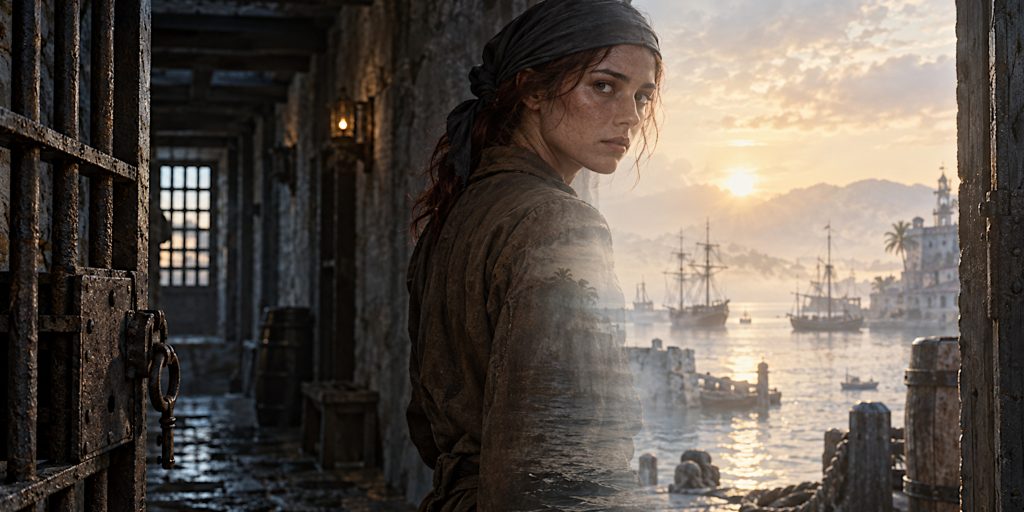
After the court postponed her execution, Bonny disappears from the securely documented story.
Captain Charles Johnson admitted the uncertainty in 1724:
“what is become of her since, we cannot tell”
He added that she had not been executed by the time his account was written.
This is significant. The earliest substantial biographer did not claim that Bonny escaped, returned home or lived to old age. He simply did not know what happened.
Later theories propose that she:
- Was released through the influence of her family
- Returned to the Carolinas
- Married again and raised children
- Remained in Jamaica under another name
- Died in prison
- Received a pardon
- Lived until 1782
A burial entry for an Ann Bonny in Jamaica in December 1733 has also been suggested as a possible match. The name alone cannot prove that the deceased woman was Rackham’s former crewmember.
No release order, pardon, later marriage record or securely connected burial entry has settled the question.
Anne Bonny’s disappearance is not a small missing detail. It is the final and longest chapter of her supposed life, and almost all of it is blank.
A Timeline Based on the Surviving Record
| Date | Recorded event |
|---|---|
| Before August 1720 | Bonny’s movements are uncertain |
| 22 August 1720 | Rackham’s group reportedly seizes the William at Nassau |
| 5 September 1720 | Woodes Rogers issues a proclamation naming Rackham, Bonny and Read |
| September to October 1720 | The crew attacks small vessels in Caribbean waters |
| 22 October 1720 | Jonathan Barnet captures Rackham’s company near Negril Point |
| 16 November 1720 | Rackham and several male crewmembers are tried |
| 18 November 1720 | Rackham is executed at Port Royal |
| 28 November 1720 | Bonny and Read are tried and convicted |
| After sentencing | Both women plead pregnancy and receive temporary reprieves |
| 28 April 1721 | Mary Read is recorded as buried in St Catherine Parish |
| 1724 | A General History of the Pyrates states that Bonny was not executed |
| After 1724 | No securely identified record establishes Bonny’s fate |
Contemporary and Near-Contemporary Quotes
Woodes Rogers’s proclamation, 1720
“Rackum who ran away with a sloop of six guns”
This official description places Rackham’s company under active pursuit shortly after the theft of the William.
Dorothy Thomas at the trial, 1720
“each of them had a Machet and Pistol in their Hands”
Thomas’s testimony directly identifies Bonny and Read as armed participants.
Witness evidence recorded at the trial
“very active on Board, and willing to do any Thing”
This undermines the argument that Bonny was simply travelling with Rackham.
The indictment
“piratically and feloniously”
The formula reflected the capital nature of the charges brought against the women.
The pregnancy plea
“pleaded their Bellies”
This legal intervention postponed the death sentences passed against Bonny and Read.
Captain Charles Johnson, 1724
“what is become of her since, we cannot tell”
The earliest extended account of Bonny’s life openly admitted that her ultimate fate was unknown.
What Is Fact, What Is Possible and What Is Legend?
| Claim | Assessment |
|---|---|
| Bonny sailed with Calico Jack | Supported by contemporary records |
| She participated in piracy | Supported by trial testimony |
| She carried a pistol and machete | Supported by Dorothy Thomas’s testimony |
| She supplied gunpowder | Supported by witness testimony |
| She wore men’s clothing during attacks | Supported by trial testimony |
| She called for a witness to be killed | Alleged under oath at her trial |
| She was born in Ireland | Traditional, but not confirmed |
| She married James Bonny | Reported in the 1724 biography |
| She was Rackham’s lover | Probable tradition, but not established in court |
| She was a pirate captain | Unsupported |
| She had red hair | Unsupported |
| She was an expert swordswoman | Unsupported |
| She and Mary Read fought alone at their capture | Near-contemporary story, not confirmed by the trial |
| She insulted Rackham before his execution | Attributed to her in 1724, but unverified |
| She lived until 1782 | Unproven |
| She was executed | No evidence |
| She escaped from prison | No evidence |
| Her fate is unknown | Supported by the absence of a conclusive later record |
Why Anne Bonny is important

Bonny’s story does not need invented captaincies, flawless swordsmanship or a convenient retirement in the Carolinas.
The surviving evidence reveals a woman operating inside a violent, overwhelmingly male maritime world. She was named in a colonial manhunt, recognised during pirate attacks and prosecuted as an active member of Rackham’s crew.
It also presents a morally difficult figure. Bonny was not merely defying gender expectations. She was accused of helping rob vulnerable vessels and demanding the murder of a woman who could identify her.
That tension is precisely what makes her historically interesting. She was neither a decorative pirate companion nor a clean modern heroine misplaced in the eighteenth century. She was a participant in a dangerous criminal enterprise who crossed social boundaries while apparently having little concern for those on the receiving end.
Then, at the moment when the law seemed certain to kill her, she vanished from the record.
The real Anne Bonny is less complete than the legend, but considerably more compelling.
Sources and Further Reading
The principal primary source is The Tryals of Captain John Rackam and Other Pirates, printed in Jamaica by Robert Baldwin in 1721. A digital copy is catalogued by The National Archives.
Woodes Rogers’s September 1720 proclamation and related newspaper reports provide evidence from before Rackham’s capture. A collection of the early documentary record brings several of these notices together.
A General History of the Robberies and Murders of the Most Notorious Pyrates, published in 1724, remains the foundation of Bonny’s traditional biography. It should be used carefully because many of its private conversations and early-life stories cannot be corroborated.
Useful modern assessments include the Dictionary of Irish Biography and research on Anne Bonny, Mary Read and women in early eighteenth-century piracy.