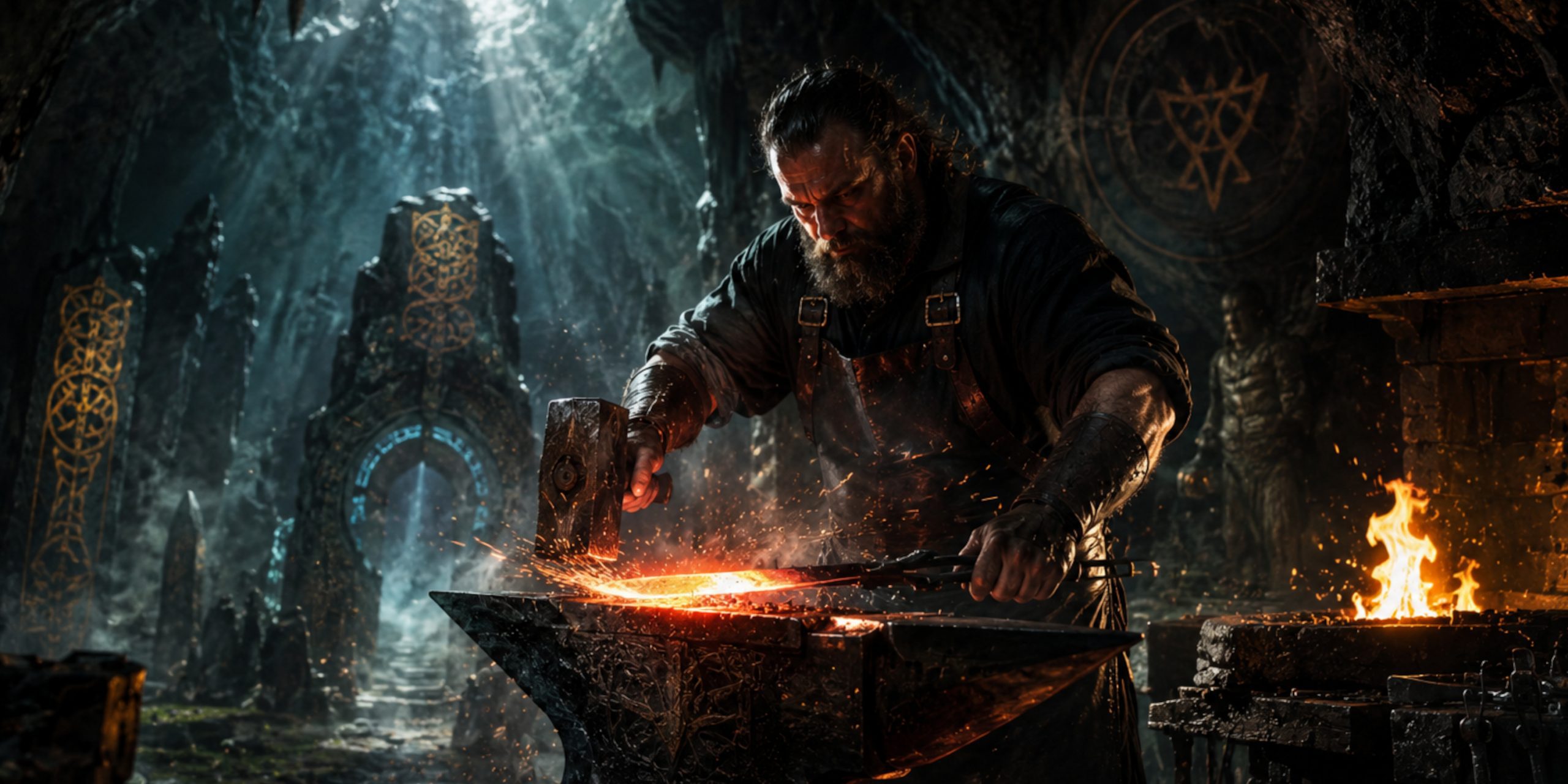
Few crafts sit at the strange crossroads of science, art and myth quite like swordsmithing. For thousands of years, humans pulled dull stone from the ground, heated it until it glowed like captured sunlight, hammered it repeatedly and somehow produced objects capable of shaping kingdoms.
To ancient eyes, this looked dangerously close to magic. A smith controlled fire, transformed matter and created weapons that could decide the fate of warriors and rulers. It is easy to understand why legends grew around these figures. If someone spends all day beside a furnace turning rocks into swords, a few rumours about supernatural powers are almost inevitable.
The truth is arguably more interesting. Ancient swordsmiths were not wizards, although some probably enjoyed letting people think so. They were practical chemists, engineers and artists centuries before those professions had names.
The Origins of Swordmaking
The first swords emerged during the Bronze Age, when metalworkers discovered that combining copper with tin created bronze, a material harder and more useful than either metal alone.
Early bronze swords appeared around the 3rd millennium BC, with some of the oldest examples found in Anatolia. These early weapons were cast rather than forged. Molten bronze was poured into moulds, then sharpened and finished by hand.
Bronze had advantages:
- It resisted corrosion
- It could be repeatedly melted and reused
- It allowed detailed casting
- It created reliable blades when produced correctly
However, bronze had limits. Long blades could bend or break, and access to tin depended on complex trade networks. When those networks weakened during the Late Bronze Age collapse, iron became increasingly important.
Iron was more common, but it was also much more stubborn. It demanded hotter furnaces, better techniques and a deeper understanding of materials. In typical human fashion, we replaced one problem with a much harder one, then spent centuries solving it.
Iron, Steel and the Discovery That Changed Warfare
The arrival of iron swords did not immediately create superior weapons. Early iron blades were often softer than good bronze ones.
The breakthrough came with steel.
Steel is iron containing controlled amounts of carbon. Ancient smiths did not understand atomic structures, but they learned through observation:
- Heating iron with charcoal changed its properties
- Repeated forging improved consistency
- Different cooling methods affected hardness
- Some ores produced better blades than others
A sword needed balance. Too little carbon and it could bend. Too much and it became brittle. Finding that middle ground was the hidden science behind legendary blades.
Modern metallurgy explains this through carbon content, crystal structures and heat treatment. Ancient smiths explained it through experience, tradition and occasionally stories involving gods.
Both approaches involved a lot of ruined metal along the way.
The Role of Fire: The Smith’s Greatest Tool
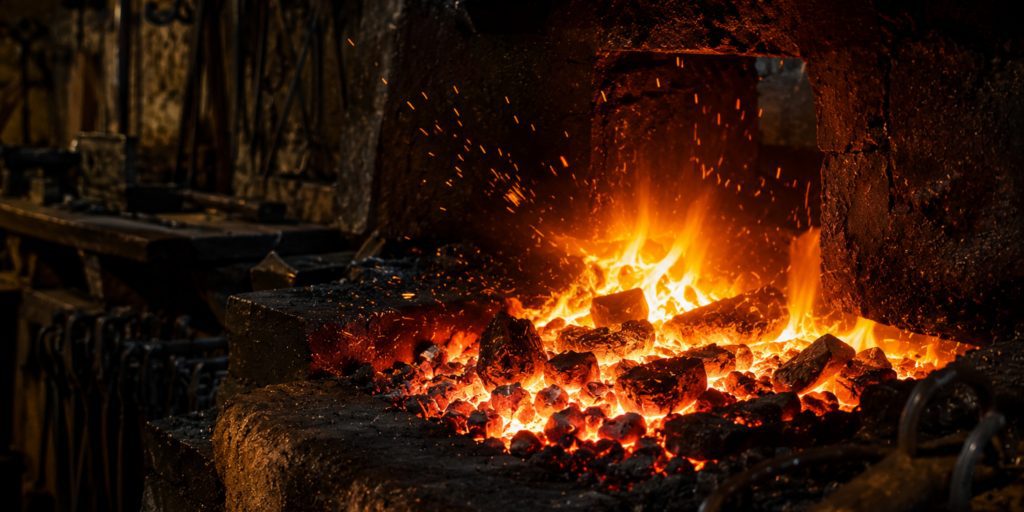
Fire was the heart of swordmaking. Controlling temperature was everything.
Ancient smiths judged heat without modern instruments. They read:
- The colour of glowing metal
- The behaviour of sparks
- The feel of the hammer strikes
- The response of the blade during forging
Experienced smiths could recognise temperature changes through tiny visual clues.
The forge itself became almost sacred in many cultures. This was not simply superstition. Fire genuinely transformed materials in ways most people could not see or understand.
A farmer watched grain become bread. A potter watched clay become ceramic. A smith watched stone become a weapon carried by kings. It was always going to attract a little drama.
Pattern Welding: Beauty Created Through Necessity
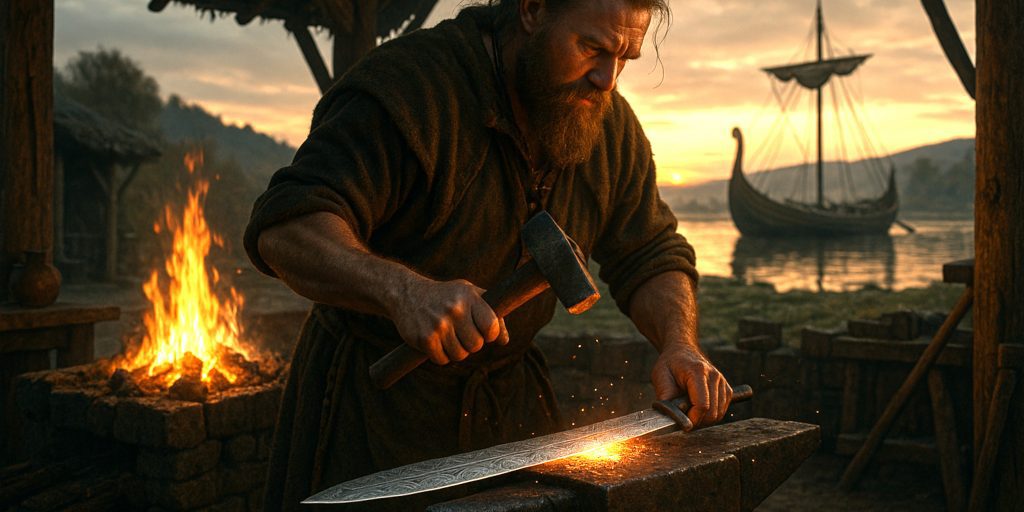
Some of the most beautiful ancient swords were created through pattern welding.
This technique involved twisting and joining different iron and steel bars together before forging them into a blade. The result produced distinctive flowing patterns across the surface.
Pattern welding was especially important in early medieval Europe, including:
- Migration Period swords
- Viking Age swords
- Anglo-Saxon weapons
The patterns were not only decorative. They helped overcome inconsistencies in early iron production by combining different materials into a stronger blade.
Many elite swords featured:
- Flexible cores
- Harder cutting edges
- Decorative patterns
- Complex layered construction
A finely made pattern welded sword was a serious display of wealth. It was the medieval equivalent of arriving with the latest technology, except your expensive object could also remove someone’s helmet.
Damascus Steel and the Mystery of the Watered Blade
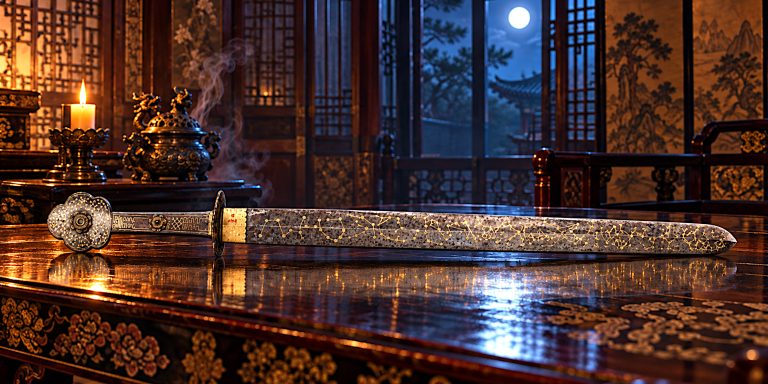
Few swordmaking traditions have inspired more fascination than Damascus steel.
Historical Damascus blades were often made from crucible steel, especially high quality steel produced in South and Central Asia. This material was traded widely and became famous in the Middle East.
Damascus swords were admired for:
- Flowing surface patterns
- Excellent cutting ability
- Toughness
- Reputation among warriors and collectors
The famous “watered” appearance came from structures within the steel itself rather than simple surface decoration.
The exact historical methods faded over time, partly because they depended on specific ores, techniques and supply chains. Modern researchers have recreated similar materials, but original Damascus steel remains surrounded by understandable fascination.
Was it magical? No.
Would I still dramatically inspect one under candlelight like a medieval scholar discovering forbidden knowledge? Absolutely.
Japanese Swordsmithing and the Pursuit of Perfection
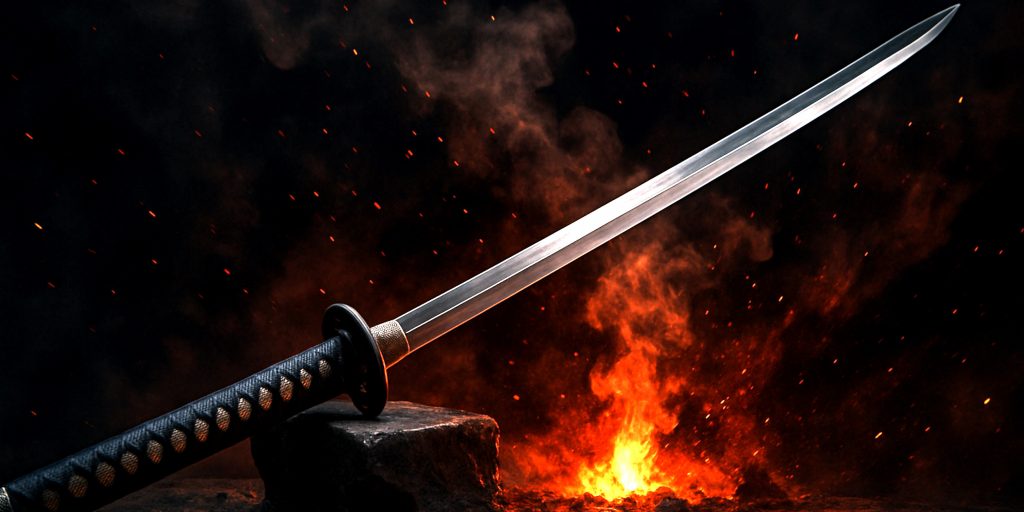
Japanese swordmaking became one of history’s most refined forging traditions.
The famous katana developed through centuries of experimentation with tamahagane steel produced from iron sand.
Traditional Japanese smiths used methods including:
- Folding steel to remove impurities and improve consistency
- Differential hardening to create a hard edge and softer spine
- Clay coating during heat treatment
- Careful polishing to reveal the blade structure
The visible temper line, known as the hamon, became both a technical feature and an artistic signature.
The katana’s reputation has sometimes been exaggerated in modern culture. It was not a mythical weapon capable of cutting through anything unfortunate enough to stand nearby.
It was, however, an extremely sophisticated sword designed around available materials, fighting methods and cultural expectations.
Rituals, Beliefs and the Spiritual Side of Swordmaking
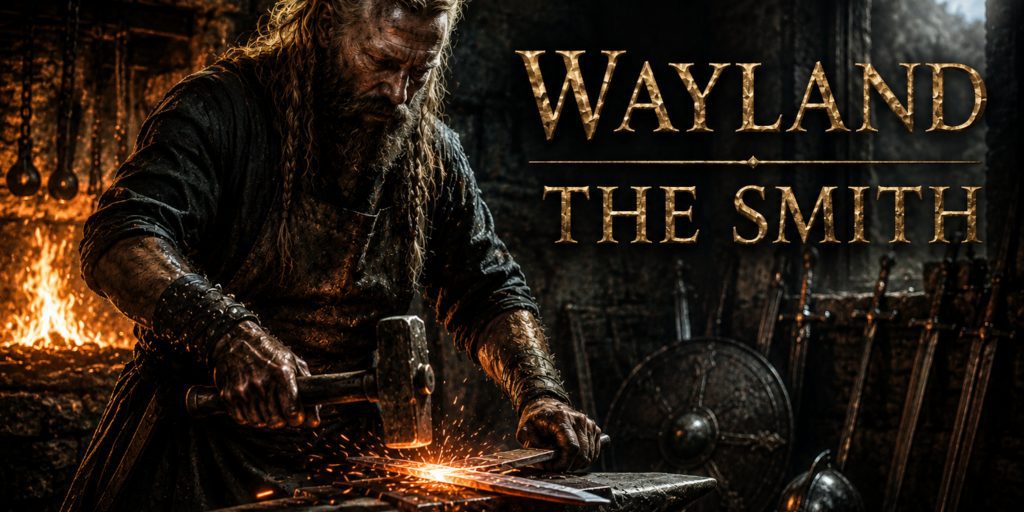
Many ancient societies believed swordsmithing contained spiritual power.
Smith gods and legendary craftsmen appear across cultures:
- Hephaestus in Greek tradition
- Wayland the Smith in Germanic legend
- Gofannon in Welsh mythology
- Ogun in West African traditions
This connection makes sense. Smiths possessed knowledge most people did not. They controlled dangerous materials, worked with extreme heat and produced objects tied to survival and status.
Some traditions included:
- Purification rituals
- Offerings before forging
- Symbolic timing of production
- Religious ceremonies
Not every smith believed they were performing magic, but reputation mattered. A little mystery was probably useful for business.
Famous Historical Swordmaking Centres
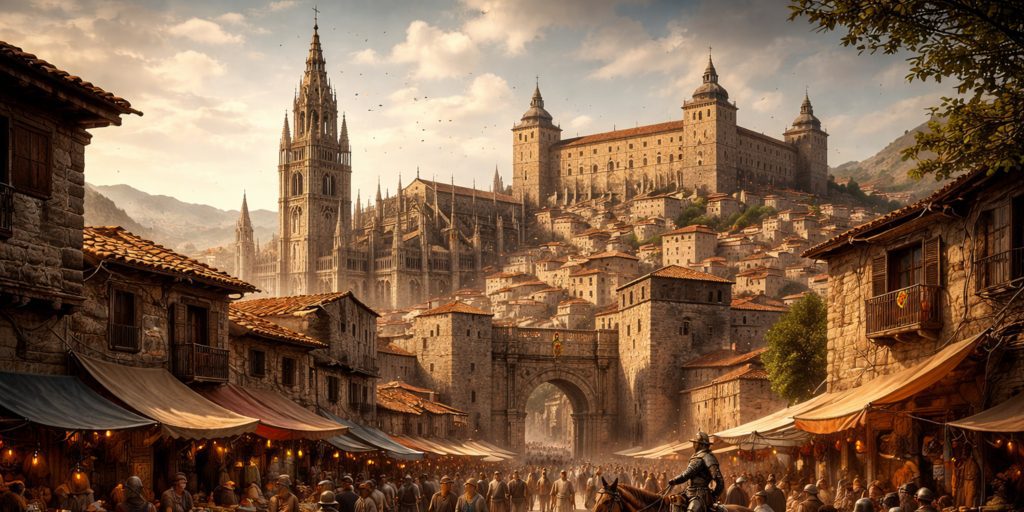
Certain regions became legendary for their blades.
Toledo, Spain
Toledo became famous for exceptional steel swords during the medieval and Renaissance periods. Its blades were prized across Europe.
Solingen, Germany
Known as the “City of Blades”, Solingen developed into one of Europe’s great sword production centres.
Japan
Centres such as Bizen and Yamashiro produced some of Japan’s most respected sword schools.
India and Persia
Regions connected to crucible steel production influenced some of the finest blades traded across Asia and the Middle East.
The Science Hidden Inside Ancient Blades
Modern analysis has revealed how advanced some historical techniques were.
Researchers use:
- Microscopy
- Chemical analysis
- X-ray imaging
- Metallography
These studies reveal:
- Carbon distribution
- Welding techniques
- Heat treatment methods
- Manufacturing mistakes and repairs
One thing becomes obvious when studying ancient swords. Their makers were experimenting constantly.
They did not have laboratory equipment, but they had generations of observation. The forge was their laboratory.
Archaeology and Surviving Evidence

Important discoveries continue to improve our understanding of ancient swordsmithing.
Archaeologists study:
- Furnace remains
- Slag deposits
- Workshop sites
- Unfinished blades
- Tools and moulds
Major finds such as Viking swords, Celtic iron weapons, Roman blades and Japanese masterpieces show enormous variation in craftsmanship.
Some swords reveal elite skill. Others reveal a smith having what we might politely call “a difficult day at work”. Failed examples are valuable because they show the learning process behind the masterpieces.
The Legacy of Ancient Swordsmiths
The greatest achievement of ancient swordsmiths was not simply making weapons. They created objects that combined engineering, identity and storytelling.
A sword could represent:
- Authority
- Honour
- Family heritage
- Religious belief
- Military skill
Today we can explain the chemistry, measure the hardness and analyse every microscopic detail. Yet a beautifully forged historical sword still has something that feels almost impossible.
Not magic exactly.
Just thousands of years of human curiosity, patience and a willingness to stand dangerously close to very hot metal until something extraordinary happened.