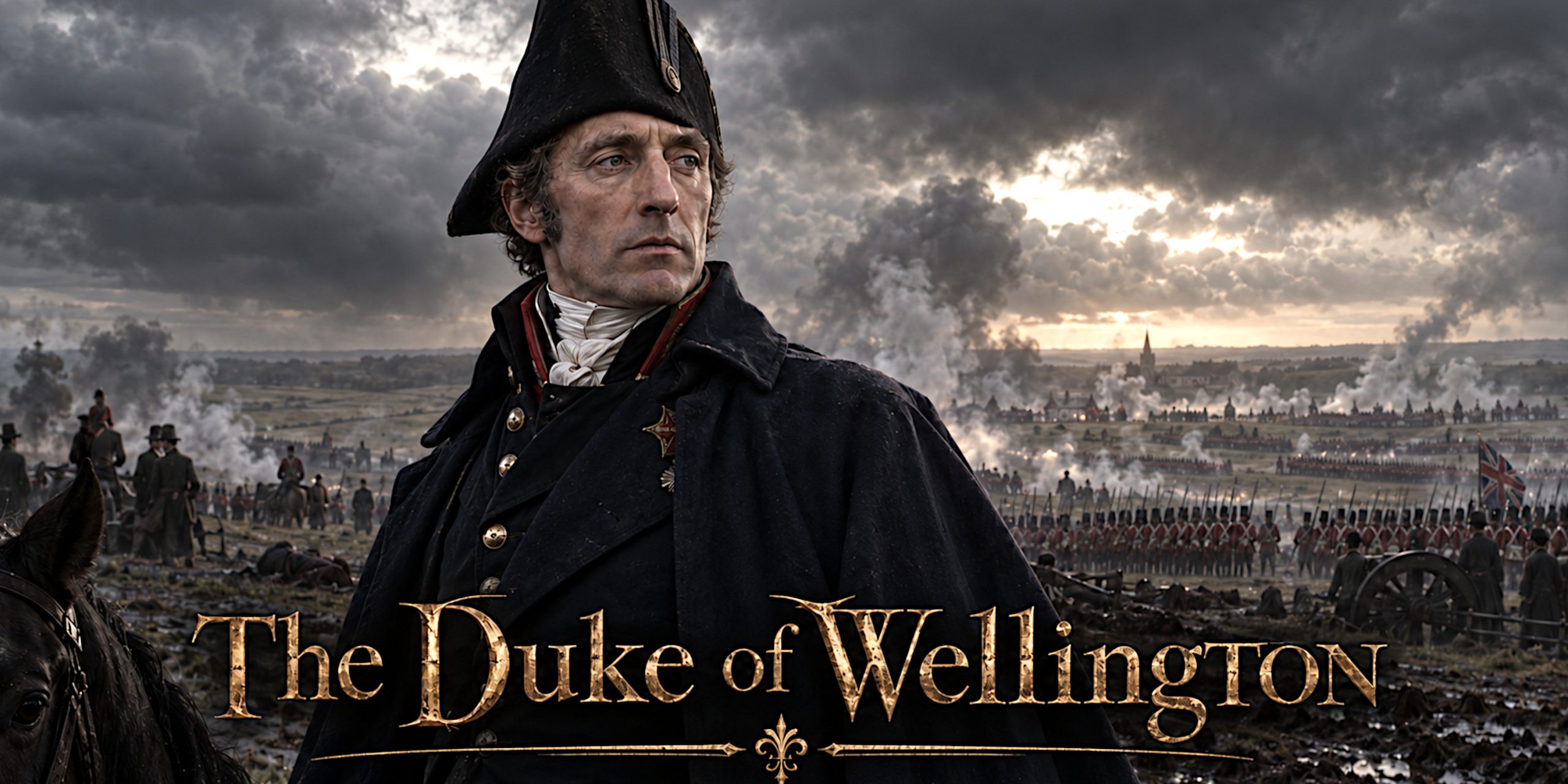
Arthur Wellesley, 1st Duke of Wellington, is usually reduced to one wet field in Belgium and one splendidly severe portrait. Waterloo certainly secured his place in history, but it did not create his reputation from nothing. By 1815, Wellington had already commanded in India, driven French armies through Portugal and Spain, crossed the Pyrenees and invaded southern France. He was one of the most experienced coalition commanders in Europe.
He was also far less tidy than the national legend. Wellington served an expanding British Empire, could be cold towards ordinary soldiers, opposed parliamentary reform and proved a much less natural prime minister than general. Yet he supported Catholic emancipation when he believed refusal risked civil conflict, a decision that split his own political allies. He was rigid, pragmatic, vain, dutiful and exceptionally capable. Historical figures do have an awkward habit of refusing to behave like statues.
Duke of Wellington: Key Facts
| Detail | Information |
|---|---|
| Full name | Arthur Wellesley, originally Arthur Wesley |
| Born | 1 May 1769, probably at Mornington House, Dublin |
| Died | 14 September 1852, Walmer Castle, Kent |
| National background | Anglo-Irish aristocracy |
| Parents | Garret Wesley, 1st Earl of Mornington, and Anne Hill-Trevor |
| Wife | Catherine “Kitty” Pakenham |
| Army service | 1787 to 1818 |
| Highest military rank | Field marshal |
| Major campaigns | Fourth Anglo-Mysore War, Second Anglo-Maratha War, Peninsular War, Waterloo Campaign |
| Best-known victories | Assaye, Vimeiro, Talavera, Salamanca, Vitoria and Waterloo |
| Prime minister | 1828 to 1830, briefly again in 1834 as caretaker |
| Burial place | St Paul’s Cathedral, London |
An Anglo-Irish Childhood
Arthur was born into the Protestant Ascendancy, the landowning Anglo-Irish elite that dominated political life in eighteenth-century Ireland. The exact location of his birth has been debated, although Mornington House in Dublin is the traditional and most commonly accepted answer. He was the third surviving son of Garret Wesley, Earl of Mornington, and Anne, Countess of Mornington.
His childhood offered little warning of future greatness. He attended Eton but did not distinguish himself, and his mother reportedly worried about his prospects. The often-repeated image of a hopeless young Arthur suddenly discovering genius is rather too neat, but he was not an obvious prodigy. After studying at the Royal Academy of Equitation at Angers in France, he entered the British Army in 1787.
His early advancement depended heavily on purchase and family influence, as was normal for an officer of his class. He also sat in the Irish House of Commons. There is no honest version of Wellington’s rise in which patronage disappears. What matters is what he did once patronage placed him in command.
Learning War in Flanders
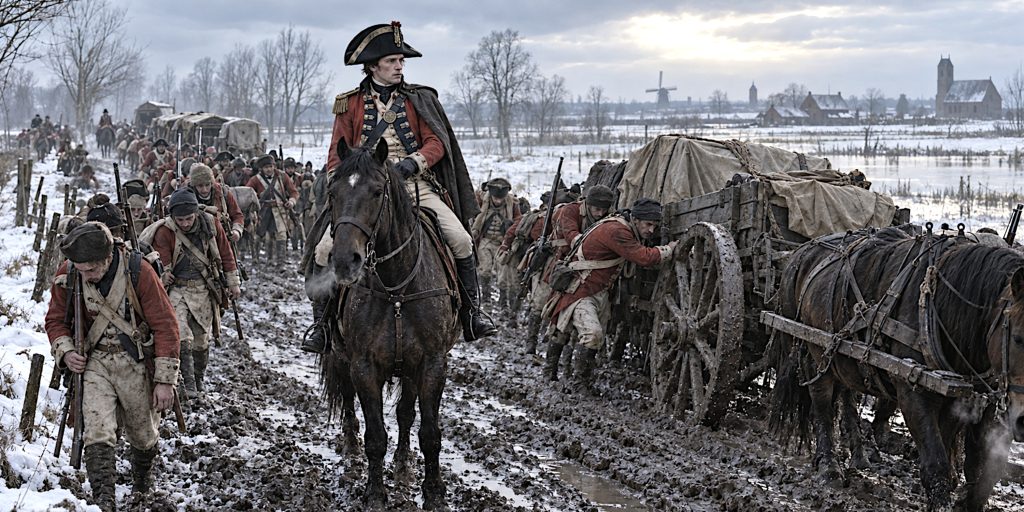
Wellesley first experienced active campaigning in the Low Countries during the unsuccessful Flanders Campaign of 1794 and 1795. The expedition was plagued by poor supply, confused command and difficult weather. It taught him what a badly managed army looked like.
He later reflected that he had learned what not to do, and his mature generalship shows the lesson. Wellington became obsessive about provisions, transport, discipline and defensible positions. He understood that courage did not compensate for empty carts or muddled orders. This sounds obvious. Military history suggests otherwise.
India: The Making of a Commander
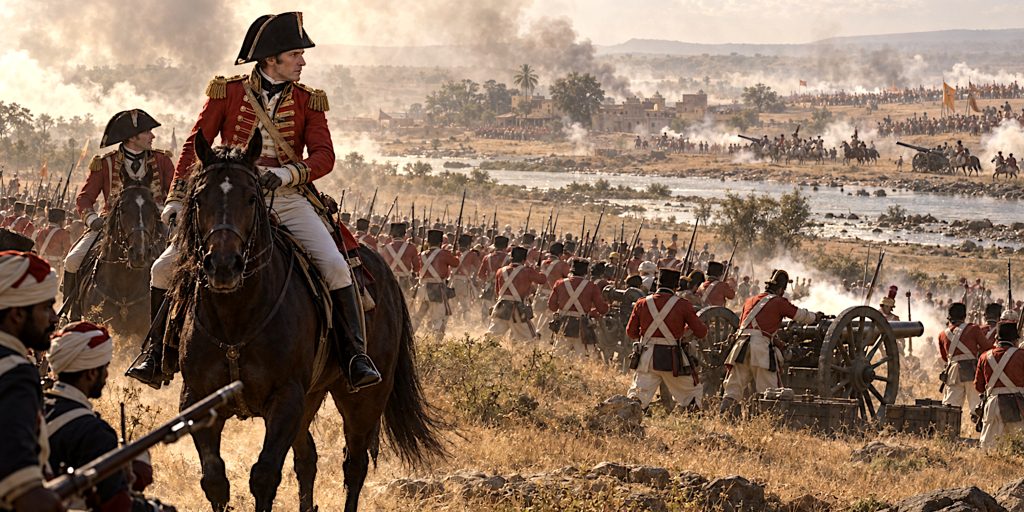
Wellesley sailed for India in 1796 with the 33rd Regiment of Foot. His elder brother Richard became governor-general two years later, giving Arthur valuable opportunities. Family influence opened doors, but India tested whether he could walk through them without falling over his sword belt.
During the Fourth Anglo-Mysore War of 1799, Wellesley took part in the campaign against Tipu Sultan and the storming of Seringapatam. He was then appointed governor of Seringapatam and Mysore. His administrative work sharpened the habits that later defined his European campaigns: intelligence gathering, secure communications, dependable supply and firm control over subordinates.
His most celebrated Indian victory came at Assaye on 23 September 1803 during the Second Anglo-Maratha War. Facing a much larger Maratha force with powerful artillery, Wellesley made a hazardous river crossing and launched a direct attack. The fighting was exceptionally severe. Two horses were killed beneath him and his force suffered heavy casualties, but the Maratha army was driven from the field.
Wellington later described Assaye as his hardest-fought battle. It displayed both his strengths and his appetite for risk. The victory was impressive, though it formed part of British imperial expansion imposed through force on Indian states. To admire the command without acknowledging the conquest would be history with the inconvenient furniture removed.
Return to Europe
Wellesley returned to Britain in 1805, entered Parliament and became Chief Secretary for Ireland in 1807. That year he commanded troops during the British attack on Copenhagen, an operation intended to prevent the Danish fleet falling under French control. Britain bombarded the city and seized the fleet despite Denmark being neutral. Strategically effective, morally troubling and diplomatically brutal, the expedition is an early reminder that British policy during the Napoleonic Wars was not conducted with spotless gloves.
In 1808 Wellesley landed in Portugal and defeated French forces at Roliça and Vimeiro. The subsequent Convention of Cintra allowed the defeated French army to return home in British ships with its equipment. Public anger led to an inquiry. Wellesley, who had not negotiated the final terms, was cleared.
He returned to Iberia in 1809 and assumed the command that would define his career.
The Peninsular War
The Peninsular War was not a private contest between Wellington and Napoleon. British and Portuguese troops fought alongside Spanish regular forces, guerrillas and civilians in a long, destructive struggle. Spanish resistance tied down large French armies, while Portuguese troops became a dependable part of Wellington’s field force under British reorganisation and command.
Wellington’s genius lay partly in making a coalition army function. He cultivated intelligence networks, protected his logistical base in Portugal and selected ground that reduced French advantages. Behind the formidable Lines of Torres Vedras, constructed in secrecy north of Lisbon, he halted Marshal Masséna’s invasion in 1810. The French could neither break the defences nor feed themselves and eventually withdrew.
His defensive reputation is deserved but incomplete. At Salamanca in July 1812, Wellington saw Marshal Marmont extend the French left too far and attacked immediately. The French position unravelled with startling speed. Vitoria in June 1813 broke French control of much of Spain, although the allied pursuit was badly weakened when soldiers stopped to loot the abandoned French baggage train.
Wellington’s furious dispatch after Vitoria contains his most famous verdict on his own troops:
“We have in the service the scum of the earth as common soldiers.”
The phrase is genuine, but it should not be detached from its context. He was condemning indiscipline and plunder, not assessing the soldiers’ courage under fire. Even so, it reveals the social distance between Wellington and the men he commanded. He respected their fighting ability more readily than he respected them.
By 1814 his army had crossed into France. Napoleon abdicated in April, and Wellington was created duke. He had conducted a sustained campaign across difficult terrain, working with several governments and armies while facing a succession of French marshals. Waterloo would be more famous. The Peninsula was the deeper proof of his ability.
Wellington’s Method of War
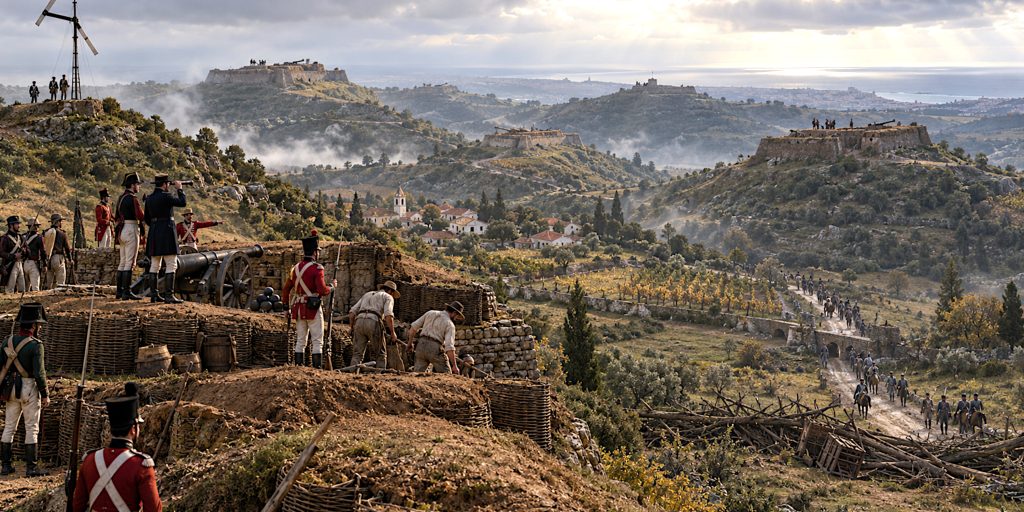
Wellington was not simply a defensive commander crouched behind a convenient ridge. His method changed with circumstances, but several habits remained consistent.
- He studied terrain closely and concealed troops behind reverse slopes when possible.
- He placed great importance on supply, roads, river crossings and secure bases.
- He expected infantry to maintain discipline under artillery and cavalry attack.
- He used allied Portuguese and German troops as integral parts of his army, rather than decorative auxiliaries.
- He could attack decisively when an opponent exposed a weakness, as at Salamanca.
- He kept plans close, sometimes so close that his own senior officers complained of knowing too little.
His control could become over-centralised. Subordinates often waited for instructions instead of developing confidence in independent command. Wellington’s sharp tongue and limited praise did not make headquarters a warm little family. It did, however, produce a force remarkably capable of surviving prolonged campaigning.
Waterloo: Victory by Coalition
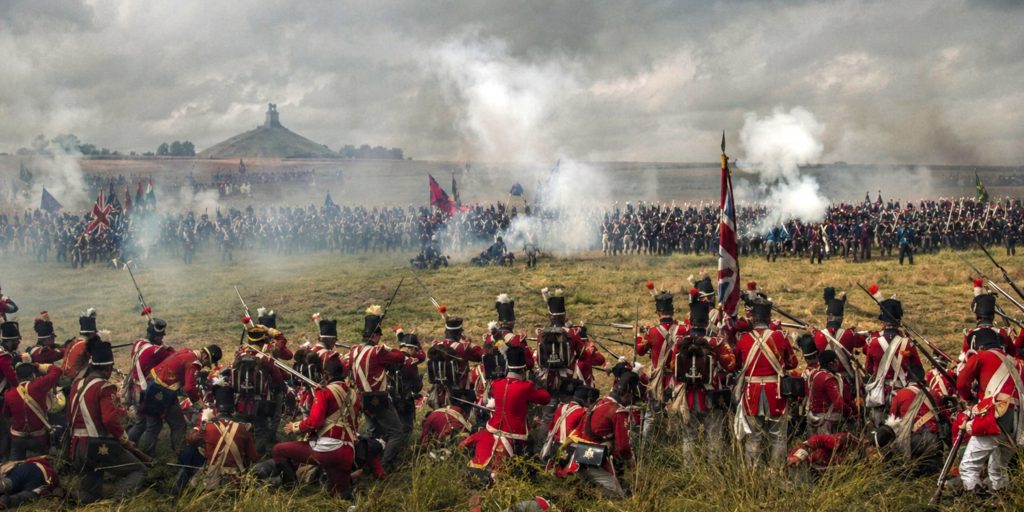
Napoleon returned from exile in March 1815, beginning the Hundred Days. Wellington took command of an allied army in the Low Countries composed of British, Dutch, Belgian, Hanoverian, Brunswick and Nassau troops. A Prussian army under Field Marshal Gebhard Leberecht von Blücher operated nearby.
Napoleon’s plan was to separate and defeat the two coalition armies before further forces could reach France. On 16 June the French beat the Prussians at Ligny, while fighting at Quatre Bras prevented Marshal Ney from securing the vital crossroads. Wellington withdrew to a ridge near the village of Waterloo and prepared to hold until Blücher arrived.
On 18 June repeated French attacks struck the allied position. Hougoumont became the scene of a savage battle within the battle. The French captured La Haye Sainte late in the day, and the allied centre came under acute pressure. Wellington relied on infantry squares against massed cavalry and kept much of his force behind the ridge, protected from direct observation and some artillery fire.
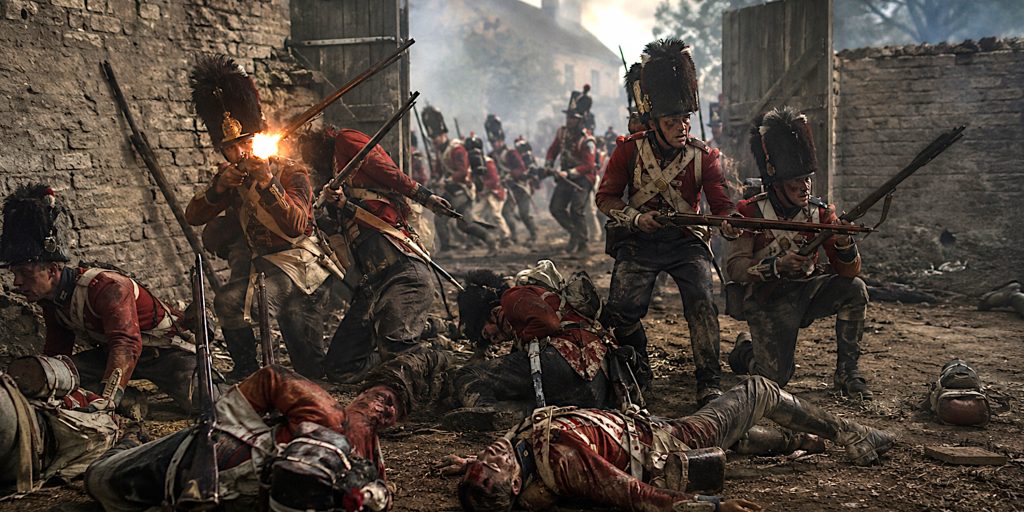
The battle was desperately close. Wellington later called it:
“The nearest run thing you ever saw in your life.”
Prussian forces began pressing Napoleon’s right during the afternoon. Their arrival was not a fortunate afterthought but part of the coalition plan, maintained after the Prussian defeat at Ligny. When Napoleon committed the Imperial Guard against Wellington’s line, the attack failed. The allied army advanced as the French position collapsed, while the Prussians drove the pursuit.
Waterloo was Wellington’s victory, but never Wellington’s alone. His army held the ridge; Blücher’s army made Napoleon fight on two fronts and helped turn defeat into rout. Claims that either commander could comfortably have won without the other belong more to national vanity than sober analysis.
Wellington’s dispatch captured the cost as well as the triumph:
“I cannot express to you the regret and sorrow with which I look round me, and contemplate the loss the army has sustained.”
That grief was real. So was his concern that praise and rewards should reach the officers around him. The remote commander was not incapable of attachment, merely rather guarded about showing it.
Arms, Uniform and Swords
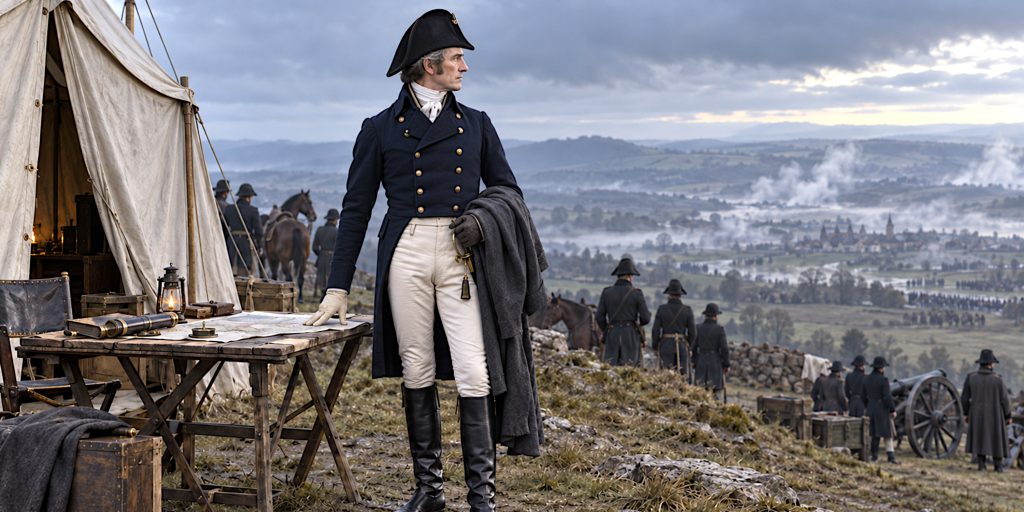
Wellington is closely associated with a plain blue coat, white trousers and a fore-and-aft bicorne hat rather than the more ornate uniform of a field marshal. At Waterloo he wore a blue coat with a short cape, which made him recognisable without covering him in gold braid.
He owned and received numerous swords over his long career. Surviving examples include presentation weapons and curved sabres influenced by Indian and Middle Eastern forms. The distinctive mameluke-hilted sword later became fashionable among senior British officers and remains part of ceremonial military dress in several services.
It would be misleading, however, to identify one famous blade as the sword with which Wellington personally won Waterloo. A commander-in-chief’s most important weapons were reconnaissance, orders, reserves and timing. The sword remained a badge of rank and a last means of defence, but Wellington directed battles rather than charging about like an unusually well-connected hussar.
| Item | Historical significance |
|---|---|
| Blue campaign coat | Reinforced his practical, restrained public image |
| Bicorne hat | Became one of his most recognisable personal symbols |
| Telescope | Essential for observing formations and ground |
| Presentation swords | Reflected status, victory and diplomatic honour |
| Mameluke-style swords | Part of the wider European fashion for curved, Eastern-influenced officers’ swords |
From General to Prime Minister
After the wars, Wellington served as diplomat, cabinet minister and commander-in-chief of the army. He became prime minister in 1828. His military habits did not transfer smoothly to cabinet government. After his first cabinet meeting, he reportedly complained:
“An extraordinary affair. I gave them their orders and they wanted to stay and discuss them.”
The line survives as an anecdote rather than a formal record, but it neatly conveys the problem. Cabinets require argument, compromise and persuasion. Armies generally prefer to know where to march.
His government’s most important act was the Roman Catholic Relief Act of 1829. Wellington had long resisted Catholic emancipation, but Daniel O’Connell’s electoral success in Ireland and the risk of disorder persuaded him that continued exclusion was dangerous. He worked with Robert Peel to pass the measure, allowing Catholics to sit in Parliament, while accompanying it with restrictions including a higher Irish county voting qualification.
The decision was pragmatic rather than an embrace of religious equality. It nevertheless required political courage and provoked fury among many Tories. Wellington even fought a duel with the Earl of Winchilsea over accusations connected with the measure. Both men deliberately missed. British constitutional history occasionally wanders into farce without asking permission.
Wellington was far less flexible over parliamentary reform. He opposed substantial changes to the electoral system and declared in 1830 that the existing constitution could not be improved. The statement helped destroy his government. During the Reform crisis, crowds attacked Apsley House and iron shutters were fitted to protect its windows. This may have helped popularise the nickname “Iron Duke”, which probably referred first to political hardness or the shutters rather than battlefield stoicism.
He briefly served as caretaker prime minister in 1834 and remained an influential elder statesman. He assisted Queen Victoria, advised governments and returned as commander-in-chief of the army in 1842.
Personality and Private Life
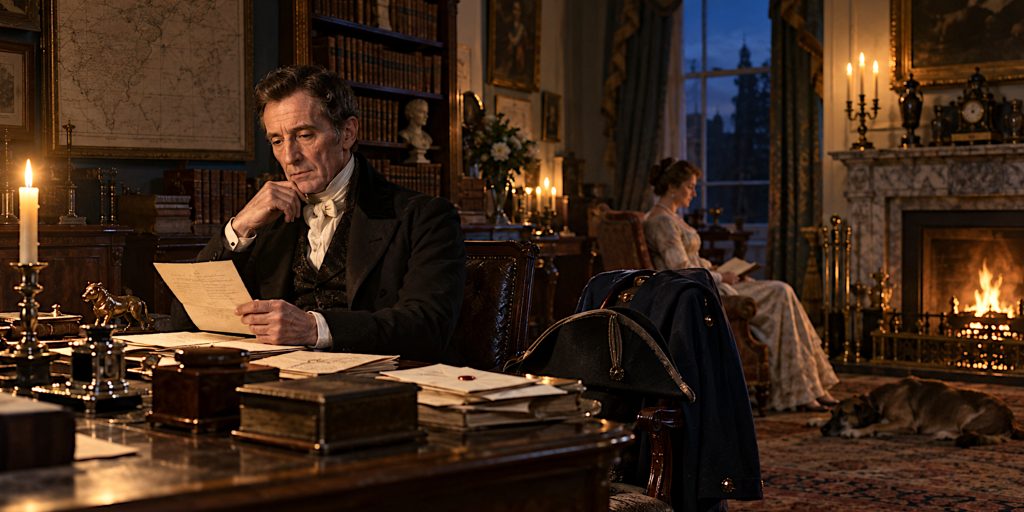
Wellington was disciplined, economical with words and impatient with foolishness. He rose early, slept on a campaign bed and retained the habits of military life long after the shooting stopped. His conversation could be dry and his judgements merciless.
He married Catherine Pakenham in 1806 after a long separation. The marriage was unhappy and emotionally distant, although they had two sons. Wellington also formed close friendships with women and was linked to several affairs. Harriette Wilson’s publisher later attempted to extract money from him by threatening publication of her memoirs. Wellington’s legendary response, “Publish and be damned”, fits his character beautifully, but the precise wording is not securely documented. A good quotation can acquire medals it never earned.
His encounter with Nelson in 1805 is better supported by Wellington’s later recollection. He initially found the admiral vain and tiresome. Nelson briefly left the room, discovered who Wellesley was, then returned and spoke seriously about war and empire. Wellington remembered:
“I don’t know that I ever had a conversation that interested me more.”
It is a wonderfully human meeting. Two national icons managed first impressions no better than the rest of us.
Wellington and the Ordinary Soldier
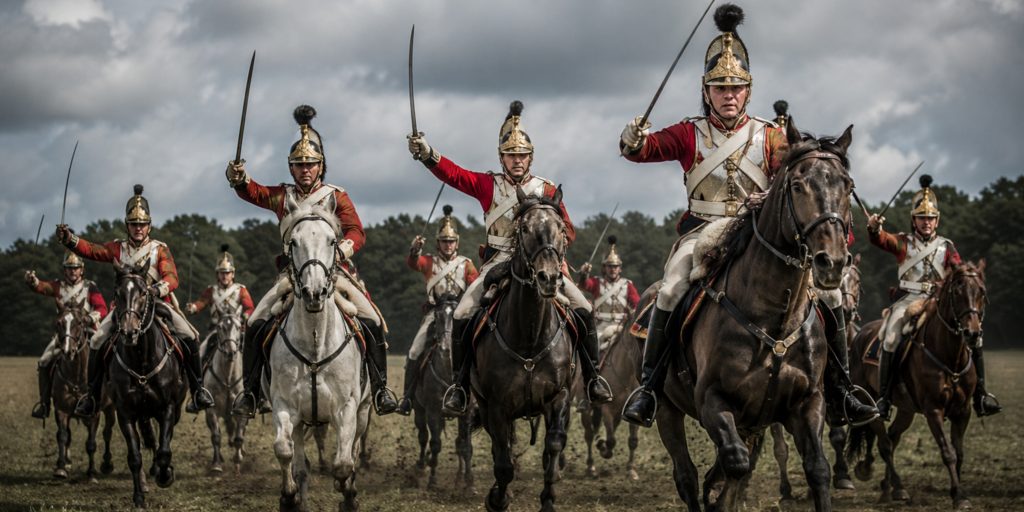
Wellington’s relationship with his soldiers resists sentimental treatment. He demanded severe discipline and approved harsh punishments common in the Georgian army. His description of rank-and-file recruits as the “scum of the earth” cannot simply be polished away.
Yet he knew exactly what those same men could do. He trusted trained infantry to hold formation under appalling pressure and understood that veteran soldiers were the foundation of his victories. After Waterloo, he resisted proposals that would have denied prize money to some allied troops and took care over recognition for the army.
The fairest conclusion is that Wellington valued soldiers collectively as a fighting instrument and often admired their performance, while retaining the prejudices of an aristocratic officer towards their social origins. Affection was limited. Professional confidence was immense.
Empire and Historical Reputation
For much of the nineteenth century, Wellington was presented as the model British hero: disciplined, patriotic, undefeated and reassuringly suspicious of enthusiasm. That image was built through monuments, paintings, biographies, anniversaries and the magnificent collections displayed at Apsley House.
Modern assessment needs a wider frame. His victories in India advanced British imperial domination. The Peninsular War brought liberation from French occupation but also involved requisition, starvation, siege warfare and atrocities by several armies. His domestic politics were conservative, particularly on electoral reform, and his idea of order left limited room for popular participation.
None of this makes his military achievements imaginary. Wellington combined tactical judgement, logistical mastery, political patience and coalition management at an exceptional level. He was rarely dazzling for the sake of being dazzling. He preferred armies fed, lines secure and enemies induced to make expensive mistakes. There are worse foundations for a reputation.
Death and State Funeral
Wellington died at Walmer Castle on 14 September 1852, aged 83. His body lay in state at the Royal Hospital Chelsea before a vast state funeral on 18 November. He was buried in the crypt of St Paul’s Cathedral beside Admiral Nelson.
The funeral confirmed his position as a national figure who belonged as much to public memory as to his family. By then Britain had spent nearly four decades turning the commander into an institution. The man himself, who disliked fuss but understood rank perfectly well, might have found the ceremony excessive and the precedence satisfactory.
Where to See Wellington’s Legacy
- Apsley House, London: Wellington’s London home, containing paintings, diplomatic gifts, silver and personal possessions.
- The National Army Museum, London: Holds important Wellington and Napoleonic collections, including uniforms, weapons and campaign material.
- Walmer Castle, Kent: His residence as Lord Warden of the Cinque Ports and the place where he died.
- St Paul’s Cathedral, London: Wellington’s tomb and the monumental memorial to him.
- Stratfield Saye House, Hampshire: The country estate granted to Wellington after the Napoleonic Wars and still associated with the family.
- Waterloo battlefield, Belgium: The landscape of the 1815 battle, although later alterations around the Lion’s Mound changed part of the ground.
Frequently Asked Questions
Why was Wellington called the Iron Duke?
The nickname became common during his political career rather than at Waterloo. It probably referred to his perceived toughness and may have been reinforced when iron shutters were installed at Apsley House after protesters smashed its windows.
Did Wellington defeat Napoleon by himself?
No. Wellington commanded the allied army holding the Waterloo position, while Blücher’s Prussian army attacked Napoleon’s flank and helped drive the French from the field. The victory depended on coalition warfare.
What was Wellington’s greatest battle?
Waterloo was his most consequential victory, but Salamanca is often considered his finest tactical performance. Wellington himself regarded Assaye as his hardest-fought battle.
Was Wellington Irish?
He was born in Dublin into the Anglo-Irish Protestant aristocracy. Describing him simply as either Irish or English misses the political and social identity of the Ascendancy into which he was born.
Was the Duke of Wellington ever defeated?
He suffered reverses and participated in failed campaigns, especially early in his career, but he was not defeated in a major battle while serving as commander-in-chief. His reputation for invincibility should not obscure costly victories, operational setbacks or dependence on allies.
Did Wellington really say “Publish and be damned”?
Possibly, but the exact words are not securely verified. The story concerns an attempted blackmail connected with the memoirs of Harriette Wilson. It is safer to treat the polished phrase as traditional rather than certain.
Final Assessment
Wellington deserves neither uncritical worship nor fashionable dismissal. His career reveals genuine military brilliance, especially in logistics, terrain, discipline and coalition command. It also belongs to an age of aristocratic privilege and imperial expansion, systems from which he benefited and which he defended.
What interests me most is his unsentimental grasp of practical reality. He knew battles were won by prepared positions, supplied troops and alliances that survived bad news. At Waterloo he held long enough for the Prussians to arrive; in the Peninsula he built an army and a system capable of outlasting repeated French invasions. The marble hero came later. The historical Wellington was more difficult, less likeable and considerably more impressive.
Sources and Further Reading
- National Army Museum: Wellington, the Iron Duke
- National Army Museum: The Peninsular War
- National Army Museum: Battle of Salamanca
- English Heritage: History of Apsley House
- UK Government: Arthur Wellesley, 1st Duke of Wellington
- Rory Muir, Wellington: The Path to Victory, 1769–1814
- Rory Muir, Wellington: Waterloo and the Fortunes of Peace, 1814–1852
- Elizabeth Longford, Wellington: The Years of the Sword
- Richard Holmes, Wellington: The Iron Duke
- Charles Esdaile, The Peninsular War: A New History