Few figures in pirate history inspire quite the same mixture of admiration, disbelief, and quiet panic as Ching Shih (Zheng Yi Sao). Most pirates burned brightly and briefly, usually ending their careers hanging from a rope while crows considered their future property rights. Ching Shih was different.
She built one of the largest pirate confederations in recorded history, controlled huge stretches of the South China Sea, challenged the Qing Empire, humiliated Portuguese and Chinese naval forces, and then retired comfortably. That final detail still feels almost rude when compared with the fate of most pirates.
Her story has drifted into myth over the centuries, partly because later writers romanticised her life and partly because surviving Chinese records can be fragmented or contradictory. Even so, enough evidence survives to paint the portrait of an astonishingly capable political and military leader.
She was not merely a pirate captain. She was an administrator, strategist, negotiator, and, by all accounts, terrifyingly strict.
Other Names and Aliases
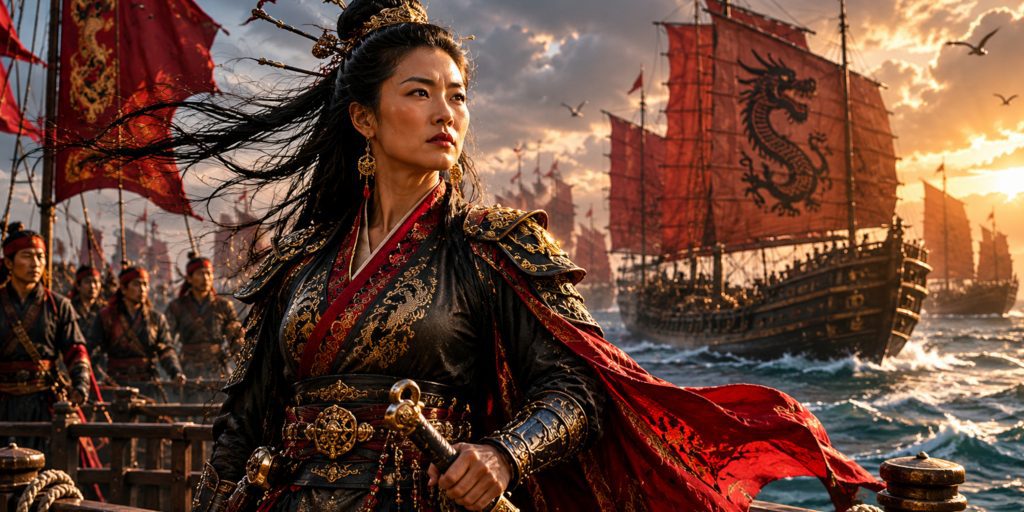
Like many historical figures from Qing China, Ching Shih appears under several names and spellings in Western sources.
Common aliases include:
- Ching Shih
- Zheng Yi Sao
- Cheng I Sao
- Ching Yih Saou
- Widow of Zheng Yi
- Madame Ching
- Shi Xianggu
- Zheng Shi
The name “Ching Shih” roughly translates as “widow of Zheng”, referring to her husband Zheng Yi.
Modern historians generally prefer Zheng Yi Sao because it aligns more closely with Cantonese naming conventions, though Ching Shih remains the most widely recognised version in English-language history.
Early Life Before Piracy
The early life of Ching Shih remains frustratingly obscure. Historians believe she was born around 1775 in Guangdong Province.
Many accounts state she worked in a floating brothel in Canton before entering pirate society. Some older Western writers sensationalised this aspect of her life with predictable Victorian enthusiasm, often treating her intelligence as somehow secondary to her beauty. The historical reality is probably more practical.
Canton’s floating brothels were hubs of commerce, gossip, criminal negotiation, and political exchange. Someone working there could gain extraordinary knowledge about trade networks, corruption, naval movements, and wealthy clients. In other words, it was not a poor place to learn how power actually functioned.
Around 1801, she married Zheng Yi, one of the leading pirate commanders operating along the southern Chinese coast.
That marriage changed the balance of power in the region.
The Red Flag Fleet
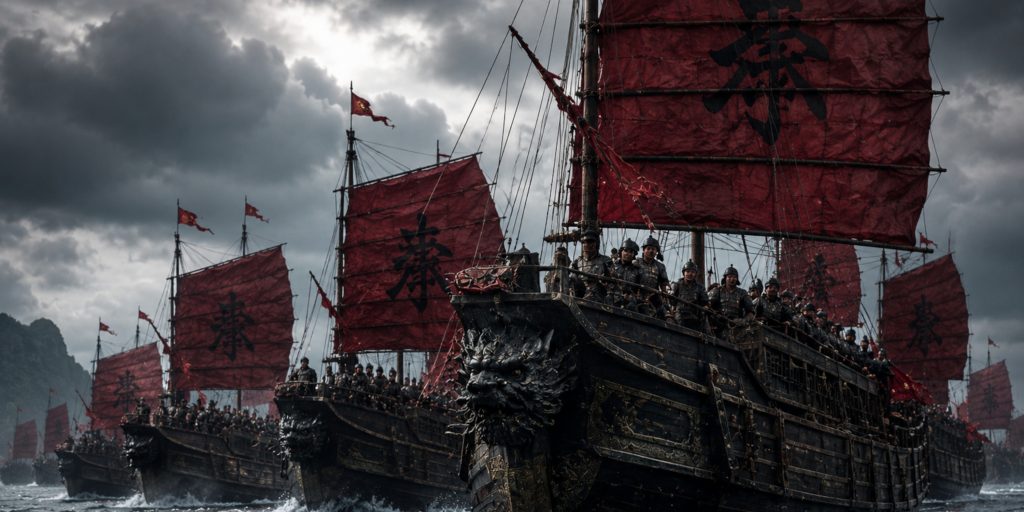
Following Zheng Yi’s death in 1807, many expected the pirate alliance to fracture. Instead, Ching Shih consolidated control with startling speed.
She formed a political and military partnership with Cheung Po Tsai, Zheng Yi’s adopted son and successor. Their relationship later became romantic as well as strategic, which no doubt gave Qing officials several headaches at once.
Under Ching Shih’s leadership, the famous Red Flag Fleet expanded into a massive confederation.
Estimates vary wildly, but contemporary reports claimed:
| Strength | Estimated Numbers |
|---|---|
| Pirate ships | 300 to 1,800 |
| Personnel | 40,000 to 80,000 |
| Areas controlled | Large parts of the South China Sea |
| Primary targets | Merchant shipping, coastal settlements, imperial supply routes |
Exact figures are debated, though even conservative estimates place her organisation among the largest pirate enterprises in history.
The fleet operated almost like a maritime state. Taxes were collected. Trade was regulated. Coastal villages sometimes paid protection money in exchange for survival. Pirate captains followed strict administrative structures.
This was organised criminal governance, not random chaos.
Ching Shih’s Pirate Code
One reason for her success was discipline.
Pirates under Ching Shih operated under a severe legal code. Violations could lead to flogging, mutilation, or execution.
According to Qing-era records:
- Loot had to be registered and distributed through central authority
- Desertion was punishable by death
- Disobedience carried brutal penalties
- Captured women were protected from assault under fleet rules
- Forced marriage or rape could result in execution
Pirates have a cinematic reputation for drunken spontaneity, but successful pirate fleets generally relied on rigid order. Ching Shih appears to have understood this better than most naval commanders sent against her.
Battles Against the Qing Empire
The Qing government repeatedly attempted to destroy the pirate confederation.
Repeatedly, it failed.
Imperial fleets struggled against the mobility and coordination of pirate squadrons familiar with the coastline and regional weather patterns. Portuguese naval forces also became involved, alongside British interests concerned with trade disruption.
One of the most significant confrontations occurred near the Tiger’s Mouth region of the Pearl River.
Ching Shih’s forces:
- Ambushed naval patrols
- Captured government vessels
- Cut supply routes
- Forced coastal settlements into cooperation
- Exploited rivalries between regional authorities
At several points, imperial commanders simply lacked the confidence to engage directly.
Which is admittedly not ideal when your job description involves stopping pirates.
Contemporary Accounts
Much of what survives about Ching Shih comes from Qing administrative records and later translations.
The scholar Yuan Yung-lun described the pirate fleets with a mixture of alarm and reluctant admiration.
One translated account noted:
“The pirates obeyed her commands absolutely.”
Another official report complained that:
“Government forces could not oppose them upon the sea.”
The British naval officer Richard Glasspoole, who was captured by pirates in 1809, described the organisation and discipline of the fleets in considerable detail after his release.
Glasspoole observed:
“Their system of plunder appeared conducted with regularity.”
That is about as close as a nineteenth-century naval officer could come to saying, “This is alarmingly efficient.”
Weapons and Ships
The fleets commanded by Ching Shih used a wide range of Chinese maritime weaponry.
Common Weapons
- Dao sabres
- Spears
- Polearms
- Matchlock muskets
- Flintlock firearms
- Composite bows
- Boarding axes
The dao was especially common in close-quarter combat aboard ships. These curved blades were practical, durable, and effective in confined fighting spaces where long weapons became awkward.
Pirate Ships
Her fleets relied heavily on Chinese junks.
These vessels featured:
- Multiple masts with battened sails
- Shallow drafts for coastal navigation
- Strong cargo capacity
- Flexible manoeuvrability
- Heavy cannon armament on larger vessels
Some pirate junks mounted dozens of guns and were capable of overwhelming isolated naval ships through coordinated attacks.
Life Beyond Piracy
One of the most extraordinary parts of Ching Shih’s story is how it ended.
Rather than dying in battle or at the gallows, she negotiated amnesty with Qing authorities in 1810.
The settlement allowed:
- Most pirates to avoid execution
- Many crews to retain wealth
- Cheung Po Tsai to receive a naval command
- Ching Shih to retire peacefully
It was a remarkable political victory.
The Qing Empire effectively concluded that bargaining with her was easier than defeating her.
After retirement, she reportedly operated a gambling house and lived comfortably until her death around 1844.
For a pirate ruler in the early nineteenth century, that outcome borders on absurdly successful.
Historical Legacy
Ching Shih’s reputation has grown steadily in modern popular culture.
She has appeared in:
- Books on maritime history
- Television documentaries
- Video games
- Pirate fiction
- Films inspired by Asian piracy
Modern portrayals sometimes exaggerate or simplify her achievements, though the core reality remains extraordinary enough without embellishment.
She commanded one of the largest pirate fleets in recorded history.
She fought empires and survived.
She transformed piracy into a disciplined political system.
Then she walked away richer than most of her enemies.
Not bad for someone imperial officials initially dismissed as a pirate widow.
Archaeology and Historical Evidence
Physical archaeology connected directly to Ching Shih remains limited, largely because pirate fleets were mobile and maritime environments are notoriously destructive to preservation.
However, historians have drawn evidence from:
- Qing naval records
- Coastal administrative archives
- South China Sea wrecks
- Portuguese colonial documents
- East India Company correspondence
Recovered artefacts from early nineteenth-century Chinese junks include:
- Bronze cannon
- Ceramic trade cargo
- Iron swivel guns
- Dao blades
- Navigation tools
These finds help illustrate the material world in which her fleets operated, even when direct attribution remains difficult.
Why Ching Shih Still Fascinates Historians
Pirate history often attracts exaggeration. Ching Shih barely needs any.
She succeeded in a world dominated by imperial governments, naval warfare, organised trade monopolies, and deeply patriarchal structures. She mastered all of them.
What makes her especially compelling is not merely violence or rebellion. It is competence.
Many pirates were reckless gamblers who mistook temporary success for immortality. Ching Shih understood logistics, law, diplomacy, discipline, and survival. She knew when to fight and, more importantly, when to negotiate.
That combination is considerably rarer than swaggering around with pistols and shouting about treasure maps.
History remembers plenty of louder men. Few achieved more.