There is a particular kind of disappointment in finding a legendary sword, admiring its elaborate design, then discovering that your battered starting weapon does more damage.
Open-world games do this surprisingly often. A famous name does not guarantee a useful weapon, and a powerful sword can feel dreadful when the rest of your character is built for something else.
The blades worth chasing give you a reason to change how you fight. Perhaps you start keeping your distance to launch moonlit projectiles. Perhaps you learn to dodge properly because taking damage ruins your sword’s bonuses. Perhaps you accept a morally appalling quest because the katana looks excellent. We have all made questionable inventory decisions.
These six swords combine distinctive identities with worthwhile combat options. Each entry covers how to obtain the weapon, a sensible build direction and the limitations that glowing item descriptions tend to leave out.
Light spoilers follow for weapon locations and associated quests. Build suggestions focus on ordinary PvE play, without exploits.
Best Legendary Swords at a Glance
“Legendary” here means memorable named weapons, rather than a shared item rarity across different games.
| Weapon and game | Suggested playstyle | Main limitation |
|---|---|---|
| Dark Moon Greatsword, Elden Ring | Intelligence spellsword | Requires substantial quest progress |
| Rivers of Blood, Elden Ring | Dexterity and Arcane aggression | Blood loss is ineffective against immune enemies |
| Blasphemous Blade, Elden Ring | Faith fighter with healing | Fire resistance reduces its appeal |
| Aerondight, The Witcher 3 | Precise swordplay with defensive support | Requires Blood and Wine |
| Ebony Blade, Skyrim | Sustained two-handed melee | Limited physical damage improvement |
| Master Sword, Breath of the Wild and Tears of the Kingdom | Adaptable sword-and-shield combat | Can temporarily run out of energy |
My preference is for weapons that reward a recognisable fighting style. An enormous damage number is welcome, obviously, but I would like something to do beyond repeatedly pressing the same button and hoping the boss respects my commitment.
Dark Moon Greatsword: The Intelligence Spellsword

Game: Elden Ring
Best suited to: Players who want sorcery and substantial melee damage in one character.
The Dark Moon Greatsword makes a convincing argument for spending half your adventure following Ranni’s increasingly complicated instructions.
It requires 16 Strength, 11 Dexterity and 38 Intelligence. Its Moonlight Greatsword skill empowers the blade, allowing heavy attacks to release magical projectiles while the effect lasts. Activating the skill costs FP, but those subsequent projectiles do not each require another FP payment. You obtain it at the conclusion of Ranni’s questline.
Suggested build
- Meet the physical requirements, then make Intelligence your main offensive investment.
- Keep Vigor healthy enough to survive a missed dodge.
- Carry a staff for enemies you would rather fight at longer range.
- Use the empowered heavy attacks deliberately, leaving stamina for an escape.
The appeal is flexibility. You can engage with ordinary sword attacks, punish an opening with a projectile or switch to sorcery when the encounter demands it.
The drawback is commitment. This is a weapon to work towards, rather than a convenient opening-hours pickup. Its heavier attacks also need space. A beautiful magical wind-up remains a wind-up, and some enemies are deeply uninterested in your presentation.
My verdict: The most satisfying choice here for a character who wants to feel equally comfortable carrying a sword and studying something dangerous.
Rivers of Blood: Aggression with Conditions Attached

Game: Elden Ring
Best suited to: Players who enjoy rapid pressure and blood-loss builds.
Rivers of Blood has spent enough time in build discussions to require its own public relations department.
Its requirements are 12 Strength, 18 Dexterity and 20 Arcane. Bloody Finger Okina drops it near the Church of Repose in the Mountaintops of the Giants, making it a late-game acquisition. Its defining skill, Corpse Piler, delivers a sequence of slashes with extended bloody attacks.
Suggested build
- Invest in Arcane and Dexterity according to your wider equipment choices.
- Maintain enough Mind to use the skill without constantly drinking.
- Treat Corpse Piler as a punish for an opening.
- Keep an alternative approach ready for enemies that resist or ignore blood loss.
The important distinction is between aggression and impatience. Rivers of Blood encourages you to apply pressure, but committing to an entire attack sequence at the wrong moment still gets you flattened.
Its reputation also needs context. A weapon’s historical dominance does not establish its position under every subsequent balance patch.
My verdict: A stylish option for a dedicated bleed character. Less convincing as a universal solution to everything with a health bar.
Blasphemous Blade: A Faith Build with Staying Power
Game: Elden Ring
Best suited to: Players who value recovery and dependable ranged punishment.
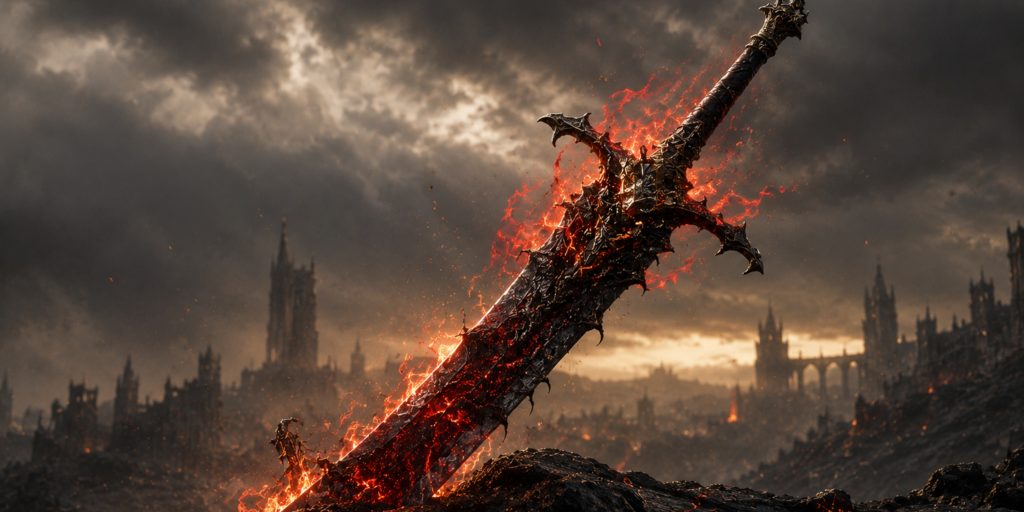
The Blasphemous Blade looks like something a sensible person would refuse to touch. Naturally, it is extremely tempting.
Obtained by exchanging Rykard’s Remembrance with Enia, it combines physical and fire damage. Its Taker’s Flames skill sends a wave of fire forwards and restores health when it connects. The skill’s damage benefits from Faith investment.
Suggested build
- Meet the weapon’s requirements, then prioritise Faith if the skill is central to your approach.
- Invest in Vigor alongside your offensive stats.
- Balance FP recovery with your usual healing supplies.
- Carry a secondary damage option for fire-resistant encounters.
What makes this sword attractive is the margin for recovery. Regaining health while dealing damage can help stabilise a difficult fight, particularly when you are still learning its rhythm.
That does not make the skill safe to use whenever you please. Its animation gives enemies time to punish poor judgement. Healing afterwards is less useful if the preceding mistake has already killed you.
My verdict: My pick for players who want a powerful Faith weapon that helps them recover from occasional errors. An entirely reasonable requirement in Elden Ring.
Aerondight: A Silver Sword That Rewards Good Habits

Game: The Witcher 3: Wild Hunt, Blood and Wine
Best suited to: Players who enjoy precise melee combat and maintaining momentum.
Aerondight has a more interesting progression system than the usual arrangement of finding a sword, using it briefly and selling it to someone who already owns seventeen swords.
Successful hits build charges that increase its damage. At full charge, it delivers critical hits, while a qualifying kill can permanently improve its damage within a limit that rises with Geralt’s level. Taking damage or letting time pass reduces accumulated charges. The sword is earned through There Can Be Only One in Blood and Wine.
Suggested build
- Support your preferred sword attacks with relevant combat skills.
- Use Quen to help protect your accumulated charges.
- Apply appropriate oils before demanding monster fights.
- Prioritise controlled attacks and clean dodges over trading damage.
Its strength comes from encouraging better play. Avoiding a hit preserves your health and protects the pressure you have built.
There is an important equipment consideration too: Aerondight is a silver sword. You still need a suitable steel weapon, and replacing a Witcher-set sword may affect the set bonuses available to your character.
My verdict: Probably my favourite weapon progression system on this list. It gives you a reason to become more disciplined without making the sword feel like homework.
Ebony Blade: Excellent Sustain, Terrible Friendship Policy
Game: The Elder Scrolls V: Skyrim
Best suited to: Players building a dark two-handed character around sustained melee.
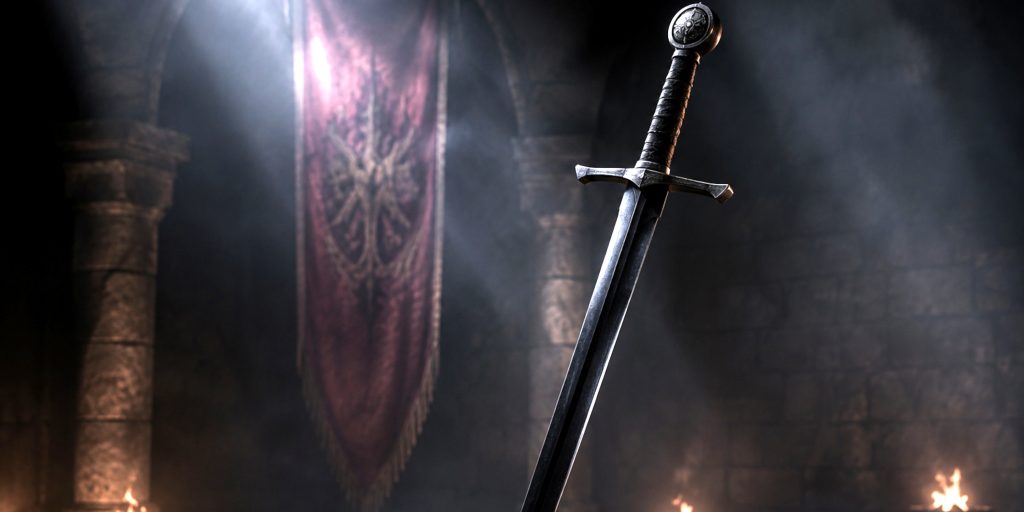
Mephala’s Ebony Blade makes its intentions fairly clear. It becomes more effective when used to betray friendly characters. Skyrim offers many routes to power, but this one is unlikely to improve the atmosphere at your next housewarming.
Its health-absorption effect begins at 10 points and can reach 30 through the required betrayals. The enchantment has unlimited charge. However, the weapon cannot be improved through normal smithing, which limits its physical damage compared with heavily upgraded alternatives. Skyrim Wiki
Suggested build
- Develop Two-Handed alongside your chosen armour skill.
- Use health and magic resistance to support close combat.
- Let repeated strikes sustain you through manageable incoming damage.
- Keep another weapon available when you need greater physical damage.
The Ebony Blade suits a character concept better than a pure damage competition. Its appeal lies in the combination of fast-feeling two-handed combat, health absorption and unpleasant role-playing implications.
It is also worth checking how your installed mods affect it. Skyrim’s unofficial fixes and combat overhauls can change equipment behaviour enough to make an old build guide misleading.
My verdict: A memorable centrepiece for a corrupted warrior. Calling it Skyrim’s strongest sword without discussing crafting would be generous.
Master Sword: Familiar Shape, Flexible Fighting
Games: The Legend of Zelda: Breath of the Wild and Tears of the Kingdom
Best suited to: Players who enjoy adaptable combat supported by exploration and preparation.
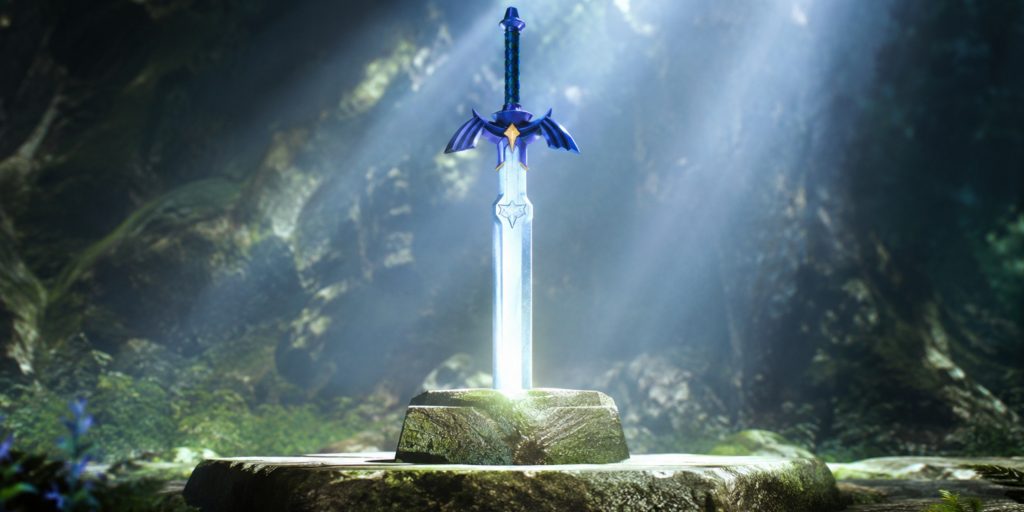
The Master Sword has an advantage most weapons cannot manufacture: you recognise it immediately.
Its practical value needs a little more explanation. In both open-world Zelda games, it can exhaust its energy and require recovery. It remains part of your equipment rather than disappearing permanently, but it is not endlessly available in every situation. Nintendo’s Tears of the Kingdom Explorer’s Guide explicitly explains that it still runs out of energy. zelda.nintendo.com
Zelda also approaches character building differently from Elden Ring. You are choosing armour, food effects, shields and supporting tools rather than committing to an Intelligence or Arcane distribution.
Suggested setup
- Choose armour and meals that support the encounter ahead.
- Pair the sword with a dependable shield.
- Keep other weapons available during its recovery period.
- In Tears of the Kingdom, experiment with suitable Fuse materials.
I like the Master Sword most as part of a flexible inventory. It provides continuity in games where equipment is otherwise constantly changing, while leaving room for improvised and occasionally ridiculous solutions.
My verdict: The strongest pick for players who want an iconic sword without organising their entire character around one weapon.
How to Build Around a Legendary Sword
The most common mistake is investing everything in the exciting part.
Damage stats are easy to admire. Health, stamina and resource management feel less glamorous until an ordinary enemy interrupts your carefully assembled masterpiece.
Before rebuilding a character around a sword, consider four things:
- Availability: Can you obtain it soon, or do you need a useful interim weapon?
- Supporting investment: Does it depend on specific stats, skills, armour or consumables?
- Encounter coverage: What happens when an enemy resists its damage type or status effect?
- Enjoyment: Do you actually like its ordinary attacks, or only its special move?
That final question matters more than most tier lists admit. You spend a lot of time fighting between spectacular moments. A weapon should feel good during those stretches too.
For a first playthrough, I would favour a reliable build with room to experiment. Discovering that you dislike a sword is mildly annoying. Discovering it after spending every rare upgrade material is character development.
Which Legendary Blade Should You Choose?
For an Intelligence character, the Dark Moon Greatsword offers the clearest combination of magic and melee identity.
For aggressive blood-loss combat, Rivers of Blood remains an appealing specialist. For Faith-based recovery, the Blasphemous Blade has a convincing purpose.
Aerondight rewards precision and continued investment. The Ebony Blade suits a darker Skyrim role-play. The Master Sword fits players who prefer adaptable equipment to a tightly prescribed build.
Personally, I would choose Aerondight for its progression and the Dark Moon Greatsword for the sheer pleasure of using it. There is something deeply persuasive about resolving a disagreement with a glowing lunar projectile.
Choose the sword whose limitations you enjoy working around. You will get far more from that than from carrying somebody else’s favourite weapon and quietly hating every swing.