A sword makes rather more sense when you know where it belongs in history. Put it beside weapons from another century or another continent and the questions become more interesting. Why that curve? Why such a long grip? And why did someone decide that the hand needed what amounts to a small iron conservatory around it?
The SevenSwords interactive sword history timeline offers a visual starting point for those questions. Follow the chronology, examine a blade and use it as a route into the wider history of swords.
It is built for browsing with a purpose, although arriving with one question and leaving with six would be a perfectly respectable outcome.
Explore the sword history timeline
See sword history in chronological context
Lists are useful when you already know the name you want. They are less helpful when you are trying to understand how unfamiliar weapons fit together.
A timeline changes the question from “What is this sword?” to “What else belongs near it?” That is a useful habit for anyone interested in military history. It encourages comparison before judgement and makes room for overlapping traditions rather than a tidy succession of winners.
Use the feature as a visual index into a subject that rarely behaves as neatly as its modern labels suggest. A sword name can describe a broad family, a particular hilt classification or an officially adopted military pattern. Those distinctions deserve attention before any grand theory of sword evolution gets underway.
Search, filter and travel through time
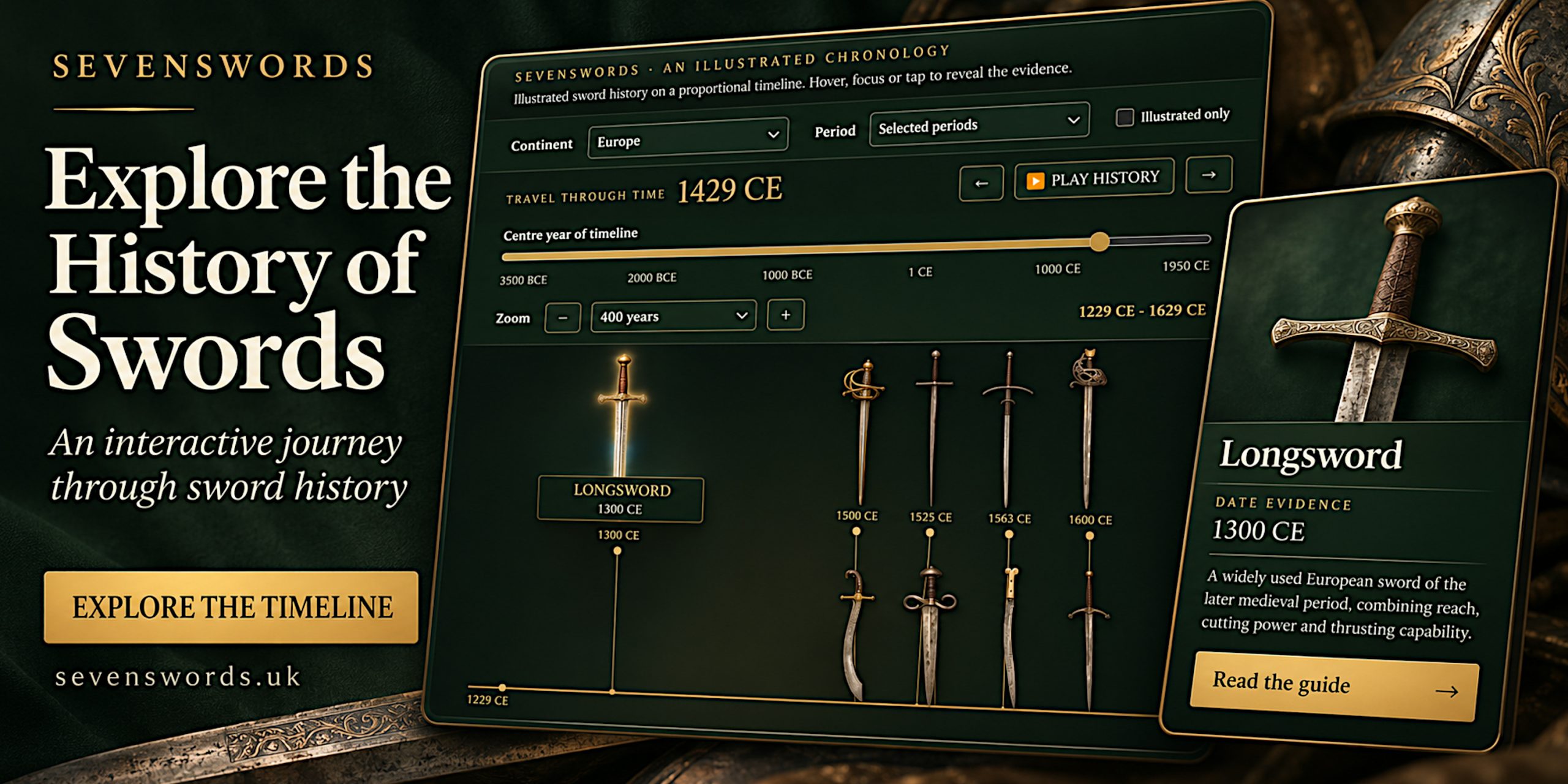
The catalogue combines sword illustrations with a proportional historical scale. Search for a sword, filter by continent or period, and adjust the zoom to change the visible span. “Play History” and previous and next controls provide another way through the chronology.
Select a blade to open its information panel, including its date evidence and, where available, a link to a fuller SevenSwords guide.
For a first visit, I would begin with a familiar name. Read its panel, widen the view and examine the neighbours. Then change regions. Familiarity gives you a foothold; comparison gives you somewhere to go.
Read the date before drawing conclusions
The feature distinguishes dated examples, approximate emergence, regional attestation and pattern adoption. Provisional dates are hidden initially but can be included. Its illustrations are modern interpretations, rather than photographs of museum objects.
That matters. The date of one surviving weapon cannot, by itself, settle when an entire sword family began. Equally, an illustration is useful for recognising a general form without becoming evidence for every detail of the earliest examples.
I would always read the accompanying explanation before treating a point on a timeline as an invention date. History has enough confident claims already. It can survive a few carefully qualified ones.
Turn a favourite sword into a research trail
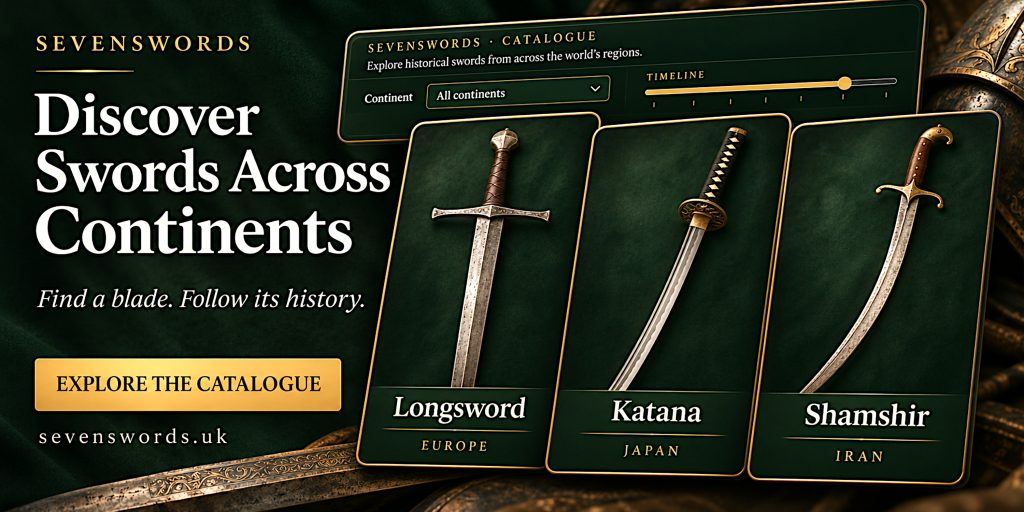
You do not need to work from the beginning. Choose the question that interests you and let it guide the visit.
| Your interest | A useful browsing approach |
|---|---|
| Ancient warfare | Start with a familiar ancient blade and compare nearby entries |
| Medieval weapons | Examine grip, guard and blade forms across a narrower period |
| Regional traditions | Change continents and investigate unfamiliar names |
| Collecting and identification | Use the chronology for orientation, then consult detailed references |
| Fiction and games | Check the historical context behind a weapon that caught your attention |
For collectors, the timeline is a starting point rather than an authentication service. An attractive resemblance is a reason to investigate further, not a provenance. Anyone who has encountered an optimistically described auction lot will appreciate the distinction.
Continue into the detailed sword guides
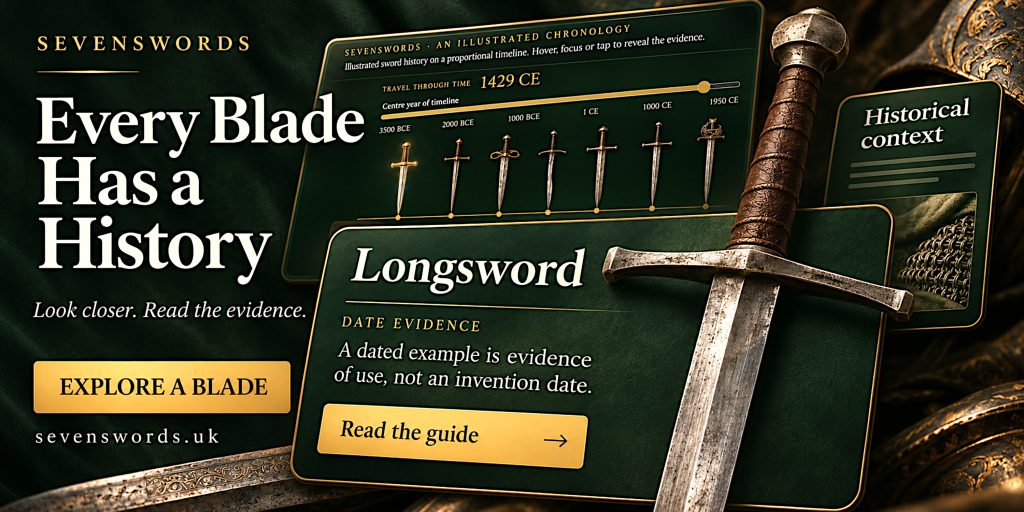
A visual overview works best when it opens the door to closer reading. Once a blade catches your attention, follow its guide or browse the SevenSwords sword types collection.
Try the longsword guide alongside its timeline entry. Read the historical explanation, return to the chronology and consider what further questions the comparison raises.
The aim is to move comfortably between the broad view and the individual weapon. Neither tells the whole story alone. Together, they make a far more useful afternoon than another argument about which sword was “best”.
Explore the interactive sword timeline
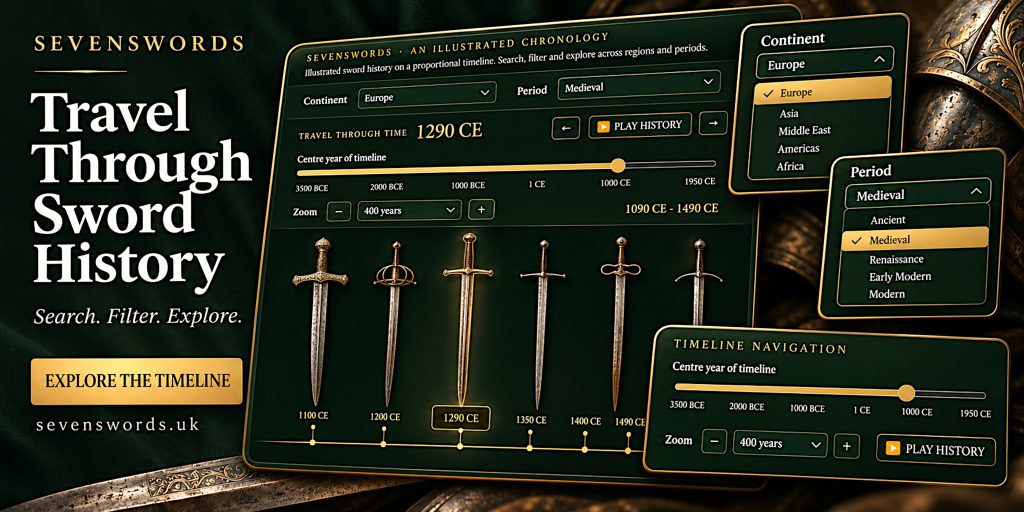
Start with a blade you recognise, follow an unfamiliar name or choose a period you have always wanted to understand better. Give the date evidence the same attention as the artwork and the catalogue becomes a useful companion to further reading.
Open the SevenSwords sword timeline and begin exploring
Sources and feature reference
- SevenSwords: Types of Swords, Historical Timeline Catalogue. Live feature, controls, catalogue descriptions and date methodology checked on 15 November 2026.
- SevenSwords: Longsword. Further reading linked from the timeline’s longsword panel.