The spatha is one of history’s most influential swords. Although many people associate it with the Roman Empire, its story began long before Rome adopted it. Originally favoured by Celtic horsemen, the design eventually transformed Roman warfare before becoming the direct ancestor of the medieval knightly sword.
Its combination of reach, versatility and relatively simple construction made it an ideal military weapon for nearly a thousand years. The gladius may have won Rome’s early conquests, but the spatha helped shape the armies of Late Antiquity and laid the foundations for European sword development.
Today, archaeological discoveries across Britain, Germany, France and eastern Europe continue to reveal beautifully preserved examples, each providing another piece of the story.
Spatha Specification
Although dimensions varied considerably across different centuries and regions, most surviving examples share similar characteristics.
| Feature | Typical Specification |
|---|---|
| Type | Straight double-edged sword |
| Period | c. 1st century BCE to 8th century CE |
| Overall Length | 75 to 105 cm |
| Blade Length | 60 to 90 cm |
| Blade Width | 4.5 to 6 cm |
| Weight | 900 g to 1.4 kg |
| Blade Shape | Parallel edges with gentle taper |
| Point | Rounded or acute depending on period |
| Grip Length | 9 to 12 cm |
| Fuller | Usually single central fuller |
| Construction | Pattern welded or homogeneous steel |
| Primary Users | Celtic warriors, Roman cavalry, Roman infantry, Germanic tribes, Migration Era warriors |
At a glance
- Double-edged straight blade
- Optimised for both cutting and thrusting
- Excellent reach compared with earlier Roman swords
- Usually carried in a wooden scabbard covered with leather
- Often suspended from a belt rather than a baldric
History and Evolution
Celtic Origins

The earliest spatha-like swords appeared among Celtic peoples during the late Iron Age.
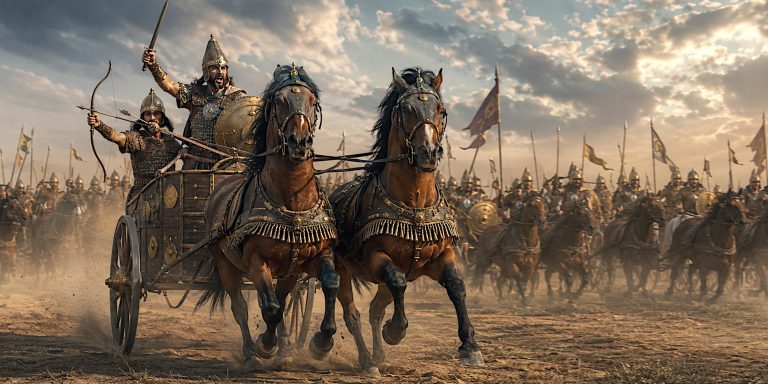
Mounted warriors required a weapon longer than those carried by infantry. Fighting from horseback meant striking opponents while passing at speed, making reach a major advantage.
These early swords were typically:
- Long
- Straight
- Double edged
- Designed primarily for slashing
Roman soldiers encountered them during campaigns in Gaul and elsewhere.
Ironically, Rome initially dismissed many Celtic military practices before gradually adopting some of their best ideas.
Roman Adoption
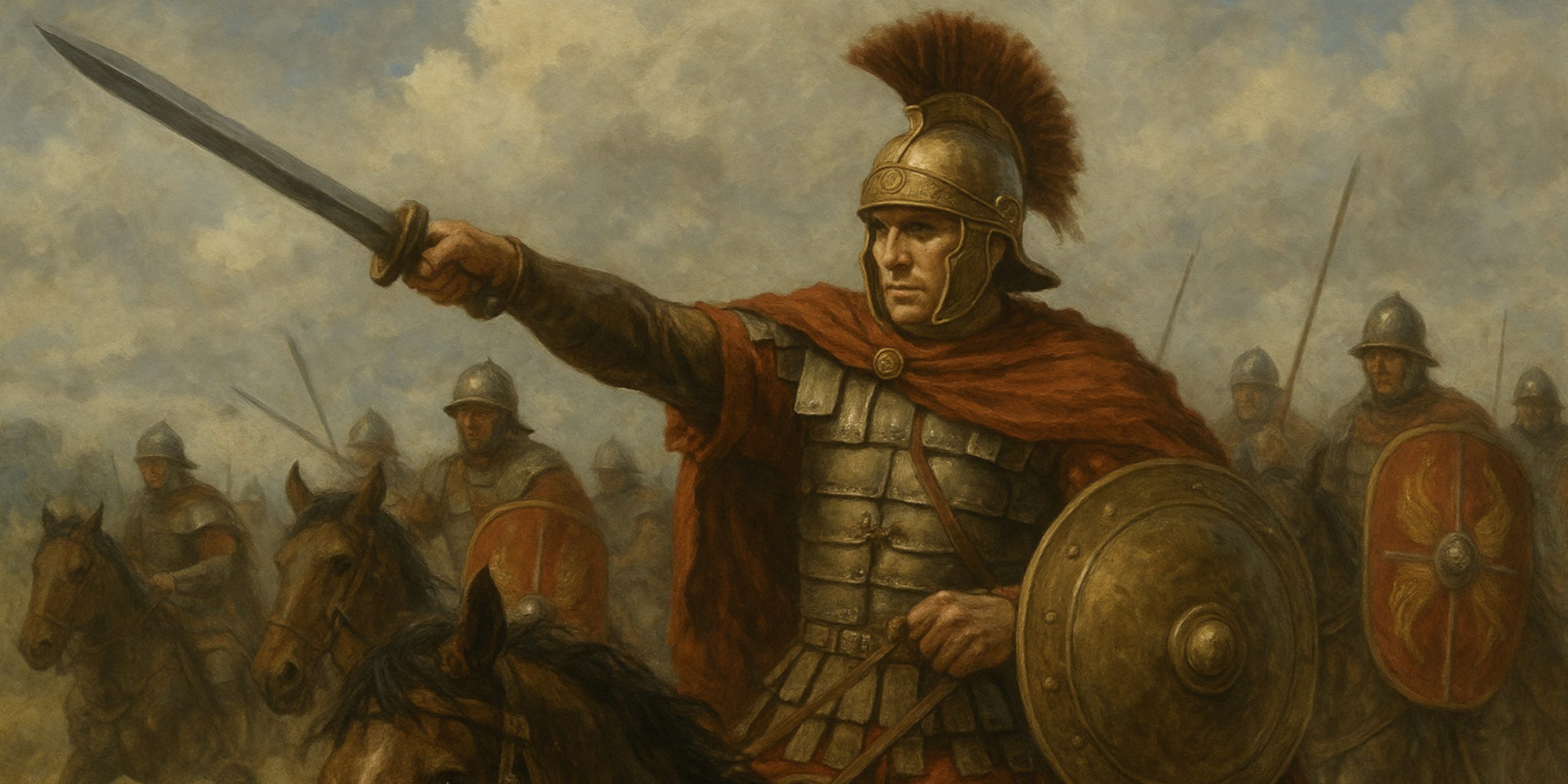
The Roman cavalry quickly recognised the advantages of the longer blade.
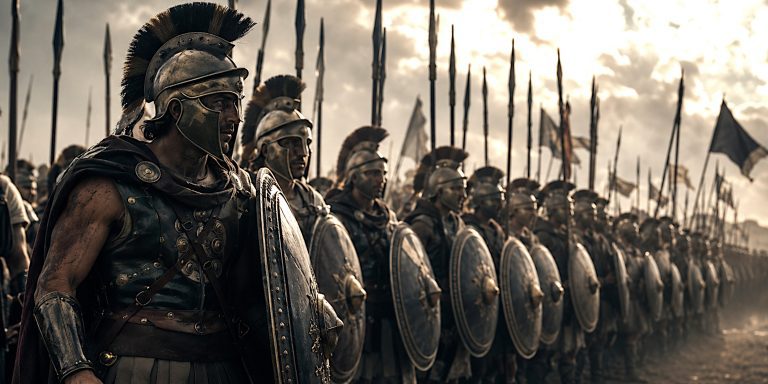
While infantry continued carrying the famous gladius during the early Empire, cavalry units increasingly used the spatha.
Advantages included:
- Greater striking distance from horseback
- Better cutting power
- Improved reach against enemy cavalry
By the second century CE, the weapon had become standard among auxiliary cavalry.
From Cavalry to Infantry

One of the biggest shifts came during the third century.
As Roman warfare evolved, infantry formations became more flexible than the tightly packed legionary lines of earlier centuries.
Several factors encouraged the transition:
- Increasing cavalry warfare
- Encounters with Germanic opponents
- Changing battlefield tactics
- Longer engagement distances
Gradually the spatha replaced the gladius as the standard Roman military sword.
By the fourth century, it had become the dominant sidearm throughout much of the Empire.
Migration Period Development

Following the collapse of Roman authority in western Europe, the spatha continued evolving.
Germanic kingdoms adopted and refined the weapon.
Notable users included:
- Franks
- Goths
- Lombards
- Anglo-Saxons
- Alamanni
Many Migration Era examples display spectacular pattern welding, with twisting iron rods creating distinctive decorative patterns across the blade.
Some surviving swords remain masterpieces of early medieval craftsmanship.
The Bridge to the Medieval Knight

The spatha gradually evolved into the familiar knightly sword.
Changes included:
- More pronounced taper
- Improved steel quality
- Better points for thrusting
- Larger crossguards
- Disc-shaped pommels
Without the spatha, the medieval arming sword would almost certainly have looked very different.
Advantages
The spatha became successful because it balanced several battlefield requirements remarkably well.
Longer reach
Compared with the gladius, users could strike opponents at significantly greater distance.
Effective cutting ability
The increased blade length generated more momentum during cuts.
Good thrusting performance
Despite its reputation as a cutting sword, many examples feature acute points capable of powerful thrusts.
Adaptable
The weapon proved equally effective for:
- Cavalry
- Infantry
- Single combat
- Battlefield engagements
Better against mounted opponents
The longer blade offered obvious advantages when fighting cavalry.
Disadvantages
Like every military weapon, the spatha involved compromises.
Less suited to tight formations
The gladius excelled within compact shield walls where shorter weapons were easier to control.
Slightly slower
Longer blades naturally require more movement.
Although not dramatically slower, they demand greater control from the user.
More expensive
Longer blades required:
- More iron
- More steel
- More forging time
This increased manufacturing costs.
Increased maintenance
The longer cutting edge meant more sharpening and greater opportunity for corrosion.
Spatha Compared with Similar Swords
| Weapon | Blade Length | Primary Strength | Main Users |
|---|---|---|---|
| Spatha | 60 to 90 cm | Versatility | Romans, Germanic peoples |
| Gladius | 45 to 60 cm | Close formation combat | Roman legions |
| Viking Sword | 70 to 90 cm | Powerful cuts | Scandinavians |
| Carolingian Sword | 75 to 90 cm | Cavalry and infantry | Frankish kingdoms |
| Roman Semispatha | 40 to 60 cm | Compact sidearm | Late Roman troops |
Compared with the Gladius
| Spatha | Gladius |
|---|---|
| Longer reach | Better in tight formations |
| Better slashing | Faster in confined spaces |
| Ideal for cavalry | Ideal for legionary tactics |
| Became standard later | Dominated the early Empire |
Compared with Viking Swords
Many Viking swords are essentially descendants of Migration Period spathae.
Differences include:
- More developed crossguards
- Distinctive pommels
- Improved metallurgy
- Better balance
The family resemblance is immediately obvious.
Construction and Blade Design

Typical features included:
- Lenticular or flattened diamond cross sections
- Central fuller to reduce weight
- Organic grips made from wood, horn or bone
- Iron or bronze guards
- Iron pommels
Higher quality examples often featured:
- Pattern welded cores
- Steel cutting edges
- Silver wire decoration
- Inlaid inscriptions
- Decorative scabbard fittings
Legacy
Few swords have influenced European weapon design as profoundly as the spatha.
Its legacy includes:
- Direct ancestor of the Viking sword
- Foundation of Carolingian sword design
- Predecessor of the medieval arming sword
- Influence on knightly weapons for centuries
Its greatest achievement may simply be longevity.
The basic concept remained militarily relevant for well over 700 years, an extraordinary lifespan for any weapon.
Archaeological Discoveries
Major discoveries have been made across Europe.
Important excavation sites include:
- Vindolanda, England
- Newstead Roman Fort, Scotland
- Illerup Ådal, Denmark
- Nydam Bog, Denmark
- Krefeld-Gellep, Germany
- Cologne region, Germany
Many waterlogged deposits have preserved wooden scabbards, leather fragments and organic grips that rarely survive elsewhere.
Where to See Spatha Swords
Several museums display exceptional examples.
| Museum | Country | Highlights |
|---|---|---|
| British Museum | United Kingdom | Roman military collections |
| Yorkshire Museum | United Kingdom | Roman York finds |
| Roman Army Museum | United Kingdom | Frontier equipment |
| Rheinisches Landesmuseum Trier | Germany | Late Roman weapons |
| National Museum of Denmark | Denmark | Illerup and Nydam discoveries |
| Germanisches Nationalmuseum | Germany | Migration Era swords |
| Musée d’Archéologie Nationale | France | Celtic and Roman weapons |
Collecting a Spatha

Original Roman spathae are among the most sought-after ancient weapons.
Because of their rarity and legal protections, most examples remain in museum collections.
Private collectors usually encounter:
- Excavated fragments
- Conserved blades
- Scabbard fittings
- Replica swords
- Licensed deaccessioned artefacts with documented provenance
What collectors should look for
- Clear archaeological provenance
- Conservation history
- X-rays showing construction
- Evidence of original pattern welding
- Stable preservation with minimal active corrosion
Avoid items with uncertain provenance or recent excavation damage.
Auction Prices
Values vary enormously depending on condition, provenance and completeness.
| Item | Typical Market Value |
|---|---|
| Corroded blade fragment | £1,000 to £4,000 |
| Partial Roman spatha | £4,000 to £12,000 |
| Complete excavated spatha | £15,000 to £50,000+ |
| Exceptional museum-quality example | £75,000 to well over £150,000 |
| Original scabbard fittings | £500 to £5,000 |
| High-end handmade replica | £600 to £2,500 |
Factors affecting value include:
- Provenance
- Completeness
- Metallurgical rarity
- Decorative features
- Historical significance
- Conservation quality
Many of the finest examples never reach public auction, instead changing hands through specialist dealers or remaining in institutional collections.
Modern Replicas
Quality reproductions remain popular among:
- Historical European Martial Arts practitioners
- Roman re-enactors
- Living history groups
- Collectors
- Museums
The best reproductions follow archaeological evidence closely, reproducing historical blade geometry, balance and construction techniques rather than simply creating a decorative display piece.
Frequently Asked Questions
Was the spatha better than the gladius?
Not universally. The gladius excelled in dense infantry formations, while the spatha offered greater reach and flexibility as Roman tactics evolved.
Did Roman legionaries carry the spatha?
Initially it was mainly a cavalry weapon. By the third and fourth centuries CE it had largely replaced the gladius among many infantry units.
Was the Viking sword based on the spatha?
Yes. Most historians regard the Viking sword as a direct descendant of the Migration Era spatha.
Were all spathae pattern welded?
No. Pattern welding was common on higher quality examples during the Migration Period, but many Roman military swords used simpler forged construction.
How rare are original spathae?
Complete examples are uncommon. Most surviving specimens are fragmentary, with intact swords largely held in museum collections.
Takeaway
The spatha represents one of the most important transitions in European military history. It bridged the gap between the disciplined legions of Imperial Rome and the warrior cultures that followed, influencing sword design for centuries after the Western Roman Empire disappeared.
Its success came from practical efficiency rather than ornament. Long enough to extend a warrior’s reach, balanced enough for both cutting and thrusting, and adaptable across changing styles of warfare, it proved remarkably durable as a concept. Few weapons can claim such an enduring influence, and even fewer can trace such a clear lineage from Iron Age battlefields to the swords carried by medieval knights.