Sekiro: Shadows Die Twice has a rather direct way of teaching its combat system. It places an armed man in front of you, watches you panic-roll into a wall, then kills you.
FromSoftware’s 2019 action game looks familiar if you have played Dark Souls, Bloodborne or Elden Ring, but approaching it like another Souls game is a reliable way to become intimately acquainted with the death screen. Sekiro replaces cautious stamina management and flexible character builds with aggressive sword fighting built around deflection, posture and rhythm.
The result is one of FromSoftware’s most focused games. It can be punishing, occasionally infuriating and surprisingly restrictive, yet its best duels have a precision few action games can match.
Sekiro: Shadows Die Twice at a Glance
| Detail | Information |
|---|---|
| Developer | FromSoftware |
| Publisher | Activision |
| Director | Hidetaka Miyazaki |
| Release date | 22 March 2019 |
| Genre | Third-person action-adventure |
| Setting | A fictionalised version of late Sengoku-period Japan |
| Platforms | PlayStation 4, Xbox One, Windows and Stadia |
| Main character | Wolf, also known as Sekiro |
| Primary weapon | Kusabimaru |
| Game modes | Single-player |
| Typical completion time | Around 30 to 50 hours |
| Major award | Game of the Year at The Game Awards 2019 |
What Is Sekiro: Shadows Die Twice About?
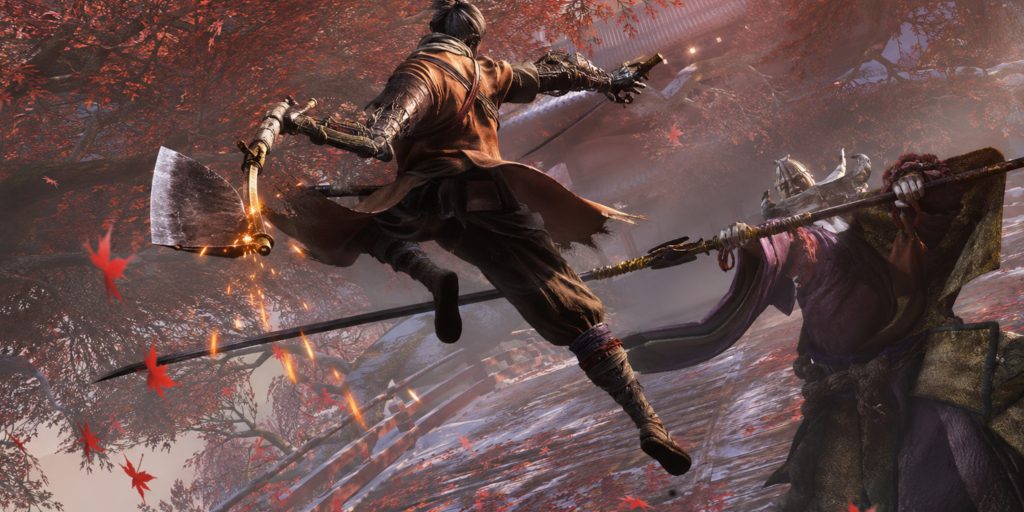
The player controls Wolf, a shinobi sworn to protect Kuro, the young Divine Heir. Kuro carries the Dragon’s Heritage, a supernatural bloodline that grants the power of resurrection. Unsurprisingly, this attracts the attention of people who view immortality as a useful military resource rather than a theological warning sign.
The Ashina clan is struggling to defend its territory from the increasingly powerful Interior Ministry. Genichiro Ashina believes Kuro’s blood can save his homeland and is prepared to use force to obtain it. Wolf’s attempt to rescue his master costs him an arm, but a mysterious Sculptor replaces it with a prosthetic capable of carrying an assortment of weapons and tools.
What begins as a rescue mission gradually becomes a story about loyalty, stagnation and the damage caused by refusing to accept death. The game’s supernatural elements grow more pronounced as Wolf encounters immortal monks, corrupted creatures, divine beings and several people who really should have reconsidered their skincare routines.
The plot is more direct than the storytelling in Dark Souls. Important scenes are presented through conventional dialogue and cutscenes, although item descriptions, environmental details and optional conversations still carry much of the wider history.
A Different Kind of FromSoftware Game
Sekiro shares some familiar features with FromSoftware’s other action RPGs:
- Sculptor’s Idols function much like checkpoints
- Death carries a material penalty
- Healing resources are limited between rests
- Areas loop back through unlockable shortcuts
- Bosses punish careless attacks
- Much of the world’s history must be pieced together
The similarities only go so far. Sekiro is not an RPG in the conventional sense. There are no armour sets, alternative weapon classes or character builds based around strength, dexterity or magic. Wolf always fights as Wolf.
That restriction gives the developers much tighter control over enemy design. Every major opponent can be built around a known set of player abilities. You cannot compensate for poor timing by returning with a tower shield, a larger weapon or forty extra levels in vitality. At some point, regrettably, you have to learn the fight.
This makes Sekiro less flexible than Elden Ring, but arguably more coherent. Its entire combat system points towards the same idea: stand your ground and take control of the duel.
Why Sekiro’s Sword Combat Feels So Good
Most action games encourage players to reduce an enemy’s health bar. Sekiro introduces a second measure called posture, and this is where the game finds its identity.
Attacks, deflections and certain counters increase an opponent’s posture damage. Once the posture bar breaks, Wolf can perform a deathblow. Against ordinary soldiers this usually ends the fight immediately. Bosses require multiple deathblows, represented by markers above their health bar.
Health still matters. Damaged enemies recover posture more slowly, so attacking remains important even when the immediate objective is to break their guard.
| Combat mechanic | How it works | Why it matters |
|---|---|---|
| Deflection | Block just before an attack connects | Damages enemy posture while protecting Wolf |
| Posture | Represents stability and defensive control | Breaking it creates a deathblow opportunity |
| Vitality | The conventional health bar | Lower vitality slows posture recovery |
| Mikiri Counter | Step into an enemy thrust | Inflicts heavy posture damage |
| Jump counter | Leap over a sweep and kick downwards | Punishes low sweeping attacks |
| Deathblow | Finishing strike against a vulnerable enemy | Removes an enemy or one boss health marker |
| Perilous attack | Special move signalled by a warning symbol | Requires recognition rather than ordinary blocking |
The genius of the system is that attack and defence become part of the same exchange. A well-timed deflection protects Wolf while pushing the enemy closer to defeat. Once this clicks, combat stops feeling like a sequence of cautious openings and starts resembling a violent conversation conducted through steel.
The sound design deserves considerable credit. Successful deflections produce bright, sharp clashes that communicate timing without forcing you to stare at the interface. When a duel settles into its rhythm, the blades almost become percussion instruments. Admittedly, the percussion instruments are trying to remove your head.
The Learning Curve and Difficulty
Sekiro is difficult, but its reputation needs some qualification. It is demanding in a specific way.
Players familiar with Souls games often enter with deeply ingrained habits. Dodging away from every attack is useful in Dark Souls and frequently disastrous here. Many enemies recover posture when given space, turning an attempted retreat into free rehabilitation for the person trying to kill you.
Progress depends on learning to:
- Deflect combinations rather than merely surviving them
- Recognise thrusts, sweeps and grabs
- Maintain pressure without becoming reckless
- Watch the enemy rather than Wolf
- Accept that hesitation genuinely can mean defeat
The early game can feel brutal because several fundamental abilities, including the Mikiri Counter, must be unlocked. Some minibosses are also surrounded by ordinary soldiers, forcing the player to repeat stealth clearances before each proper attempt.
There are ways to make encounters easier. Prosthetic tools exploit particular weaknesses, stealth can remove a health marker from some minibosses and consumables provide useful advantages. Nevertheless, Sekiro offers nothing comparable to summoning another player. Every mandatory duel eventually becomes personal.
That can be exhilarating or exhausting, depending on your patience and the number of times a giant ape has thrown something unspeakable at you.
The Shinobi Prosthetic
Wolf’s missing arm is replaced by the Shinobi Prosthetic, which can be fitted with specialised tools found throughout the world. These devices provide tactical options without replacing Kusabimaru as the centre of the combat system.
| Prosthetic tool | Main use | Particularly effective against |
|---|---|---|
| Loaded Shuriken | Interrupts movement and attacks at range | Airborne or agile enemies |
| Flame Vent | Deals fire damage and causes Burn | Red-eyed enemies |
| Shinobi Firecracker | Startles enemies and animals | Beasts and mounted opponents |
| Loaded Axe | Delivers heavy impact damage | Shields and defensive guards |
| Loaded Spear | Pulls enemies or strips loose armour | Selected armoured opponents |
| Loaded Umbrella | Provides strong directional defence | Projectiles and heavy attacks |
| Sabimaru | Applies poison through rapid strikes | Enemies vulnerable to poison |
| Mist Raven | Enables evasive repositioning | Fast combinations and tight spaces |
| Divine Abduction | Turns enemies around or carries special effects | Crowds and certain monks |
| Finger Whistle | Distracts enemies and affects beasts | Stealth situations and animal enemies |
Each tool has an upgrade tree, but Spirit Emblems limit repeated use. This prevents the prosthetic from becoming an unlimited solution to every problem.
The best tools create openings rather than winning fights automatically. Firecrackers can interrupt a dangerous enemy, the axe can break a shield and the umbrella can neutralise attacks that otherwise appear overwhelming. They feel like a shinobi’s collection of dirty tricks, which is appropriate. Honour is admirable, but so is surviving.
Kusabimaru and the Mortal Blade

Wolf’s primary sword is Kusabimaru, a katana given to him by Kuro. It remains equipped throughout the game and cannot be replaced.
This matters because Sekiro is interested in mastery rather than collection. The player develops a deeper understanding of one weapon instead of cycling through increasingly elaborate swords with slightly larger numbers attached to them.
Kusabimaru is used for:
- Standard attacks
- Deflections
- Deathblows
- Stealth executions
- Combat Arts
- Special counters
Later, Wolf obtains the Mortal Blade, an odachi associated with killing immortal beings. It is central to the story and powers the Mortal Draw Combat Art, but it does not become a freely equipped replacement for Kusabimaru.
The relationship between the two swords reflects the game’s broader design. Kusabimaru is the practical weapon Wolf must master. The Mortal Blade is dangerous, exceptional and tied to the cost of severing immortality.
Stealth and Exploration
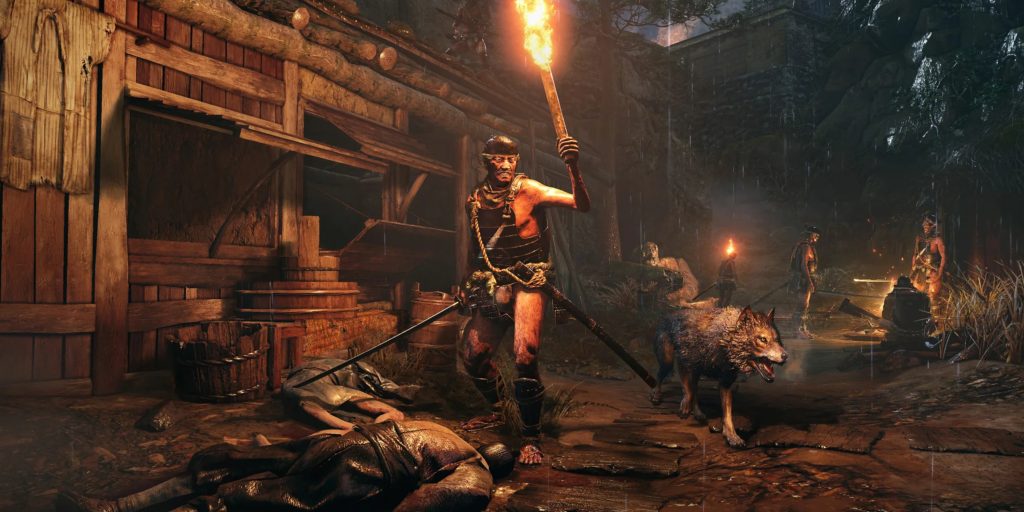
Although the sword duels attract most of the attention, Sekiro is also a stealth-action game. Wolf can crouch through vegetation, hang from ledges, climb onto rooftops and eliminate isolated enemies without beginning a full fight.
The grappling hook adds a degree of verticality rarely seen in FromSoftware’s earlier games. It allows Wolf to cross ravines, reach elevated positions and escape when an encounter becomes crowded.
Stealth is useful, though not especially sophisticated. Enemy awareness can be inconsistent, and guards sometimes fail to react convincingly when colleagues disappear one by one. Wolf may be a master shinobi, but Ashina’s workplace communication policies also deserve some credit.
The system works best as a way to shape an encounter before open combat begins. You can identify stronger targets, remove archers and create a safer route through an area. Bosses still demand direct confrontation, so hiding in a bush remains a temporary career choice.
Bosses and Memorable Encounters
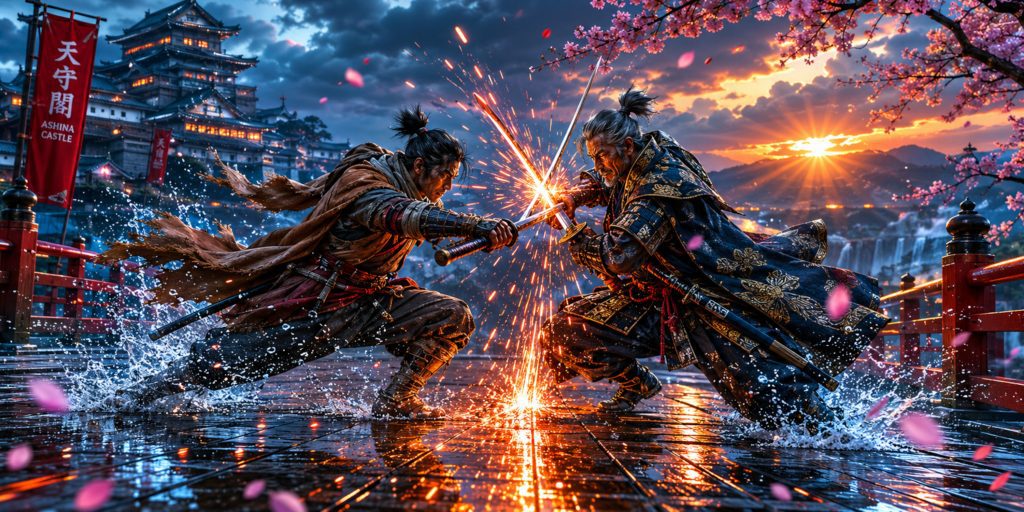
The bosses are the strongest argument for Sekiro’s tightly controlled combat system. Because every player has the same core weapon and defensive abilities, the best encounters can test exact skills without accounting for hundreds of possible builds.
Genichiro Ashina is the game’s defining examination. He tests deflection, aggression, perilous-attack recognition and the ability to maintain concentration across several phases. Players who defeat him have usually understood what Sekiro expects.
Other major encounters explore different parts of the system:
- Lady Butterfly combines illusions with fast close-range exchanges
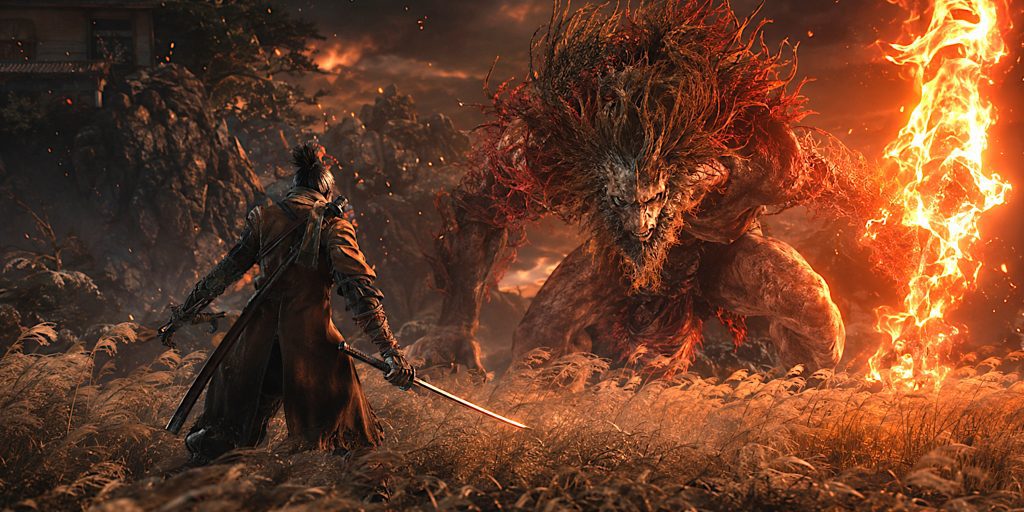
- Guardian Ape disrupts the normal rhythm with erratic movement
- Corrupted Monk places sustained pressure on posture management
- Owl uses shinobi techniques against the player
- Isshin demands command of virtually every major combat lesson
Not every encounter is equally successful. Repeated miniboss types weaken the sense of discovery, while some large creatures do not suit a combat system built around reading blades and exchanging deflections. The camera can also become a genuine second opponent in enclosed spaces.
At its best, however, Sekiro creates duels that feel learned rather than endured. A boss who initially appears impossible can eventually be defeated with calm, almost clinical precision. Few games make improvement this visible.
Resurrection and the Cost of Death
The title refers to Wolf’s ability to return after being killed. Resurrection allows the player to stand up during an encounter and continue fighting, provided the relevant node is available.
It is not an unlimited safety net. Further resurrection may be temporarily blocked, while repeated true deaths reduce accumulated experience and sen. Death can also advance Dragonrot, a sickness affecting certain non-player characters.
Dragonrot sounds more consequential than it ultimately proves to be. It reduces the chance of receiving Unseen Aid and alters character dialogue, but it does not permanently kill infected characters. Cure items are available, although players may hesitate to use them before knowing how scarce they are.
The mechanic supports the game’s themes effectively, but it never develops into the major systemic threat suggested by its introduction. Resurrection has a far greater effect during combat, where it encourages calculated risk and can rescue an otherwise excellent boss attempt.
Sengoku Japan, Folklore and Fantasy
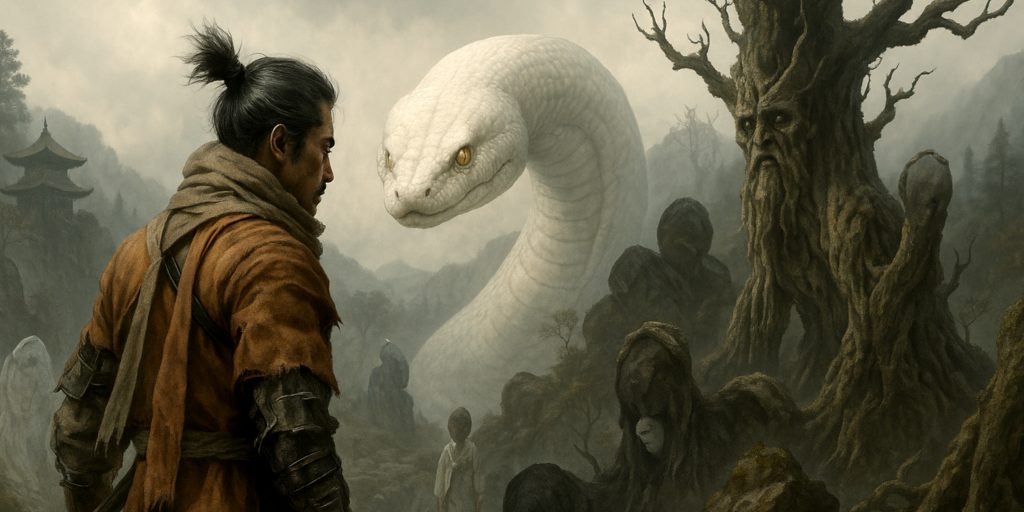
The game is set during the closing years of Japan’s Sengoku period, broadly presented as the late sixteenth century. Ashina itself is fictionalised, though the name has historical associations and the wider setting draws on a period of civil conflict, collapsing regional power and approaching unification.
This is not a historical simulation. Matchlock firearms, castles, samurai armour and Buddhist institutions sit beside giant serpents, demonic apparitions and immortality-granting centipedes.
The fantasy works because it grows from the concerns of the setting. Ashina is a land refusing to die. Its leaders seek unnatural power because military defeat is approaching, while corrupted forms of immortality spread through its people and religious institutions. The supernatural imagery gives physical form to political desperation.
The environments move between burning estates, mountain temples, snowy fortifications, flooded villages and divine palaces. Ashina Castle acts as the geographical and narrative centre, revisited as control of the region changes. Reusing the location could have felt economical in the least flattering sense, but its transformations give the campaign a strong sense of escalation.
Story, Characters and Multiple Endings
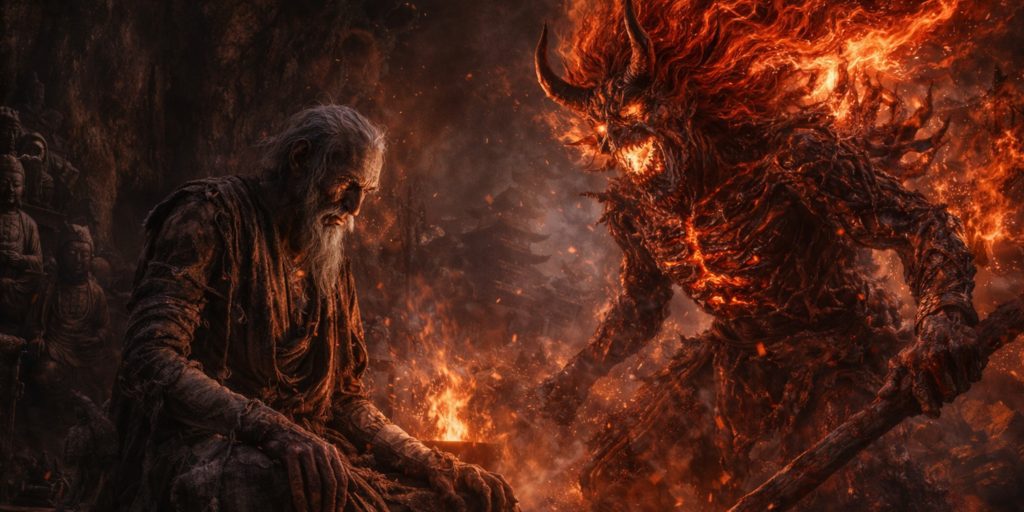
Wolf is more clearly defined than the largely silent protagonists of Dark Souls. He speaks, remembers his past and has a specific relationship with Kuro. He is still reserved enough to leave room for interpretation, but he is not an empty suit of armour waiting for a ridiculous helmet.
The emotional heart of the story lies in the conflict between obedience and moral judgement. Wolf’s Iron Code demands loyalty to his father, yet his duty to Kuro pushes him towards a different path.
Player choices can lead to four endings:
- Shura
- Immortal Severance
- Purification
- Return
The endings range from grim collapse to cautious hope. Two require extensive optional steps, including overheard conversations and easily missed character interactions. FromSoftware remains committed to hiding major narrative developments behind behaviour most normal people would consider eavesdropping.
The central story is understandable on a first playthrough, while the alternative endings reward closer attention. New Game Plus makes subsequent runs faster and provides a natural opportunity to explore other choices.
Visual Design, Music and Performance
Sekiro is not a technical showcase in the modern sense, but its art direction has aged well. The strong silhouettes, autumn colours and carefully framed architecture give each region a distinct identity.
Character animation is particularly important. Enemy movements communicate danger, timing and intent. A spear thrust looks different from a sweep, and experienced players gradually learn to read shoulders, hips and weapon angles rather than waiting for the perilous-attack warning.
The soundtrack by Yuka Kitamura and Noriyuki Asakura favours traditional Japanese instrumentation, tense rhythms and dramatic orchestration. Music often remains restrained during exploration before expanding during major encounters.
The original console versions target 30 frames per second, while the Windows version can run at 60 frames per second. Backwards compatibility allows improved performance on newer Xbox and PlayStation hardware, though there is no separate native current-generation edition.
What the Game Does Brilliantly
Sekiro’s main strengths come from its refusal to dilute the central concept.
- Sword combat rewards timing, observation and controlled aggression
- Bosses are designed around a consistent player moveset
- Traversal is faster and more vertical than in earlier FromSoftware games
- The Japanese-inspired setting supports both history and supernatural horror
- Sound and animation provide unusually clear combat feedback
- The campaign has very little disposable content
- New Game Plus and alternative endings encourage replay
The combat also creates an unusually honest relationship between failure and improvement. Defeat rarely leaves you wondering whether you selected the wrong build twenty hours earlier. More often, you know exactly which thrust you failed to counter. This is reassuring for approximately three seconds.
Where Sekiro Falls Short
The game’s focus inevitably creates limitations.
- There is little scope for character customisation
- Players cannot select alternative primary weapons
- Some minibosses are reused too often
- The camera struggles near walls and large enemies
- Group combat is less refined than one-on-one duelling
- Dragonrot never becomes as meaningful as its presentation suggests
- A few prosthetic upgrades offer limited value
- The opening hours can be hostile to players still unlearning Souls habits
The lack of accessibility options at launch also remains a valid criticism. Difficulty is central to the game’s intended rhythm, but more control over visual cues, input requirements and training tools could have widened access without dismantling the core combat design.
Players who enjoy build experimentation may find Sekiro narrow. Its progression systems improve Wolf, but they do not allow him to become a fundamentally different type of fighter.
The Game of the Year Update
A free update released in October 2020 added several features:
- Reflections of Strength for replaying defeated bosses
- Gauntlets of Strength built around consecutive boss encounters
- Unlockable alternate outfits
- Remnants that allow players to record movements and messages
The Gauntlets are the most substantial addition. They turn the strongest element of the game into a focused challenge mode and include altered versions of certain bosses.
There was no traditional story expansion. For a game with such a strong setting, the absence of a large narrative DLC remains slightly surprising. FromSoftware apparently decided the final boss had already done enough damage to the public.
Is Sekiro Still Worth Playing?
Yes, provided you want the game Sekiro actually is.
It remains an excellent choice for players who enjoy:
- Precise melee combat
- Difficult boss encounters
- Japanese folklore and dark fantasy
- Focused single-player campaigns
- Learning systems through repeated practice
It may be less suitable if you primarily want:
- Extensive builds and equipment
- Cooperative multiplayer
- Difficulty settings
- A relaxed exploration game
- An easy way to overpower difficult bosses
Sekiro has aged better than many action games because its appeal rests on mechanical clarity rather than scale. It is smaller and less flexible than Elden Ring, but its sword fighting is arguably sharper.
Sekiro Compared with Other FromSoftware Games
| Game | Combat emphasis | Character builds | Multiplayer | Overall structure |
|---|---|---|---|---|
| Sekiro | Deflection, posture and sword duels | Very limited | No conventional multiplayer | Focused action-adventure |
| Dark Souls III | Dodging, blocking and stamina | Extensive | Co-op and PvP | Interconnected action RPG |
| Bloodborne | Aggression, dodging and health recovery | Moderate | Co-op and PvP | Gothic action RPG |
| Elden Ring | Build freedom and varied tactics | Extensive | Co-op and PvP | Large open-world action RPG |
Calling Sekiro the hardest FromSoftware game is too simple. Its difficulty depends heavily on whether its combat rhythm suits the player. Someone comfortable with deflection may find it more manageable than Dark Souls. Someone determined to dodge every sword swing may experience several educational evenings.
Verdict
Sekiro: Shadows Die Twice is FromSoftware at its most disciplined. It takes a comparatively small collection of mechanics and pushes them to an exceptional level of refinement.
The limited customisation will frustrate players who enjoy inventing builds, and some encounters reveal the weaknesses of the camera and group combat. Yet those compromises allow the game to deliver some of the finest sword duels in modern gaming.
Its finest achievement is the way it changes the player. Early fights provoke panic and retreat. Later ones encourage patience, pressure and close observation. You do not merely increase Wolf’s power. You become better at controlling him.
That makes victory feel earned in a way levelling alone cannot provide. It also explains why players still talk about defeating Genichiro or Isshin years later, usually with the strained pride of somebody describing a successful escape from a burning building.
Verdict: 9/10
Frequently Asked Questions
Is Sekiro an open-world game?
No. It uses interconnected areas with branching routes and some freedom of exploration, but it is not an open world like Elden Ring.
Is Sekiro harder than Dark Souls?
It depends on the player. Sekiro demands precise deflection and offers fewer ways to bypass difficult encounters through builds, levelling or multiplayer assistance.
Can you change weapons in Sekiro?
Wolf uses Kusabimaru as his main weapon throughout the game. The Mortal Blade appears through story events and Combat Arts, while prosthetic tools provide additional tactical options.
Does Sekiro have multiplayer?
It has no conventional cooperative or competitive multiplayer. The Remnant system allows players to leave recordings and messages for others.
Does Sekiro have difficulty settings?
There are no standard difficulty selections. Optional systems such as the Demon Bell and returning Kuro’s Charm can make the game more demanding.
How many endings does Sekiro have?
There are four endings: Shura, Immortal Severance, Purification and Return.
Did Sekiro win Game of the Year?
Yes. It won Game of the Year at The Game Awards 2019.