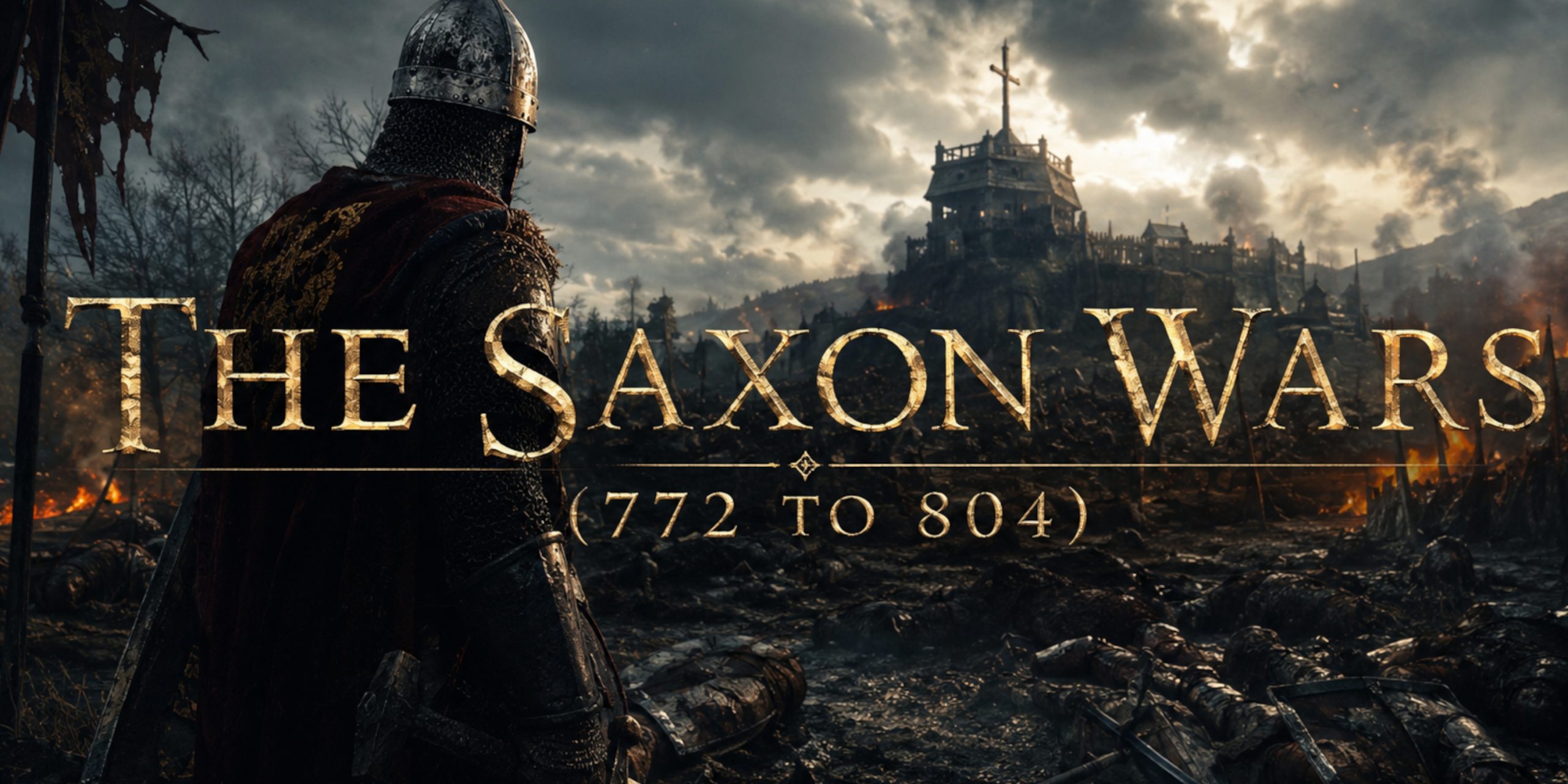
The Saxon Wars were not a single campaign but more than three decades of relentless warfare between Charlemagne and the fiercely independent Saxon tribes of northern Germany. Lasting from 772 until 804, the conflict shaped the future of western Europe more profoundly than many better-known medieval battles.
This was a war of conquest, religion and political survival. Charlemagne sought to absorb Saxony into the expanding Frankish kingdom, while the Saxons fought to preserve their independence, traditional beliefs and way of life. Neither side gave much ground willingly.
As a historian, I often think the Saxon Wars receive surprisingly little attention considering their consequences. Without Charlemagne’s victory, the map of medieval Europe might have looked very different. Christianity may have spread more slowly into northern Germany, and the foundations of the later Holy Roman Empire could have taken another course entirely.
There is also an uncomfortable side to this story. Medieval chroniclers celebrated Charlemagne’s victories, yet modern historians increasingly recognise the brutality of his methods. This was conquest in its rawest form.
Overview
| Period | 772 to 804 |
|---|---|
| Location | Saxony, modern northern Germany |
| Main Belligerents | Frankish Kingdom and the Saxon tribes |
| Frankish Leader | Charlemagne |
| Saxon Leader | Widukind (until c.785), later regional chiefs |
| Result | Frankish victory and incorporation of Saxony |
| Lasting Impact | Christianisation of Saxony and expansion of the Carolingian Empire |
Why Did the War Begin?
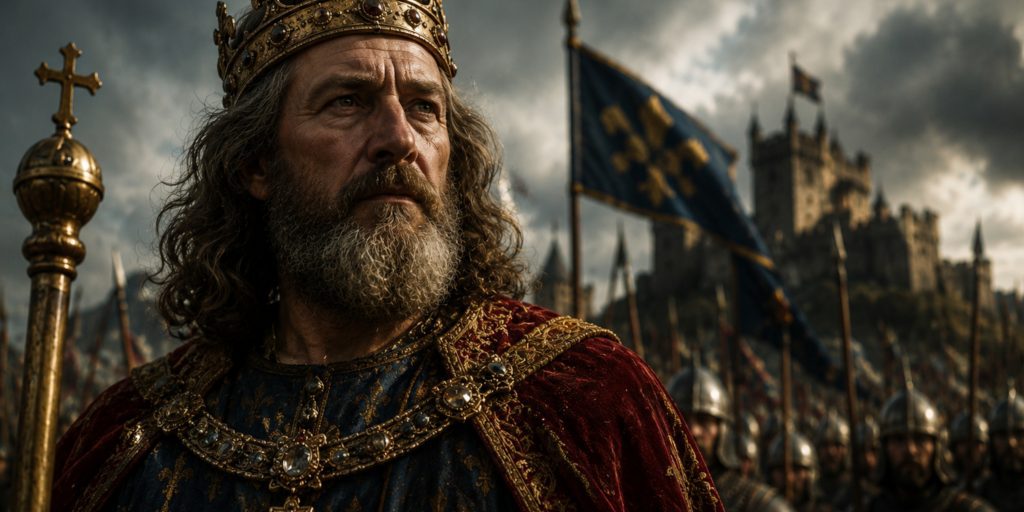
By the eighth century, the Frankish kingdom had become western Europe’s dominant military power. Charlemagne inherited an expanding realm and viewed Saxony as both a military threat and an opportunity.
The Saxons occupied territory east of the Rhine and north of the Main River. Unlike the Franks, they were divided into tribal regions rather than ruled by a single king. These included:
- Westphalians
- Eastphalians
- Angrians
- Nordalbingians
Although politically fragmented, they shared language, customs and pagan religion.
Border raids had become common. Frankish settlements were attacked, livestock stolen and churches occasionally destroyed. From Charlemagne’s perspective, permanent conquest appeared preferable to endless frontier warfare.
Religion added another dimension. Charlemagne believed that expanding Christianity formed part of his royal duty. The Saxons remained devoted to Germanic pagan traditions centred on sacred groves, springs and holy trees.
That combination of political ambition and religious zeal made compromise unlikely.
The Destruction of the Irminsul
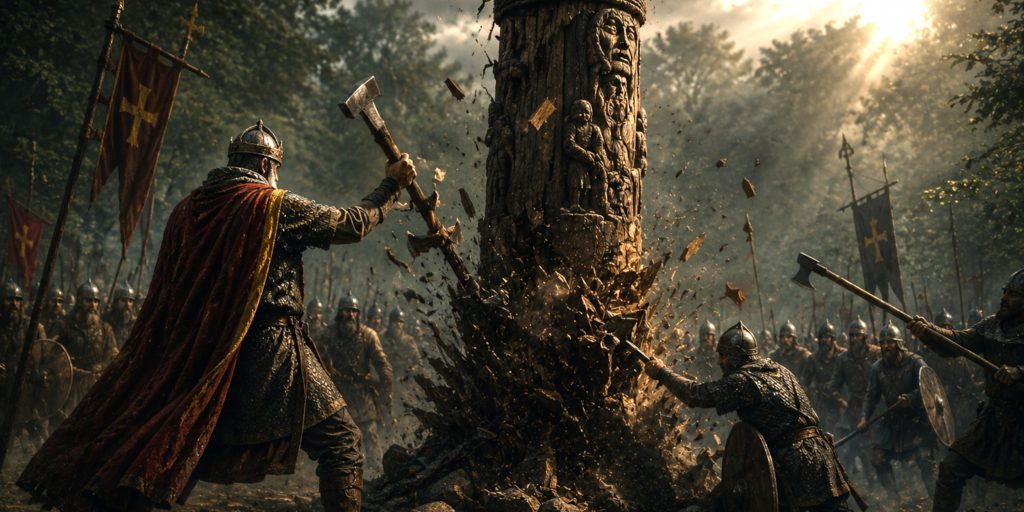
The opening campaign of 772 became one of the conflict’s defining moments.
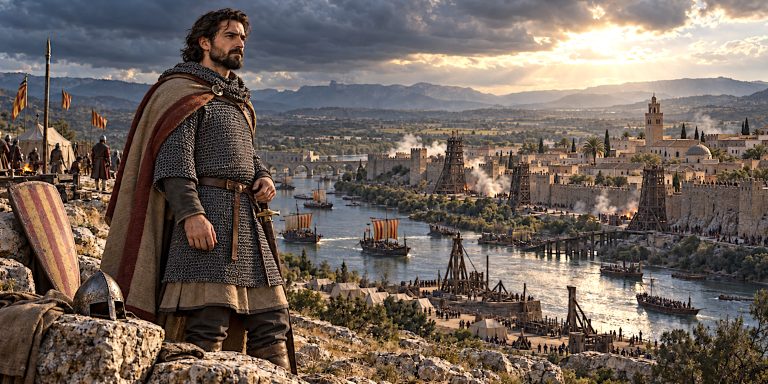
Charlemagne invaded Saxony and captured the fortress of Eresburg before destroying the Irminsul, one of the most sacred symbols of Saxon religion.
The exact appearance of the Irminsul remains unknown. Contemporary descriptions suggest it may have been a large wooden pillar or sacred tree representing the structure of the universe.
Its destruction was deeply symbolic.
To Frankish chroniclers it demonstrated Christianity’s triumph.
To the Saxons it represented an assault on their identity itself.
One can hardly imagine beginning peace negotiations by chopping down your opponent’s holiest shrine.
The Course of the War
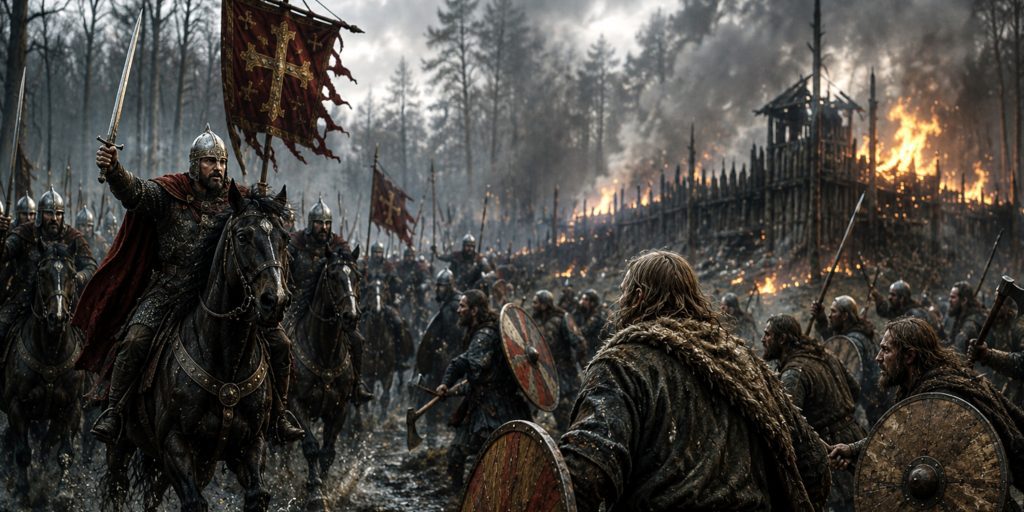
Rather than one continuous campaign, the Saxon Wars consisted of repeated cycles:
- Frankish invasion
- Saxon submission
- Forced conversion
- Frankish withdrawal
- Saxon rebellion
This pattern repeated for decades.
Every time Charlemagne campaigned elsewhere, whether in Italy, Bavaria or Spain, Saxon revolts often followed.
The greatest challenge came from Widukind, who united much of Saxon resistance during the 770s and early 780s.
Widukind and the Saxon Resistance
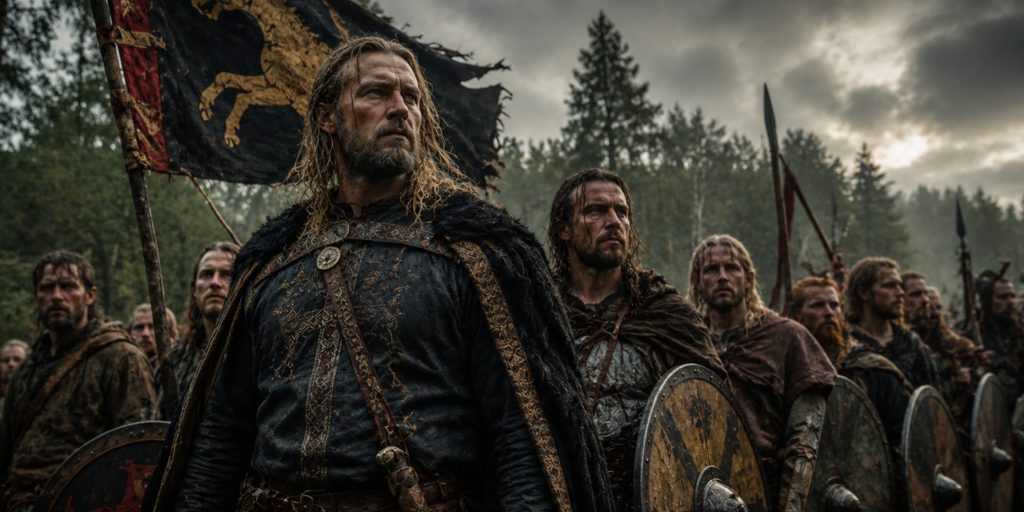
Widukind emerged as the most capable opponent Charlemagne ever faced inside Germany.
Little is known about his early life, but Frankish sources describe him as charismatic, determined and politically skilled.
Unlike Charlemagne, Widukind possessed no permanent army. Instead he relied upon tribal alliances, rapid movement and detailed local knowledge.
He avoided decisive battles whenever possible and instead exploited Frankish weaknesses through raids and surprise attacks.
His ability to revive resistance repeatedly frustrated Charlemagne for over a decade.
In 785, after sustained military pressure, Widukind accepted baptism.
Whether this represented genuine religious conversion or political realism remains one of the great unanswered questions of Carolingian history.
Major Battles of the Saxon Wars
Battle of Süntel (782)
One of the greatest Saxon victories.
A Frankish force underestimated the Saxons and attacked without adequate coordination. The Saxons surrounded and destroyed much of the Frankish army.
The defeat shocked Charlemagne.
The Verden Massacre (782)
Although not technically a battle, Verden became one of the conflict’s darkest episodes.
According to Frankish sources, Charlemagne ordered the execution of approximately 4,500 Saxon prisoners accused of rebellion.
Modern historians debate both the number killed and the precise interpretation of the Latin sources.
Regardless of the exact figure, it remains one of the most controversial events of Charlemagne’s reign.
Campaigns of 783
Charlemagne personally led multiple campaigns that gradually regained the initiative.
Several hard-fought engagements around the River Lippe weakened organised Saxon resistance and restored Frankish control.
Final Campaigns (798 to 804)
Northern Saxony remained unstable for years.
The Nordalbingians continued resisting until Frankish campaigns, supported by allied Slavic forces, finally secured the region.
Large-scale deportations followed.
By 804 organised resistance had effectively ended.
Military Organisation
Frankish Army
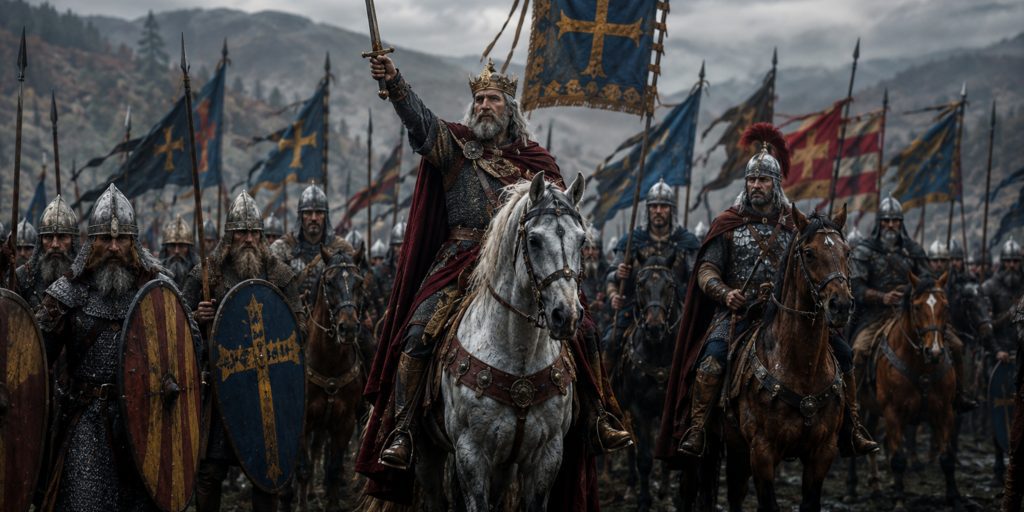
The Frankish military combined professional leadership with feudal obligations.
It included:
- Heavy cavalry
- Armoured infantry
- Spearmen
- Archers
- Engineers capable of constructing bridges and siege works
Frankish logistics steadily improved throughout the campaigns, allowing deeper operations inside Saxony.
Saxon Warriors
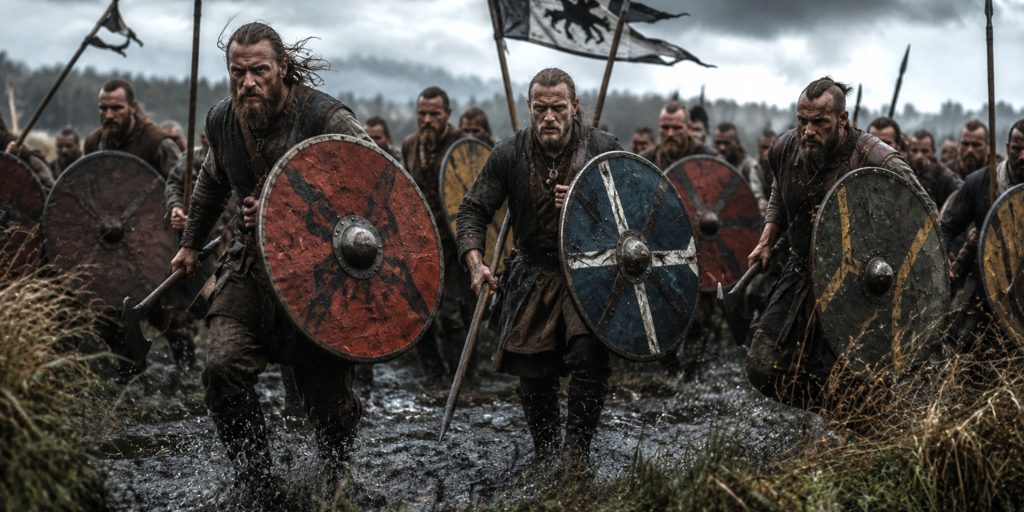
The Saxons fought very differently.
Their forces consisted mainly of free warriors drawn from local communities.
Typical equipment included:
- Spears
- Seaxes
- Axes
- Round shields
- Short swords owned by wealthier warriors
- Hunting bows used when required
Rather than seeking open battle against superior Frankish cavalry, they preferred forests, marshes and surprise attacks.
The landscape itself became one of their greatest allies.
Battles and Military Strategy
The Saxon Wars demonstrated two very different approaches to warfare.
Charlemagne relied upon:
- Multiple converging armies
- Fortified bases
- Road building
- Supply organisation
- Permanent occupation
The Saxons relied upon:
- Local knowledge
- Fast-moving war bands
- Ambushes
- Raids
- Seasonal warfare
Eventually Frankish organisation proved more sustainable than repeated tribal uprisings.
The lesson feels surprisingly modern. Winning a battle is easier than controlling territory over thirty years.
Christianity and Forced Conversion
Religion remained central throughout the conflict.
Charlemagne issued the Capitulatio de partibus Saxoniae, which imposed severe penalties for those who rejected Christianity.
According to its provisions, offences including attacks upon churches or refusal of baptism could carry the death penalty.
Modern historians debate how consistently these laws were enforced, but they demonstrate how closely royal authority and religion had become intertwined.
Missionaries followed the army, churches appeared across conquered territory and monasteries became centres of Frankish administration.
Archaeology
Archaeology has transformed our understanding of the Saxon Wars.
Excavations at Eresburg, believed to be modern Obermarsberg, have uncovered evidence of Carolingian fortifications, defensive earthworks and occupation layers consistent with Frankish military activity.
At Paderborn, where Charlemagne established an important royal centre, excavations have revealed churches, palaces and administrative buildings that illustrate how conquest quickly evolved into permanent government.
Burials from Saxony display a gradual transition from pagan customs towards Christian practice during the late eighth and early ninth centuries.
Weapon finds include:
- Iron spearheads
- Seaxes
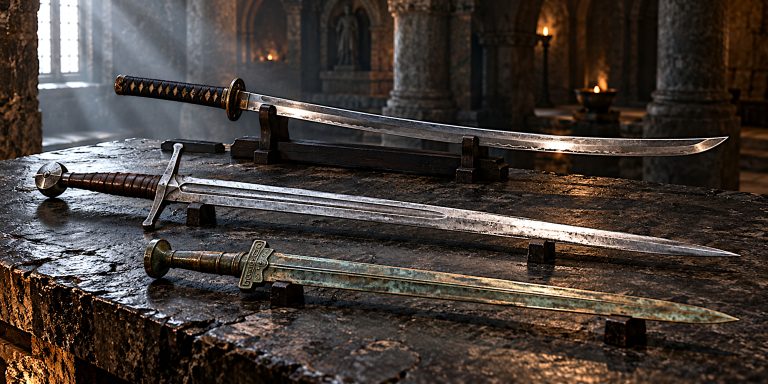
- Frankish swords
- Shield bosses
- Arrowheads
- Horse equipment
No confirmed remains of the Irminsul have been identified.
Its precise location remains one of early medieval archaeology’s enduring mysteries.
Contemporary Quotes
The Royal Frankish Annals recorded the destruction of the Irminsul:
“He destroyed the shrine which they called Irminsul.”
The chronicler Einhard, writing about Charlemagne’s determination, observed:
“No war undertaken by the Franks was more prolonged, more cruel or more arduous.”
These brief statements capture both the symbolic beginning and exhausting duration of the conflict.
Sources
Most written evidence comes from Frankish authors.
The principal sources include:
- Royal Frankish Annals
- Einhard’s Life of Charlemagne
- Annales Laureshamenses
- Carolingian capitularies
Unfortunately, no surviving contemporary Saxon narrative exists.
This means the story is largely told through the eyes of the victors, something historians must always remember when assessing events.
Legacy
The Saxon Wars fundamentally reshaped Europe.
Their consequences included:
- Expansion of the Carolingian Empire
- Permanent incorporation of Saxony into the Frankish realm
- Spread of Christianity across northern Germany
- Creation of new bishoprics and monasteries
- Foundations for the later Holy Roman Empire
- Strengthening of Carolingian royal authority
The conflict also established a model for combining conquest with religious conversion that influenced later medieval rulers.
For Charlemagne, the wars secured his eastern frontier and confirmed his reputation as Europe’s most formidable ruler.
For the Saxons, defeat meant the end of political independence, but not the disappearance of their identity. Saxon culture survived, adapted and ultimately became one of the major foundations of medieval Germany.
What We Still Do Not Know
Despite decades of research, important questions remain.
Historians continue to debate:
- The exact location and appearance of the Irminsul
- The true scale of the Verden executions
- Whether Widukind sincerely embraced Christianity
- How extensive Frankish control really was between campaigns
- The extent to which ordinary Saxons accepted or resisted conversion
New archaeological discoveries continue to refine our understanding, but the Saxon Wars still contain many unanswered questions.