Mount & Blade II: Bannerlord does not exactly hide its inspirations. TaleWorlds essentially grabbed chunks of late antiquity and the early medieval world, threw them into a giant sandbox, then asked players to solve every disagreement with cavalry charges and flying axes. Frankly, history professors probably would have done the same if they had access to a physics engine.
What makes Bannerlord interesting is how recognisable its factions feel without directly copying real nations. The Empire is not literally Byzantium. The Vlandians are not officially Normans. The Khuzaits are not a carbon copy of the Mongols. Yet after about five minutes in Calradia, most players start squinting at the screen and going, “Hang on, these lads are basically medieval French cavalry with extra shouting.”
Here is how Bannerlord’s factions compare to the real cultures that inspired them.
The Empire, Byzantine Empire and Late Rome
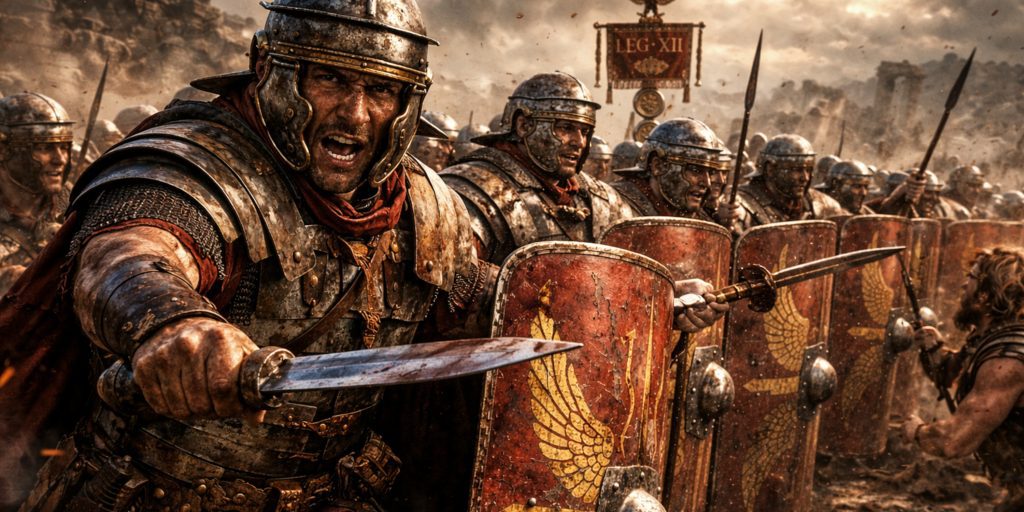
The Empire is the most obvious historical parallel in the game. It pulls heavily from the Eastern Roman Empire, better known as Byzantium, especially during its troubled middle period when civil wars seemed to occur every other Tuesday.
Historical Inspiration
The Empire resembles:
- The Byzantine Empire
- The late Western Roman Empire
- Elements of Hellenistic successor states
Its cities, armour styles, political system and military organisation all scream Constantinople. Even the split into Northern, Southern and Western Empire factions mirrors the endless fragmentation that plagued Rome after imperial decline.
Real Historical Similarities
Cataphracts
Imperial heavy cavalry are essentially Byzantine cataphracts.
These were heavily armoured horsemen used across the Eastern Roman world. Both rider and horse could be covered in scale or lamellar armour, turning them into medieval tanks before tanks existed. Watching them charge in Bannerlord feels historically accurate right up until one gets stuck on a tree.
Infantry Doctrine
The Empire also uses disciplined spear infantry and combined arms tactics, very similar to Byzantine military manuals like the Strategikon.
Real Byzantine armies relied on:
- Shield walls
- Spearmen
- archers
- Heavy cavalry coordination
- Tactical flexibility
That combination made them incredibly dangerous when properly organised, which also explains why Empire AI armies occasionally steamroll entire regions before immediately collapsing in civil war.
What Bannerlord Changes
The Empire simplifies Byzantine complexity quite a bit.
Real Byzantine armies employed:
- Greek fire
- Foreign mercenaries
- Extensive naval warfare
- Complicated diplomacy
- Elite Varangian guards
Bannerlord strips most of that away and focuses on battlefield identity instead.
The Vlandians, Normans and Medieval France
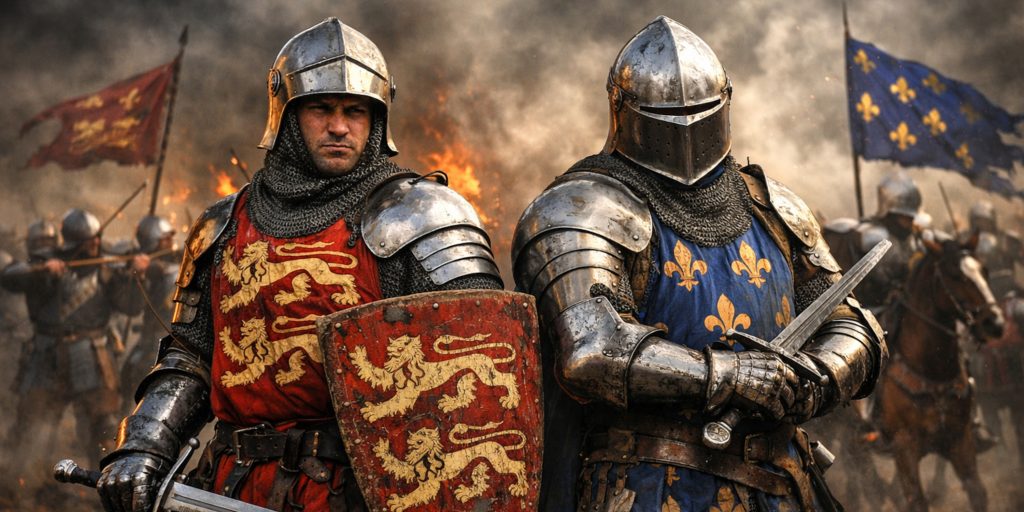
The Vlandians are basically what happens when Norman knights become a full civilisation.
Their entire culture revolves around cavalry dominance, feudal nobles and the belief that every problem can be solved by charging directly at it with a lance.
Historically, that worked alarmingly often.
Historical Inspiration
The Vlandians draw from:
- Norman England
- Medieval France
- The Holy Roman Empire
- Feudal Western Europe
Their heraldry, castles and knight culture all resemble Western Europe between the 11th and 13th centuries.
Real Historical Similarities
Knightly Warfare
The Vlandian banner knight is heavily inspired by Norman and French heavy cavalry.
After the Norman Conquest in 1066, mounted knights became one of the most feared military forces in Europe. Their use of couched lances transformed warfare.
Bannerlord captures this beautifully. A full Vlandian cavalry charge feels less like combat and more like being hit by a collapsing cathedral.
Feudal Society
The faction also reflects:
- Feudal vassalage
- Noble land ownership
- Castle-based power structures
- Chivalric military culture
This mirrors medieval France and Norman England quite closely.
What Bannerlord Changes
Real medieval European armies relied more heavily on:
- Mercenaries
- Crossbowmen
- Logistics
- Religious authority
Bannerlord simplifies feudal politics into relatively straightforward clan rivalries. Real medieval succession disputes were somehow even messier than Calradia’s.
Which is genuinely impressive.
The Sturgians, Vikings and Kievan Rus
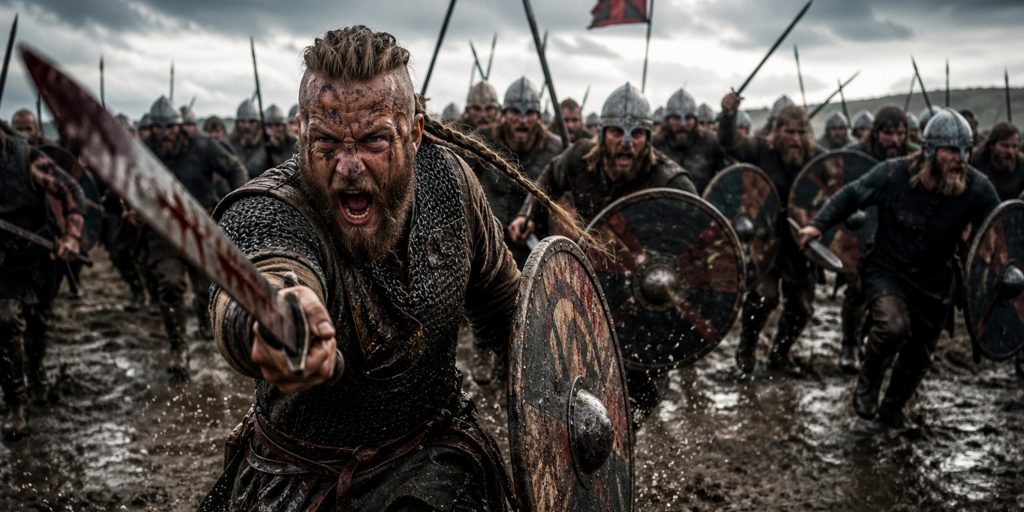
The Sturgians are a fascinating hybrid faction. At first glance they look purely Viking inspired, but there is a lot of Slavic and Rus influence underneath the axes and fur cloaks.
Historical Inspiration
The Sturgians resemble:
- Vikings
- Kievan Rus
- Early medieval Slavic states
- Scandinavian warrior cultures
This blend makes them one of the more historically layered factions in the game.
Real Historical Similarities
Shield Wall Combat
Sturgian infantry clearly draws from Viking warfare traditions.
Historically, Norse armies relied heavily on:
- Shield walls
- Axes
- Spears
- Aggressive infantry tactics
Bannerlord absolutely nails the feeling of heavy infantry advancing downhill while screaming like tax collectors are behind them.
Rus Influence
The faction’s cities and political style resemble Kievan Rus more than pure Scandinavia.
The Rus were Norse-descended rulers operating across Eastern Europe. They mixed Scandinavian military traditions with Slavic culture and Byzantine influence.
That hybrid identity is visible everywhere in Sturgia.
What Bannerlord Changes
Real Vikings were:
- Traders
- Explorers
- Mercenaries
- Settlers
Bannerlord understandably focuses more on warfare than commerce. Otherwise half the player base would accidentally become medieval accountants.
The Khuzaits, Mongols and Turkic Steppe Empires
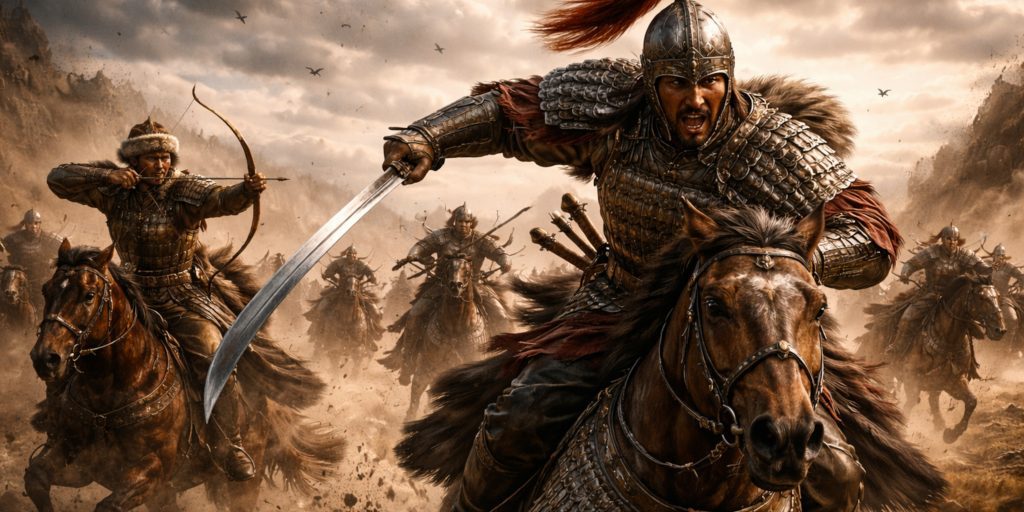
The Khuzaits are pure steppe warfare chaos, and honestly, they might be the most terrifying faction in the game when properly used.
They are heavily inspired by the Mongols, though there are also strong Turkic and Central Asian influences.
Historical Inspiration
The Khuzaits resemble:
- Mongol Empire
- Turkic khanates
- Cumans
- Huns
- Central Asian nomadic cultures
Real Historical Similarities
Horse Archery
This is the faction’s defining trait.
Historically, Mongol armies dominated much of Eurasia through:
- Mounted archery
- Mobility
- Feigned retreats
- Operational speed
- Discipline
Bannerlord captures the frustration of fighting horse archers perfectly. You spend half the battle chasing them while your infantry slowly questions every life choice that led them there.
Nomadic Warfare
Khuzait armies rely on mobility over static defence, mirroring real steppe doctrine.
Historical nomadic armies could:
- Move rapidly across huge distances
- Live off mobile supply systems
- Strike unexpectedly
- Avoid prolonged sieges
What Bannerlord Changes
Real Mongol warfare involved astonishing levels of:
- Intelligence gathering
- Communication
- Siege engineering
- Psychological warfare
Bannerlord mainly focuses on battlefield tactics rather than empire administration. Probably for the best, because organising medieval tax systems does not quite have the same adrenaline rush as a cavalry encirclement.
The Battanians, Celts and Tribal Britain
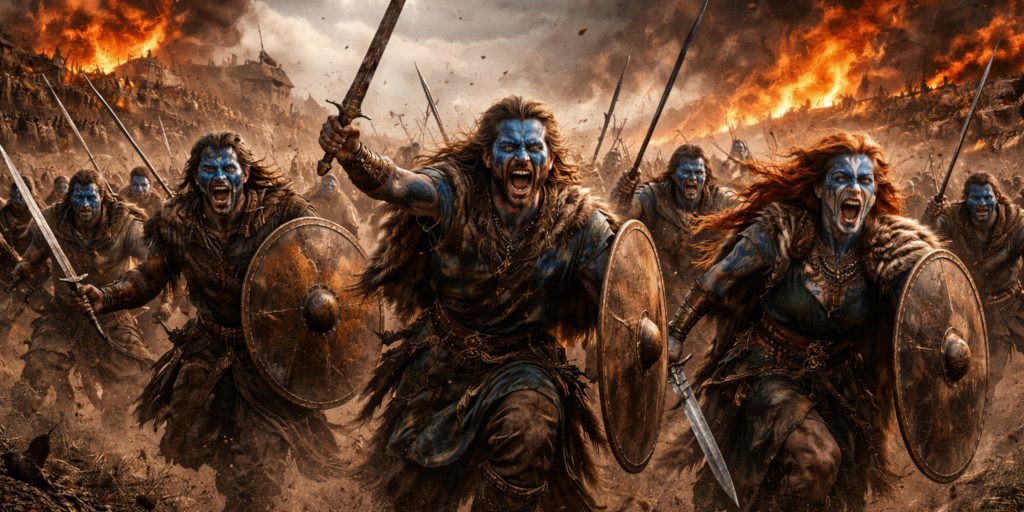
The Battanians are one of the more romanticised factions in Bannerlord.
They blend ancient Celtic imagery with medieval woodland guerrilla warfare and a healthy amount of fantasy flavour.
Historical Inspiration
The Battanians draw from:
- Ancient Celts
- Welsh kingdoms
- Picts
- Gaelic tribal cultures
Real Historical Similarities
Woodland Warfare
The Battanians excel in forests and ambush tactics.
Historically, Celtic and Welsh forces often relied on:
- Difficult terrain
- Guerrilla warfare
- Ambushes
- Skirmishing
That terrain advantage frustrated larger invading powers for centuries, especially the Romans and later the English.
Fian Champions
The famous Battanian Fian units resemble elite longbowmen, particularly Welsh archers.
Longbows became devastating weapons in medieval warfare, especially during the Hundred Years’ War. A skilled archer could punch through armour and destroy cavalry formations.
What Bannerlord Changes
The Battanians mix time periods heavily.
You have:
- Iron Age aesthetics
- Medieval longbows
- Fantasy tribal politics
- Early medieval armour
Historically, these elements did not really overlap neatly. But it creates a memorable faction identity, and honestly, Calradia was never pretending to be a university lecture.
The Aserai, Arabs and Islamic Caliphates
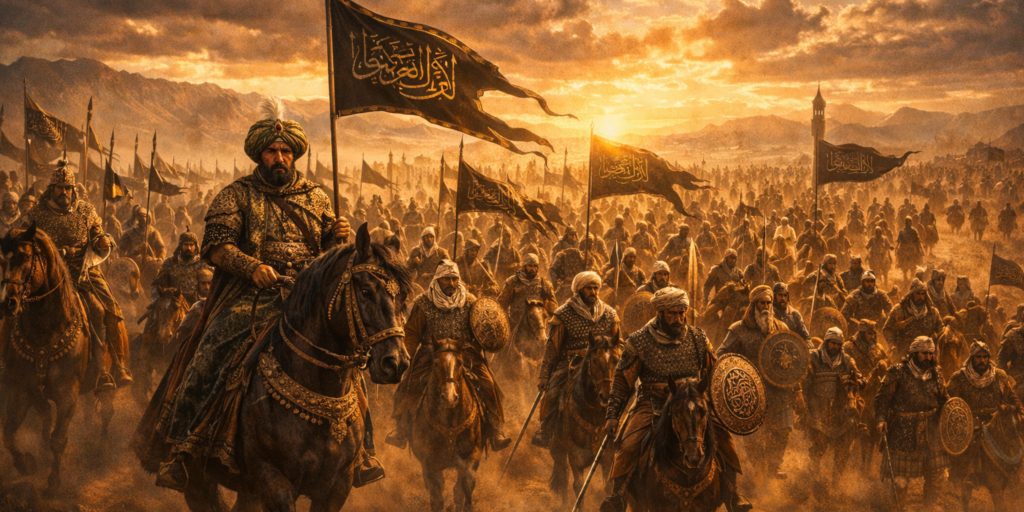
The Aserai combine influences from medieval Arab states, desert trade empires and Islamic military traditions.
They are one of the most economically focused factions in Bannerlord, which quietly mirrors real history quite well.
Historical Inspiration
The Aserai resemble:
- Abbasid Caliphate
- Fatimid Egypt
- Medieval Arab kingdoms
- Mamluk military systems
Real Historical Similarities
Desert Warfare
The Aserai rely on mobility, cavalry and flexible troop compositions.
Historical Islamic armies frequently used:
- Light cavalry
- Horse archers
- Spearmen
- Professional slave soldiers
- Fast desert movement
Trade Networks
Aserai prosperity comes from trade routes crossing desert regions.
This reflects the historical importance of:
- Caravan commerce
- Silk Road exchanges
- Mediterranean trade
- Islamic commercial networks
Medieval Islamic states often became enormously wealthy through trade alone.
What Bannerlord Changes
The Aserai are simplified into a fairly unified desert culture.
Historically, the Islamic world contained huge ethnic and political diversity, including:
- Arabs
- Persians
- Berbers
- Turks
- Kurds
Bannerlord compresses centuries of regional variation into one faction identity for gameplay clarity.
Why Bannerlord’s Historical Blend Works So Well
What makes Bannerlord clever is that it does not chase strict realism.
Instead, it captures the feeling of historical warfare.
You immediately understand:
- Why steppe cavalry terrified Europe
- Why heavy knights dominated medieval battlefields
- Why disciplined infantry mattered
- Why terrain could decide wars
- Why empires kept collapsing into civil wars because ambitious nobles apparently cannot help themselves
The factions feel authentic because they are built around historical military logic rather than exact historical copying.
That balance is probably why Bannerlord remains so addictive. It lets players live out the fantasy of commanding medieval armies while still brushing against genuine history.
Also, because launching thirty cavalrymen off a hill into a wall of spears is deeply educational. In a traumatic sort of way.
Seven Swords Takeaway
Bannerlord’s factions are not one-to-one recreations of real civilisations, but the historical inspirations are impossible to miss once you know where to look.
The Empire carries Byzantium’s exhausted grandeur. The Vlandians embody Norman cavalry culture. The Khuzaits channel Mongol terror. The Sturgians blend Vikings with the Rus. The Battanians romanticise Celtic resistance. The Aserai reflect the wealth and mobility of medieval Islamic powers.
That mixture gives Calradia a strange familiarity. It feels fictional, yet oddly believable at the same time.
Which is probably why players lose hundreds of hours to it while insisting they are “just doing one more siege”.
Nobody has ever actually done one more siege.