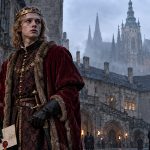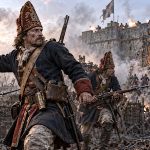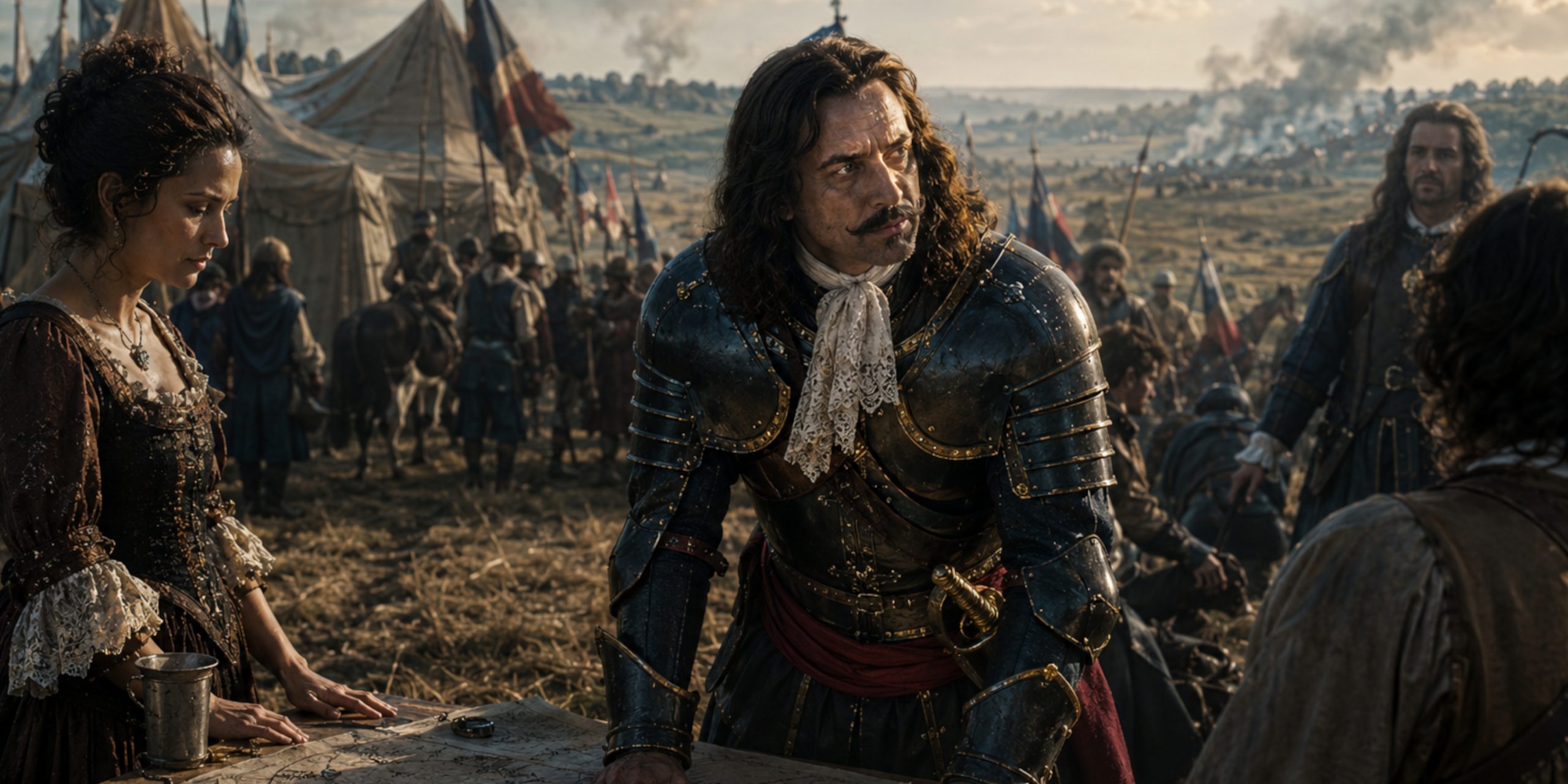
Henri de La Tour d’Auvergne, better known as Marshal Turenne, rarely receives the same dramatic attention as Napoleon or Marlborough. That feels slightly unfair. Turenne was the sort of commander who did not need theatrics. He won by thinking more clearly than the man opposite him.
Born in 1611, he came of age during the Thirty Years’ War and matured into one of the defining military minds of seventeenth century Europe. His campaigns feel measured rather than reckless, deliberate rather than flamboyant. If some generals chase glory, Turenne seemed to distrust it. He preferred results.
Early Life and Rise to Command
Turenne was born into a noble family with strong military connections, yet his early years gave little indication of future brilliance. Contemporary accounts describe him as physically slight and not especially imposing. There is a certain irony here. He would go on to command armies with a composure that made others seem hurried.
He began his military career in Dutch service, learning under experienced commanders in the wars against Spain. This grounding shaped him. He absorbed the importance of logistics, terrain, and patience. These lessons never left him.
By the 1640s, he had entered French service and quickly rose through the ranks. His performance during the later stages of the Thirty Years’ War marked him out as a commander of rare consistency.
Arms and Armour
Turenne’s era sits at a fascinating point between medieval traditions and early modern warfare. Armour had not disappeared, but it was becoming more selective.
Personal Equipment
- Breastplate and backplate, often worn over a buff coat
- Open-faced helmet or hat, reflecting the declining use of heavy helms
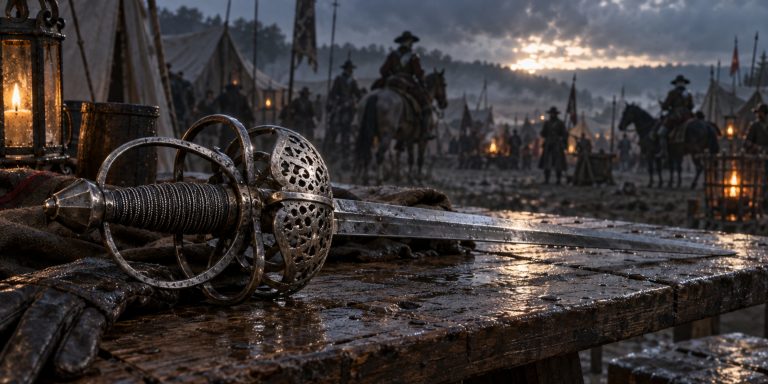
- Sword, typically a rapier or transitional military blade suited to both cut and thrust
- Pair of pistols, carried by officers for close combat
Infantry Equipment
- Pikemen with long pikes, still essential for formation defence
- Musketeers armed with matchlock muskets, supported by rests in earlier years
- Sidearms such as short swords or hangers
Cavalry Equipment
- Cuirassiers with partial armour, often retaining breastplates
- Pistols and swords as primary weapons
- Light cavalry with minimal armour, favouring speed and manoeuvre
There is a noticeable shift here. Armour is no longer about full protection. It becomes a compromise between defence and mobility. Turenne understood this balance and deployed his forces accordingly.
Battles and Military Acumen
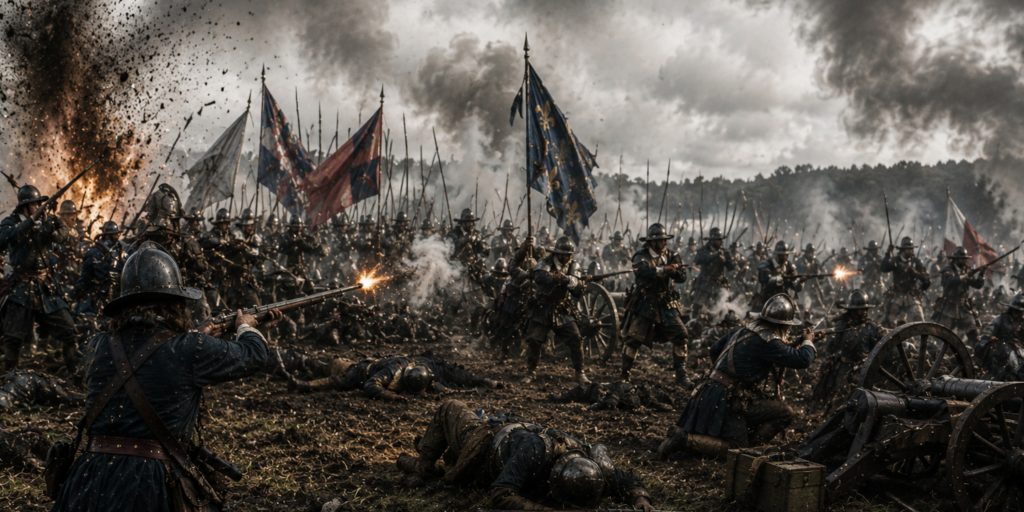
Turenne’s reputation rests on consistency. He rarely lost control of a campaign, and he almost never allowed himself to be drawn into reckless engagements.
Thirty Years’ War Campaigns
His early campaigns alongside French and allied forces against the Holy Roman Empire showcased his ability to coordinate with other commanders. This was not easy. Coalition warfare rarely is.
He demonstrated a talent for positioning armies where they could threaten supply lines rather than simply chase battles.
The Fronde
During the civil unrest of the Fronde, Turenne’s loyalty briefly wavered before he returned to royal service. What stands out is how quickly he re-established control. His campaigns during this period were efficient and decisive.
He did not waste time trying to crush every opponent. He targeted the points that mattered.
Franco-Dutch War
This is where Turenne’s brilliance becomes undeniable.
In 1674 and 1675, he conducted a winter campaign that surprised his enemies and broke conventional expectations. Armies were not meant to move aggressively in winter. Turenne ignored that idea and turned it into an advantage.
His manoeuvres in Alsace forced enemy forces into retreat without requiring a catastrophic battle. It is the sort of campaign that does not always translate into dramatic storytelling, yet from a military perspective it is almost flawless.
Final Campaign and Death
Turenne died in 1675 during the Battle of Salzbach, struck by a cannonball while reconnoitring the field. It is an abrupt end for a man who had spent decades mastering the art of controlled warfare.
His death had an immediate effect. French operations lost cohesion, which says a great deal about how central he was to command.
Style of Command
Turenne’s approach can feel understated at first glance. Look closer and it becomes more impressive.
- Careful study of terrain before committing to action
- Strong emphasis on supply lines and movement
- Avoidance of unnecessary battles
- Preference for manoeuvre over brute force
- Calm leadership that inspired confidence rather than fear
He was not trying to overwhelm opponents with spectacle. He was trying to outthink them. That distinction matters.
As a historian, I find him quietly fascinating. There is no sense of ego in his campaigns. Just clarity.
Where to See Artefacts from Turenne’s Era
Artefacts directly tied to Turenne himself are relatively scarce, yet items from his campaigns and period can still be viewed in several important collections.
- Musée de l’Armée in Paris holds seventeenth century arms, armour, and documents linked to French military history
- Château de Sedan, associated with his family, offers context on his background and regional influence
- Les Invalides contains memorials and artefacts from French military leaders of the era
- Regional museums in Alsace preserve material connected to the Franco-Dutch War campaigns
These collections provide a tangible sense of the world Turenne operated in, even if they do not always carry his name directly.
Latest Archaeological Findings
Archaeology relating to Turenne’s campaigns tends to focus on battlefield landscapes rather than individual artefacts.
Recent work in Alsace has examined:
- Temporary fortifications and camp layouts from the 1674 to 1675 campaigns
- Musket balls and artillery fragments that help map troop positions
- Road networks used for winter manoeuvres, confirming written accounts of his movements
There is a growing interest in using landscape archaeology to understand early modern warfare. In Turenne’s case, it reinforces the idea that his strength lay in movement and positioning rather than static defence.
Legacy
Turenne’s influence extends well beyond his lifetime. Later commanders studied his campaigns closely. Napoleon himself admired his methods, particularly his use of manoeuvre.
His reputation rests on discipline, intelligence, and restraint. Those are not always the qualities that make headlines, yet they are often the ones that win wars.
If there is a criticism, it is that his style does not lend itself to legend in the same way as more dramatic figures. No grand last stands, no reckless charges. Just steady success.
Personally, I think that makes him more interesting, not less.
Seven Swords Takeaway
Marshal Turenne stands as one of the most reliable commanders in European history. He did not chase glory. He built it carefully, campaign by campaign.
His legacy is not one moment, but a pattern. A pattern of calm decisions, precise movements, and victories that feel almost inevitable once you understand how he thought.
He is, in many ways, the general other generals would choose to study.