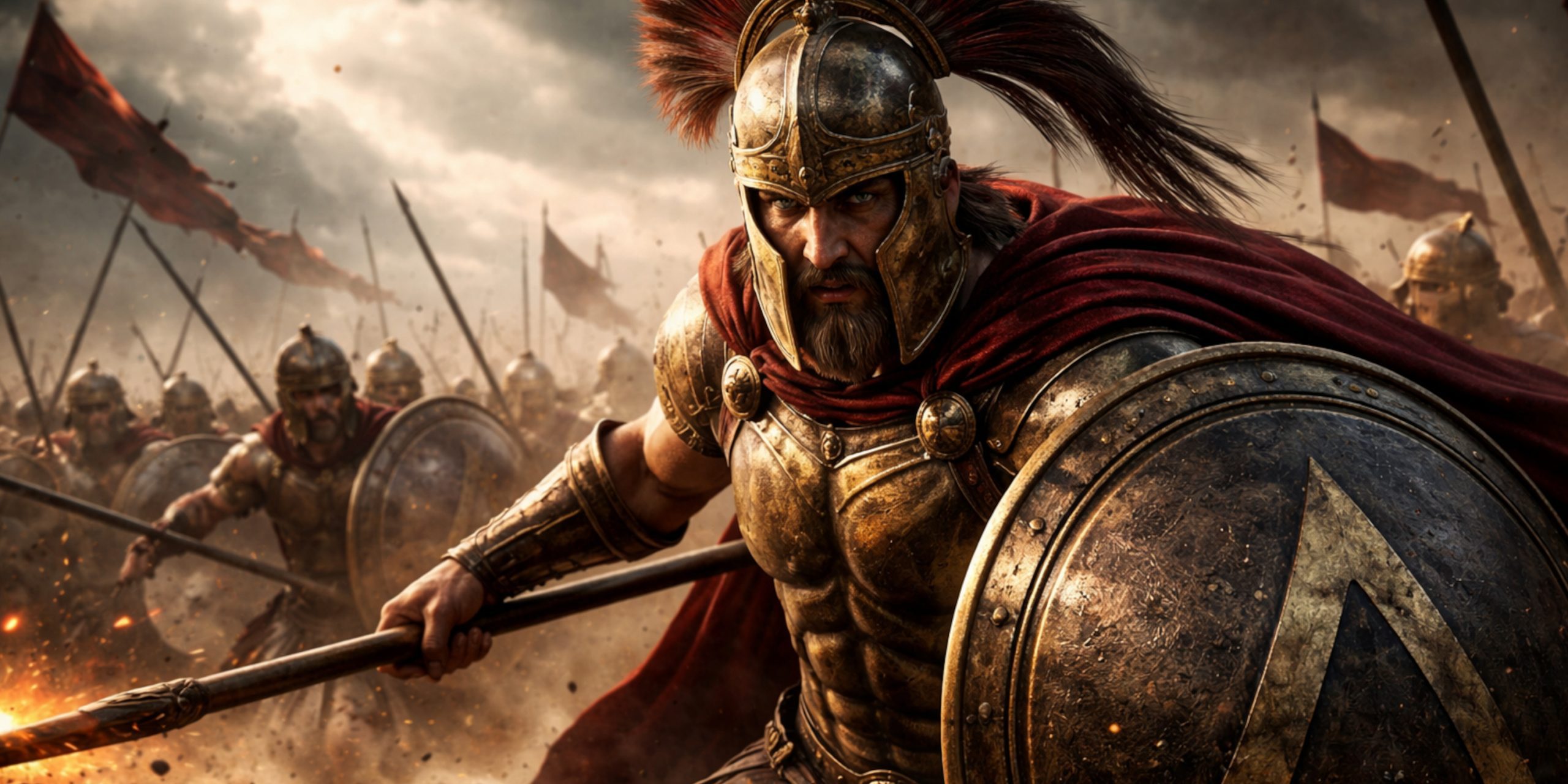
Brasidas tends to slip through the cracks when people list great Greek commanders. He lacks the mythic aura of Leonidas and the intellectual fame of Pericles. Yet when you read the accounts closely, especially those of Thucydides, he feels startlingly modern. Quick thinking, adaptable, capable of persuasion as well as violence.
He was not just a Spartan who fought well. He was a Spartan who understood people, and that alone made him unusual.
Historical Background
Brasidas operated during the early and middle years of the Peloponnesian War, a conflict that pulled the Greek world apart.
Sparta, rigid and land-focused, faced Athens, wealthy, naval, and politically experimental. Most Spartan commanders relied on brute force and predictable invasion routes. Brasidas did something different. He took the war north, into Thrace and the Aegean fringe, where Athenian influence was thinner and loyalties more fragile.
That decision alone changed the tempo of the war.
Arms and Armour
Spartan equipment was conservative, built around discipline and cohesion rather than individual flair. Brasidas would have been equipped as a standard hoplite officer, though his role required more mobility than most.
Core Equipment
- Helmet: Corinthian or later variants, bronze, enclosing the face with narrow eye slits
- Body Armour: Bronze cuirass or composite linen armour known as linothorax
- Shield: Large round aspis, wood with bronze facing, designed for formation fighting
- Primary Weapon: Dory spear, around 2 to 3 metres long
- Secondary Weapon: Xiphos short sword, used when formations collapsed
Practical Adaptations
Brasidas’ campaigns suggest flexibility:
- Likely lighter kit for rapid marches in Thrace
- Greater reliance on allied troops such as peltasts and local forces
- A willingness to operate outside strict phalanx conditions
Spartan warfare was usually about holding the line. Brasidas understood when to break it.
Military Style and Character
What stands out most is not his bravery, though he had that in abundance. It is his judgement.
Thucydides presents him as calm, persuasive, and measured. He could convince cities to defect from Athens without bloodshed, which in Greek warfare was almost radical.
He also recognised something many Spartans ignored. War was not just about smashing armies. It was about weakening alliances.
That is where he excelled.
Major Battles and Campaigns
The Campaign in Thrace
Brasidas led an expedition north around 424 BC. This was not a typical Spartan theatre of war.
Key Achievements
- Marched rapidly through hostile and uncertain territory
- Secured alliances with local cities
- Undermined Athenian control without large-scale battles
Cities often opened their gates voluntarily. He offered moderate terms and respect for local autonomy. Compared to the heavy-handed Athenian empire, this was persuasive.
It feels almost like political warfare before the term existed.
Capture of Amphipolis
This was his defining success.
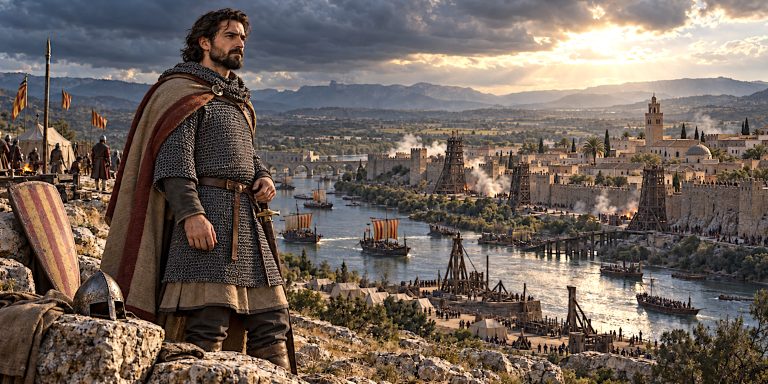
Amphipolis was strategically vital. It controlled access to timber, silver, and routes into Thrace.
Brasidas approached quickly and negotiated before the Athenians could respond.
Outcome
- Amphipolis surrendered with minimal destruction
- Athenian general Thucydides arrived too late to save it
- Athens lost a key northern stronghold
This was not just a tactical win. It was a psychological shock.
Battle of Amphipolis, 422 BC
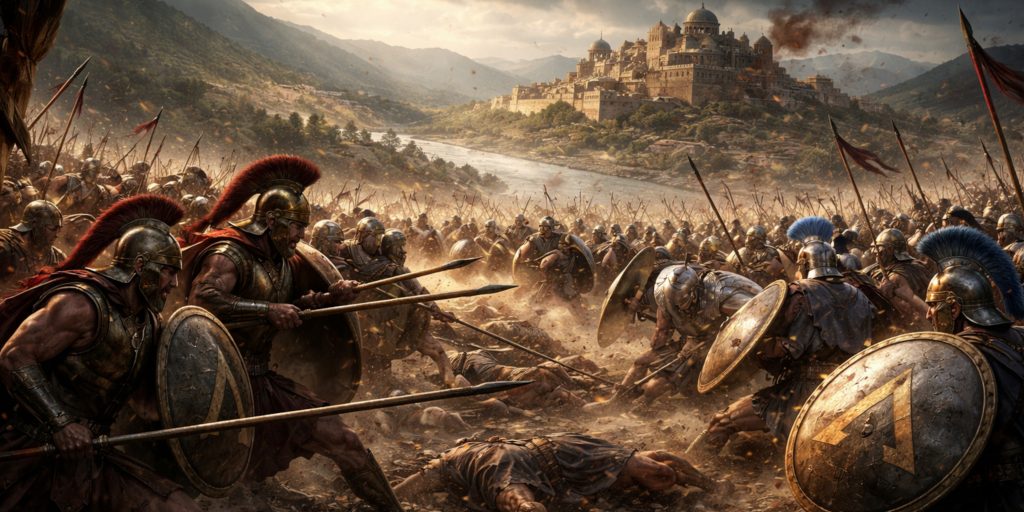
Brasidas faced the Athenian general Cleon in a decisive engagement.
Key Elements
- Brasidas used a sudden, aggressive sortie rather than static defence
- He exploited Athenian hesitation and poor coordination
- Spartan and allied troops struck with speed and cohesion
Result
- Decisive Spartan victory
- Cleon killed
- Brasidas mortally wounded during the attack
His death was both triumphant and tragic. He won the battle that secured his reputation, then died before seeing its full consequences.
Military Assessment
Brasidas breaks the stereotype of Spartan rigidity.
Strengths
- Strategic mobility
- Diplomatic intelligence
- Ability to inspire allies
- Tactical boldness at the right moment
Limitations
- Dependent on momentum
- Operating far from Spartan support structures
- His death cut short a potentially larger strategic impact
If he had lived longer, the northern war might have unfolded very differently.
Personality and Reputation
Thucydides, who was exiled partly because of Brasidas’ success, still speaks of him with respect. That says a great deal.
He was:
- Measured in speech
- Respected by allies and even enemies
- Capable of restraint, which was rare in Greek warfare
Spartans were feared. Brasidas was something else. He was trusted.
Archaeology and Physical Legacy
Amphipolis and the Lion Monument
Brasidas was buried at Amphipolis, an unusual honour for a Spartan.
Archaeological Highlights
- Lion of Amphipolis: Often associated with elite burials in the region, possibly linked to prominent figures of the period
- City Excavations: Fortifications, houses, and artefacts reveal a prosperous and contested settlement
- Kasta Tomb: A large and complex burial site nearby, though not directly tied to Brasidas, shows the importance of the region in the late Classical and early Hellenistic periods
Burial Context
Ancient sources suggest:
- Brasidas received heroic honours
- He was treated as a founder figure of the city after its capture
- His tomb became a site of local significance
That is an extraordinary outcome for a Spartan operating far from home.
Where to See Artefacts Today
Material directly tied to Brasidas is limited, which is not unusual for individual Greek commanders. However, related artefacts and sites can be visited.
Key Locations
- Archaeological Museum of Amphipolis: Local finds from the city and surrounding area
- Archaeological Museum of Thessaloniki: Broader regional artefacts, including weapons and armour from the Classical period
- Ancient Site of Amphipolis: The landscape itself remains the most powerful connection
Standing at Amphipolis, you get a sense of scale. Rivers, hills, open ground. It becomes clear why Brasidas wanted it.
Latest Archaeological Insights
Recent work around Amphipolis has focused on urban layout and burial practices.
Current Understanding
- The city was wealthier and more complex than earlier assumptions suggested
- Trade networks in timber and metals were central to its value
- Burial monuments in the region indicate elite competition and identity
While no direct artefact can be confidently assigned to Brasidas himself, the environment he fought over is becoming clearer with each excavation season.
Legacy
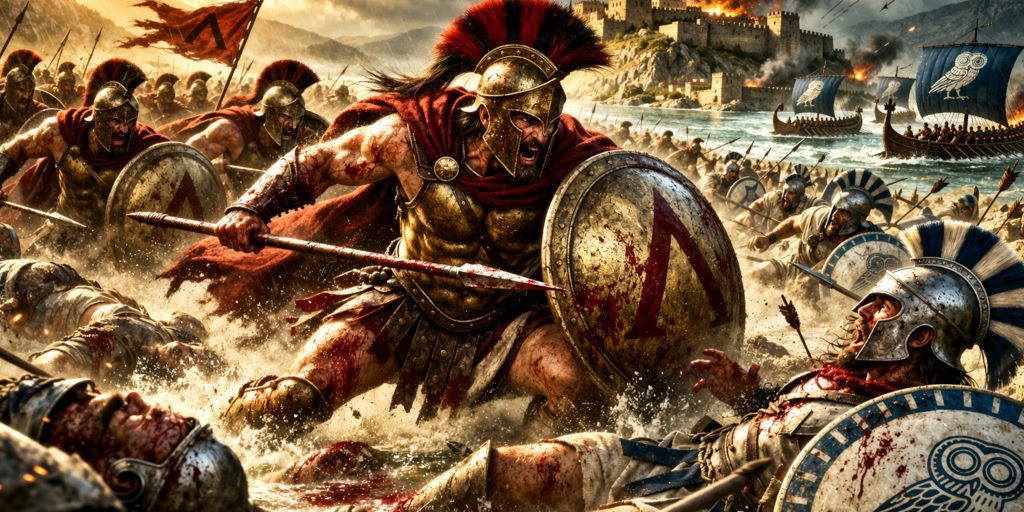
Brasidas represents a different kind of Spartan.
He showed that:
- War could be shaped through diplomacy as much as combat
- Mobility could outmatch brute strength
- Leadership mattered beyond the battlefield
His death helped open the door to the Peace of Nicias, though that peace proved fragile.
There is a sense, reading his story, that Sparta briefly had a commander who could think like Athens without becoming it. That combination is rare.
Takeaway
Brasidas is one of those figures who grows more interesting the longer you sit with him.
He does not fit neatly into the Spartan mould, and perhaps that is the point. He adapted when others did not. He persuaded when others threatened. And when the moment came, he struck hard and fast.
If history had given him another decade, we might be talking about him in the same breath as the very greatest names of the ancient world.