There is something slightly addictive about Black Sails. You come for the pirate chaos, stay for the politics, and somewhere along the way you realise you are watching a prequel that quietly outclasses most historical dramas.
Ranking the seasons is not easy. Each one feels like it is doing a different job. One builds the world, one tightens the knife, one goes fully tragic, and one lands the whole thing with surprising confidence.
So here it is, clean and honest.

Season 1
Season 1 has a bit of a reputation, and not always a kind one. It is the slowest entry and at times feels like it is still figuring out what kind of show it wants to be.
The Nassau setting is introduced well, a lawless trading hub that feels equal parts opportunity and trap. The problem is pacing. There are stretches where the show leans too heavily into intrigue without quite earning the tension yet.
Still, there is plenty to like.
- The foundation of Captain Flint is laid properly
- The Walrus crew dynamic starts to form
- Nassau feels lived in, not just a backdrop
The real issue is consistency. Some episodes feel sharp and purposeful, others drift. Compared to what comes later, it is clear the show has not fully found its voice.
Even so, it does the important work. Without this setup, the later seasons do not hit nearly as hard.
Season 2
Season 2 is where things click.
The writing tightens, the stakes feel real, and the show leans into character depth in a way that suddenly makes everything richer. The flashbacks tied to Flint are the turning point. They reshape him from a ruthless pirate into something far more complicated.
You start to see the show’s real ambition here.
- Political drama becomes central rather than background noise
- Relationships carry weight, especially Flint and Miranda
- The Charles Town storyline adds scale
It is also the season where characters like Anne Bonny and Jack Rackham begin to shine rather than just orbit the main plot.
There are still moments that drag, but they are fewer. The show feels confident now. It knows what it is building toward, even if the audience does not yet.
Season 3
Season 3 is where the show stops holding back.
Enter Blackbeard, played with a quiet menace that never feels forced. His presence alone raises the tension, but it is what the show does with him that really lands.
This season is darker, heavier, and far more brutal.
- The tone shifts toward tragedy and inevitability
- Major character moments actually have consequences
- The scale expands beyond Nassau
There is a confidence in how the story unfolds. The show trusts the audience to keep up, and it rewards that trust with some of its most memorable sequences.
Certain scenes linger longer than you expect. Not because they are flashy, but because they feel final.
Season 4
Season 4 is the best of the lot, and it is not particularly close.
Final seasons often stumble. They rush, overcomplicate, or collapse under their own weight. This one does the opposite. It narrows its focus and leans fully into character resolution.
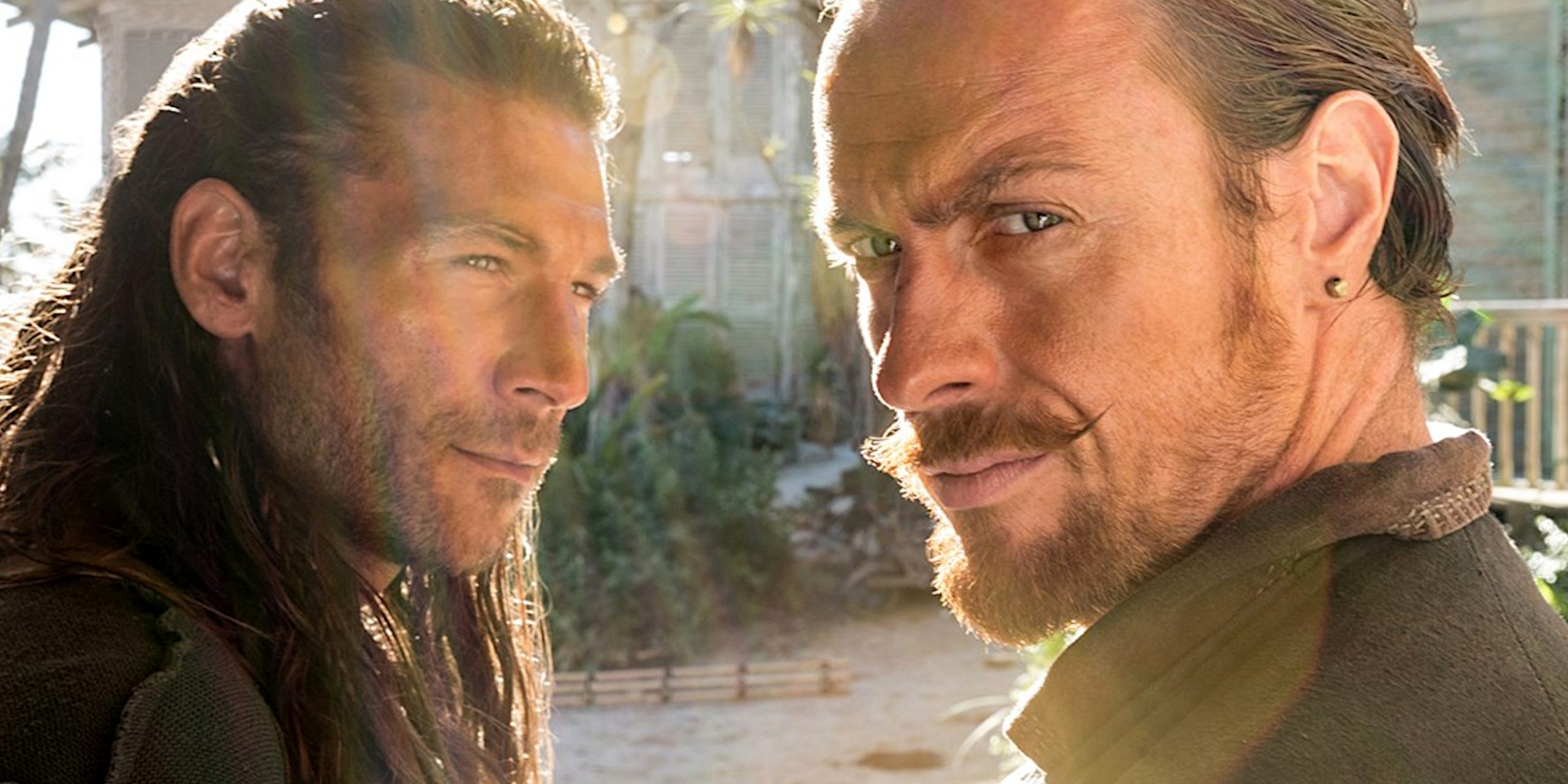
The relationship between Flint and Long John Silver becomes the core of everything. Not just a rivalry, but a clash of belief systems.
- Every storyline feels purposeful
- Emotional payoffs actually land
- The ending respects the audience
It is also surprisingly restrained. The show could have gone bigger, louder, more chaotic. Instead, it chooses something more reflective.
There is a quiet confidence in how it ends. Not everything is neat, but it feels complete.
Final Ranking
- Season 4
- Season 3
- Season 2
- Season 1
The Seven Swords Takeaway
What makes Black Sails stand out is not just the battles or the setting. It is the way it evolves. Each season builds on the last without repeating it.
Season 1 lays the groundwork, a little uneven but necessary. Season 2 finds the emotional core. Season 3 leans into consequence. Season 4 brings it all together with more control than most shows manage.
If you came for pirates, you got them. If you stayed, it was probably for something else entirely.