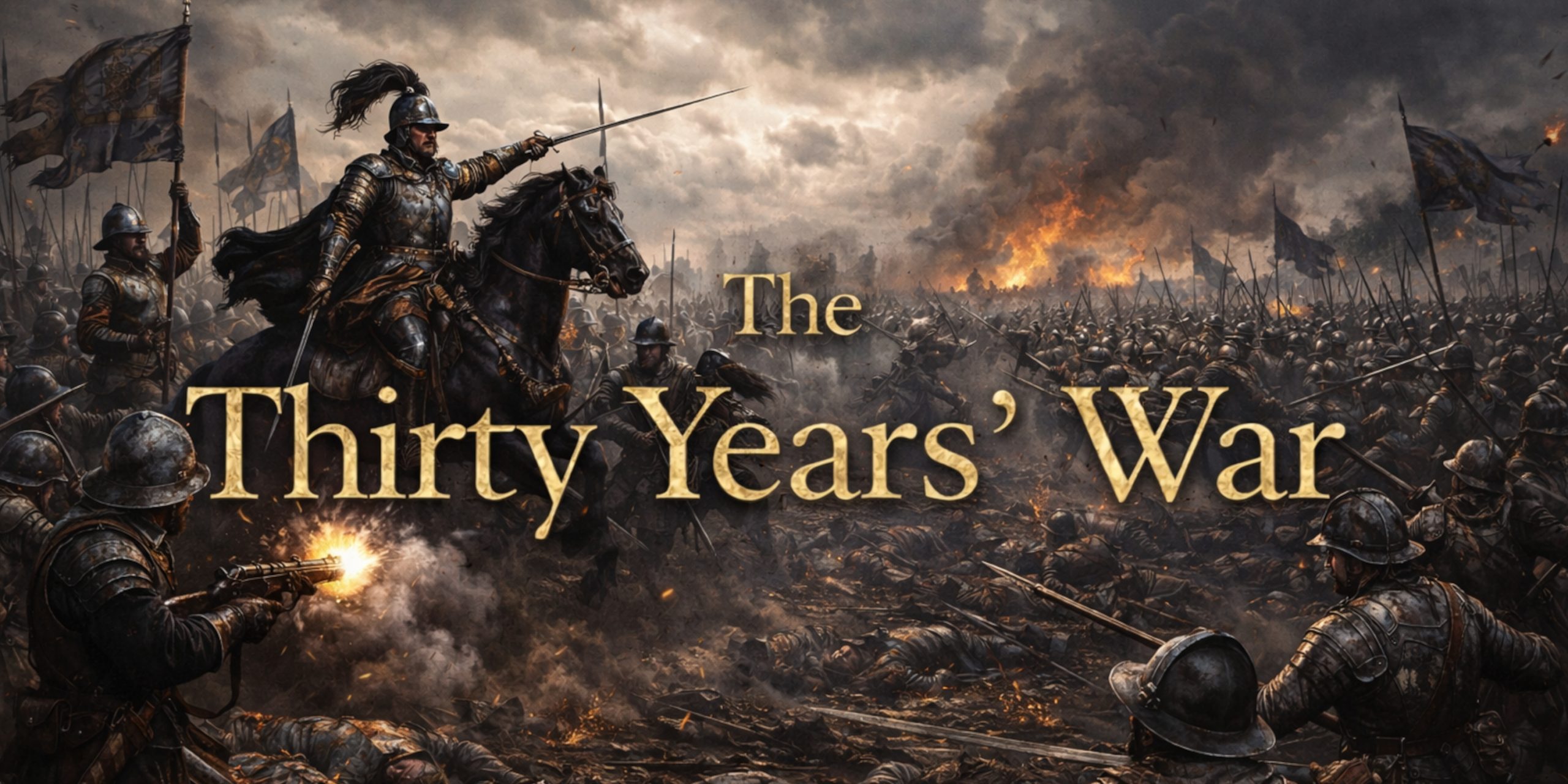
Few conflicts in European history feel as chaotic, destructive, and oddly consequential as the Thirty Years’ War. It began in 1618 with what looked like a regional dispute in the lands of the Holy Roman Empire. By the time peace arrived in 1648, much of central Europe had been ravaged, entire regions were depopulated, and the political balance of the continent had shifted for centuries.
At its heart the war was a messy combination of religion, dynastic ambition, territorial rivalry, and opportunism. Catholic and Protestant states certainly fought one another, but the neat religious narrative quickly breaks down. Catholic France famously supported Protestant armies against the Catholic Habsburgs. Princes switched sides with remarkable flexibility when it suited their interests.
As a historian one quickly learns that the Thirty Years’ War refuses to behave neatly. It sprawls across decades, involves dozens of armies, and produces leaders whose reputations swing wildly between genius and disaster.
What remains clear is the scale of the catastrophe. Large parts of Germany lost a third or more of their population through warfare, famine, and disease. Villages vanished. Trade collapsed. Armies lived off the land in a way that made civilians the primary victims.
The war also produced the diplomatic settlement that modern historians still discuss today. The Peace of Westphalia helped establish the principle that states should respect each other’s sovereignty. That idea would quietly shape European politics for centuries.
Causes of the War
The origins of the conflict lay in the fragile religious and political settlement created after the Reformation.
The Holy Roman Empire was a patchwork of hundreds of semi independent states. The Peace of Augsburg in 1555 had attempted to stabilise matters by allowing rulers to choose whether their territories were Catholic or Lutheran. It did not recognise Calvinism and left many tensions unresolved.
Several pressures gradually built toward crisis.
Religious tension
- Protestant and Catholic rulers competed for influence across the empire
- Calvinist territories lacked legal recognition
- Religious distrust intensified across central Europe
Political rivalry
- The Habsburg emperors attempted to strengthen imperial authority
- Many German princes feared losing autonomy
- Rival powers such as France and Sweden watched closely for advantage
The Defenestration of Prague
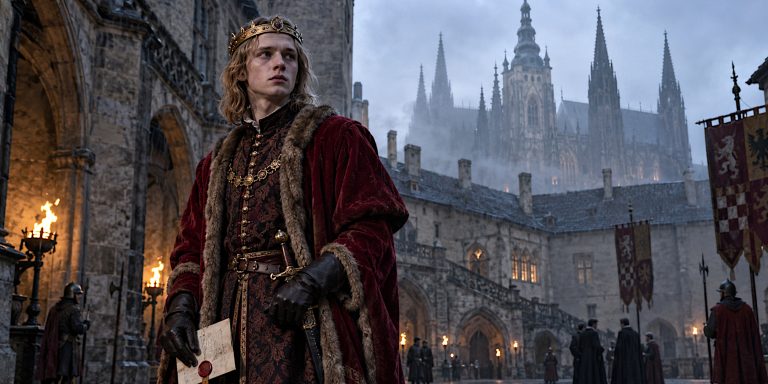
The immediate spark came in 1618 when Protestant nobles in Bohemia rebelled against the authority of the Catholic Habsburg monarchy. Imperial officials were thrown from a window of Prague Castle during a heated confrontation.
Miraculously the officials survived the fall. Diplomacy did not.
Bohemia revolted and elected a Protestant king. The emperor responded with force, and the crisis widened into a continental conflict.
Phases of the Conflict
Historians usually divide the war into several overlapping phases, though in truth the transitions were rarely tidy.
Bohemian Phase 1618–1625
The rebellion in Bohemia was crushed after the imperial victory at the Battle of White Mountain in 1620. Protestant resistance in the region collapsed quickly.
Danish Phase 1625–1629
King Christian IV of Denmark entered the war in support of Protestant interests. Imperial forces under talented commanders pushed him back and forced Denmark from the conflict.
Swedish Phase 1630–1635
Sweden entered the war under the remarkable leadership of King Gustavus Adolphus. Swedish armies achieved dramatic victories and briefly reshaped the balance of power in Germany.
French Phase 1635–1648
France joined the war directly against the Habsburgs despite being Catholic. At this stage the conflict had clearly become a great power struggle rather than a religious crusade.
Major Battles
The Thirty Years’ War produced numerous engagements across central Europe. Several battles stand out for their strategic importance.
| Battle | Year | Significance |
|---|---|---|
| White Mountain | 1620 | Imperial forces crushed the Bohemian revolt |
| Breitenfeld | 1631 | Gustavus Adolphus defeated the imperial army and revived the Protestant cause |
| Lützen | 1632 | Swedish victory but Gustavus Adolphus was killed |
| Nördlingen | 1634 | Major Catholic victory that weakened Swedish influence |
| Rocroi | 1643 | French victory over Spain signalled the decline of Spanish military dominance |
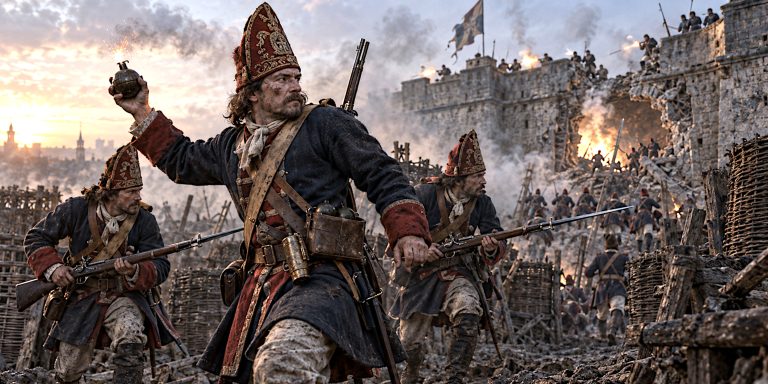
Breitenfeld deserves particular attention. Gustavus Adolphus reorganised his army with flexible formations and coordinated artillery. The result was a decisive defeat for the imperial army.
The Swedish king quickly gained a reputation as one of the most capable commanders of the century. His death at Lützen in 1632 was a turning point. Victorious though the Swedes were, they had lost the leader who drove their success.
One cannot help noticing that several battles in this war produced both triumph and tragedy simultaneously. Victories often arrived with heavy costs.
Arms and Warfare
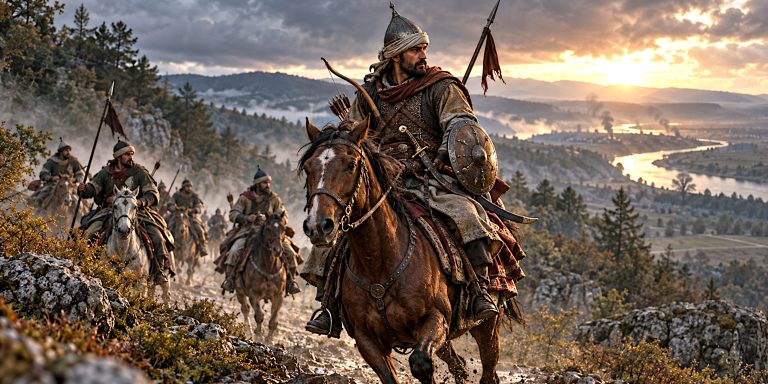
Armies in the Thirty Years’ War were diverse and frequently multinational. Mercenaries played a large role, and loyalties were sometimes flexible if pay ran late.
Common weapons included:
- Pikes used by infantry formations to defend against cavalry
- Matchlock muskets gradually replacing earlier firearms
- Rapiers and broadswords carried by officers and cavalry
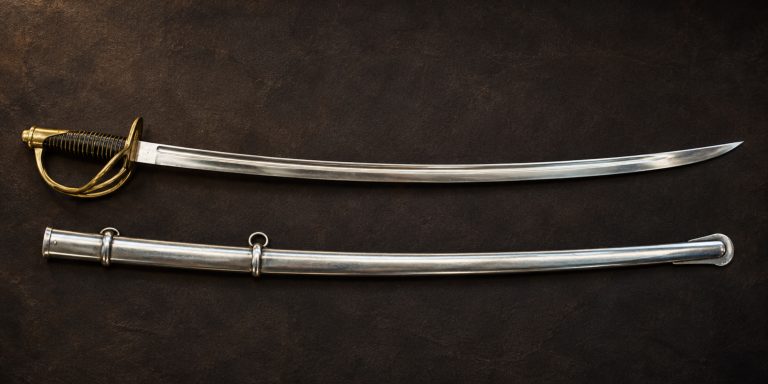
- Cavalry sabres designed for slashing attacks during charges
Artillery became increasingly important during the conflict. Swedish forces in particular used lighter field guns that could move more easily during battle.
The war also demonstrated how devastating mobile cavalry and disciplined infantry could be when combined effectively. Several armies experimented with tactics that would influence European warfare for the next century.
Archaeology of the War
Modern archaeology has added fascinating detail to what written sources only hint at.
Excavations at battlefield sites such as Lützen and Wittstock have uncovered mass graves, musket balls, fragments of armour, and personal items belonging to soldiers.
The Lützen battlefield in particular has produced remarkable evidence. Archaeologists discovered a large mass grave containing dozens of soldiers killed during the battle. Analysis of the remains revealed the brutal nature of the fighting. Many skeletons showed multiple wounds from swords, bullets, and blunt trauma.
Artefacts recovered from the site include:
- Lead musket balls flattened by impact
- Fragments of cuirass armour
- Belt buckles and uniform fittings
- Coins and devotional items carried by soldiers
These finds reveal details rarely recorded in written accounts. Some soldiers had suffered old injuries that had healed poorly. Others were barely adults. War rarely waits for perfect readiness.
The Human Cost
The devastation caused by the war cannot be overstated.
Large regions of the Holy Roman Empire were ravaged repeatedly by marching armies. Crops were seized, villages burned, and populations displaced.
Modern historians estimate that parts of Germany lost between twenty and forty percent of their population during the conflict. In some districts the losses were even higher.
Disease and famine were often deadlier than combat itself. Soldiers and refugees spread epidemics across the countryside.
One contemporary observer captured the despair of the period:
“We live like wild beasts, eating bark and grass.”
The line appears in several accounts from the time and reflects the grim conditions civilians endured.
Contemporary Voices
Surviving writings from the war convey a mixture of religious conviction, exhaustion, and disbelief.
The German writer Hans Jakob Christoffel von Grimmelshausen later described the chaos of the era in his novel Simplicius Simplicissimus, a work heavily inspired by the conflict.
Another contemporary account lamented the endless destruction:
“The war feeds the war.”
It is a simple phrase but a disturbingly accurate one. Armies often sustained themselves through plunder, which ensured that violence continued even when strategic goals had become unclear.
The Peace of Westphalia
After decades of warfare negotiations finally produced peace in 1648.
The treaties signed at Münster and Osnabrück became known collectively as the Peace of Westphalia. They reshaped the political structure of Europe.
Key outcomes included:
- Recognition of Calvinism alongside Catholicism and Lutheranism
- Greater autonomy for the states of the Holy Roman Empire
- Territorial gains for France and Sweden
- Formal recognition of the independence of the Dutch Republic and Switzerland
The settlement also reinforced the idea that rulers controlled the internal affairs of their territories without outside interference.
Modern diplomacy still echoes these principles.
Legacy
The Thirty Years’ War marked a turning point in European history.
It weakened the political cohesion of the Holy Roman Empire while strengthening emerging powers such as France and Sweden. Spain began its long decline as a dominant military force.
Equally important was the transformation of warfare itself. The conflict demonstrated the logistical demands of large standing armies and the devastating consequences when those armies lived off the land.
Perhaps the most enduring legacy lies in the diplomatic settlement that followed. The concept of sovereign states interacting through negotiation rather than constant intervention slowly gained traction.
Historians still debate how modern the Peace of Westphalia truly was. Yet it certainly signalled a growing recognition that endless religious war had become intolerable.
After thirty years of destruction, even the most stubborn rulers eventually discovered a surprising enthusiasm for peace.