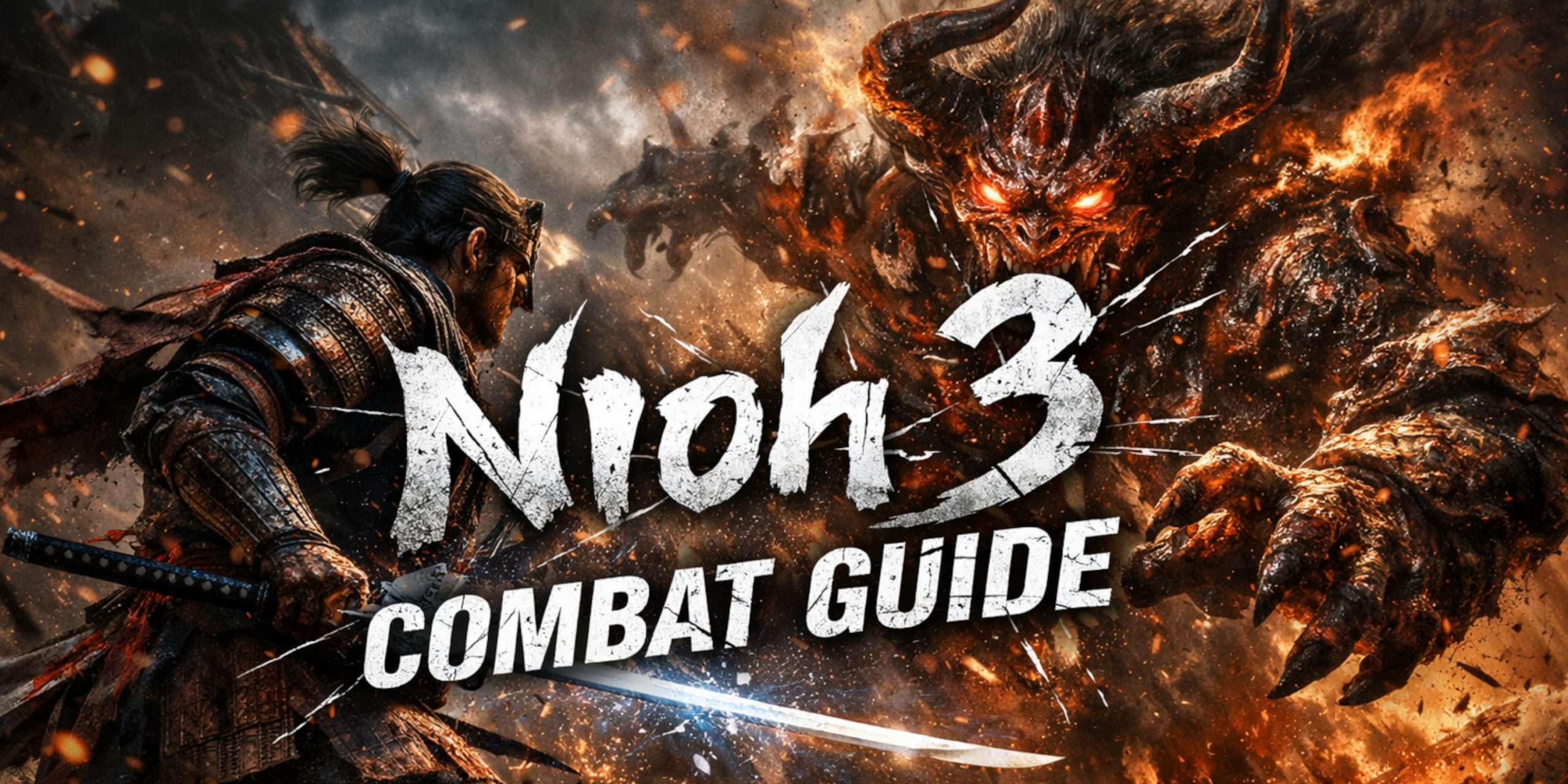
If Nioh 3 is your first trip into Team Ninja’s particular brand of chaos, welcome. You are about to be humbled by demons, stabbed by bandits, and occasionally flattened by a giant yokai that looks like it escaped from a nightmare. It is not a gentle game.
The good news is that the combat system is one of the most satisfying in modern action RPGs. Once it clicks, fights feel like controlled violence rather than desperate button mashing. Timing matters, positioning matters, and every weapon has its own rhythm.
This guide walks through the core mechanics new players should understand early. Think of it as the difference between surviving your first region and repeatedly asking yourself why that one skeleton keeps beating you.
Understanding the Core Combat Philosophy
Nioh 3 combat rewards patience and awareness. Aggression works, but only when you understand the systems behind it.
Every fight revolves around three things:
- Managing Ki, which functions as stamina
- Choosing the correct stance for the situation
- Recognising enemy patterns and responding with timing rather than panic
Enemies can kill you quickly, but they also follow readable attack patterns. Once you learn those patterns, fights start to feel almost tactical.
A useful mindset is to treat each encounter like a duel rather than a chaotic brawl.
Ki Management: The Most Important Skill
Ki is the backbone of combat in Nioh. Every attack, dodge, and block consumes it. When your Ki bar empties, you become briefly vulnerable, which usually leads to a painful lesson.
Key things to remember:
- Attacking recklessly drains Ki very quickly
- Blocking is powerful but also consumes Ki under pressure
- Dodging is safer than tanking hits with your face
The mechanic that makes everything work is the Ki Pulse.
After attacking, a small window appears where you can press the pulse button to recover lost Ki instantly. Good players pulse constantly. It keeps your stamina high and allows longer attack chains.
Get into the habit early. Swing, pulse, reposition.
Mastering the Three Stances
Nioh’s stance system gives every weapon three fighting styles. Switching between them during combat is a core skill.
High Stance
High stance focuses on power.
Characteristics:
- Heavy damage
- Slower attacks
- Higher Ki cost
Best used when an enemy is staggered or when you have an opening after a dodge. It is not ideal for defensive play.
Mid Stance
Mid stance sits comfortably in the middle.
Characteristics:
- Balanced damage and speed
- Strong blocking capability
- Reliable against human enemies
This stance often becomes the default for many players since it handles most situations well.
Low Stance
Low stance emphasises speed and mobility.
Characteristics:
- Fast attacks
- Low Ki cost
- Excellent dodging
When fighting fast yokai or multiple enemies, low stance often keeps you alive. You sacrifice damage but gain breathing room.
A useful habit is to attack in high stance, then switch to low stance for defence.
Blocking vs Dodging
New players often rely too heavily on dodging. In Nioh, blocking is surprisingly strong.
Blocking advantages:
- Stops most damage from human enemies
- Allows you to stay close to the target
- Creates opportunities to counterattack
However, blocking drains Ki when absorbing hits. If the bar empties while blocking, you become staggered.
Dodging is better when:
- Fighting large yokai
- Avoiding grab attacks
- Escaping multiple enemies
The trick is mixing both. Block quick strikes, dodge heavy attacks.
Yokai Abilities and Burst Counters
Yokai abilities introduce a supernatural layer to combat. They allow you to unleash attacks inspired by the monsters you defeat.
These abilities:
- Deal strong damage
- Break enemy Ki quickly
- Create openings against tougher foes
Another critical mechanic is the Burst Counter.
Certain enemy attacks glow red. This signals a powerful move that can be interrupted if you time your counter correctly.
A successful Burst Counter:
- Cancels the enemy attack
- Deals heavy Ki damage
- Often staggers the opponent
It is risky but extremely rewarding.
Fighting Yokai Enemies
Yokai behave very differently from human enemies.
Key differences:
- Larger health pools
- Stronger attacks
- Special mechanics such as Yokai Realm zones
The Yokai Realm drains your Ki regeneration. When fighting inside it, the pressure increases quickly.
Use Ki Pulse correctly and stay aggressive when a yokai’s Ki bar is low. Once depleted, they become vulnerable to powerful finishing attacks.
Weapon Choice Matters
Each weapon type has a distinct feel.
Some beginner friendly options include:
Sword
- Balanced and versatile
- Good mix of speed and damage
- Easy to learn stance transitions
Spear
- Excellent reach
- Strong crowd control
- Safer for new players who prefer distance
Dual Swords
- Very fast attacks
- Strong pressure in close combat
- Requires good Ki control
Experiment early. The best weapon is the one that matches your rhythm.
Reading Enemy Patterns
Combat becomes far easier once you stop reacting randomly and start reading enemies.
Look for:
- Wind up animations before heavy attacks
- Moments when enemies pause after combos
- Visual cues for unblockable attacks
Most enemies follow predictable sequences. Once recognised, they become far less intimidating.
Even bosses obey patterns. The difference is simply scale and aggression.
Beginner Combat Tips That Save Lives
A few habits make the early game dramatically easier.
Fight one enemy at a time whenever possible. Pull enemies carefully rather than charging into groups.
Use the environment. Narrow spaces reduce the chances of being surrounded.
Upgrade gear regularly. Even small increases in attack and defence help.
Above all, stay calm. Panic leads to empty Ki bars and very short fights.
Seven Swords Takeaway
Nioh 3 combat looks intimidating at first. It throws a lot of mechanics at the player and then immediately drops you into a battlefield filled with demons.
But once the systems begin to click, the experience changes completely. The rhythm of Ki pulses, stance switching, and perfectly timed counters creates a flow that few action RPGs can match.
Stick with it. That enemy that destroyed you ten times earlier might suddenly feel manageable. Then easy. Then almost unfair in your favour.
That moment when you dismantle a boss without taking a hit, it feels like you finally understand the language the game has been speaking all along.
And honestly, it is a great feeling.