The quiet magic of Wolf Hall comes from its refusal to shout. No glossy palaces screaming Tudor. Just rooms that feel lived in, corridors that swallow light, and courtyards where politics sounds like footsteps behind you. The good news is that many of these places are still standing, still open, and still very much worth a day out. I went looking for the show and found England staring back, slightly unimpressed and totally authentic.
Montacute House, Somerset
Montacute House is where Wolf Hall lets its guard down. Those honey coloured walls and long galleries bring a rare sense of openness to a series that often prefers shadows. The house doubles for several Tudor interiors, and once you are there it makes sense. The scale is confident without being bombastic, which fits Cromwell’s rise perfectly.
Walking through the Great Hall feels like stepping into a negotiation that has paused for lunch. You half expect Mark Rylance to reappear with that measured stare. The National Trust runs the site beautifully, and you can linger without feeling rushed, which matters when a place asks you to slow down.
Penshurst Place, Kent
Penshurst Place plays the role of power with no need for decoration. The medieval Great Hall, with its vast timber roof, is used repeatedly in Wolf Hall to sell the idea of authority as something physical. Heavy beams, cold stone, and the sense that history is watching you back.
It is still a family home, which adds an odd intimacy. You are not just touring a museum set. You are walking through a place that has adapted, survived, and quietly judged centuries of ambition. That fits the show’s mood almost too well.
Lacock Abbey, Wiltshire
If Wolf Hall had a visual thesis, it would be written in the corridors of Lacock Abbey. These cloisters and passageways stand in for monastic and court interiors, and they do most of the acting without a single line of dialogue.
The light here is doing serious work. It slides across stone, disappears around corners, and turns simple walks into moments of tension. Visiting Lacock is quietly addictive. You start noticing how silence behaves, which feels very on brand for a show obsessed with what is not said.
Berkeley Castle, Gloucestershire
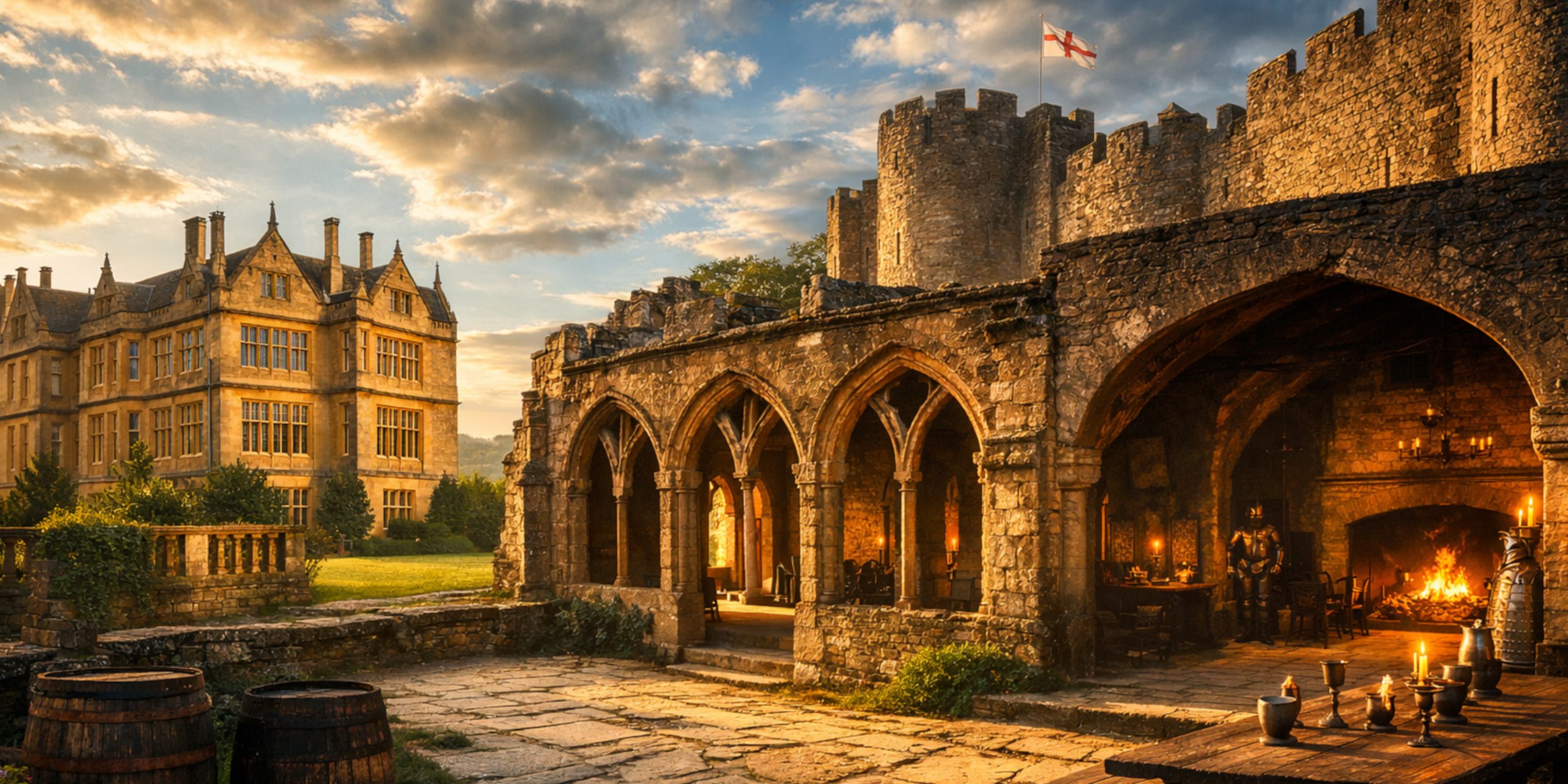
Berkeley Castle brings weight. Thick walls, uneven floors, and rooms that feel carved rather than designed. Wolf Hall uses it when the story needs to remind you that power can crush as easily as it can elevate.
This is one of those places where the past refuses to be polite. You feel it immediately, especially in the Great Hall. It is impressive without trying to charm you, which makes it a perfect fit for the series at its most ruthless.
Why These Places Work So Well
Wolf Hall avoids the tourist brochure version of Tudor England. These locations succeed because they are imperfect. Floors slope, rooms feel cramped, and the buildings make no effort to flatter modern expectations. That honesty is why visiting them feels so satisfying. You are not chasing a TV moment. You are meeting the same spaces that shaped the mood of the show.
There is also something grounding about standing in places that predate the drama by centuries. The series fades away for a moment, and you realise how small even the biggest political manoeuvres can feel inside walls like these.
Planning Your Visit
Most of these sites are open seasonally, with guided tours and decent cafes, which is essential after a few hours of pretending you could survive Tudor politics. Combine Montacute and Lacock over a weekend, or pair Penshurst with a Kent countryside wander. None of them demand speed. In fact, they reward hanging around and noticing details.
Watch the documentary on Tudor filming locations: