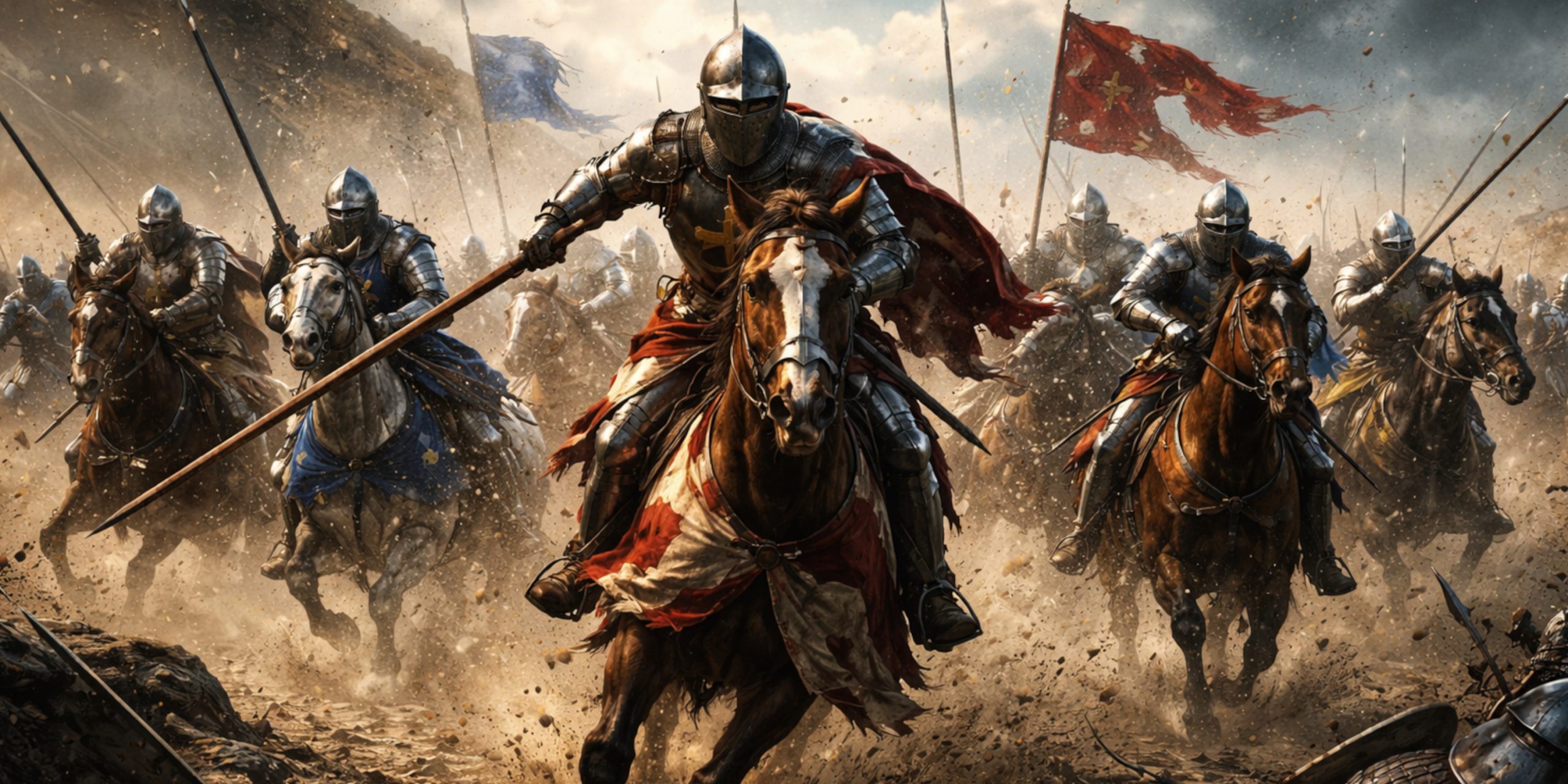
For much of the medieval period, cavalry held a special and often decisive place on the battlefield. Armoured riders thundering across open ground created a mixture of speed, shock, and social prestige that infantry could rarely match. Chronicles from England to Byzantium speak with a certain awe about mounted warriors, sometimes with admiration and sometimes with dread.
Yet cavalry dominance was never absolute. When it worked, it worked spectacularly. When it failed, the results could be embarrassing and occasionally catastrophic. Still, for several centuries, the mounted knight or horse archer remained one of the most influential military forces in Eurasia.
Understanding why cavalry became so dominant means looking beyond the romance of knights and banners. It involves economics, breeding horses, battlefield psychology, and the quiet reality that medieval armies often struggled with discipline and coordination.
The Shock Value of Mounted Combat
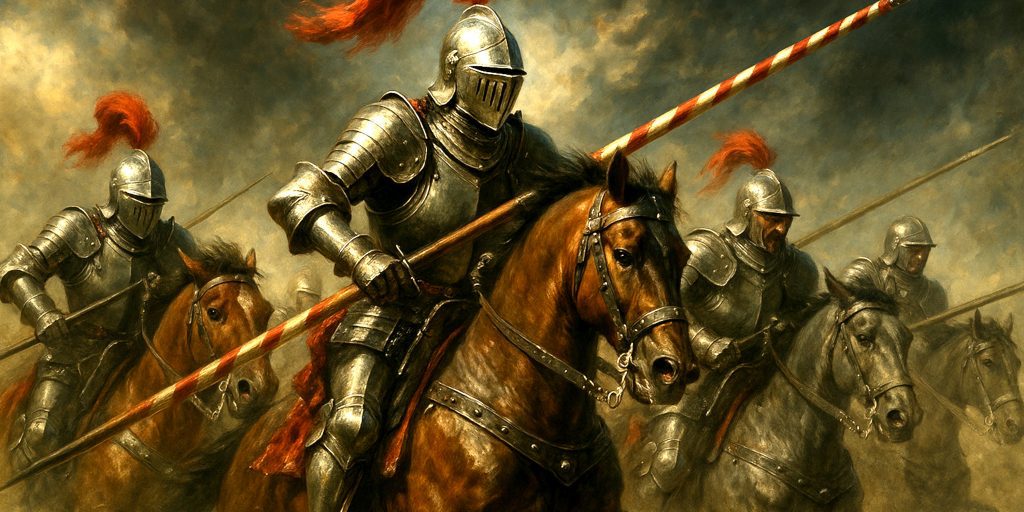
The first advantage cavalry possessed was simple physics. A rider on a powerful warhorse could generate enormous impact during a charge. When hundreds of riders moved together, the result resembled a moving wall of iron.
A charging cavalry formation delivered several advantages:
• Greater momentum and physical impact
• Elevated striking position over infantry
• Ability to break formations through shock
• Rapid exploitation once enemy lines faltered
The couched lance became a particularly effective weapon for this purpose. By bracing the lance under the arm, the rider transferred the horse’s momentum directly into the target.
Contemporary sources often emphasise the terrifying experience of facing such a charge. The Norman writer William of Poitiers described mounted knights at the Battle of Hastings as striking “like thunderbolts.”
Infantry without strong discipline or defensive preparation often broke before contact even occurred. In other words, cavalry sometimes won battles through fear alone.
Speed and Operational Mobility
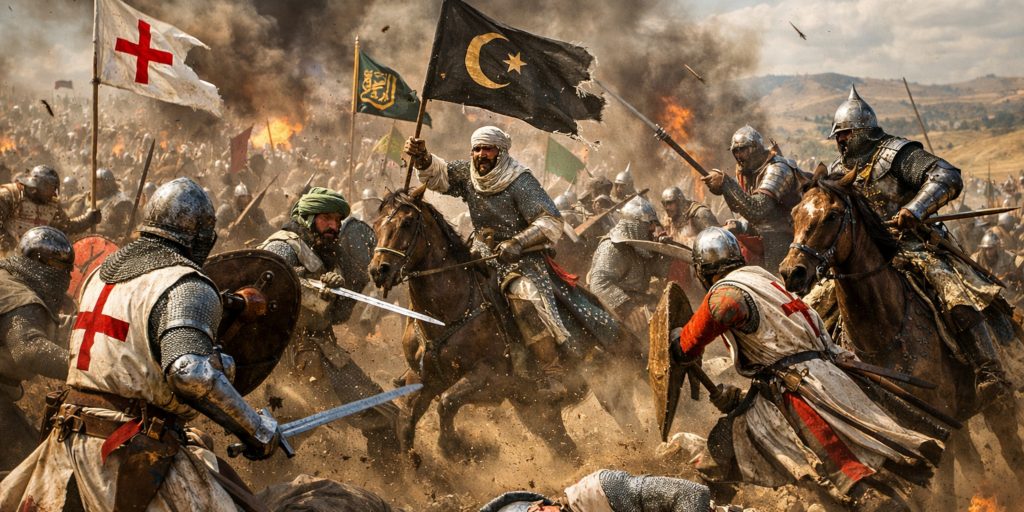
Mobility might have been cavalry’s greatest strategic advantage.
A mounted army could move far faster than infantry. Scouts could cover large distances, raids could be launched deep into enemy territory, and commanders could reposition forces during battle.
In the medieval world, where communication was slow and terrain unpredictable, this flexibility proved invaluable.
Mounted forces allowed commanders to:
• Outflank slower infantry formations
• Pursue fleeing enemies
• Conduct reconnaissance and screening
• Raid supply lines and settlements
The ability to pursue defeated enemies was particularly important. Many medieval battles were decided not by the initial clash, but by the slaughter that followed when a broken army attempted to escape.
A cavalry pursuit could turn a retreat into a disaster.
The Knightly Elite
Cavalry dominance also had a social dimension. Mounted warriors were expensive to equip and maintain. A trained warhorse, armour, weapons, and the training required to use them effectively placed cavalry firmly in the hands of the elite.
In Western Europe this produced the knightly class. In Byzantium and the Islamic world similar elite cavalry traditions existed.
Knights were not just soldiers. They represented a warrior aristocracy whose entire social identity revolved around mounted combat.
Maintaining cavalry required:
• Specialised horse breeding
• Armour production
• Land wealth to support warriors
• Years of training
The result was a professional mounted elite that many infantry formations could not easily match.
That said, knights also had a reputation for being… enthusiastic. Medieval chroniclers politely describe them as brave. Modern historians might sometimes call them impulsive.
Famous Battles Where Cavalry Played a Decisive Role
While cavalry shaped warfare for centuries, some battles demonstrate their influence particularly clearly.
Battle of Hastings (1066)
At the famous Battle of Hastings, Norman cavalry under William the Conqueror repeatedly attacked Anglo Saxon infantry formations.
The English shield wall initially held firm. Yet the combination of cavalry pressure, archery, and feigned retreats eventually broke the defenders.
Mounted troops proved crucial in exploiting gaps once the English line began to fragment.
Battle of Bouvines (1214)
At the Battle of Bouvines, the cavalry of Philip II of France played a decisive role in defeating a coalition led by Otto IV, Holy Roman Emperor.
Heavy cavalry charges smashed opposing formations and captured key leaders, effectively ending the battle.
Bouvines illustrates how elite mounted forces could decide conflicts between major European powers.
Battle of Hattin (1187)
At the Battle of Hattin, cavalry also proved decisive, though in a different way.
Forces under Saladin used mobile mounted archers to harass and exhaust the Crusader army before the final engagement.
The Crusader cavalry attempted charges but struggled against encirclement and constant missile fire.
The battle demonstrates that cavalry dominance was not limited to heavily armoured knights. Horse archers could be equally devastating.
Battle of Agincourt (1415)
The Battle of Agincourt is often cited as the moment cavalry dominance faltered.
French mounted nobles repeatedly attacked English positions commanded by Henry V of England.
Mud, terrain, and disciplined longbow fire destroyed the attacking formations.
Agincourt reminds us that cavalry worked best under the right conditions. Poor terrain and prepared infantry could turn the battlefield against them.
Archaeology and the Material Reality of Cavalry Warfare
Archaeology has revealed fascinating details about the practical side of mounted warfare.
Excavations across Europe and the Near East have uncovered equipment associated with cavalry including:
• Spurs used by riders to control horses
• Horse armour fragments known as barding
• Saddles and stirrups
• Lance heads designed for shock combat
One of the most significant innovations was the stirrup. By stabilising the rider, it allowed far greater control during combat and made the couched lance technique possible.
Horse remains discovered at medieval battlefields also show the size and strength of warhorses. Contrary to popular myth, medieval destriers were not gigantic animals, but they were strong and carefully bred for endurance and aggression.
Archaeological finds at sites such as the Battle of Visby and Battle of Towton reveal damage patterns consistent with mounted charges and cavalry pursuit.
These discoveries remind us that cavalry warfare was not just romantic spectacle. It was brutal, practical, and physically demanding.
Contemporary Views of Cavalry
Medieval writers often described cavalry in dramatic language.
The chronicler Jean Froissart wrote of mounted knights:
“Knights mounted on good horses rode so fiercely that none could withstand them.”
Another account from the First Crusade described the impact of a Frankish charge:
“The Turks could not endure the weight of the knights and fled.”
These descriptions reflect both admiration and propaganda. Chroniclers often favoured the mounted elite who sponsored their writing.
Still, the repeated emphasis on speed and shock appears consistently across sources.
Why Cavalry Eventually Lost Its Dominance
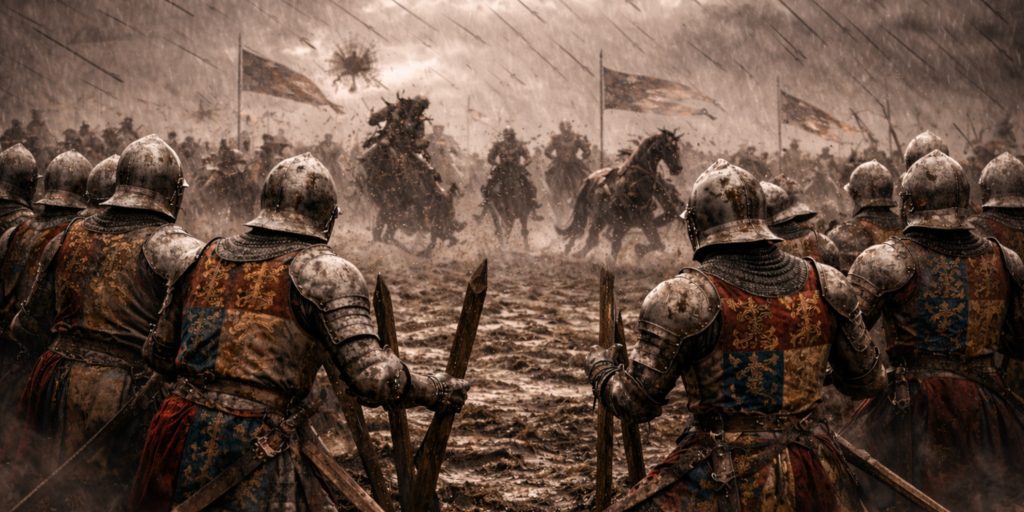
By the late medieval period, the dominance of cavalry began to weaken.
Several developments changed the battlefield:
• Professional infantry formations such as Swiss pikemen
• Longbow and crossbow missile fire
• Gunpowder weapons
• Improved infantry discipline and tactics
Battles such as Morgarten, Courtrai, and Agincourt showed that well organised infantry could defeat mounted knights.
The age of cavalry was not over, but its unquestioned supremacy was fading.
Takeaway from a Historian
It is tempting to imagine medieval battles as endless waves of heroic knights charging across green fields. Reality was less tidy.
Cavalry dominated because it combined mobility, shock, and elite training in a world where many armies lacked discipline and coordination. When these advantages aligned, mounted forces could shatter enemies with startling speed.
Yet cavalry always had weaknesses. Mud, narrow terrain, stubborn infantry, or simply overconfidence could turn the most glorious charge into a disaster.
In other words, cavalry ruled the medieval battlefield. Just not every battlefield, and certainly not every time. That small detail keeps historians busy arguing, which frankly is half the fun.