Understanding the Gods of the Empire
The Nine Divines form the cornerstone of the Imperial pantheon in The Elder Scrolls V: Skyrim. These deities represent both religious belief and political influence across Tamriel, particularly in Cyrodiil and Skyrim. Although the Empire has changed over time, the Nine Divines remain central to its identity, shaping everything from moral codes to the power of the priesthood.
This guide breaks down each Divine’s role, sphere of influence, and in-game impact, providing clarity on how they function within both lore and gameplay.
What Are the Nine Divines?
The Nine Divines are the gods worshipped in mainstream Imperial culture. They are:
- Akatosh
- Arkay
- Dibella
- Julianos
- Kynareth
- Mara
- Stendarr
- Zenithar
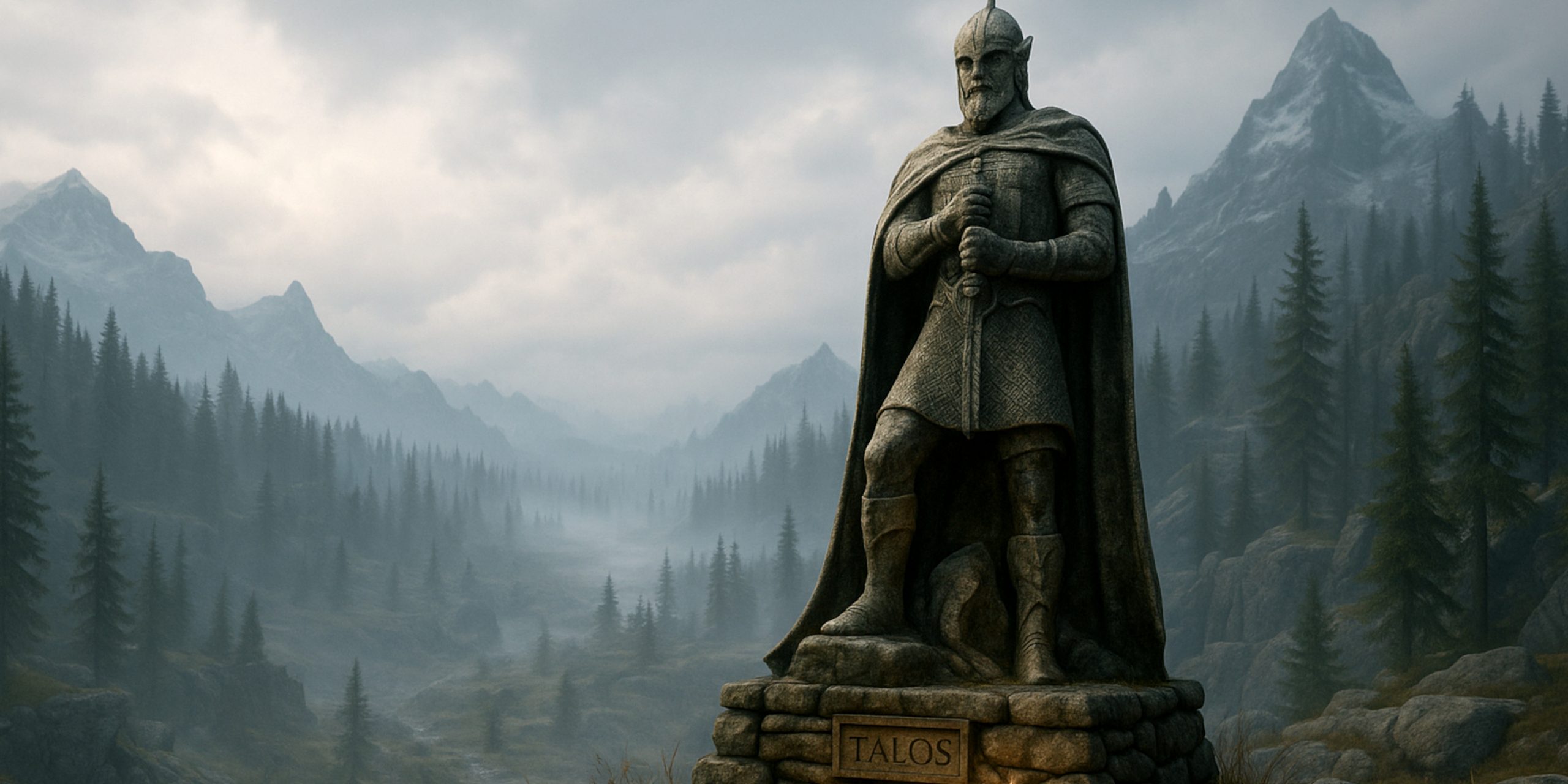
- Talos
Originally, the pantheon was known as the Eight Divines, until the controversial deification of Talos, the mortal Tiber Septim. After the events of the White-Gold Concordat, Talos worship became outlawed in parts of the Empire, including Skyrim under Thalmor pressure, creating ongoing political and religious tensions.
The Nine Divines in Detail
| Divine | Sphere of Influence | Temples in Skyrim | Blessing Effect |
|---|---|---|---|
| Akatosh | Time, immortality, the Dragon God of Time. Father of dragons and the chief deity. | Temple of the One (Solitude) | Magicka regenerates 10% faster |
| Arkay | Life and death, funerals, and the cycle of souls. | Hall of the Dead (various cities) | Increased Health by 25 points |
| Dibella | Beauty, love, and artistry. | Temple of Dibella (Markarth) | +10 Speech |
| Julianos | Wisdom, logic, and arcane knowledge. | None directly, but shrines found throughout | +25 Magicka |
| Kynareth | Nature, the heavens, and air. | Temple of Kynareth (Whiterun) | Stamina regenerates 25% faster |
| Mara | Compassion, love, marriage, and family. | Temple of Mara (Riften) | Healing spells restore 10% more |
| Stendarr | Mercy, justice, and protection against evil. | Hall of the Vigilant (before destruction) | Block 10% more damage with shields |
| Zenithar | Work, commerce, and trade. | Shrines found in inns and cities | Prices improved by 10% |
| Talos | War, governance, heroism. Mortal-turned-divine. | Shrines throughout Skyrim (often hidden) | Shout cooldown reduced by 20% |
The Talos Controversy
Talos remains a central point of conflict in Skyrim’s civil war. The Thalmor, through the White-Gold Concordat, banned his worship, arguing that no mortal can ascend to divinity. The Nords, however, revere Talos as a native son and a war hero who became divine through conquest and unification. His shrines can be found across Skyrim, often protected or hidden by those defying Imperial law.
Temples and Worship in Skyrim
Each Divine has affiliated priests and worshippers, though only a few have formal temples. Temples act as places to receive blessings, purchase amulets, or engage in related quests. Notably, the Temple of Mara in Riften allows the player to arrange a marriage, reflecting her role in love and union.
Shrines to the Divines are scattered across the province, and visiting one grants a temporary blessing. These can be used strategically, as only one Divine blessing can be active at a time unless combined with the Blessing of Nocturnal or The Lord Stone, which are separate.
In-Game Impact and Roleplaying
Worship of the Divines is more than flavour text. Choosing which Divine to favour can influence your gameplay style. A merchant may lean toward Zenithar, while a warrior might honour Talos or Stendarr. Some quests are directly tied to the Divines, such as the Book of Love (Temple of Mara) or The Heart of Dibella.
For roleplayers, allegiance to a Divine can shape moral decisions, dialogue choices, or even faction alignments. The Companions revere Ysgramor more than the Divines, while the Vigilants of Stendarr actively hunt Daedra in his name.
Lore Significance
The Nine Divines mirror the cultural balance between gods and mortals. The Empire upholds them as both spiritual and civic icons. While some, like Akatosh and Arkay, are near-universal across Tamriel, others reflect Imperial ideals. Talos stands as the most human of the Divines, embodying the belief that mortals can ascend through greatness.
Their influence stretches into politics, military values, family structure, and even resistance movements, showing that in Skyrim, religion is not passive, it shapes power.
The Seven Swords Takeaway
The Nine Divines are not just background lore in Skyrim. They offer mechanical benefits, structure the game’s religion, and connect deeply to the world’s broader conflicts. Whether you worship Talos in defiance, turn to Mara for guidance, or pray to Akatosh in times of need, your choices reflect more than preference. They echo centuries of belief, rebellion, and the struggle between empire and identity.