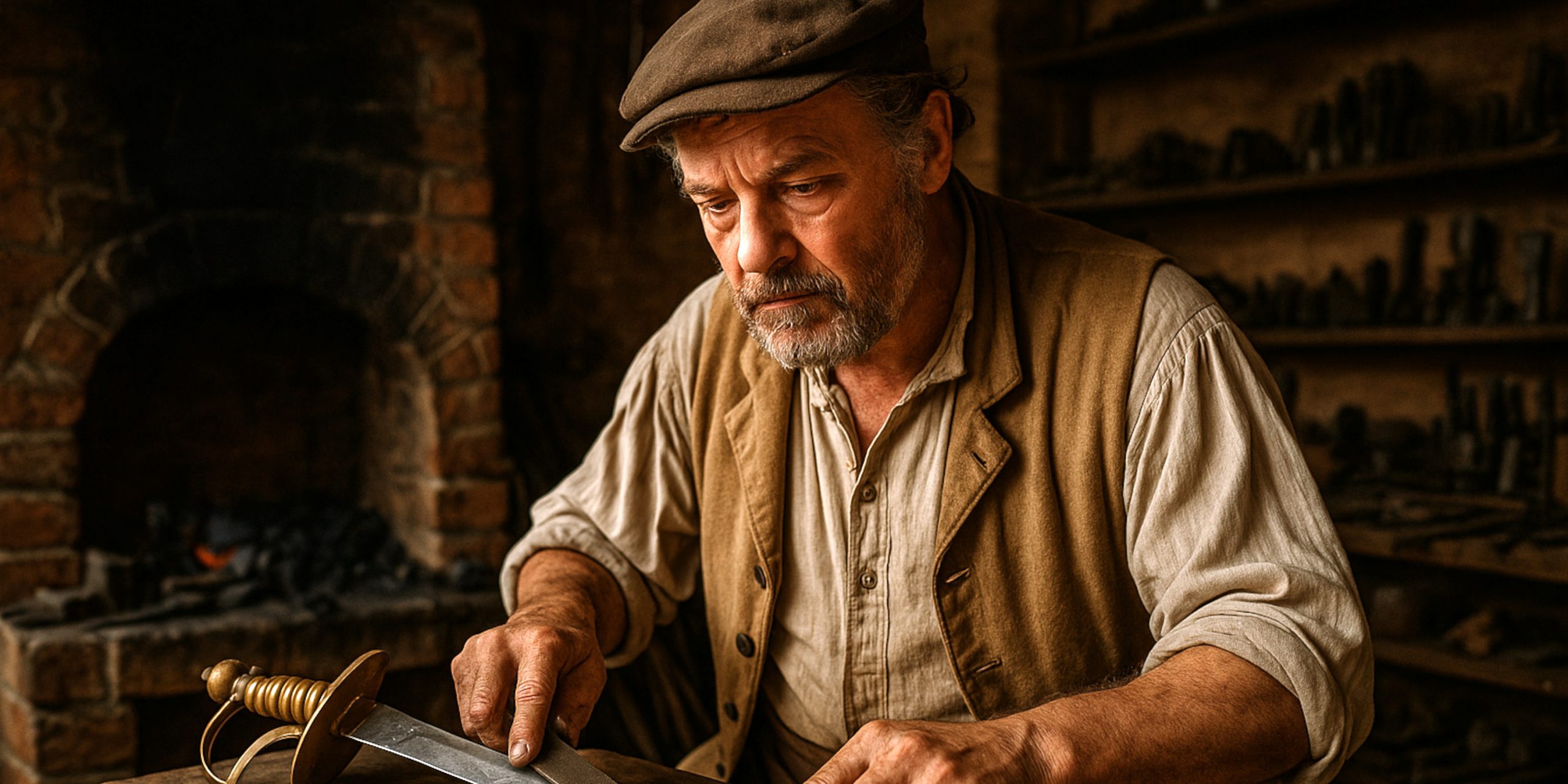
Few names from Birmingham’s thriving eighteenth-century metalworking scene still draw the interest of collectors and military historians, yet Samuel Harvey is one of the exceptions. His stamped initials appear on blades that travelled further than many of their owners ever expected, carried into North America, the Caribbean, the Indian subcontinent and beyond. These blades often outlived the men who swung them, which is perhaps the most honest assessment of Harvey’s craftsmanship.
Harvey belonged to a generation of Midlands smiths who transformed Birmingham from a provincial town into a powerhouse of British arms production. His work sat at the intersection of craft and industry, and although he never courted fame, his output speaks for him more clearly than any surviving record of his personality.
The World He Worked In
Birmingham in the mid eighteenth century was expanding at pace. The region already had a reputation for skilled metalwork, yet the demands of imperial warfare raised the city’s importance further. Contracts for British Army swords were lucrative, fiercely contested and occasionally controversial. It was a world filled with middlemen, subcontracting and the sort of procurement chaos that would be familiar to any modern bureaucrat.
In this crowded environment, the ability to produce reliable, consistent blades mattered more than flair. Harvey did exactly that. His workshop operated as part of the wider Birmingham gun and blade trade, a loose network of edge tool makers, grinders, cutlers and merchants who pooled labour when needed. The system was efficient and occasionally shambolic, but it delivered.
What Made a Harvey Blade Recognisable
Harvey’s mark, usually stamped near the ricasso, remains the easiest way to identify his work. The stamp is typically a simple HARVEY or SH, depending on the contract and period. Collectors quickly grow attached to it, trusting the clarity of the lettering almost as much as the edge itself.
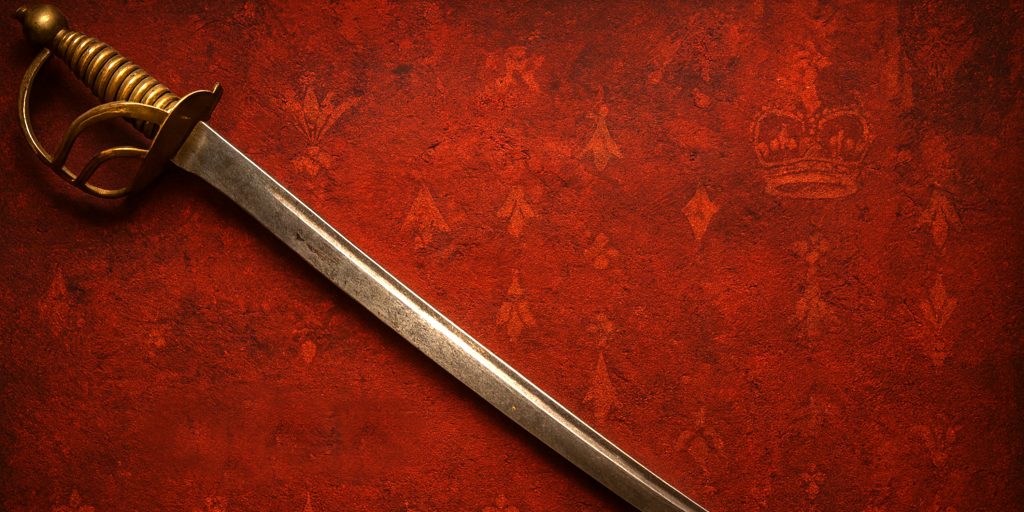
Most surviving Harvey blades are British military patterns. The 1751 infantry hanger and the later 1760s variants appear frequently. These swords were not decorative display pieces. They were working tools for soldiers who expected little from life beyond their pay, their rations and perhaps one last night of quiet before the march. Harvey blades tended to be sturdy, practical and decently tempered, which is more than can be said for some London-made examples of the era that spent more time impressing procurement officers than surviving actual service.
Several American Revolutionary War finds, particularly from battle sites in New York and New England, include Harvey-marked blades. His work therefore crossed the Atlantic well before the age of steam, carried by troops who likely never knew the name behind the stamp.
The Man Behind the Steel
Details of Samuel Harvey’s life are frustratingly thin. Parish records and trade listings suggest he operated from the mid eighteenth century into the 1770s, possibly with family involvement before or after his active years. His workshop was one of many small concerns feeding into larger contractors who negotiated directly with the Board of Ordnance.
This layered supply chain means Harvey’s role was rarely front and centre. Yet his steady presence across decades of contracts hints at a reputation for reliability. Birmingham merchants were not known for sticking with suppliers who failed to deliver on time or who sent in the sort of blades that bent like boiled leather. Harvey remained in work, which in this industry is its own biography.
Historical Importance
Harvey’s significance lies not in flamboyant innovation but in representing the transition from traditional craft to early industrial production. His blades reflect a moment when Birmingham was proving it could match or surpass London makers in both quantity and quality.
For military historians, the presence of HARVEY on a blade provides a tangible link to the logistics of eighteenth-century warfare. It also reminds us that the effectiveness of an army depends not just on generals and muskets but on the people who supplied the edge weapons that remained essential for close combat.
One might even argue that Harvey did more for the British Army’s fighting capability than a few of the colonels who nominally commanded it, although making that point too loudly in certain circles tends to ruffle feathers.
Timeline of Samuel Harvey, Birmingham Swordsmith
Early 1740s
Harvey appears in Birmingham trade activity, likely as part of the town’s expanding cutlery and edge tool network. Records from this era are sparse, but his presence fits with a generation of smiths who supplied London merchants while quietly building their own reputations. One imagines a modest workshop, plenty of noise, and an apprentice or two hoping not to set anything on fire.
1745 to 1750
The armaments trade grows sharply during Britain’s continental commitments. Birmingham makers receive increasing attention from the Board of Ordnance, which prefers dependable output at competitive prices. Harvey begins marking blades with either HARVEY or SH, signalling that he has moved beyond apprenticeship into recognised production.
1751
Introduction of the British infantry hanger pattern that becomes strongly associated with his work. Harvey emerges as one of the Birmingham smiths producing blades for merchants contracted to supply the Army. The popularity of this pattern ensures a steady stream of orders, something any smith would welcome.
Mid 1750s
Harvey’s production appears to scale, indicated by the broader distribution of his stamps across surviving blades. Several examples from this period show improved consistency in heat treatment and fuller shaping, suggesting refinements within his workshop. Birmingham’s edge weapon trade becomes increasingly collaborative, with subcontracted grinders and finishers contributing to final products.
1756 to 1763
Seven Years’ War. Demand for infantry swords expands significantly. Harvey’s blades accompany British forces across multiple theatres. Surviving examples found in North America indicate that his work formed part of the equipment issued to line infantry and militia units. While generals earned titles and portraits, Harvey earned repeat business, which some might argue is more practical.
Late 1760s
Introduction of updated hanger variants and experimental patterns. Harvey continues marking blades consistently, although slight changes in the typography of the stamp hint at new dies. This suggests either workshop growth or simple wear and replacement, neither of which harms the blades in the eyes of collectors.
Early 1770s
Harvey remains an active supplier. Birmingham merchants compete for Board of Ordnance orders, and Harvey’s workshop appears integrated into several of these contract chains. His blades from this period turn up in both domestic stores and colonial garrisons.
1775 to 1783
American Revolutionary War. Numerous Harvey-marked blades are recovered from battle sites in New York, New England and Canada. These finds confirm transport of his work to North America in significant numbers. As usual, Harvey himself receives little acknowledgement in the records. The eighteenth century was not known for celebrating its craftsmen, unless they happened to invent steam engines.
Post 1780s
Harvey’s name declines in frequency among later military patterns. This suggests retirement, succession by a family member or absorption into another Birmingham workshop. The lack of clear documentary evidence is typical of the era. The trade was fluid, practical and uninterested in providing modern historians with neat endings.
Legacy
Harvey-marked blades attract collectors who appreciate honest military swords rather than the ornate fantasies of later Victorian manufacture. Prices vary according to condition and completeness, but a clean example of a Harvey infantry hanger often sits comfortably in the mid-range of the market. Provenance from North American battlefields can raise values significantly, though such claims require careful documentation to avoid paying for folklore.
Collectors admire Harvey pieces because they offer what every historian quietly hopes for. Physical evidence, functional design, and enough mystery to keep the imagination working long after closing the display case.