La Tène Sword: The Elegant Blade of Celtic Europe
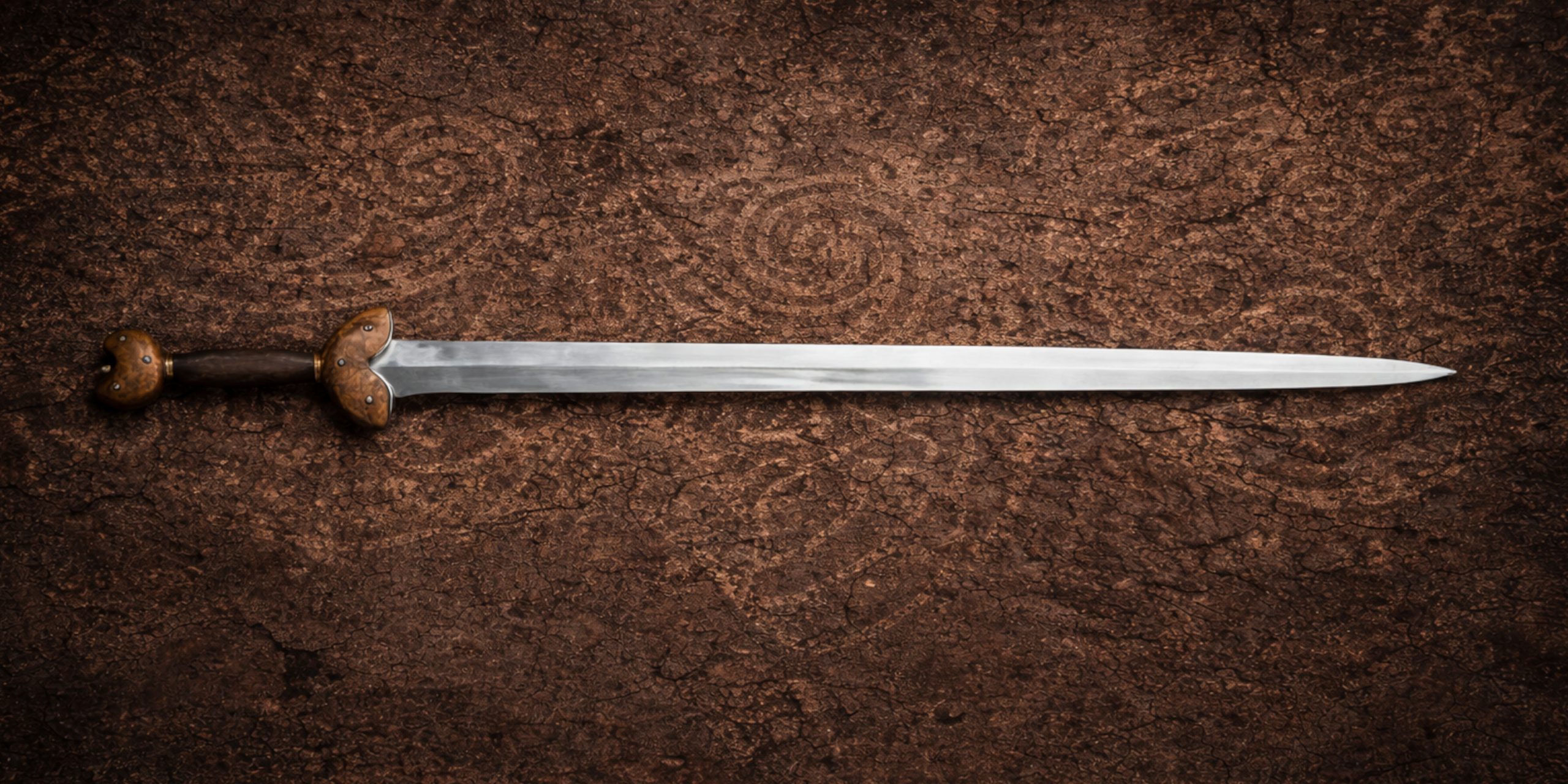
The La Tène sword stands among the most recognisable weapons of Iron Age Europe. Long, slender, and often beautifully decorated, it reflects the martial culture of the Celtic world during the later centuries before the Roman Empire dominated the continent.
Named after the archaeological site of La Tène on Lake Neuchâtel in Switzerland, these swords appeared widely across Celtic territories from roughly the 5th century BCE until the early Roman period. They accompanied warriors from Gaul, the Alps, Britain, and central Europe into battle and were frequently buried with elite fighters.
What strikes historians most is the contrast between the elegant appearance of these blades and the brutal warfare they were used in. Celtic warriors valued speed, aggression, and personal display in combat, and the La Tène sword suited that approach perfectly.
The weapon was primarily a slashing blade, designed for sweeping cuts delivered from horseback or during fast moving infantry clashes. Many examples show evidence of bending in combat or ritual deposition, something Roman writers later commented on, sometimes with exaggeration.
Today the La Tène sword is one of the most studied Iron Age weapons in Europe. Archaeology has uncovered hundreds of examples, allowing historians to reconstruct its evolution, fighting style, and cultural significance.
Specifications

The La Tène sword developed over several centuries. While sizes and fittings varied across regions, most examples share a recognisable set of characteristics.
| Feature | Typical Characteristics |
|---|---|
| Period | c. 450 BCE to 50 BCE |
| Length | 70 to 90 cm overall |
| Blade Length | 60 to 80 cm |
| Blade Shape | Long, straight, narrow blade with rounded or spatulate tip |
| Edge | Double edged |
| Weight | 900 g to 1.2 kg |
| Grip | Organic materials such as wood, bone, or horn |
| Guard | Small or minimal cross guard |
| Scabbard | Iron or bronze scabbards with decorative plates |
| Primary Use | Slashing cuts in close combat |
Distinctive features often included decorative scabbards. Celtic metalworkers engraved swirling La Tène style motifs, abstract animal forms, and geometric patterns. These designs are among the most recognisable artistic styles of Iron Age Europe.
History and Evolution
Early Celtic Swords
Before the La Tène period, earlier Hallstatt culture swords were typically shorter and heavier. They resembled the weapons of Mediterranean cultures and were likely influenced by trade with Greek and Etruscan societies.
During the 5th century BCE, Celtic smiths began producing longer blades with a narrower profile. This change coincided with shifts in warfare. Warriors increasingly fought with oval shields and emphasised mobility rather than dense formations.
Expansion Across Europe
As Celtic tribes expanded across Europe, the La Tène sword spread with them. Archaeological finds appear across a wide geographic range.
Key regions include:
- Gaul (modern France)
- Southern Germany
- Switzerland
- Northern Italy
- Britain
- The Danube basin
Celtic mercenaries also carried these swords into Mediterranean conflicts. Greek and Roman sources describe Gallic warriors wielding long iron blades during battles in Italy and the Balkans.
Late La Tène Developments
By the 2nd and 1st centuries BCE, scabbards became more elaborate and blade construction improved. Some swords display pattern welding techniques and stronger iron cores.
Roman expansion eventually introduced new military equipment into Celtic territories. The Roman gladius and later the spatha began replacing local weapon styles in many regions.
Advantages and Disadvantages
Like any weapon, the La Tène sword reflected the tactical preferences of its culture. It excelled in some contexts but struggled in others.
Advantages
- Excellent cutting power due to long slashing blade
- Reach advantage against shorter weapons
- Lightweight design allowed rapid strikes
- Effective from horseback during sweeping attacks
- Symbolic prestige weapon associated with elite warriors
Disadvantages
- Less effective for thrusting compared with Roman weapons
- Blade flexibility sometimes led to bending in heavy combat
- Limited hand protection due to small guard
- Required open fighting style rather than tight formations
Roman writers such as Polybius noted that some Celtic swords bent after heavy strikes, forcing warriors to straighten them during battle. Archaeology suggests this was not universal but did occur with certain iron compositions.
Comparison With Similar Weapons
The La Tène sword existed alongside several other notable Iron Age blades. Comparing them reveals how different cultures approached warfare.
| Weapon | Culture | Key Differences |
|---|---|---|
| La Tène sword | Celtic Europe | Long slashing blade, decorative scabbards |
| Roman gladius | Roman Republic | Short stabbing sword designed for formation combat |
| Iberian falcata | Iberian Peninsula | Curved blade optimised for powerful chopping blows |
| Greek xiphos | Greek city states | Short thrusting sword used with hoplite shield |
| Roman spatha | Roman cavalry | Longer sword later influenced by Celtic designs |
Interestingly, the Roman spatha may have drawn influence from Celtic sword traditions. As Rome adopted more cavalry units and mobile warfare, longer blades became increasingly useful.
Legacy
The La Tène sword left a lasting mark on European weapon development.
Its key contributions include:
- Establishing the long cavalry style sword in western Europe
- Influencing Roman spatha design
- Providing artistic inspiration through distinctive Celtic decoration
- Representing the warrior elite of Iron Age Celtic society
Many later medieval swords share the same basic concept of a straight, double edged blade designed for powerful cuts.
In a cultural sense, the weapon has become symbolic of Celtic warrior identity. Museums across Europe display La Tène swords as central pieces in Iron Age collections.
Where to See La Tène Swords Today
Several museums house particularly important examples.
Notable collections include:
- Laténium Museum, Switzerland
Located near the original La Tène archaeological site. Contains numerous excavated weapons. - British Museum, London
Holds several Celtic swords discovered in Britain. - National Museum of Scotland, Edinburgh
Displays Iron Age weapons found across the British Isles. - Musée d’Archéologie Nationale, Saint Germain en Laye
One of the richest collections of Celtic artefacts from Gaul. - Römisch Germanisches Museum, Cologne
Includes finds from Celtic and early Roman frontier regions.
Many of these swords were discovered in river deposits, graves, or ritual offering sites.
Collector’s Guide
Authentic La Tène swords are rare on the private market because most excavated examples remain in museum collections. However, fragments, scabbard fittings, and restored blades occasionally appear at major auctions.
What Collectors Look For
- Complete blade length
- Original scabbard fragments
- Clear La Tène decorative motifs
- Provenance documentation
- Association with known archaeological finds
Condition varies dramatically since most swords were buried for over two thousand years.
Auction Price Guide
| Item Type | Typical Auction Range |
|---|---|
| Fragmentary blade | £3,000 to £8,000 |
| Partial sword with fittings | £8,000 to £20,000 |
| Complete La Tène sword | £20,000 to £60,000 |
| Museum quality example | £60,000+ |
Sales have occurred through auction houses such as Christie’s, Bonhams, and Hermann Historica.
Collectors must also navigate strict cultural heritage laws. Many European countries prohibit the export of newly discovered archaeological artefacts.
Reproductions
Modern replicas are widely available for historical re enactment and display. High quality reproductions often cost between £400 and £1,200 depending on craftsmanship and historical accuracy.
Takeaway
The La Tène sword captures a moment when Iron Age Europe was alive with competing cultures and warrior traditions. It reflects a society that valued individual prowess, artistic expression, and battlefield reputation.
While Roman historians sometimes mocked Celtic weapons, archaeology paints a different picture. These blades were carefully crafted tools that served their warriors well across centuries of conflict.
More than two thousand years later, the La Tène sword remains one of the most distinctive weapons ever produced in Europe. Elegant in form yet brutally practical, it is a reminder that even the fiercest tools of war can carry a surprising degree of artistry.
Watch the replica review: