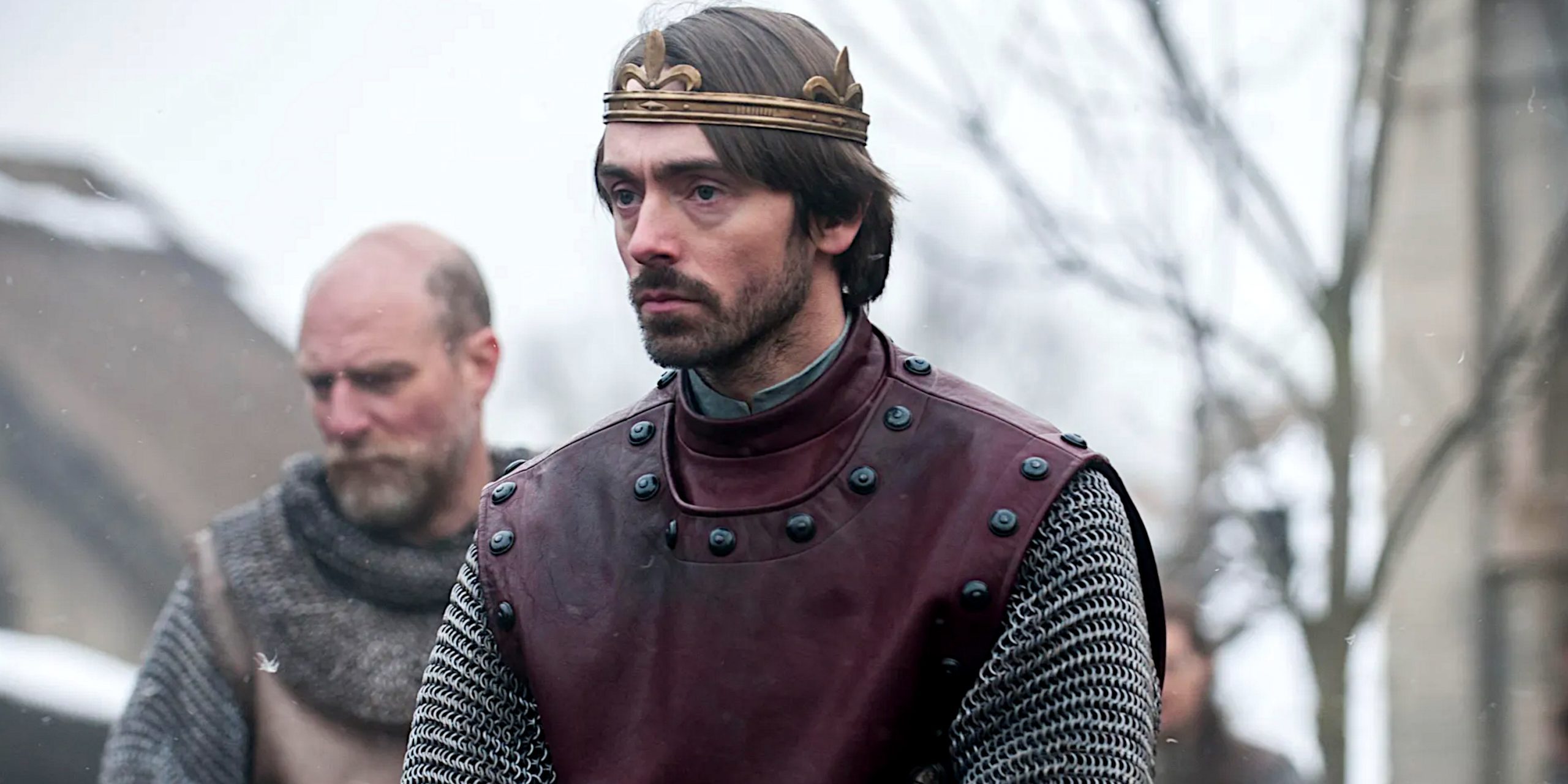
Kings rule the world of The Last Kingdom, but not all crowns carry the same weight. Some rule through faith and strategy. Others rule through the sharp end of an axe. A few barely manage to rule at all before their throne collapses under them.
Looking across the series, the difference between a good king and a forgettable one becomes obvious very quickly. Some shape the destiny of England. Others spend most of their reign arguing, panicking, or trusting the wrong people.
So here is a ranking of every major king in The Last Kingdom, judged by three things: raw power, political skill, and the legacy they leave behind.
Alfred the Great
No surprise here. Alfred is the gravitational centre of the entire series.
He begins the story as a king under siege. Wessex is surrounded by Viking armies, and one bad decision could wipe the kingdom off the map. What sets Alfred apart is that he never sees the conflict purely as a battlefield problem. He sees it as a long game.
Alfred builds alliances, manipulates rivals, writes laws, and most importantly creates the idea of a united England. While other kings fight to survive the next raid, Alfred is already thinking centuries ahead.
His greatest weapon is not a sword but patience. Even when illness leaves him barely able to stand, he outmanoeuvres stronger warriors again and again.
By the end of the series his dream becomes reality. Wessex survives, England begins to form, and Alfred’s reputation as the architect of the kingdom becomes impossible to challenge.
Legacy wise, nobody else in the show comes close.
Edward
Edward spends most of the early seasons living in his father’s shadow, which is a difficult place to be when that father happens to be Alfred.
At first he looks hesitant and uncertain. Decisions take time. Advisors push him in different directions. The throne clearly weighs on him.
Yet over time Edward grows into the role. He expands Wessex authority, takes key towns across Mercia and East Anglia, and continues Alfred’s vision of a unified England.
His reign is not perfect. He struggles with political marriages, family conflicts, and rival claimants. Still, when you step back and look at the map, Edward leaves the kingdom stronger than he found it.
That alone places him near the top.
Aethelstan
Aethelstan represents the final step in Alfred’s dream.
Unlike Edward, he rules with absolute confidence. He understands power, diplomacy, and military force from the start. His campaigns against the Norse and Scots reshape the political landscape of Britain.
Under Aethelstan, the scattered Anglo Saxon kingdoms finally become something resembling a single realm.
His rule also shows the dangers of absolute authority. His advisors manipulate him, and some decisions lead to unnecessary bloodshed. Still, his impact is undeniable.
In historical terms he becomes the first true King of England, which gives his legacy enormous weight.
Guthrum
Guthrum begins the story as a Viking warlord, but his transformation into a Christian king becomes one of the most fascinating political moves in the series.
At first he seems like every other Danish leader. He invades, fights, and burns towns across Wessex. Then something shifts. His baptism after defeat changes his political identity.
Suddenly Guthrum is not just a Viking commander. He is a recognised king within the Christian political order of England.
That move stabilises the frontier between Wessex and the Danelaw. It also gives him legitimacy that other Viking leaders never quite manage to achieve.
His rule might not reshape England, but it keeps a fragile peace alive during a very unstable time.
Constantine of Scotland
Constantine represents a different kind of power. He is cautious, patient, and perfectly willing to let other kingdoms exhaust themselves before stepping in.
In the series he often operates on the edge of events, but his presence reminds everyone that England is not the only power on the island.
His alliances with Norse forces show that he understands the value of timing. If England weakens, Scotland benefits.
That strategic mindset makes him a dangerous opponent, even when he is not the most visible figure on screen.
Guthred of Northumbria
Guthred might hold the title of king, but his reign is defined by uncertainty.
He owes his crown largely to prophecy and the support of powerful allies, especially Uhtred. Without them he likely never reaches the throne.
Once crowned he struggles to maintain control. Advisors manipulate him, rivals undermine him, and his decisions often create more problems than solutions.
Still, his rule stabilises Northumbria long enough to prevent complete chaos in the north. In a world where kings are constantly overthrown, even temporary stability counts for something.
Aelfwynn
Aelfwynn’s time as ruler of Mercia is brief, and that brevity ultimately defines her ranking.
She inherits authority during a volatile moment when Mercia is caught between powerful neighbours. The political reality is brutal. Without strong military backing, her position cannot last.
Her removal shows how fragile power can be when the surrounding kingdoms are far stronger.
Despite the short reign, she represents an important moment in Mercian history, where leadership briefly shifts before the kingdom is absorbed into a larger political structure.
The Kings Who Never Quite Ruled
The world of The Last Kingdom also contains several rulers who technically hold crowns but rarely control events.
Some inherit unstable thrones. Others rely entirely on stronger allies. A few simply lack the political instincts needed to survive.
In the brutal landscape of early medieval Britain, wearing a crown is often the most dangerous position in the room.
The series does a good job showing that kingship is less about the crown itself and more about the ability to keep it.
Why Kings are central in The Last Kingdom
The show constantly returns to one central idea. Kingdoms are fragile.
A strong king can unite armies, secure alliances, and create long term stability. A weak one can lose everything within a single season.
What makes The Last Kingdom compelling is that power never feels guaranteed. Even legendary rulers spend half their time worrying that the next battle could end their reign.
Watching Alfred plan England while Viking armies hammer at his borders captures that tension perfectly.
History rarely feels tidy, and the show reflects that chaos surprisingly well.
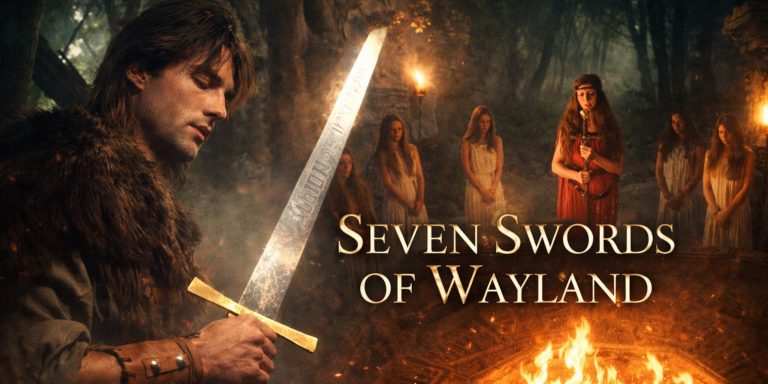
Seven Swords Takeaway
When the dust settles, one truth becomes obvious. The fate of England in The Last Kingdom rests on the shoulders of a handful of extraordinary rulers.
Alfred provides the vision. Edward expands it. Aethelstan finishes the job.
Around them swirl ambitious Vikings, uncertain rulers, and kingdoms trying to survive the century. Some succeed. Others fade quickly.
But in the end, power in this world belongs to those who understand something simple.
A crown is not protection.
It is a target.