Skip to content
Seven Swords

Seven Swords

Primary Menu
  • Sword History
    • Battles
    • Profiles
    • Re-Enactment
    • Pirates
    • Vikings
    • Resources
  • Types of Swords
  • Movies
  • TV
  • Gaming
    • RPG
  • HEMA
  • Shop
  • Home
  • Fantasy Swords
  • Dragon Slayer: The D&D Sword Built to Kill Dragons
  • Fantasy Swords
  • Role-playing Games
  • Swords from Literature

Dragon Slayer: The D&D Sword Built to Kill Dragons

Liz Stone September 9, 2026
Add us as a preferred Google source
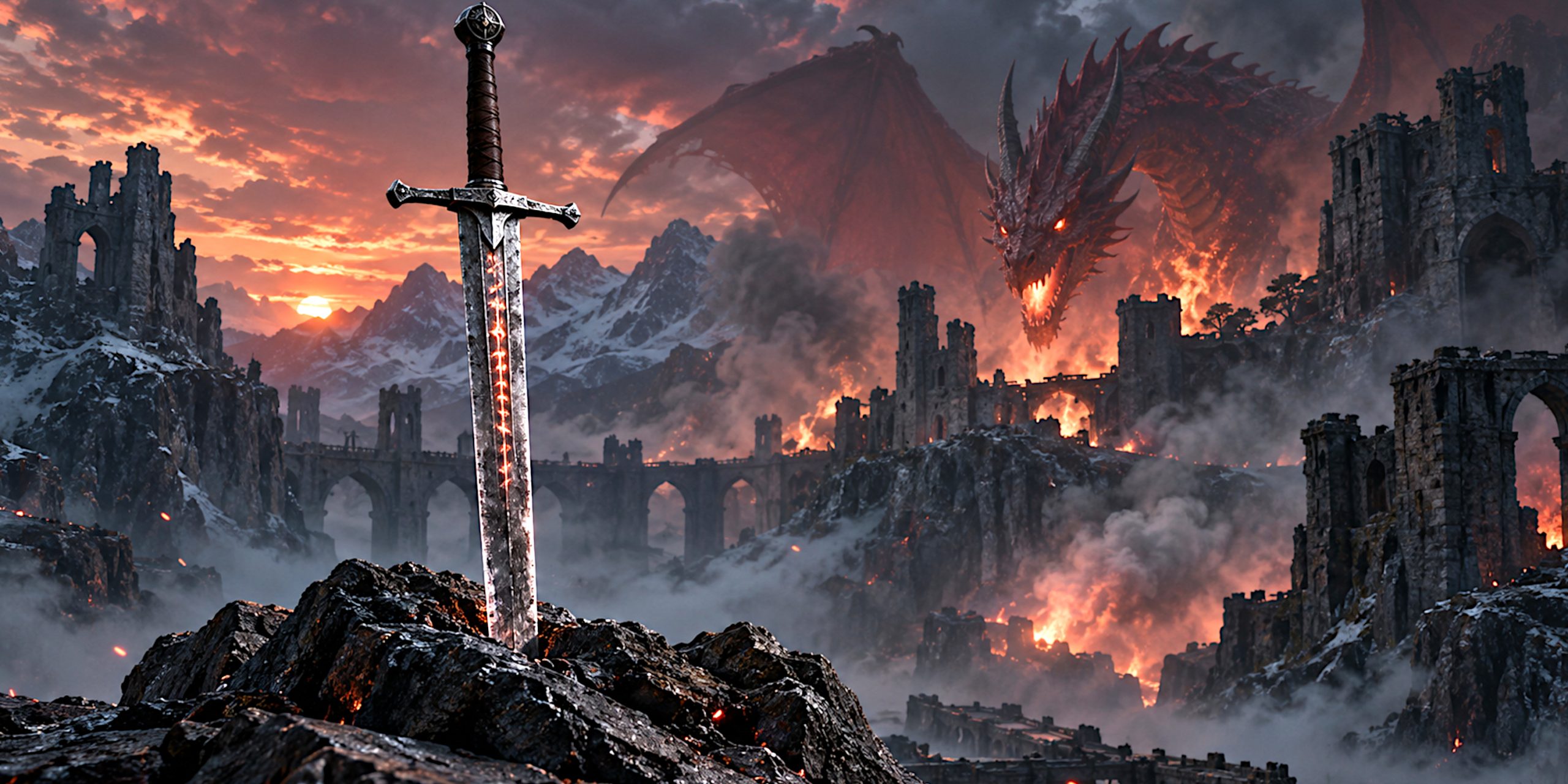
The Dragonslayer Sword from Dungeons & Dragons

The Dragon Slayer is one of the most wonderfully direct magic weapons in Dungeons & Dragons. There is no misleading name, concealed curse or lengthy instruction manual written by an archmage with poor handwriting. It is a sword. It slays dragons.

Within fifth-edition D&D, the Dragon Slayer is a rare magic weapon that becomes considerably more dangerous when used against creatures of the Dragon type. Against ordinary enemies it remains a useful enchanted sword. Against a dragon, it starts earning its name.

That specialisation makes it less universally powerful than some famous D&D weapons, but far more memorable when the campaign finally produces wings, scales and an alarming amount of fire.


Dragon Slayer Sword Statistics

The familiar fifth-edition version appears as a rare magic weapon. Its basic rules are pleasingly short.

PropertyRule
Weapon typeAny sword
RarityRare
Magical bonusPlus 1 to attack and damage rolls
Special damageAn additional 3d6 damage against a Dragon
Damage typeMatches the sword’s normal damage type
AttunementNot required in the 2014 fifth-edition rules
Eligible formsLongsword, greatsword, shortsword, rapier, scimitar or another sword approved by the DM

When the wielder hits a creature belonging to the Dragon type, the target suffers an additional 3d6 damage. This damage is added on every successful hit rather than being limited to once per turn.

That detail matters. A fighter with Extra Attack can trigger the additional damage several times during the same turn. Add Action Surge and the supposedly ancient, majestic dragon may suddenly discover that legendary dignity provides no bonus to Armour Class.

Players using the revised fifth-edition rules should check the wording in the version of the Dungeon Master’s Guide being used at their table, particularly when combining material from the 2014 and 2024 rules.


What Counts as a Dragon?

The Dragon Slayer does not work only against traditional chromatic and metallic dragons. Its ability applies to any creature whose stat block identifies it as a Dragon.

Depending on the sourcebooks allowed in the campaign, valid targets can include:

  • Chromatic dragons
  • Metallic dragons
  • Gem dragons
  • Dragon turtles
  • Faerie dragons
  • Pseudodragons
  • Wyverns
  • Drakes and other creatures classified as Dragons
  • Dragon-like monsters specifically given the Dragon creature type

The creature’s name is not enough by itself. A dragonborn, for example, is not automatically a Dragon for rules purposes. Its creature type determines whether the bonus damage applies.

This creates the faintly ridiculous possibility of a legendary dragon-killing blade functioning against a tiny faerie dragon. Mechanically, the sword is satisfied. Morally, the wielder may have some explaining to do.


Is the Dragon Slayer Always a Longsword?

No. The magic item can be attached to any sword unless a particular adventure or Dungeon Master specifies otherwise.

A Dragon Slayer might therefore be:

  • A longsword carried by a traditional knight
  • A greatsword forged for a heavily armoured dragon hunter
  • A rapier created by an elven duellist
  • A scimitar belonging to a desert order
  • A shortsword designed for a rogue or lightly equipped scout

This flexibility is one of the weapon’s best qualities. The Dungeon Master can place a Dragon Slayer in the campaign without forcing the party to adopt a weapon nobody normally uses.

A greatsword version provides excellent raw damage for Strength-based fighters, barbarians and paladins. A rapier allows a Dexterity-focused character to benefit. A shortsword can be used in two-weapon fighting, although the additional damage only applies when the Dragon Slayer itself lands the hit.


How Much Damage Does a Dragon Slayer Inflict?

Against a normal creature, the sword behaves like a plus 1 magic weapon. Against a Dragon, every successful attack adds 3d6 damage.

A longsword wielded in one hand would normally deal:

1d8 slashing damage, plus the wielder’s ability modifier, plus 1

Against a Dragon, it instead deals:

1d8 slashing damage, plus the wielder’s ability modifier, plus 1, plus 3d6 slashing damage

The extra 3d6 produces an average of 10.5 additional damage per hit. That is substantial on its own and increasingly unpleasant when used by a character who can make several attacks.

Critical hits make the weapon even more dangerous because the additional damage dice are normally doubled along with the weapon’s other damage dice. A critical hit from a Dragon Slayer greatsword can therefore involve a satisfying fistful of dice. This is one of those rare moments when arriving at the table with an excessive dice collection appears entirely reasonable.


Which Classes Use the Dragon Slayer Best?

Any character proficient with the sword’s chosen form can use it, but martial characters make the most of its repeated bonus damage.

Fighter

The fighter is probably the most efficient Dragon Slayer wielder. Extra Attack increases the number of opportunities to trigger the additional 3d6, while Action Surge can produce a devastating burst of attacks.

A fighter does not need complicated preparation. They simply need to reach the dragon, which is admittedly the part dragons tend to object to.

Paladin

Paladins combine the sword’s extra damage with Divine Smite. A critical hit can become spectacularly expensive for the target, particularly if the paladin has been saving spell slots for precisely this moment.

The weapon also suits the class thematically. A sacred warrior hunting an ancient wyrm needs very little additional explanation.

Barbarian

A barbarian benefits from the reliable magical bonus and can use Reckless Attack to improve the chance of landing each hit. Resistance to common physical damage also helps the wielder survive long enough to keep swinging.

A greatsword version is the obvious pairing, although “obvious” has never troubled barbarians very much.

Ranger

A dragon-hunting ranger can combine the weapon with class features and spells that improve accuracy or add damage. Dexterity-based rangers may prefer a rapier or shortsword version.

The main limitation is proximity. Rangers are often safer at range, while a Dragon Slayer demands the sort of personal commitment that places a character directly beneath the claws.

Rogue

A rogue can use a finesse version such as a rapier or shortsword. Sneak Attack and the Dragon Slayer’s bonus damage can produce a formidable single strike.

The rogue gains less from the sword than a fighter making several attacks, but one critical hit can still make the dragon reconsider its threat assessment.


Advantages and Disadvantages

AdvantagesDisadvantages
Adds 3d6 damage on every hit against DragonsSpecial ability is highly situational
Provides a permanent plus 1 magical bonusOffers no defensive protection
Does not require attunement under the 2014 rulesMelee versions are difficult to use against flying dragons
Can be created as almost any swordLess impressive in campaigns without many Dragon-type enemies
Scales well with Extra AttackA plus 1 bonus may feel modest at higher levels

The absence of an attunement requirement is particularly useful. Characters are usually limited to three attuned magic items, so a weapon that provides a strong specialised ability without occupying a slot is valuable.

Its weakness is equally clear. A campaign full of fiends, undead or aberrations leaves the weapon functioning as an ordinary plus 1 sword. Still useful, certainly, but hardly the legendary implement promised by the name.


Dragon Slayer Versus Dragonlance

The Dragon Slayer is sometimes confused with a dragonlance, but the two weapons are distinct.

FeatureDragon SlayerDragonlance
Typical formAny swordLance or pike
RarityRareVaries by version
General bonusPlus 1 to attack and damageDepends on the item’s rules
Anti-dragon effectAdditional damage against DragonsUsually heavier specialised damage or tactical effects
Setting associationSuitable for most D&D settingsStrongly associated with Dragonlance
Best userAny suitable sword wielderMounted warriors or dedicated dragon hunters

A Dragon Slayer is easier to place in a general fantasy campaign. A dragonlance carries more setting-specific history and is often designed around organised warfare against dragons rather than individual adventuring.


Dragon Slayer Versus Other Magic Swords

The Dragon Slayer occupies an interesting middle position among D&D weapons. It is stronger than a basic plus 1 sword in the right encounter, but lacks the broad utility of weapons with effects that work against every opponent.

WeaponMain strengthMain limitation
Dragon SlayerHeavy repeated damage against DragonsHighly specialised
Flame TongueAdditional fire damage against most targetsFire resistance is common
Frost BrandCold damage and defensive benefitsUsually much rarer
Giant SlayerExtra damage and control against giantsDepends on facing Giant-type creatures
Vorpal SwordExceptional critical-hit effectLegendary rarity
Holy AvengerPowerful offence and protectionRestricted to paladins

The closest comparison is the Giant Slayer. Both are purpose-built weapons aimed at a particular creature type. The Dragon Slayer concentrates on additional damage, while versions of the Giant Slayer may also knock their intended targets prone.


Building Lore Around the Sword

The standard item provides mechanics rather than a fixed history. That gives the Dungeon Master plenty of room to create something more interesting than “you find a sword in the chest”.

A Dragon Slayer might have been:

  • Forged from ore taken from beneath a dragon’s first lair
  • Quenched in the blood of an ancient wyrm
  • Created by a kingdom that no longer exists
  • Carried by a hero whose victory was considerably exaggerated
  • Broken during an unsuccessful hunt and later reforged
  • Blessed by a deity opposed to draconic tyranny
  • Made from the fang, claw or scale of a slain dragon
  • Stolen from a dragon’s own treasure hoard

The sword need not hate all dragons. It could have been made by a metallic dragon to destroy a particular rival, or forged as part of an alliance between mortals and dragons.

That distinction can create a better story. A weapon designed to kill “dragons” in general is useful. A weapon made to kill one named dragon carries history, grudges and probably several inconvenient heirs.


Should the Sword Be Sentient?

A standard Dragon Slayer is not sentient, but making one intelligent can turn a functional magic item into a recurring character.

Possible personalities include:

  • A stern knight who considers every retreat dishonourable
  • An enthusiastic weapon with an alarmingly broad definition of dragon
  • The trapped spirit of its original wielder
  • A repentant dragon whose soul was bound into the blade
  • A calculating intelligence interested only in one ancient target
  • A boastful sword whose account of past victories cannot be independently verified

Sentience works best when it creates decisions rather than constantly punishing the wielder. A sword that demands the immediate death of every dragon can become exhausting. One that questions the party’s motives or recognises forgotten draconic heraldry is far more useful.


How a Dungeon Master Can Introduce a Dragon Slayer

The weapon is most satisfying when the players understand why they need it. Dropping it into random treasure immediately before a dragon battle works mechanically, but feels suspiciously like the universe has begun arranging the party’s inventory.

Better introductions include:

  • A quest to recover the blade from a ruined fortress
  • A rival dragon hunter who already carries it
  • A sword held in a dragon’s hoard as a captured trophy
  • A broken weapon whose pieces lie in separate locations
  • An ancestral blade that awakens when a dragon returns
  • A weapon offered by a patron whose motives are doubtful
  • A ceremonial sword mistakenly believed to be powerless

The Dragon Slayer can also serve as a warning. Finding one in an otherwise peaceful settlement tells the players that somebody once expected dragons, and may expect them again.


Balancing the Dragon Slayer in a Campaign

The weapon’s power depends almost entirely on encounter design. In a campaign containing one dragon, it is a specialised reward with a single glorious opportunity. In a dragon-heavy adventure, it can become one of the party’s most damaging items.

Dungeon Masters should consider:

  • How frequently Dragon-type creatures appear
  • Whether the wielder can reliably reach flying enemies
  • How many attacks the character makes
  • Whether critical-hit optimisation is common in the group
  • Whether the sword applies to allied or neutral dragons
  • How the existence of the weapon affects negotiations

The final point deserves attention. Carrying a weapon called Dragon Slayer into a diplomatic meeting with a gold dragon is not necessarily hostile, but it has the social delicacy of bringing a loaded crossbow to a job interview.

The sword does not need to be weakened simply because it performs well against its intended prey. Specialised magic items should feel powerful in the encounters built for them. The better counterbalance is to make reaching, identifying or confronting the dragon a meaningful challenge.


Can Players Craft a Dragon Slayer?

Crafting rules depend on the edition, campaign and optional systems being used. As a rare magic item, a Dragon Slayer should normally require more than money and spare time.

Suitable ingredients might include:

  • A dragon’s fang or claw
  • Scales from the intended dragon species
  • Metal exposed to a dragon’s breath
  • Blood willingly given by a dragon
  • An existing magical sword
  • Instructions preserved by an extinct order
  • A forge heated by elemental or draconic fire

The most interesting ingredient is often something that cannot be acquired through combat alone. Perhaps the blade requires the blessing of one dragon before it can be used against another. That immediately turns the crafting process into an adventure rather than magical shopping with extra paperwork.


Is the Dragon Slayer Worth Using?

Against Dragons, absolutely. The extra 3d6 damage on every hit can transform a capable martial character into a major threat, especially when combined with Extra Attack, critical hits and class abilities.

Against everything else, it remains a reliable plus 1 magic sword. That is respectable, although less exciting once the party begins finding very rare or legendary weapons.

Its real strength lies in timing. The Dragon Slayer is at its best when introduced as part of a developing story, linked to a specific enemy and given enough history to matter. Players should remember where they found it, whose hands once carried it and which dragon has good reason to fear its return.

Mechanically, it is simple. Narratively, it can carry an entire campaign. Few D&D weapons make their purpose quite so clear, and fewer still encourage the party to look at an ancient red dragon and think, perhaps unwisely, that the odds have improved.
What do you feel about this?

  • Fantasy Swords
  • Role-playing Games
  • Swords from Literature

Post navigation

Previous: Irish Gallowglass: Everything We Know About Ireland’s Medieval Warriors
Next: Bellerophon: The Fallen Rider of Greek Myth

Related Stories

A lone adventurer looks towards Baldur’s Gate as a nautiloid ship crosses a stormy sky, with “BG3 Timeline” in shattered-glass lettering
  • Baldur's Gate
  • Role-playing Games
  • Video Game Swords

Timeline of Events in the Baldur’s Gate Universe

Liz Stone October 11, 2026 0
European, Japanese and Chinese swords displayed on a stone table under dramatic lighting
  • Fantasy Swords
  • Legendary Swords
  • Sword History

Why Do Swords Have Names? History, Legends and the Coolest Named Blades

Jayne Ellis October 9, 2026 0
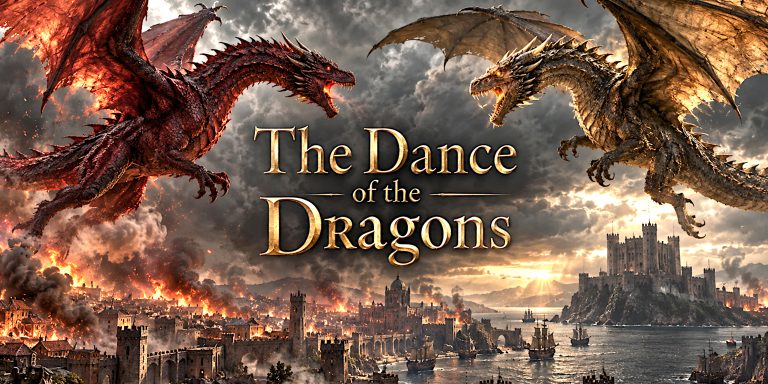
SEO title: Dance of the Dragons Explained: Causes, Battles and Ending Meta description: Explore the Dance of the Dragons, from Rhaenyra and Aegon II’s rival claims to the major battles, dragon deaths and devastating end of the war. URL slug: Retain /the-dance-of-the-dragons/ The Dance of the Dragons: The Targaryen Civil War Explained The Dance of the Dragons was the Targaryen civil war fought between Rhaenyra Targaryen and her younger half-brother, Aegon II, over the Iron Throne. Lasting from 129 to 131 AC, it killed both rival claimants, devastated Westeros and left the dynasty’s dragons dangerously close to extinction. Rhaenyra’s son eventually became King Aegon III, but calling that a happy ending requires some fairly creative accounting. A Wiki of Ice and Fire What draws me to this story is how avoidable its beginnings feel. The family has wealth, dragons and decades to settle the succession. Somehow, it still arrives at two coronations and a civil war. Spoiler warning: This guide covers the complete war as described in Fire & Blood, including its ending. It follows the book chronology rather than treating House of the Dragon as an identical account. What Was the Dance of the Dragons? The Dance was a struggle between two branches of House Targaryen, each claiming the right to succeed King Viserys I. Rhaenyra had been publicly named his heir. Aegon was his eldest surviving son, born from his second marriage to Alicent Hightower. When Viserys died, their supporters moved to establish competing monarchies. The fighting spread through Westeros, involving armies, fleets, assassins and dragonriders. Its consequences reached far beyond the royal household. Communities with no meaningful say in the succession paid for it through ruined harvests, burned homes and mass displacement. The name sounds almost graceful. The actual war offers very little support for that branding. A Wiki of Ice and Fire Why Did Rhaenyra and Aegon Both Claim the Throne? Rhaenyra’s claim rested on Viserys’s explicit choice of successor and the oaths sworn to uphold it. He did not formally replace her after Alicent bore him sons. Aegon’s supporters appealed to male succession, earlier royal decisions and the precedent of the Great Council of 101 AC. They also feared the influence of Rhaenyra’s husband, Daemon, and argued that Alicent’s children would be unsafe under their half-sister’s rule. This was more complicated than a straightforward contest between law and rebellion. Westeros had traditions, precedents and royal commands, but no universally accepted mechanism capable of resolving their contradictions. Rhaenyra had a strong argument based on her father’s declared wishes. Aegon’s faction had an argument grounded in established expectations about male inheritance. Both sides also had powerful people whose position depended on the answer. Viserys’s failure was leaving those competing interests unresolved while assuming his decision would survive him. Royal authority is considerably less persuasive once the king providing it is dead. A Wiki of Ice and Fire The Blacks and the Greens Explained The faction names originated in the book account at a tournament in 111 AC. Alicent wore green, while Rhaenyra wore Targaryen red and black. Their supporters adopted the colours, which became political shorthand. A court wardrobe dispute acquiring military consequences feels painfully believable. A Wiki of Ice and Fire Faction Claimant Principal supporters Important advantages Blacks Rhaenyra Targaryen Daemon, Corlys Velaryon, Rhaenys, Jacaerys and allies including the Arryns and Starks Velaryon naval strength, access to numerous dragons and support for Viserys’s chosen heir Greens Aegon II Targaryen Alicent, Otto Hightower, Criston Cole, Aemond, Daeron and major Hightower, Lannister and Baratheon forces Initial control of the capital and royal government, powerful regional allies and Vhagar These were shifting coalitions rather than perfectly unified teams. Personal rivalries, marriage agreements and local interests influenced allegiance, and some supporters changed sides. A Wiki of Ice and Fire I find the conflict more interesting when those differences remain visible. Supporting Rhaenyra’s succession claim does not require defending every decision made in her name. Recognising the Greens’ political strengths does not excuse their conduct. The Dragons That Shaped the War The Blacks’ access to more dragons did not guarantee victory. Some were young, some lacked riders, and others were difficult to control. The Greens possessed Vhagar, whose size and experience made simple numerical comparisons misleading. Dragon Rider during the war Significance Syrax Rhaenyra Closely associated with the Black claimant, although Rhaenyra was not a frequent battlefield dragonrider Caraxes Daemon An experienced fighting dragon, central to Daemon’s campaigns Meleys Rhaenys A formidable dragon lost at Rook’s Rest Sunfyre Aegon II Survived terrible injuries and remained crucial to Aegon’s eventual capture of Rhaenyra Vhagar Aemond The Greens’ greatest individual dragon advantage Tessarion Daeron Strengthened the Green campaign in the Reach Vermithor Hugh Hammer A powerful dragon whose rider’s betrayal helped transform the war Silverwing Ulf White Another major addition to the Blacks that later passed into hostile hands The important question was never simply who owned the most dragons. It was who could deploy them effectively, keep their riders loyal and survive the consequences when another dragon fought back. A Wiki of Ice and Fire Storm’s End and Blood and Cheese: The War Becomes Personal The death of Lucerys Velaryon destroyed much of the remaining space for compromise. Sent to seek Baratheon support at Storm’s End, Lucerys encountered Aemond. After leaving the castle, he and his dragon Arrax were pursued and killed by Aemond and Vhagar. The book gives this episode through its historical sources. The television adaptation’s presentation of Aemond losing control should not automatically be read back into the book account. Revenge followed through the assassins known as Blood and Cheese, who murdered Aegon II and Helaena’s young son Jaehaerys. Daemon arranged the retaliatory operation through contacts in King’s Landing. These killings changed the conflict’s emotional stakes. Each faction could point to an atrocity against its own family, making restraint harder to defend and revenge easier to demand. A Wiki of Ice and Fire Rook’s Rest: A Victory With a Terrible Price At Rook’s Rest, Criston Cole’s campaign drew Rhaenys and Meleys into a confrontation with Aegon on Sunfyre and Aemond on Vhagar. Rhaenys and Meleys were killed. Aegon suffered severe injuries, while Sunfyre was badly wounded. The Greens removed an important enemy dragonrider, but their king paid heavily for the victory. The battle exposes the risk behind the dynasty’s greatest weapon. A dragon can overwhelm soldiers on the ground. Against another dragon, even a royal rider is horribly vulnerable. A Wiki of Ice and Fire The Gullet: Why Fleets Still Mattered The Battle of the Gullet brought the Triarchy’s fleet against the Velaryons and their dragonrider allies. The attackers suffered enormous losses, but the Blacks also endured a disaster. Jacaerys and Vermax died, the Velaryon fleet lost substantial strength, and settlements on Driftmark were devastated. Jacaerys’s death mattered beyond the loss of another prince. He had helped secure alliances and strengthen his mother’s cause. Losing him damaged both the family and its political future. Corlys Velaryon’s response captures the cost: “If this be victory, I pray I never win another.” The Gullet is a useful reminder that dragons could not make shipping, supply routes or coastal defences irrelevant. Controlling the sea still mattered, even when something enormous and flammable was happening overhead. A Wiki of Ice and Fire Rhaenyra Takes King’s Landing, Then Loses It Rhaenyra eventually occupied King’s Landing and sat the Iron Throne. Securing the capital, however, did not give her a stable government. Financial pressure, unpopular taxation, executions and growing suspicion weakened her position. Betrayals elsewhere intensified her distrust, including her treatment of dragonriders whose loyalty she questioned. Her position deteriorated further after Helaena’s death. Rumours spread, unrest escalated and the city turned violently against its rulers. Rhaenyra’s collapse is compelling because her original claim and her later performance are different questions. Being denied an inheritance does not automatically prepare someone to govern a hungry, frightened capital during a civil war. A Wiki of Ice and Fire Tumbleton: The Danger of Empowering New Dragonriders The Blacks recruited new riders to make use of previously unclaimed dragons. The resulting military strength came with a problem: possessing a dragon did not guarantee loyalty to Rhaenyra. At the First Battle of Tumbleton, Hugh Hammer and Ulf White changed sides with Vermithor and Silverwing. Their betrayal helped turn the fighting into a catastrophe for the town. The Second Battle of Tumbleton brought further destruction. Addam Velaryon attacked with Seasmoke, and the fighting killed major dragons, including Seasmoke, Vermithor and Tessarion. Tumbleton shows how quickly the conflict escaped the control of its original leaders. Giving ambitious people immense destructive power created threats that neither claimant could reliably contain. A Wiki of Ice and Fire The Gods Eye and the Storming of the Dragonpit Two events made the destruction of Targaryen dragon power especially clear. Above the Gods Eye, Daemon and Caraxes fought Aemond and Vhagar. Both dragons died. Aemond’s body was recovered later, while Daemon’s was not, although he was presumed dead. It is an extraordinary confrontation, but its strategic meaning is grim: experienced riders and irreplaceable dragons were being consumed by the family’s struggle. A Wiki of Ice and Fire In King’s Landing, a crowd stormed the Dragonpit amid escalating unrest. Dreamfyre, Tyraxes, Shrykos and Morghul were killed inside. Syrax died outside during the same upheaval. The attack cost many human lives as well. Its importance lies in the collapse of the assumption that dragons placed their owners beyond ordinary people’s reach. Confinement, chaos and overwhelming numbers made even these creatures vulnerable. A Wiki of Ice and Fire How Did the Dance of the Dragons End? After fleeing King’s Landing, Rhaenyra returned to Dragonstone and found that Aegon II had gained control there. He ordered Sunfyre to kill her in front of her son, the future Aegon III. A Wiki of Ice and Fire Aegon outlived his rival, but he did not secure a lasting victory. His military position remained precarious, and he was poisoned in 131 AC as forces supporting Rhaenyra’s cause continued to threaten his rule. Rhaenyra and Daemon’s son succeeded him as Aegon III. His marriage to Aegon II’s daughter Jaehaera helped represent a settlement between the surviving branches of the family. A Wiki of Ice and Fire Question Answer Who survived longer? Aegon II Who inherited the throne after him? Rhaenyra’s son, Aegon III Was Rhaenyra recognised in the official royal succession? Aegon II remained the recognised monarch Did either claimant achieve lasting personal victory? No. Both died before the settlement That is why “who won?” needs more than a faction colour. Aegon’s kingship remained in the official record, while the dynasty continued through Rhaenyra’s children. Neither lived to enjoy it. A Wiki of Ice and Fire Did the Dance Kill All the Dragons? No. Some dragons survived the war. The Dance destroyed much of their population, but their disappearance was a longer process. The last known Targaryen dragon died in 153 AC, during Aegon III’s reign, more than two decades after the war ended. Aegon’s nickname, “Dragonbane”, should not be treated as proof that he personally caused their extinction. The distinction matters. The Dance crippled the dynasty’s dragon power; the remaining decline followed afterwards. House Targaryen also survived and continued to rule for generations. Its advantage had changed, though. Without dragons, royal authority depended more heavily on alliances, armies and the cooperation of powerful houses. A Wiki of Ice and Fire Fire & Blood and House of the Dragon: Which Account Should You Follow? Fire & Blood provides the main written account of the Dance. It presents Targaryen history through an in-world historian, drawing on sources that disagree about motives, conversations and responsibility. George R.R. Martin That structure is part of the appeal. Readers have to consider who witnessed an event, who benefited from a particular version and which details might be gossip. House of the Dragon dramatises the conflict and makes its own choices about those uncertainties. Its scenes and character motivations should be discussed as adaptation decisions, rather than automatic confirmation of what happened in the books. For understanding the complete war, start with the book chronology. For discussing a particular television scene, stay within the show’s version. Combining the two without explanation creates a surprisingly confident account of events that belongs to neither. Why the Dance Still Matters For me, the Dance works because its disasters grow out of recognisable decisions. People protect their children, defend their status, distrust rivals and convince themselves that one more act of violence will make them safe. The original dispute never stops mattering. Rhaenyra was the named heir, and the challenge to her succession exposes the limits imposed on women in Westerosi politics. But the war also forces a harder question: what happens when defending a claim becomes more important than preserving the realm it would allow you to rule? By the end, the throne survives. Much of the family, its power and the lives around it do not. That is the part I find hardest to shake. Everyone spends the war arguing over who should inherit the kingdom, while steadily making it a worse kingdom to inherit. Image alt text: Two dragons clash above a burning medieval coastal city beneath storm clouds, with gold lettering reading “The Dance of the Dragons”.
  • House of the Dragon
  • Swords from Literature
  • Swords from TV

The Dance of the Dragons: The Targaryen Civil War Explained

Liz Stone October 6, 2026 0
the-rings-of-power-timeline
  • Fantasy Swords
  • Swords from TV
  • The Rings of Power

The Rings of Power Timeline Explained: Tolkien’s Dates vs the TV Series

Matt Tait October 3, 2026 0
Wheel of Time - Amazon prime
  • Fantasy Swords
  • Swords from TV
  • The Wheel of Time

The Wheel of Time Review: Uneven Beginnings, Better Fantasy and an Unfinished Story

Liz Stone October 2, 2026 0
Dune salute
  • Movie Swords
  • Swords from Literature

Why Are There Swords in Dune Instead of Guns?

Liz Stone September 28, 2026 0

Trending Now

Biggest Wars of the Middle Ages: 20 Major Conflicts Biggest Medieval Wars 1

Biggest Wars of the Middle Ages: 20 Major Conflicts

October 11, 2026 0
Timeline of Events in the Baldur’s Gate Universe A lone adventurer looks towards Baldur’s Gate as a nautiloid ship crosses a stormy sky, with “BG3 Timeline” in shattered-glass lettering 2

Timeline of Events in the Baldur’s Gate Universe

October 11, 2026 0
Sica Sword: A gladiatorial favourite Gladiator with a Sica shortsword 3

Sica Sword: A gladiatorial favourite

October 11, 2026 0
Battle of Jena and Auerstedt, 1806 French and Prussian-Saxon troops fight through morning fog at the Battle of Jena and Auerstedt in 1806. 4

Battle of Jena and Auerstedt, 1806

October 11, 2026 0

Sword resources Archives - Seven Swords

  • The Most Expensive Swords Ever Sold at Auction
    by Matt Tait on September 29, 2026 at 1:55 pm

    Some swords are expensive because of their materials. Others are valuable because a famous hand once held them. The post The Most Expensive Swords Ever Sold at Auction appeared first on Seven Swords.

  • HEMA Sparring Swords: Types, Prices and How to Choose the Right One
    by Jayne Ellis on September 22, 2026 at 5:37 pm

    A HEMA sparring sword has a difficult role. It must resemble a historical weapon closely enough to teach The post HEMA Sparring Swords: Types, Prices and How to Choose the Right One appeared first on Seven Swords.

  • Essential Antique Sword Books: The Best Reference Guides for Collectors
    by Jayne Ellis on August 27, 2026 at 11:07 am

    Buying an antique sword without first buying a few good books is an impressively expensive way to learn. The post Essential Antique Sword Books: The Best Reference Guides for Collectors appeared first on Seven Swords.

  • Essential HEMA Books: The Historical Fencing Library Worth Building
    by Jayne Ellis on August 23, 2026 at 3:59 pm

    Historical European Martial Arts has a rather unusual relationship with books. In most combat sports, reading is supplementary. The post Essential HEMA Books: The Historical Fencing Library Worth Building appeared first on Seven Swords.

  • Napoleonic Sword Auction Guide: Prices, Identification and Buying Advice
    by Matt Tait on August 12, 2026 at 11:31 am

    Buying an original Napoleonic sword is one of those collecting decisions where enthusiasm can become expensive remarkably quickly. The post Napoleonic Sword Auction Guide: Prices, Identification and Buying Advice appeared first on Seven Swords.

Sevenswords.uk is part of the Ultimate network | Privacy Policy

Copyright © 2026 All rights reserved.