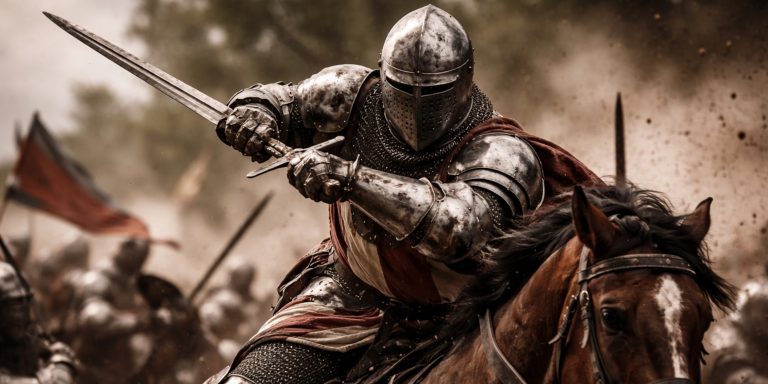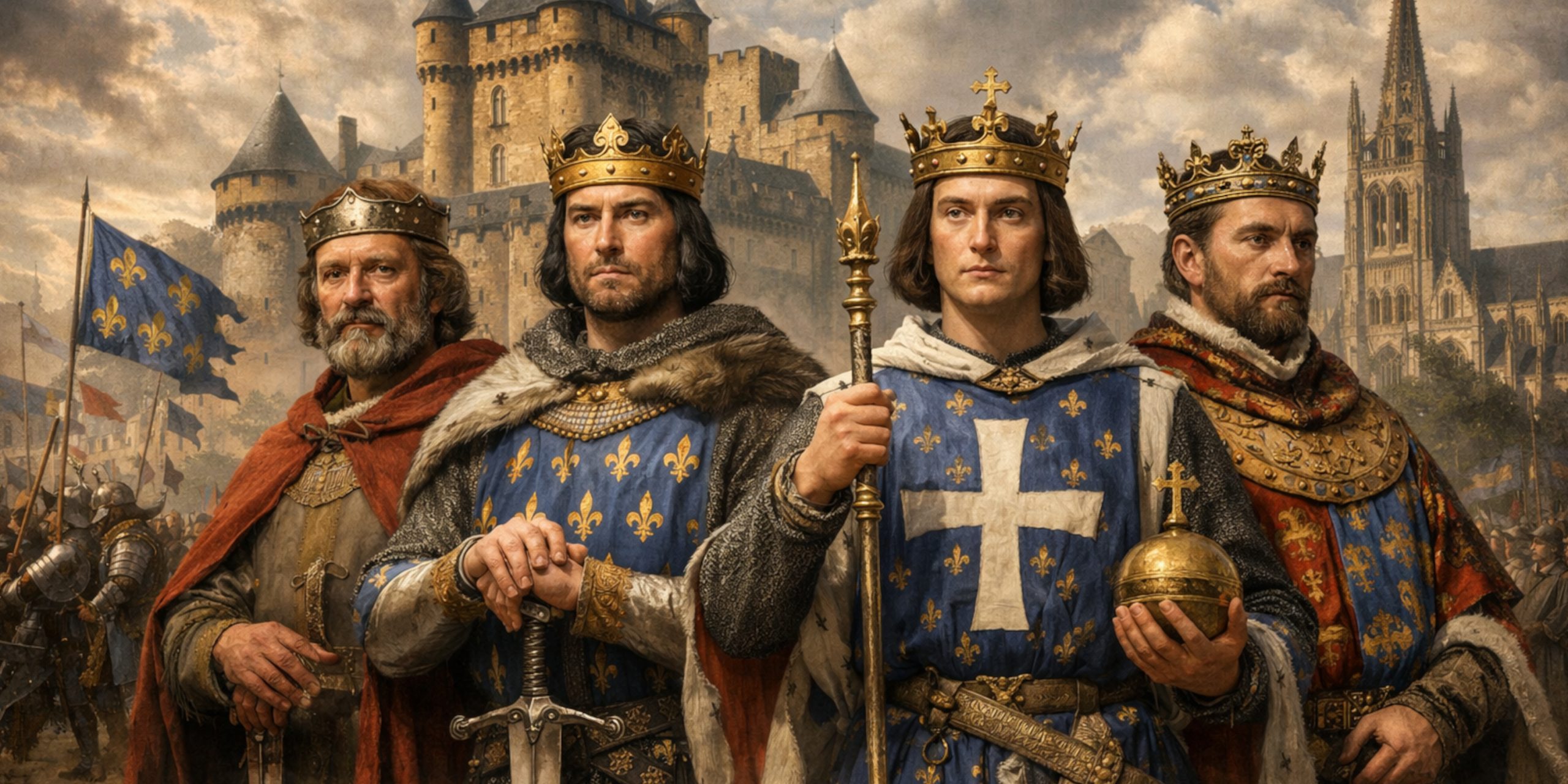
The Capetian Dynasty rarely gets the cinematic treatment. There are no sweeping conquest montages to rival the Normans, no sudden collapses worthy of a tragedy. What you get instead is something far more impressive. Quiet endurance. Political stamina. A family that turned a shaky crown into the most durable royal house in European history.
From 987 onwards, the Capetians ruled France in one form or another for over eight centuries. If medieval power were a long campaign rather than a single battle, this is what winning looks like.
Origins, Hugh Capet and a Modest Crown
The story begins with Hugh Capet, elected king in 987 after the Carolingian line fizzled out. Elected is doing a lot of work here. Hugh was not chosen because he dazzled anyone with ambition. He was selected because he seemed manageable.
At the time, the French king controlled little beyond Paris and Orléans. Powerful dukes ruled Normandy, Aquitaine, Burgundy, and Flanders with the confidence of men who paid lip service to the crown and little else. Hugh Capet’s authority rested more on symbolism than force, and even that was fragile.
From a historian’s point of view, this is where the Capetians reveal their character. They did not overreach. They consolidated.
The Capetian Formula, Inheritance Over Heroics
Early Capetian kings perfected a simple but revolutionary strategy. They ensured their sons were crowned during their own lifetime. This sidestepped elections, discouraged rival claims, and made succession feel inevitable.
Robert II, Henry I, Philip I, and Louis VI were not grand conquerors. They were patient administrators, ecclesiastical allies, and quiet dealmakers. Their power grew not through dramatic expansion but through survival.
As a dynasty, they understood something medieval Europe often forgot. Stability is power.
The Turning Point, Philip II Augustus
Philip II Augustus changed the tempo.
Reigning from 1180 to 1223, he broke the dominance of the Angevin kings of England and absorbed Normandy, Anjou, and much of western France into the royal domain. The Battle of Bouvines in 1214 did more than defeat a coalition of enemies. It announced that the French crown was no longer a minor landlord playing defence.
Philip’s reign marks the moment when Capetian patience paid dividends. Centuries of careful inheritance suddenly had teeth.
Church, Law, and the Shape of Authority
The Capetians cultivated the Church with care. Kings presented themselves as God’s chosen rulers, defenders of orthodoxy, and patrons of reform. This alliance paid off in legitimacy, literacy, and legal muscle.
By the thirteenth century, Capetian France had developed a stronger legal identity than most of its neighbours. Royal courts expanded. Written law began to matter. Justice became a tool of authority rather than a local courtesy.
This is less glamorous than battlefield glory, but far more enduring.
Louis IX, Sanctity and Statecraft
Louis IX, later Saint Louis, stands as the moral high point of the dynasty. Pious, serious, and deeply invested in justice, he ruled as a king who genuinely believed his job had eternal consequences.
His crusades were costly and strategically questionable, but his domestic reforms were transformative. He strengthened royal courts, curbed noble violence, and embodied a form of kingship that made resistance feel almost sinful.
As a historian, I find Louis fascinating because he proves that image matters. His sanctity became a political asset long after his death.
Cadet Branches and a Growing Family Tree
By the late Middle Ages, the House of Capet had sprouted branches everywhere. The Valois, Bourbons, Angevins, and others all descended from the same root.
This sprawling family network extended Capetian influence across Europe. Kings of France, Spain, Naples, and even Luxembourg could trace their bloodline back to Hugh Capet. When people talk about medieval Europe as a dynastic chessboard, this is the family holding half the pieces.
Of course, the same system bred rivalry, succession crises, and eventually the Hundred Years’ War. Dynastic success always carries a price.
Decline Without Collapse
The direct Capetian male line ended in 1328, but the dynasty itself did not truly fall. The Valois took over, then the Bourbons, both Capetian by blood. Even the French Revolution failed to erase the lineage entirely.
When Louis XVI lost his head, it was not the end of Capetian influence. It was the closing act of a story already centuries old.
Few dynasties can claim that kind of longevity.
Legacy, Why the Capetians Still Matter
The Capetians built France not through spectacle but through structure. They normalised inheritance, strengthened institutions, and made the crown a permanent feature rather than a negotiable title.
Modern France, centralised, legalistic, and state-driven, owes more to the Capetians than to any single revolutionary moment. They remind us that history is often shaped by those who stay in power long enough to make permanence feel natural.
As a historian, I admire them not because they were exciting, but because they were effective. Medieval Europe was loud, violent, and chaotic. The Capetians endured. And in the end, endurance won.
Watch the documentary: