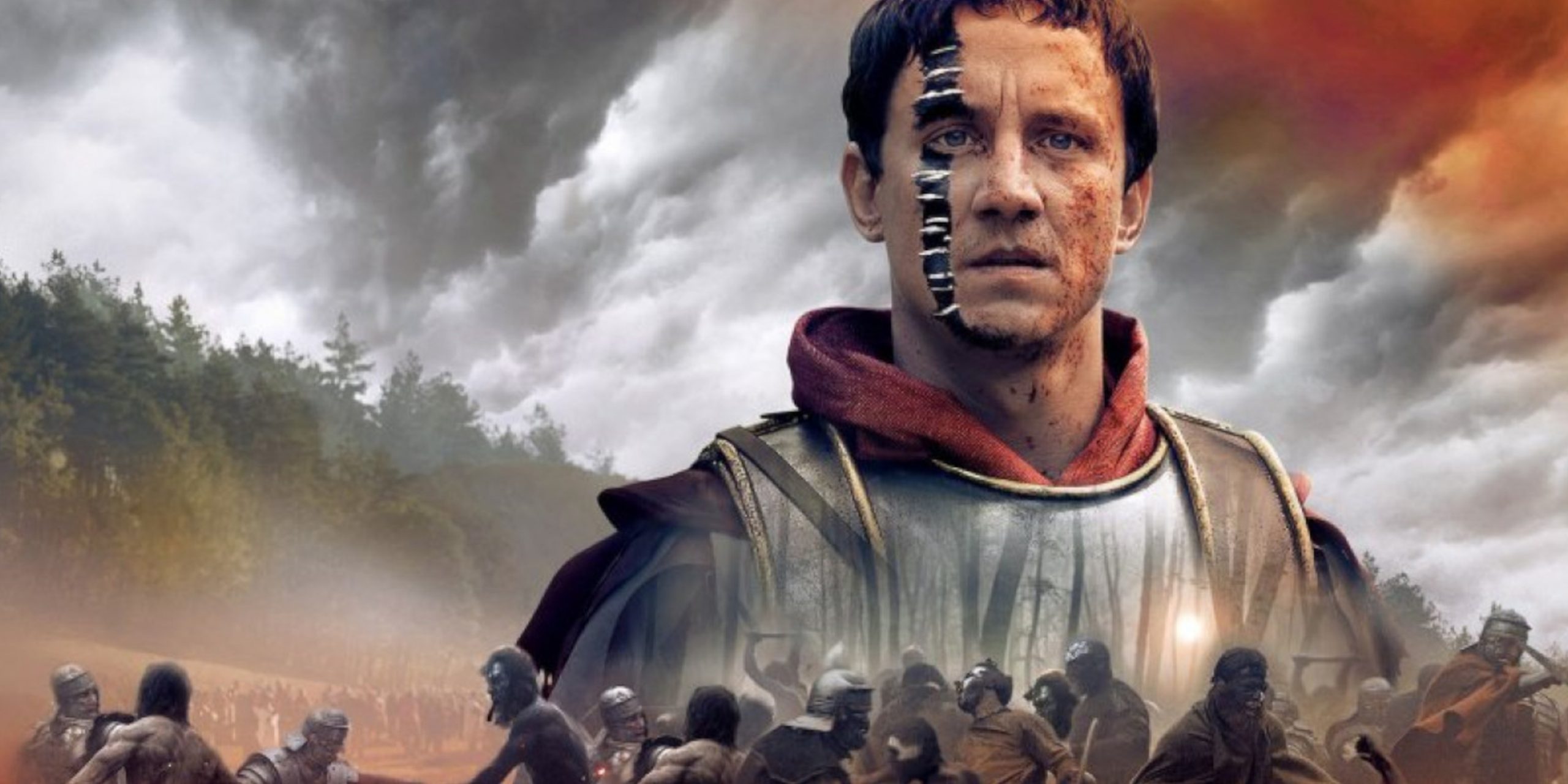
Barbarians, a Roman war drama that actually takes history seriously
Barbarians arrived quietly and then did something rare. It made a Roman period drama that trusted its audience. No glossy hero speeches. No Romans speaking English with theatre accents. Instead, you get mud, paranoia, political pressure, and Latin that sounds like Latin.
Set in Germania just before the year 9 AD, the series centres on Rome’s attempt to fully absorb the region east of the Rhine. It focuses on cultural fracture more than conquest, and it treats Roman power as something brittle rather than inevitable. That alone makes it stand out in a genre that often treats the legions like an unstoppable cheat code.
The historical spine, Rome meets the forest
The narrative builds towards the Battle of the Teutoburg Forest, one of the most important ambushes in European history. Three Roman legions marched in confident columns and did not march out again. The loss reshaped Roman strategy for generations and froze imperial expansion at the Rhine.
At the centre of this disaster is Publius Quinctilius Varus, portrayed not as a cartoon villain but as a man drowning in administrative pressure. He believes order comes from law, census, and taxes. Germania politely disagrees.
Opposing him is Arminius, a Roman trained auxiliary officer who understands legion tactics better than most Romans. The show leans into this dual identity. He is not a noble savage or a freedom poster boy. He is compromised, ambitious, and permanently stuck between two worlds.
Language, culture, and why the show feels different
One of the smartest choices Barbarians makes is linguistic. Romans speak Latin. Germanic tribes speak their own languages. Translation is often awkward or deliberately absent. This does more work than a dozen exposition speeches. You feel the imbalance of power and the fragility of alliances simply by watching people misunderstand each other.
Cultural clashes are handled with restraint. Roman law is efficient, logical, and deeply arrogant. Tribal customs are flexible, personal, and sometimes brutal. Neither side is romanticised. The series understands that empire building is often less about battles and more about paperwork, hostage taking, and slow pressure.
Warfare, tactics, and grounded violence
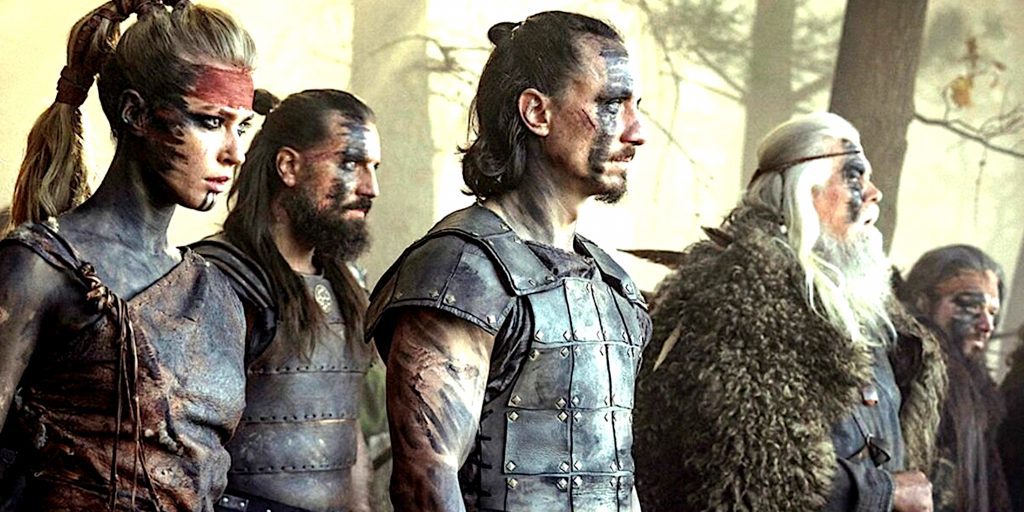
When violence comes, it is quick and ugly. The forest is not cinematic in a glossy way. It is wet, narrow, and hostile. Shields snag. Armour drags men down. The Roman fighting style, built for open ground and cohesion, collapses once formation breaks.
The show avoids over choreographed duels. Combat feels confused, which is historically honest. The ambush at Teutoburg is not treated as a heroic last stand but as a prolonged unravelling. That decision gives the battle weight rather than spectacle for its own sake.
Characters who feel human, not mythic

Arminius carries the series, but the supporting cast does real work. Thusnelda is written with agency and teeth, not as a decorative symbol of resistance. Roman officers squabble, posture, and protect their careers. Tribal leaders argue constantly and rarely agree on anything for long.
This is a show interested in how people justify their choices when every option is bad. Loyalty is conditional. Honour is negotiable. Survival usually wins.
How accurate is Barbarians, really?
It is not a documentary, but it is far more grounded than most Roman dramas. Archaeology supports the scale of the Teutoburg disaster, including mass graves and scattered equipment consistent with an ambush and pursuit. The political context also holds up. Rome genuinely expected Germania to become another province. The shock of failure was real.
Some timelines are compressed and some relationships simplified, but the broad strokes are solid. Importantly, the show respects uncertainty. Ancient sources are biased and incomplete, and Barbarians often leaves space where certainty would be dishonest.
Why Barbarians is a needed addition to Television
Barbarians works because it refuses to flatten history into good versus evil. It shows empire as a system that believes in its own permanence right up until it fails. Watching Romans argue about tax quotas while standing in hostile woodland feels uncomfortably familiar in a modern world obsessed with control and metrics.
It also proves that historical drama does not need to be loud to be compelling. Trust the setting. Trust the audience. Let history breathe.
If you like your Roman history muddy, political, and slightly uncomfortable, this one earns its place.
Production
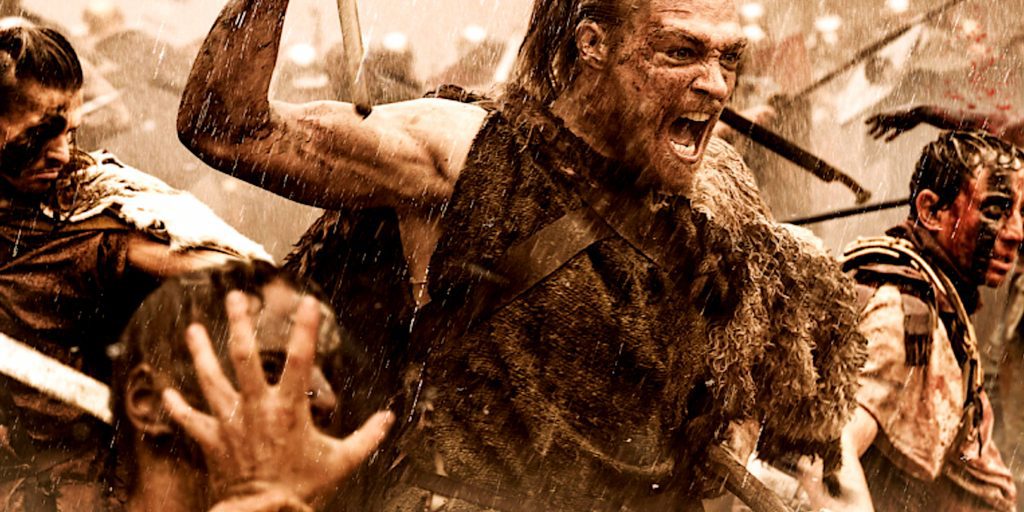
Filming for Barbarians took place in Budapest, Hungary, between August and November 2019. The series was produced by Gaumont Germany, a branch of the renowned French studio Gaumont. Directors Barbara Eder and Steve St. Leger, the latter known for his work on Vikings, sought to balance dramatic storytelling with historical authenticity. Historians were consulted to ensure accuracy in set design, costumes, and language. Notably, the dialogue alternates between German and Classical Latin, lending further credibility to the portrayal of Roman and Germanic interactions.
Key historical figures include:
- Arminius (Laurence Rupp): A Germanic noble trained in Roman warfare, whose defection becomes instrumental in the tribal uprising.
- Thusnelda (Jeanne Goursaud): A fierce warrior and daughter of a pro-Roman chieftain, who emerges as a key leader in the resistance.
- Folkwin Wolfspeer (David Schütter): A loyal warrior and childhood companion of Arminius and Thusnelda.
- Varus (Gaetano Aronica): The Roman governor whose overconfidence leads to disaster.
The series blends historical events with fictionalised personal conflicts, offering a humanised perspective on a well-documented military catastrophe.
Main Cast
- Laurence Rupp as Arminius
- Jeanne Goursaud as Thusnelda
- David Schütter as Folkwin Wolfspeer
- Bernhard Schütz as Segestes
- Gaetano Aronica as Varus
- Daniel Donskoy as Flavus
- Murathan Muslu as Marbod
- Alessandro Fella as Germanicus
- Giovanni Carta as Tiberius
Series Overview
- Seasons: 2
- Episodes: 12 (6 per season)
- Runtime: 41–51 minutes per episode
- Original Release: 23 October 2020 – 21 October 2022
- Language: German and Latin
- Platform: Netflix
Weaponry & Combat
The series meticulously recreates the arms and armour of the period, distinguishing between Roman military equipment and Germanic tribal weaponry.
- Roman Gladius: The standard short sword of legionaries, designed for close-quarters combat.
- Pilum: A heavy javelin used to disrupt enemy formations before melee engagement.
- Scutum: The large rectangular shield employed by Roman infantry for formation fighting.
- Lorica Segmentata: The iconic segmented plate armour worn by legionaries.
In contrast, Germanic warriors wielded:
- Framea: A versatile spear used for thrusting and throwing.
- Seax: A single-edged knife or short sword common among Germanic tribes.
- Round Shields: Wooden shields reinforced with iron bosses, offering mobility in forested terrain.
- Battle Axes: Favoured for their brutal efficiency in close combat.
The depiction of guerrilla warfare in dense woodland reflects historical accounts of Germanic tactics, which exploited terrain to neutralise Roman discipline.
Critical Reception
Barbarians received praise for its gripping narrative, strong performances, and atmospheric production design. Critics lauded its unflinching portrayal of warfare and the moral complexities of rebellion. However, some historians noted minor inaccuracies, such as the simplification of tribal politics and the embellishment of certain characters’ roles.
The series proved a commercial success, reportedly reaching over 37 million households within its first month on Netflix, cementing its place among the platform’s most-watched non-English productions.
Legacy & Cultural Impact
The show has renewed interest in the Roman-Germanic conflicts of antiquity, particularly the figure of Arminius, who remains a contentious symbol of German nationalism. Its blend of action and historical drama has drawn comparisons to series like Rome and Vikings.
Where to watch:
Barbarians is available for streaming on Netflix in the UK and internationally, with options for English subtitles and dubbing.
For enthusiasts of historical epics, Barbarians offers a compelling, if dramatised, retelling of one of Rome’s most devastating military defeats.
Watch the trailer: