If you are still grinding bandits for pocket change in 2026, we need to talk.
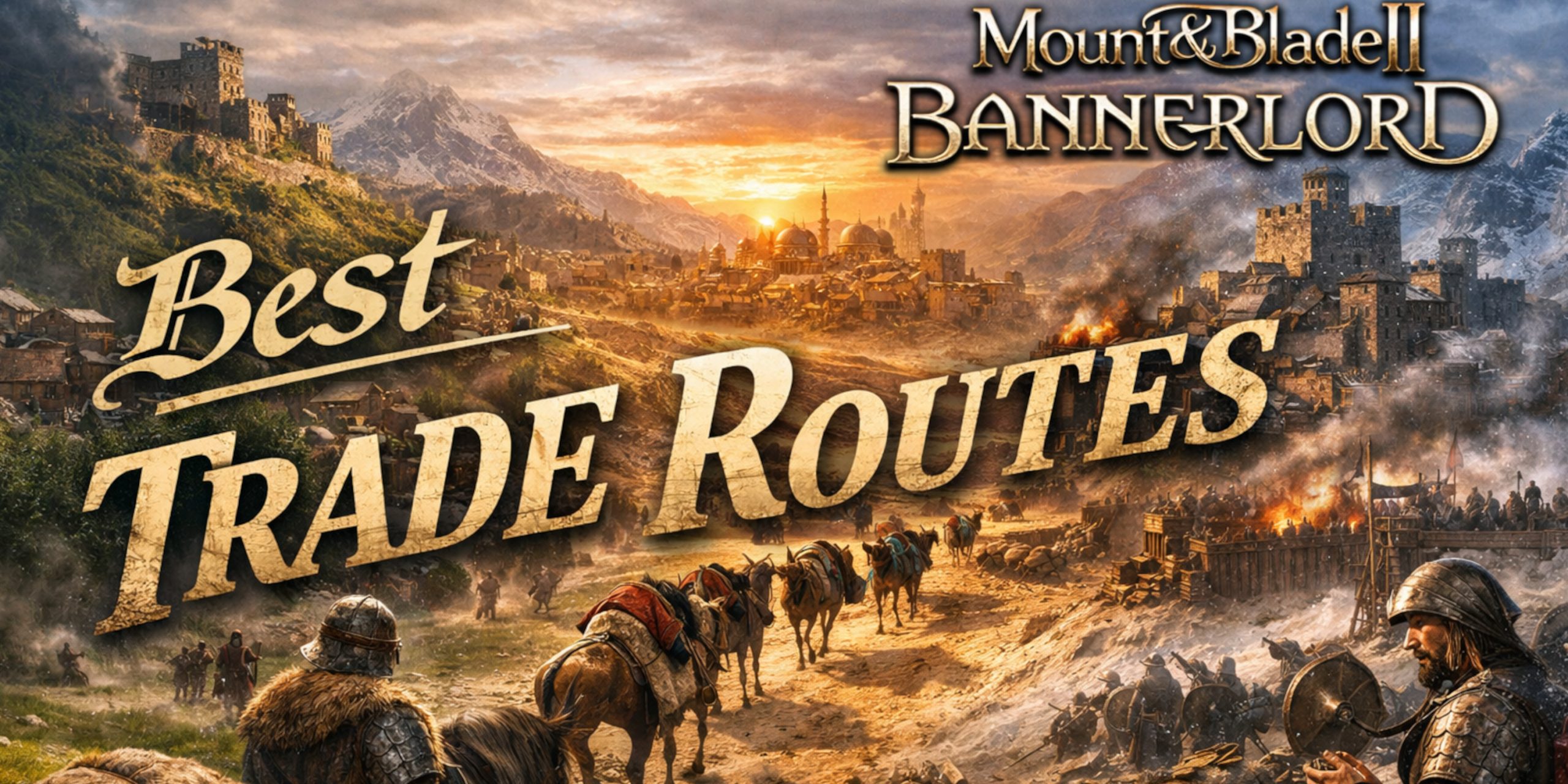
Trading in Mount & Blade II: Bannerlord has matured. Prices shift more dynamically, wars disrupt supply lines harder, and caravans actually matter. The old “buy hardwood in Battania, sell anywhere” trick still works, but if you want real money, you need structured routes and a bit of patience.
This guide breaks down the most reliable trade loops, how to read the market properly, and how to scale from struggling merchant to Calradian tycoon.
How Trading Works in 2026
Before diving into routes, a quick reality check.
Prices are driven by:
- Village production linked to towns
- Caravan movement
- Ongoing wars
- Workshops and prosperity
- Food shortages and sieges
If a town is starving, grain prices spike. If a region is peaceful and prosperous, luxury goods soar. If caravans are being wiped out, expect volatility.
You are not just buying low and selling high. You are reading the political map.
Northern Hardwood to Imperial Workshops
This remains one of the most consistent early game routes.
Buy:
- Hardwood in Battanian towns such as Seonon and Marunath
Sell:
- Imperial cities such as Epicrotea, Lageta, or Zeonica
Why it works:
Battania produces hardwood cheaply. Imperial cities consume it for workshops and weapons. When wars flare up between the Empire and its neighbours, demand increases even more.
Profit margin is not glamorous, but it is stable. It funds your first caravan or workshop without drama.
Aserai Desert Goods to the North
This is where margins start looking interesting.
Buy in Aserai lands:
- Dates
- Salt
- Spices
Sell in:
- Sturgia
- Northern Empire
- Battania
Southern desert economies produce luxury food and trade goods cheaply. Northern regions, especially Sturgia, pay well because they do not produce them locally.
Just be careful. Desert bandits are annoying. Steppe bandits are worse. Always travel with enough troops to deter attacks without slowing your speed into the ground.
Sturgian Furs to the South
If you want high value goods per inventory slot, this is your route.
Buy:
- Furs in Tyal, Varcheg, and surrounding villages
Sell:
- Aserai and Southern Empire cities
Furs are expensive but stack well in profit. Southern climates treat them as luxury imports, so you often see strong green numbers.
This route shines mid game when you have decent cargo capacity and can move quickly.
Vlandian Iron and Tools Circuit
Vlandia produces:
- Iron ore
- Tools
Imperial and Battanian cities regularly pay more, especially after sieges when equipment stocks drop.
A short loop between Vlandia and Western Empire territory can quietly generate strong weekly income. It is not flashy, but it stacks fast.
High Risk War Zone Arbitrage
This is not beginner friendly.
When two factions are at war and sieges start happening, food and raw materials spike dramatically inside besieged regions.
Tactics:
- Buy grain and fish in safe territory
- Sell to towns recently relieved from siege
- Watch prosperity levels
Yes, it feels slightly opportunistic. Yes, it is extremely profitable.
Just do not get trapped behind enemy lines. Your trading empire ends quickly if your entire caravan train is captured.
Scaling Your Trading Empire
Once you hit 50 to 100 trade skill, things change.
Focus on:
- Investing in caravans led by companions with high Trade skill
- Building workshops in stable, high prosperity towns
- Using perks that mark profitable trade goods automatically
Aserai caravans tend to survive longer due to map positioning, but it depends on the current geopolitical chaos of your campaign.
If you are serious about becoming rich, trading pairs beautifully with mercenary contracts. You move between towns anyway, so you might as well get paid for fighting on the way.
Common Trading Mistakes
Let me save you some frustration.
- Overloading your party and crawling across the map
- Ignoring war declarations
- Buying goods without checking average price colour indicators
- Investing in workshops inside towns that get sieged every month
Trading rewards awareness. Calradia is alive. If you treat it like a static spreadsheet, you will bleed money.
The Best Early Game Trade Loop
If you want something simple and reliable:
Battania hardwood → Imperial cities
Then Imperial wine → Vlandia
Then Vlandian tools → Battania
It forms a triangle that keeps cargo flowing and risk manageable.
It is not glamorous, but it funds your army, your first castle, and eventually your kingdom.
And that is when trading becomes optional, because by then you are the economy.
The Seven Swords Takeaway
Trading in Bannerlord is quietly one of the most satisfying systems in the game. There is something deeply satisfying about turning 2,000 denars into 200,000 without swinging a sword.
In 2026, the market feels more reactive and more punishing, which honestly makes it better. You cannot autopilot your way to wealth anymore.
Read the map. Watch the wars. Move with purpose.
Calradia rewards merchants who think like generals.
And if all else fails, there is always hardwood.