A historian’s ranking of the mounted forces that decided ancient wars
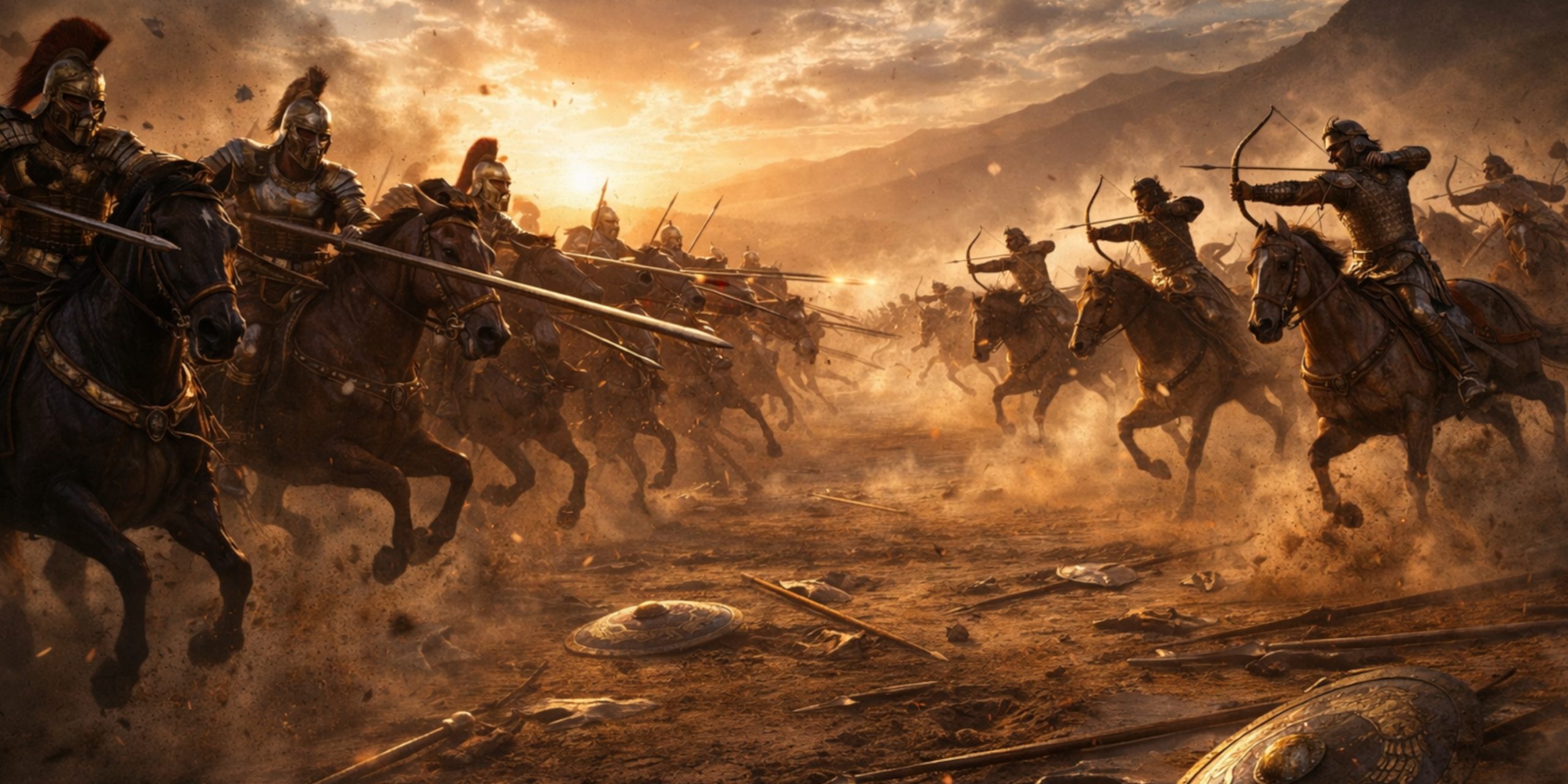
Ancient cavalry were not always battlefield kings. For long stretches of history, infantry still dominated. But when cavalry was well trained, properly equipped and used with intent, it changed wars fast. Shock charges broke lines, horse archers bled armies dry, and elite companions decided battles in minutes.
This list ranks ancient cavalry units by battlefield impact, discipline, tactical flexibility, equipment and historical results.
S Tier: The War-Winners
Macedonian Companion Cavalry (Hetairoi, 4th century BC)
Weapons: Xyston lance, kopis, xiphos, round shield
Key battles: Chaeronea, Issus, Gaugamela
The Companions were shock cavalry perfected. Their kopis, forward-curved and brutally weighted, was ideal for downward cuts from horseback once the lance shattered. Alexander’s personal leadership turned them into a precision weapon that broke empires.
Parthian Horse Archers (3rd century BC–3rd century AD)
Weapons: Composite bow, akinakes short sword, light spear
Key battles: Carrhae
The akinakes was a compact thrust-and-cut blade, perfect for fast strikes during feigned retreats. Parthian cavalry avoided prolonged melee, but when forced into close combat their short swords were fast and lethal.
Scythian Horse Archers (7th–3rd centuries BC)
Weapons: Composite bow, akinakes, spear
Key battles: Campaigns against Assyria and Persia
Scythian swords were short, leaf-shaped and designed for quick stabbing attacks. Their cavalry doctrine revolved around speed and harassment, not heroic duels, and their weapons reflect that reality.
Cataphracts (Seleucid, Parthian, Armenian)
Weapons: Kontos lance, straight long sword, mace
Key battles: Magnesia, eastern Roman frontier battles
The cataphract sword was long, straight and optimised for thrusting through armour. Once the kontos broke enemy lines, these blades finished the work in crushing close-quarters combat.
A Tier: Elite and Highly Effective
Achaemenid Persian Cavalry (6th–4th centuries BC)
Weapons: Spear, akinakes, composite bow
Key battles: Issus, Gaugamela
Persian cavalry relied on flexibility. The akinakes served as a dependable sidearm when missile exchanges collapsed into melee, favouring thrusts rather than sweeping cuts.
Roman Auxiliary Cavalry (1st century BC–3rd century AD)
Weapons: Spear, spatha long sword, oval shield
Key battles: Dacian Wars, frontier campaigns
The spatha was longer than the legionary gladius and perfectly suited to mounted combat. Roman auxiliaries used it for wide slashing attacks that defined later cavalry sword design across Europe.
Numidian Light Cavalry (3rd–2nd centuries BC)
Weapons: Javelins, short straight sword, no shield
Key battles: Cannae, Zama
Numidians avoided prolonged melee, but their simple short swords were effective for finishing fleeing enemies and striking exposed infantry after harassment.
Thessalian Cavalry (5th–4th centuries BC)
Weapons: Spear, xiphos, round shield
Key battles: Peloponnesian War, Chaeronea
Thessalians favoured disciplined shock action. Their xiphos was a balanced cut-and-thrust sword, effective once spear lines collapsed.
B Tier: Reliable and Dangerous
Carthaginian Citizen Cavalry
Weapons: Spear, straight sword, round shield
Key battles: Trebia, Cannae
Less famous than Hannibal’s mercenaries, but competent. Their straight swords were functional rather than refined, suited to thrusting from horseback.
Celtic Heavy Cavalry (4th–1st centuries BC)
Weapons: Long slashing sword, spear, oval shield
Key battles: Telamon, Gallic Wars
Celtic cavalry swords were long, flexible and terrifying in wide slashing arcs. Perfect for shock, less effective in tight formations once momentum was lost.
Hellenistic Medium Cavalry (Successor States)
Weapons: Spear, kopis or straight sword, shield
Key battles: Ipsus, Magnesia
A mix of traditions. Units armed with kopis favoured aggressive cuts, while straight-bladed swords supported thrusting attacks against armoured infantry.
Assyrian Cavalry (9th–7th centuries BC)
Weapons: Spear, iron sword, bow
Key battles: Levantine campaigns
Early cavalry swords were short and narrow, designed more as backups than primary weapons. Assyrians still relied heavily on missile fire and shock coordination.
C Tier: Brave but Limited
Early Roman Cavalry (Equites)
Weapons: Spear, short straight sword, small shield
Outclassed by specialist cavalry. Their swords were secondary weapons, reflecting Rome’s early infantry-focused doctrine.
Greek Citizen Cavalry (Non-Thessalian)
Weapons: Spear, xiphos
Limited training and numbers. Their swords were serviceable but rarely decisive.
Levantine and Hebrew Cavalry (Iron Age)
Weapons: Spear, short straight sword
Scarce horses and limited metallurgy restricted the quality and use of cavalry swords.
Germanic Tribal Cavalry
Weapons: Spear, seax or short sword
Effective in raids, dangerous in pursuit, but poorly suited to sustained melee against disciplined cavalry.
D Tier: Marginal and Situational
Militia Cavalry (Various cultures)
Weapons: Spear, basic short sword
Weapons were often inferior, and training inconsistent.
Light Skirmish Horse Without Support
Weapons: Javelins, knife or short sword
Sidearms only used in desperation.
Early Cavalry Transition Units (Post-Chariot Era)
Weapons: Spear, early short sword
Sword design lagged behind tactical development, leaving these units awkwardly equipped.
Seven Swords Takeaway
Ancient cavalry reached its peak when mobility, discipline and weapon design aligned. The Companions broke empires through shock. Horse archers destroyed armies without contact. Cataphracts proved armour could ride as well as walk.
Yet cavalry only dominated when used with purpose. Unsupported charges failed, poorly trained riders died fast, and infantry still ruled most ancient battlefields.
The best cavalry didn’t replace infantry. They finished what infantry began.