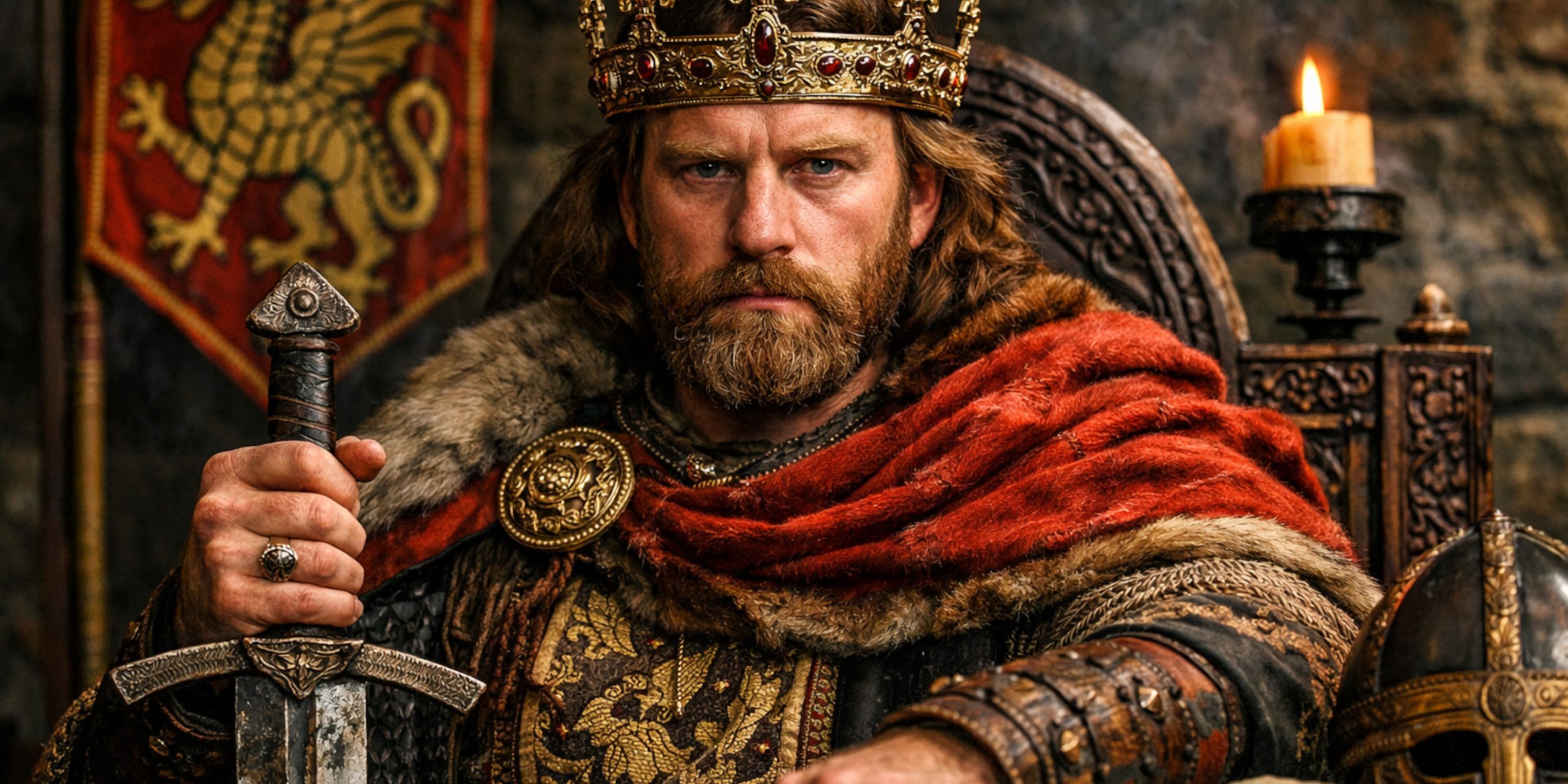
Aethelred II remains one of the most contested figures in English history. His nickname has become a historical punchline, repeated so often that it has hardened into assumed truth. Yet when stripped of hindsight and hostile chroniclers, a more complicated ruler appears. He inherited a wealthy, tightly governed kingdom just as Scandinavian warfare evolved into something England had never faced before. His reign was less a catalogue of foolishness than a prolonged struggle against structural limits.
Early Life and Accession
Aethelred was born around 966, the younger son of King Edgar. His accession followed the murder of his half brother Edward in 978, an event that cast a long shadow over his rule. Although direct involvement cannot be proven, suspicion lingered, and early authority rested heavily on senior nobles and churchmen.
The nickname “the Unready” derives from Old English unræd, meaning poorly advised rather than incompetent. In modern terms, it suggests a king whose counsel repeatedly failed him, not one incapable of thought or action.
The Political Landscape of Late Tenth Century England
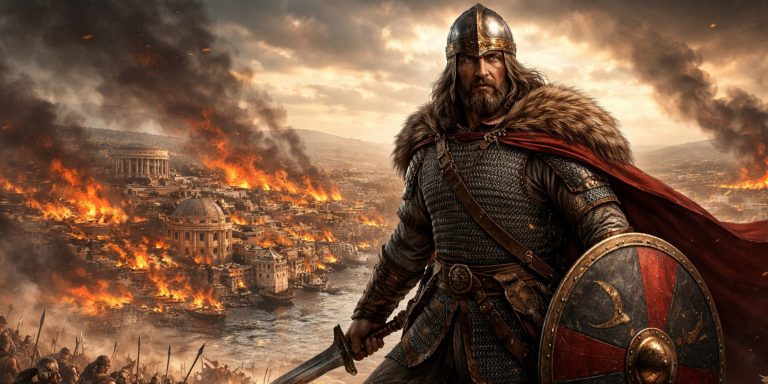
England under Aethelred was centralised, wealthy, and administratively sophisticated. That same wealth made it irresistible. Scandinavian leaders were no longer seasonal raiders but commanders of large, disciplined armies who wintered in England and negotiated from strength.
Local power still mattered. Earls controlled regional forces, and royal commands depended on cooperation rather than coercion. This decentralisation proved fatal when rapid, coordinated responses were required.
Arms and Armour
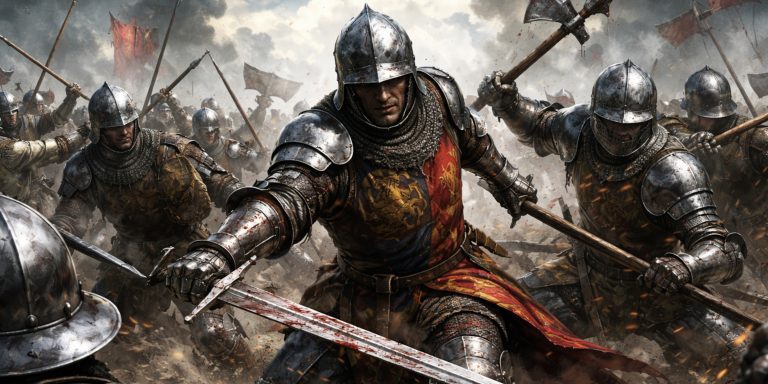
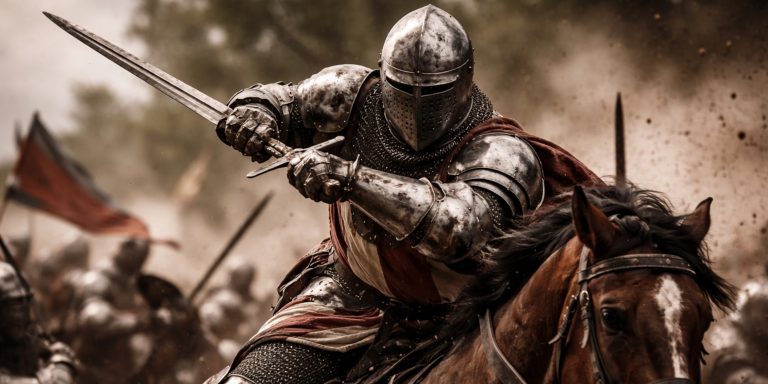
English and Scandinavian warriors were equipped in broadly similar fashion. Military outcomes were shaped less by equipment than by organisation and leadership.
English forces typically used:
- Swords of late Petersen types, increasingly made from solid steel
- Spears as the most common battlefield weapon
- Round shields with iron bosses and wooden boards
- Mail shirts worn by wealthier thegns and household troops
- Helmets were rare but present, usually spangenhelm or nasal forms
Scandinavian armies favoured:
- Comparable swords and spears, with heavier use of the two handed axe
- High quality mail among experienced war leaders
- Strong unit cohesion developed through long campaigns
Archaeology shows no clear technological inferiority on the English side. The problem lay in mobilisation and command, not in steel or skill.
Battles and Military Acumen
Aethelred’s military record is uneven and often reactive, shaped by emergencies rather than long term planning.
Maldon, 991
The defeat against forces led by Olaf Tryggvason is preserved in poetry as much as in history. The decision to allow the enemy to cross the causeway reflected contemporary ideas of honourable combat. It also ended disastrously.
Tribute and Danegeld
Repeated payments to Scandinavian armies were intended to buy time and stability. In practice, they advertised England’s wealth. The policy made sense in the short term and failed spectacularly in the long one.
The Great Raids, 1009 to 1012
The arrival of Thorkell the Tall with a massive army overwhelmed regional defence. Even London faced sustained pressure. Coordination failed, loyalty frayed, and trust in royal leadership eroded.
Assandun, 1016
The final defeat against Cnut ended meaningful English resistance. Betrayal by English commanders played a role, underlining how far royal authority had weakened by the end of Aethelred’s life.
Aethelred understood the danger but never found a system capable of answering it. His failure was institutional as much as personal.
Law, Coinage, and Royal Authority
Away from the battlefield, Aethelred was an active and capable ruler. His law codes are extensive and reveal a king deeply concerned with justice, religious reform, and social order. Coinage was regularly recalled and reissued, giving the crown tight control over currency and taxation.
This contrast is striking. Aethelred governed peace effectively and war poorly, precisely the reverse of what his reign demanded.
Death and Reputation
Aethelred died in 1016 as Cnut tightened his grip on England. His son Edmund Ironside briefly continued resistance before the kingdom passed into Scandinavian hands. Later chroniclers, writing under new regimes, found it convenient to lay the blame at Aethelred’s feet.
His reputation has suffered from simplicity. He was neither heroic nor useless. He was conscientious, outmatched, and ruling during a military transition that exposed every weakness of the late Anglo Saxon state.
Where to See Artefacts from Aethelred’s Reign
- British Museum
Extensive collections of Aethelred’s coinage, including long cross pennies - Ashmolean Museum
Anglo Saxon artefacts and material culture from his reign - Fitzwilliam Museum
Coins, manuscripts, and objects tied to royal and ecclesiastical life
Latest Archaeology and Research
Recent hoard analysis shows intense monetary circulation right up to the conquest, challenging the idea of economic collapse. Settlement archaeology points to continuity even in regions heavily affected by Scandinavian armies.
Scholarly focus has also shifted towards Aethelred’s advisers. Rather than a dysfunctional court, the evidence suggests capable but divided leadership struggling under unprecedented strain.
Seven Swords Takeaway
Aethelred II was not a foolish king undone by his own ignorance. He was a ruler attempting to govern a rich, complex kingdom while its traditional military systems failed in real time. His errors were costly and sometimes fatal. His efforts were genuine and often misunderstood.
If nothing else, he deserves to be remembered as more than a nickname. History should manage that much.
Watch the documentary: